
Orchestrate AI insights into action

Trending
Categories
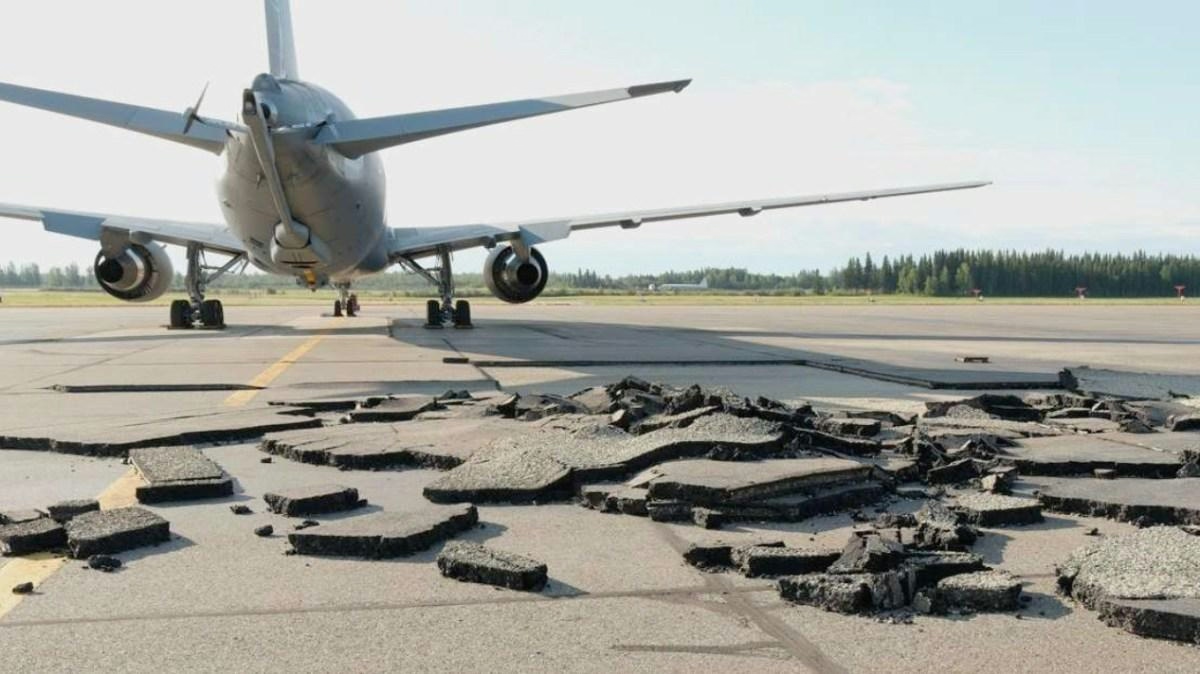
Air Force Tanker Damages Alaska Airport Runway During Engine Test
Air Force Tanker Damages Alaska Airport Runway During Engine Test
Incident Overview
Last summer, a U.S. Air Force KC-46A refueling tanker caused substantial damage to the runway at Fairbanks International Airport during a series of high-powered engine tests, according to a recently released Air Force investigation report. The incident, which occurred in July, resulted in a 25-foot-wide hole in the runway and repair costs amounting to $147,044. Notably, the aircraft itself sustained no damage.
The tanker, assigned to the New Hampshire Air National Guard’s 133rd Air Refueling Squadron, had landed in Fairbanks following a mission from Yokota Air Base in Japan. Upon arrival, the crew reported abnormal engine vibration indications in both engines, which grounded the aircraft and necessitated the deployment of a specialized maintenance team from McConnell Air Force Base, Kansas.
Investigation Findings and Technical Details
The investigation, led by Air Force Lieutenant Colonel Michael Raynor, revealed that maintenance personnel conducted ten high-power engine runs over an eight-hour period to diagnose and address the vibration issues. Each test involved operating both engines at up to 83 percent power—the same thrust level used during takeoff—producing exhaust temperatures near 1,170 degrees Fahrenheit. The report emphasized that even when testing a single engine, both are typically run simultaneously to avoid asymmetric forces that could damage the aircraft.
The repeated exposure to intense heat and exhaust gases caused the asphalt sealant behind the aircraft to melt. During the tenth engine run, a 25-by-25-foot section of pavement detached and was propelled up to 100 feet away, scattering debris across nearly two-thirds of an acre. Fortunately, no personnel were injured, and the investigation did not identify any errors on the part of the maintenance team.
Implications for Aviation Safety and Infrastructure
This incident has raised concerns regarding operational safety and the potential impact on airport operations, particularly when military aircraft conduct maintenance procedures at civilian facilities. Aviation authorities may increase scrutiny of such activities, potentially prompting reviews of maintenance and operational protocols to prevent similar occurrences in the future.
While there have been no reported responses from competitors or immediate market reactions, the event underscores broader challenges in military aviation and airport infrastructure. It may influence future policies and investments aimed at enhancing runway durability and maintenance standards, especially as military and civilian aviation operations continue to intersect.
The Air Force’s investigation remains ongoing, and officials have yet to announce any procedural changes. Meanwhile, the damaged Fairbanks runway has been repaired, and the KC-46A tanker has returned to service without further incident.

Etihad Airways Suspends Airbus A380 Flights on Key Route

Aditya Birla Group Seeks Approval for Aircraft Leasing in GIFT City

Qatar Airways Highlights Innovation and Connectivity at Arabian Travel Market 2026

Hong Kong's Five-Year Plan Includes Andrew Fan's Aircraft Parts Processing Hub Proposal

ACIA Aero Leasing Delivers ATR72-600 to Air Nostrum

RTX Appoints Jill Albertelli as Head of Pratt & Whitney

TAT Technologies Joins Beyond Aero Hydrogen Aircraft Program

AURAK Study Highlights Barriers to Air Taxi Adoption in Emerging Economies

Xiamen Air Selects Altitude for 787 Maintenance at Heathrow

Etihad and Swissport Extend Global Partnership
