Image

AeroGenie — Your Intelligent Copilot.

Ask anything. Analyze everything. Act instantly.

Trending

Categories

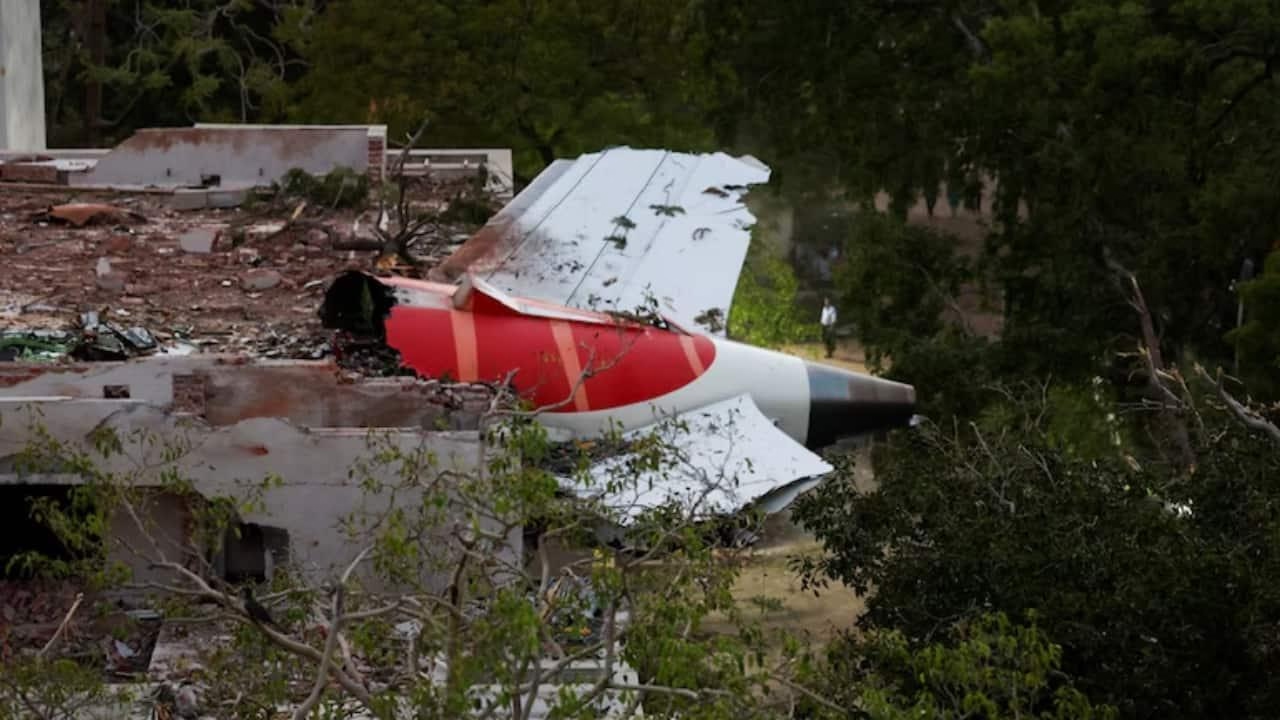
Air India and AI Express Retire Flight Number 171 Following Ahmedabad Crash
June 14, 2025By ePlane AI
Air India and AI Express Retire Flight Number 171 Following Ahmedabad Crash
0
0
Air India
Boeing 787-8 Dreamliner
Flight Number Retirement

Air India and AI Express Retire Flight Number 171 Following Ahmedabad Crash

Flight Number Retirement and Operational Changes

Air India and its subsidiary Air India Express have officially retired the flight number ‘171’ in the wake of the tragic crash involving a Boeing 787-8 Dreamliner on Thursday. The flight, operating as AI 171 from Ahmedabad to London Gatwick, crashed mere seconds after takeoff, resulting in the deaths of 241 passengers and crew, as well as additional casualties on the ground after the aircraft struck a medical college complex. This decision to discontinue the use of flight number 171 aligns with a common industry practice of retiring flight numbers associated with major accidents as a mark of respect for the victims.

Effective June 17, the Ahmedabad-London Gatwick route will be re-designated as flight AI 159. Air India Express has similarly withdrawn its corresponding flight number, IX 171. This measure echoes the airline’s response to the 2020 Kozhikode accident, where the flight number involved was also retired following the loss of 21 lives.

Implications for Air India and the Aviation Sector

The aftermath of the crash presents significant challenges for Air India, which now faces reputational damage, potential financial repercussions, and intensified scrutiny from aviation regulators and insurers. Industry experts predict a temporary decline in passenger confidence and bookings, while competitors may leverage the situation to emphasize their own safety records. The incident is expected to catalyse broader regulatory oversight within the Indian aviation sector, compelling all carriers to enhance safety protocols and operational standards.

Investigation and Regulatory Response

In response to the disaster, Union Home Secretary Govind Mohan has been appointed to lead a high-level, multi-disciplinary committee tasked with investigating the causes of the crash and recommending comprehensive safety measures. This committee will function alongside other ongoing inquiries conducted by relevant agencies. An official order dated June 13 outlines the composition of the panel, which includes senior officials from the civil aviation and home ministries, representatives from the Gujarat home department and disaster response authority, the Ahmedabad Police Commissioner, the Indian Air Force’s Director General of Inspection and Safety, and the heads of the Bureau of Civil Aviation Security (BCAS) and the Directorate General of Civil Aviation (DGCA). Additional members comprise the Special Director of the Intelligence Bureau and the Director of the Directorate of Forensic Science Services.

Meanwhile, the Aircraft Accident Investigation Bureau (AAIB) has commenced a formal investigation into the crash. As the inquiry progresses, Air India and the broader aviation industry face mounting pressure to restore public trust and uphold the highest standards of safety.

More news
Aventure Aviation Acquires Atlanta Aviation to Expand MRO and Interior Services

Aventure Aviation Acquires Atlanta Aviation to Expand MRO and Interior Services

Aventure Aviation Acquires Atlanta Aviation to Expand MRO and Interior Services Aventure Aviation has announced the acquisition of Atlanta Aviation International, an FAA-certified repair station headquartered in Atlanta, Georgia, as part of its strategic initiative to enhance its maintenance, repair, and overhaul (MRO) and aircraft interior service capabilities. Established in 1994, Atlanta Aviation International has built a strong reputation in aircraft interior refurbishment, serving a diverse clientele across commercial, business, general aviation, rotorcraft, and military sectors. With nearly three decades of experience, the company has cultivated a substantial domestic and international customer base that will now complement Aventure Aviation’s existing operations. Integration and Operational Expansion Following the acquisition, Atlanta Aviation’s operations will be relocated to Aventure Aviation’s campus in Peachtree City, Georgia. This move will consolidate activities within a newly constructed 70,000-square-foot, state-of-the-art warehouse facility. The integration is expected to generate operational synergies and broaden the combined entity’s service portfolio, thereby enhancing its global reach and capacity to pursue new opportunities within the aftermarket and MRO markets. Together, the two companies bring over 55 years of industry expertise, positioning themselves to strengthen sales efforts, improve customer support, and offer expanded options for refurbished aircraft interiors. Atlanta Aviation International’s President, Mike Thatch, along with his team, will continue in their leadership roles to ensure a seamless transition to the new facility while upholding the company’s established standards of service excellence. Challenges and Competitive Landscape Despite the promising outlook, the integration poses several challenges for Aventure Aviation. The successful merger of operational processes, adherence to stringent regulatory requirements, and effective management of personnel transitions will be critical to unlocking the full potential of the acquisition. This development occurs amid intensifying competition within the MRO sector. Competitors such as West Star Aviation have recently bolstered their capabilities through acquisitions like DCJet, aimed at enhancing Aircraft on Ground (AOG) service offerings. Similarly, Setna iO’s acquisition of J&C Aero reflects a broader industry trend of MRO providers expanding their aircraft interior services. Industry analysts observe that Aventure Aviation’s acquisition strategically positions the company to compete more effectively in a rapidly evolving market. However, the ultimate success will depend on how adeptly Aventure navigates operational integration, regulatory compliance, and workforce management, while maintaining the high-quality service expected by its expanded customer base.
StandardAero and AviLease Form Engine Maintenance Partnership

StandardAero and AviLease Form Engine Maintenance Partnership

StandardAero and AviLease Form Engine Maintenance Partnership Strategic Collaboration in Engine Maintenance StandardAero has formalized a general terms agreement (GTA) with global aircraft lessor AviLease, establishing a partnership to provide maintenance, repair, and overhaul (MRO) services for CFM International’s LEAP-1A, LEAP-1B, and CFM56-7B engines. This collaboration is designed to support AviLease’s expanding global leasing operations and reflects the ambitions of both companies within the rapidly evolving aviation sector. AviLease, headquartered in Saudi Arabia and supported by the Public Investment Fund (PIF), manages a fleet of approximately 200 predominantly new-technology, fuel-efficient aircraft leased to 53 airline customers worldwide. With a workforce of 95 professionals distributed across five offices, AviLease is positioning itself as a national champion in aircraft leasing, aligned with Saudi Arabia’s Vision 2030 and National Aviation Strategy. Olivier Ruffet, Vice President Sales – EMEA at StandardAero, expressed optimism about the partnership, stating that the agreement will enable StandardAero’s teams of LEAP and CFM56 engine MRO experts to provide responsive and high-quality support to AviLease and its airline customers. He emphasized the company’s commitment to delivering superior engine services as AviLease continues its dynamic growth trajectory. Operational Capabilities and Industry Challenges StandardAero operates its engine maintenance services for the next-generation LEAP-1A and LEAP-1B engine family from a substantial 810,000-square-foot facility in San Antonio, Texas. Notably, in March 2023, StandardAero became the first non-airline entity in the Americas to sign a CFM-branded service agreement (CBSA) covering both LEAP-1A and LEAP-1B engines, underscoring its technical capabilities and industry standing. Despite the promising outlook, the partnership faces significant challenges inherent to the MRO market. The sector is intensely competitive, with established providers aggressively pursuing contracts and market share. Both StandardAero and AviLease must also navigate complex regulatory environments across multiple jurisdictions, which can increase operational costs and complicate compliance. Furthermore, substantial investment in advanced technology and infrastructure will be necessary to meet the evolving demands of modern aircraft engines, ensuring reliability and efficiency in service delivery. Market responses to the announcement have included skepticism regarding the ability of StandardAero and AviLease to consistently offer cost-effective and dependable engine maintenance. Competitors are expected to respond with aggressive pricing strategies, enhanced service offerings, or new alliances to maintain their positions within the MRO sector. A Strategic Step Forward Despite these challenges, the agreement represents a strategic advancement for both companies. By leveraging AviLease’s expanding fleet and global reach alongside StandardAero’s technical expertise and established facilities, the partnership aims to provide comprehensive engine support to airline customers worldwide. This collaboration seeks to navigate the complexities of a dynamic and competitive industry while supporting the growth ambitions of both organizations.
Yingling Aviation Marks 80 Years in Operation

Yingling Aviation Marks 80 Years in Operation

Yingling Aviation Celebrates Eight Decade Milestone Yingling Aviation is set to commemorate its 80th anniversary in 2026, marking eight decades of continuous operation within the aviation sector. Founded in 1946 by Vic Yingling in Wichita, Kansas, the company began with a single aircraft and has since evolved into a prominent provider of maintenance, repair, and overhaul (MRO) services. Initially known as Yingling Aircraft, the business remained under family ownership until 1982, when it was sold to Jerry Vanier, and subsequently acquired by Lynn Nichols in 2000. Chris Short, Yingling Aviation’s chief operating officer, reflected on the company’s longevity, stating, “Eighty years in aviation is simply amazing. This legacy has been driven by our people and the trust of our customers. Generations of teammates have built something special here, and we are proud to carry that forward.” Growth, Services, and Industry Challenges Currently, Yingling employs over 400 staff members and operates facilities spanning more than 500,000 square feet (46,500 square meters). Its extensive range of services encompasses aircraft maintenance, avionics, interiors, paint, propeller and engine services, parts support, and fixed-base operator (FBO) operations. This comprehensive portfolio positions Yingling as a key player in the MRO market. However, the company faces an increasingly competitive environment as major industry players such as Bombardier, GE, and RTX invest heavily to expand their MRO capabilities. Notable recent developments include Bombardier’s acquisition of Velocity Maintenance Solutions and GE’s establishment of an engine repair facility in Singapore. These moves reflect a broader trend toward consolidation and intensifying competition, which may lead clients to scrutinize Yingling’s pricing and service quality more closely amid a crowded marketplace. To maintain its competitive advantage, Yingling acknowledges the necessity of ongoing enhancements to its service offerings and infrastructure. Short emphasized the critical role of the company’s workforce and customer relationships in meeting these challenges, noting, “As we celebrate this milestone, we recognize the people who made it possible. Our employees, customers, and partners have shaped who we are. Their trust continues to move us forward.” Throughout 2026, Yingling plans to honor its 80-year heritage through a series of storytelling initiatives, customer engagement activities, and industry events that will showcase both its rich history and its vision for the future.
Air Taxis to Support Transportation at LA28 Olympics

Air Taxis to Support Transportation at LA28 Olympics

Air Taxis to Support Transportation at LA28 Olympics As Los Angeles prepares to host the 2028 Olympic Games, transportation remains a critical focus for both organizers and residents. At USC’s The Games Week, a panel discussion led by co-chairs Alexander Bartolomei and Mitchell Kirby explored the future of transit in the city, addressing the pressing question: “What will transportation look like in 2028?” Kirby, a senior studying environmental and mechanical engineering, captured a common concern among Angelenos, stating, “It’s bad now, what’s going to happen then?” Transforming Transit Infrastructure for the Games The panel featured five experts who outlined sweeping changes planned for Los Angeles’s transit infrastructure in anticipation of the Games. Among the most significant initiatives is the introduction of electric air taxis alongside a substantial expansion of the city’s bus fleet. Sam Morrissey, vice president of transportation for LA28, explained that existing carpool and toll lanes will be reserved exclusively for LA28-authorized vehicles during the Olympics. While acknowledging that this will create capacity challenges by reducing lanes available to the general public, Morrissey emphasized the opportunity to demonstrate the efficiency of public transit. “We will create these capacity challenges by taking those lanes away, but we will also show people that, ‘Wow, that’s a great way to get around, on a bus,’” he said. Meghna Khanna, deputy executive officer of mobility corridors at L.A. Metro, detailed plans to open dedicated freeway lanes for Olympic personnel and implement transit signal priority systems to reduce bus delays. The city intends to add approximately 2,000 buses—more than doubling Metro’s current fleet—to accommodate the expected surge in demand from visitors and athletes. The Promise and Challenges of Electric Air Taxis A notable innovation for LA28 is the planned deployment of electric air taxis. Tosha Perkins, chief administrative officer at Archer Aviation, announced that the company will provide aerial ride-share services using its “Midnight” electric air taxi, which can carry up to four passengers. Perkins acknowledged that fares during the Olympics are likely to be high, comparable to an Uber Black ride, but expressed confidence that prices will decrease as production scales. “We wanted to be able to provide something that was cost effective for everyone to be able to use,” she said. Despite the promise of this new mode of transport, the rollout of air taxis faces significant challenges. Industry competitors such as Supernal have recently laid off nearly 300 employees amid difficulties in proving their technology, underscoring the hurdles in bringing air taxis to market. Archer Aviation itself has encountered skepticism regarding its readiness and has faced legal issues, including a lawsuit alleging gender discrimination. Market reactions remain mixed, with some questioning whether these companies can deliver on their ambitious promises in time for the Olympics. Nevertheless, Archer is pressing forward, expanding its fleet and participating in initiatives like the White House-backed eVTOL Integration Pilot Program. Khanna expressed optimism about leveraging the Olympics as a catalyst for innovation and regulatory progress. “There are lots of collaborative ways that we are trying to get around some of those standard protocols by using the Games as the method,” she said. As the LA28 Games approach, the city’s ambitious transportation plans—combining traditional transit expansions with emerging technologies—will be closely observed as a potential model for the future of urban mobility.
Breeze Airways Adds Three Airbus A220-300 Aircraft to Fleet

Breeze Airways Adds Three Airbus A220-300 Aircraft to Fleet

Breeze Airways Expands Fleet with Three Airbus A220-300 Aircraft Utah-based low-cost carrier Breeze Airways has augmented its fleet with the addition of three Airbus A220-300 aircraft, delivered in February under a long-term sale and leaseback agreement with Dutch regional aircraft lessor TrueNoord. This acquisition marks TrueNoord’s inaugural entry into the A220 market, representing the largest and first Airbus model in its portfolio, which until now has been dominated by ATR, Embraer, and De Havilland Canada aircraft. Headquartered in Amsterdam with offices in Dublin, London, and Singapore, TrueNoord currently leases over 100 aircraft to more than 30 airlines worldwide. Strategic Role of the A220-300 in Breeze’s Operations The Airbus A220-300 plays a pivotal role in Breeze’s operational strategy, enabling the airline to efficiently serve Tier 2 and Tier 3 cities with an optimal balance of seat capacity and lower operating costs compared to larger jets. This flexibility allows Breeze to profitably operate routes that have historically been unsustainable for other carriers employing bigger aircraft. With the integration of these three new aircraft, Breeze’s active fleet has expanded to 49 planes, supporting nearly 300 year-round routes across the United States, Mexico, and the Caribbean. Since its inaugural flight in May 2021, Breeze has experienced rapid growth, now serving 86 cities and offering low-cost flights to more than 34 states. The airline’s customer-centric policies include no change or cancellation fees, customizable booking options, fast onboard WiFi, free family seating, and a variety of purchasable meal and drink options. Breeze maintains operating bases in several cities, including Akron/Canton, Charleston (SC), Fort Myers, Hartford, New Orleans, Norfolk, Orlando, Providence, Provo, Raleigh/Durham, Tampa, and Vero Beach. Challenges and Competitive Landscape Despite the advantages offered by the A220-300, integrating new-generation aircraft presents operational challenges. Industry leaders, such as AerCap CEO Aengus Kelly, have highlighted that airlines operating newer fleets may encounter increased downtime due to reliability issues, potentially necessitating a larger number of aircraft to maintain schedules. This dynamic could affect Breeze’s operational efficiency and costs as it continues its expansion. The competitive environment is also intensifying, with other low-cost carriers like QantasLink and Croatia Airlines investing in the A220-300 to modernize their fleets and enhance route networks. This trend is likely to increase competition and exert downward pressure on fares as airlines compete for market share on overlapping routes. Founded in 2018 as Moxy Airways by industry veteran David Neeleman—known for launching WestJet, JetBlue, and Azul—Breeze’s current fleet includes 50 Airbus A220-300s alongside a mix of Embraer 190 and 195 aircraft. As Breeze and its competitors continue to invest in next-generation aircraft, the airline industry is poised for heightened competition and ongoing operational challenges amid the transition to new technologies.
China's 10-passenger electric aircraft, the Matrix, hints at how big flying taxis can be

China's 10-passenger electric aircraft, the Matrix, hints at how big flying taxis can be

China’s 10-Passenger Electric Aircraft, the Matrix, Signals Ambitious Future for Flying Taxis A Glimpse into Urban Air Mobility In a hangar near Shanghai, the future of urban air transportation is beginning to take form with the development of the Matrix, a large electric vertical takeoff and landing (eVTOL) aircraft created by the Chinese company AutoFlight. Recently completing a demonstration flight in Kunshan, the Matrix showcases both the potential and the complexities involved in realizing large-scale flying taxis. Weighing five tons and featuring a wingspan of 20 meters (66 feet), the Matrix stands as the largest electric aircraft constructed in China to date. The prototype measures 17.1 meters (56 feet) in length and 3.3 meters (11 feet) in height, with the capacity to carry up to 10 passengers. It can sustain flight for approximately one hour on a single battery charge. Founded in 2017, AutoFlight envisions the Matrix as a future flying taxi, although industry experts emphasize that widespread commercial use remains several years away. During a recent demonstration for The Associated Press, the Matrix was moved from its hangar to a helipad at AutoFlight’s low-altitude test facility. Following thorough pre-flight checks, the aircraft’s propellers activated, lifting the eVTOL into the air for two circuits around the heliport. The noise generated was noticeable but quieter than that of a conventional helicopter, and the aircraft completed a smooth landing after roughly ten minutes. Challenges on the Path to Commercialization Despite the successful test flight, significant obstacles remain before flying taxis like the Matrix can become a common mode of transport. Regulatory approval stands as a primary challenge. When questioned about a timeline for commercial operations, Steven Yang, AutoFlight’s senior vice president, acknowledged the difficulty in providing a definitive answer. The company’s smaller, two-ton passenger eVTOL is still undergoing certification, and Yang expressed hope that the Matrix would receive a type certificate from regulators by 2027. Even with certification, additional approvals would be necessary before the aircraft could carry passengers. AutoFlight is part of a growing field of Chinese companies developing eVTOL technology. EHANG, based in Guangdong province, has already secured certification to offer commercial passenger services, although operations have yet to commence. The sector is attracting attention from both established aerospace firms and new entrants, fueling accelerated development, strategic partnerships, and increased investment as competitors strive for leadership in this emerging market. Beyond regulatory hurdles, technological limitations and infrastructure requirements pose further challenges. Facilities capable of supporting regular eVTOL operations remain scarce, and questions persist regarding energy efficiency and cost-effectiveness. While the Matrix and similar aircraft are promoted for their environmental advantages and potential to alleviate urban congestion, market acceptance will depend on the ability to deliver these benefits at scale. Currently, the most tangible impact of China’s burgeoning “low-altitude economy” is the deployment of drones for services such as food delivery in cities like Shenzhen. The Matrix’s recent test flight marks a step forward in the development of large, passenger-carrying electric aircraft, yet the realization of everyday flying taxis will demand overcoming substantial technical, regulatory, and market challenges.
SkyDrive’s Tokyo Launch and the Future of Flying Cars

SkyDrive’s Tokyo Launch and the Future of Flying Cars

SkyDrive’s Tokyo Launch and the Future of Flying Cars On March 5, 2026, Tokyo Big Sight became the stage for a remarkable technological milestone as Japanese developer SkyDrive successfully demonstrated its SD-05 eVTOL aircraft performing integrated ground-and-flight operations in a major urban environment. Unlike previous tests conducted in rural areas, this event showcased the aircraft’s ability to transition seamlessly from ground taxiing to vertical takeoff amidst Tokyo’s congested cityscape. The SD-05’s poised and precise maneuvering drew admiration, symbolizing a tangible advance in urban air mobility. SkyDrive’s Position in the Advanced Air Mobility Landscape SkyDrive operates within the rapidly evolving sector known as Advanced Air Mobility (AAM), which encompasses the development of flying cars and urban air taxis. While American companies such as Joby Aviation and Archer Aviation focus on larger, five-seat air taxis designed for longer-distance commutes, SkyDrive has adopted a contrasting strategy. Its SD-05 is compact and agile, tailored for short urban trips, much like Japan’s kei cars that navigate narrow city streets with ease. This approach aligns with the spatial constraints of Japanese cities, where addressing the "last mile" of travel remains a persistent challenge. Despite this strategic niche, SkyDrive faces formidable competition. China’s EHang has advanced rapidly, pioneering autonomous, pilotless operations and securing Type Certification from Chinese regulators, positioning itself ahead in the commercialization race. Meanwhile, Germany’s Volocopter continues to engage with European regulatory bodies to advance its own urban air mobility solutions. SkyDrive’s competitive advantage lies in its strong "Made in Japan" reputation for reliability and its partnership with Suzuki, which brings established manufacturing expertise to the venture—an asset that many electric vehicle startups have yet to fully realize. The Global Race for Urban Air Mobility Leadership The pursuit of dominance in urban air mobility is intensifying across multiple regions. In China, EHang’s swift regulatory progress has enabled rapid deployment of its autonomous aerial vehicles. The United Arab Emirates, particularly Dubai, aims to introduce flying taxis by 2026, seeking to alleviate traffic congestion even among luxury vehicle users. In the United States, the Federal Aviation Administration (FAA) has outlined a regulatory roadmap for AAM, but progress remains cautious and slow due to complex legal and safety considerations. Within this international context, SkyDrive’s Tokyo demonstration represents a significant achievement, yet the broader competitive landscape remains fluid and uncertain. Regulatory and Market Challenges Ahead The Tokyo launch also underscores the considerable challenges confronting the flying car industry. Regulatory approval continues to be a major obstacle, as authorities worldwide wrestle with issues related to safety standards, airspace management, and the development of necessary infrastructure. Public acceptance poses another critical hurdle, with skepticism persisting regarding the practicality, efficiency, and cost-effectiveness of flying taxis compared to traditional ground transportation. Market responses have been mixed, and it is anticipated that competitors will intensify efforts to enhance technology and safety features in pursuit of market share. While SkyDrive’s accomplishment marks a bold step forward, the future of flying cars remains uncertain. Ongoing debates over infrastructure development, regulatory frameworks, and consumer trust will shape the trajectory of this emerging industry in the years to come.
American Airlines Expands Premium Offerings on Widebody Fleet

American Airlines Expands Premium Offerings on Widebody Fleet

American Airlines Expands Premium Offerings on Widebody Fleet Strategic Shift Toward Premium Travel American Airlines is intensifying its focus on premium travel by investing substantially in new cabin products across its widebody and long-range narrowbody aircraft. This initiative reflects a broader industry trend where U.S. carriers compete vigorously to attract high-yield passengers through enhanced business class suites, upgraded lounges, and expanded premium economy cabins on long-haul routes. American’s transformation involves reshaping its fleet composition to prioritize premium seating over maximum capacity, a move that underscores the growing profitability of premium travelers. The airline’s premium pivot aligns with a wider market shift, as premium cabins continue to generate a disproportionate share of revenue on transatlantic and transpacific routes. Although corporate travel has not yet fully recovered to pre-pandemic levels, demand from premium leisure travelers has surged, prompting airlines to reconfigure aircraft to emphasize business and premium economy seating. American Airlines has publicly committed to increasing its premium seating by more than 45% across its long-haul fleet by the middle of the decade, signaling a long-term strategic repositioning rather than a temporary adjustment. Competitive Landscape and Industry Context American’s expansion in premium offerings occurs amid intensified competition from other carriers. JetBlue, for instance, has curtailed its transatlantic growth due to fleet constraints and heightened rivalry, underscoring the necessity for American to differentiate its premium products to sustain a competitive advantage. Similarly, Turkish Airlines’ disciplined approach to growth and profitability highlights the importance of balancing expansion with operational efficiency. Air Canada’s focus on the flexibility of new aircraft such as the A350-1000 further illustrates the need for American to consider both range and operational benefits as it refines its premium strategy. Fleet Modernization and Product Enhancements The airline’s premium transformation extends beyond new aircraft deliveries to include retrofitting existing Boeing 777 and 787 jets with updated interiors. American is introducing premium-heavy configurations on recently delivered Boeing 787-9 Dreamliners, which now feature 51 Flagship Suite seats—significantly increasing premium capacity compared to earlier models. The upcoming introduction of the Airbus A321XLR will mark a notable development by bringing lie-flat Flagship Suite seating to a narrowbody platform capable of long-haul operations. Collectively, these initiatives demonstrate American’s commitment to premium comfort as a central pillar of its competitive strategy, moving beyond reliance on network scale or flight frequency. At the core of this strategy is the new Flagship Suite business class product, which represents American’s first major advancement in business class hard product design in over a decade. The suites are designed to enhance privacy and personalization, featuring sliding doors, expanded storage, wireless charging, and a chaise lounge seating position that allows for multiple reclining configurations. Complementing these features are enhanced finishes, modern lighting, and upgraded inflight entertainment systems, all contributing to an elevated onboard experience. As American Airlines continues to invest in premium products and fleet modernization, its ability to balance differentiation, operational efficiency, and flexibility will be critical to maintaining its position in the increasingly competitive premium long-haul market.
GE Aerospace Stock Approaches 52-Week High

GE Aerospace Stock Approaches 52-Week High

GE Aerospace Stock Nears 52-Week High on Strong Growth and AI Innovation Shares of GE Aerospace closed at $339.81 on Wednesday, approaching their 52-week high of $348.48 by just 2.5%. The company has demonstrated remarkable performance, significantly outpacing both the broader market and its industry peers. Over the past year, GE Aerospace’s stock has surged 73.3%, compared to the S&P 500’s 21.6% gain, and has outperformed competitors such as RTX Corp, which rose 62.8%, and L3Harris Technologies, up 72.5%. Robust Financial Results and Dividend Increase Investor confidence has been bolstered by GE Aerospace’s strong financial results. In the fourth quarter, the company reported earnings per share (EPS) of $1.57, surpassing the consensus estimate of $1.43. Revenue reached $11.90 billion, exceeding analyst expectations and representing a 17.6% increase year-over-year. Looking ahead, GE has provided guidance for full-year 2026 EPS in the range of $7.10 to $7.40, slightly below the Zacks consensus estimate of $7.44, which implies an annual growth rate of 16.8%. Reflecting its positive outlook, GE Aerospace raised its quarterly dividend by 30.6% to $0.47 per share, payable on April 27. The stock is currently trading above both its 50-day and 200-day moving averages, indicating sustained technical strength. Drivers of Growth: Defense, Commercial Engines, and Artificial Intelligence The company’s momentum is supported by robust demand across both commercial and defense sectors. At the 2025 Dubai Airshow, GE Aerospace secured over 500 engine orders, including significant agreements with flydubai, Riyadh Air, and a landmark deal with Qatar Airways for more than 400 GE9X and GEnx engines—the largest widebody engine contract in the company’s history. Additionally, United Airlines selected GE to supply 300 GEnx engines for its new Boeing 787 Dreamliners. On the defense side, GE Aerospace secured a $5 billion contract with the U.S. Air Force for F110 engines and support services, alongside an indefinite delivery/indefinite quantity (IDIQ) contract with the U.S. Army. The company plans to invest over $1 billion in maintenance, repair, and overhaul (MRO) facilities worldwide over the next five years, including the establishment of a dedicated LEAP engine test cell. A key factor distinguishing GE Aerospace is its strategic integration of artificial intelligence. Its Flight Deck lean-management platform utilizes AI to optimize operations, positioning the company at the forefront of AI-driven transformation within the aerospace industry. This technological innovation has enhanced investor confidence and prompted competitors such as Lockheed Martin to increase their own investments in AI and technology to maintain competitive positioning. Valuation Concerns and Market Outlook Despite its strong operational and financial performance, GE Aerospace’s valuation remains a point of contention among analysts. The stock trades at a forward price-to-earnings (P/E) ratio of 44.43, significantly above the industry average of 33.65. By comparison, RTX trades at 30.12 and L3Harris at 30.49. This premium valuation has resulted in mixed analyst sentiment. BNP Paribas Exane recently downgraded the stock to “underperform” with a price target of $290, while UBS maintains a “buy” rating with a target of $374. The consensus rating stands at “Moderate Buy” with an average price target of $331.12. Potential challenges include market saturation in defense contracts and intensifying competition from other aerospace giants. Nevertheless, GE Aerospace’s commitment to innovation and its strong financial trajectory continue to support positive market sentiment, keeping the stock near its all-time highs as it approaches 2026.
Human Factors: When Effort Falls Short

Human Factors: When Effort Falls Short

Human Factors: When Effort Falls Short Engine Failure and Emergency Response The National Transportation Safety Board’s (NTSB) final report on the March 2024 aviation accident begins with a stark account: approximately 30 minutes into the flight, the airplane’s engine abruptly emitted a loud noise before ceasing to produce power. This sudden failure was accompanied by oil spraying across the windscreen, severely impairing the pilot’s visibility. With the nearest airport beyond reach and the Altamaha River in Georgia swollen to flood stage below, the pilot swiftly established the best glide speed, issued a Mayday call, and maneuvered to avoid the river. The terrain ahead offered little reprieve, consisting of dense pine forests and hilly ground, conditions far from ideal for an emergency landing. The aircraft involved, a 2015 Cirrus SR22 Xi Edition, was equipped with a full-frame parachute system. The pilot prudently waited until the last safe moment, ensuring clearance from the river and surrounding swamp, before deploying the parachute. The descent carried the pilot, his wife, and their dog into the forest canopy. The aircraft struck the trees, flipped nose down, and came to rest entangled among young pines, with its spinner nearly touching the ground. Remarkably, all occupants escaped without injury, though the aircraft sustained substantial damage, as later confirmed by NTSB investigators. Mechanical Breakdown and Investigation Findings The investigation quickly identified the cause of the engine failure. Upon removing the engine cowl, investigators discovered a catastrophic breach in the engine crankcase near cylinders Nos. 3 and 4. A large portion of the engine’s upper section was missing, including much of the base of the No. 4 cylinder. The connecting rod for the No. 4 piston was absent, with only fragments recovered from the crankcase and oil sump. Metal debris was found throughout the oil filter, and the oil pump exhibited internal scratches caused by circulating metal fragments. The remaining five connecting rods were also compromised, showing signs of bushing displacement, chipping, and in some cases, breakage. This incident highlights a critical reality in aviation and other high-stakes industries: despite rigorous preparation and advanced technology, human factors and unforeseen mechanical failures can still precipitate critical breakdowns. The complex interplay between human decision-making and mechanical reliability remains a constant challenge. Broader Implications: Human Factors in Technology and Markets A parallel can be drawn between this aviation incident and the current volatility in financial markets, where human factors intersect with rapid technological change. Recent fluctuations in stock prices, particularly among technology companies, have been driven by investor reactions to advancements in artificial intelligence. Concerns over AI tools potentially displacing established software have led to sharp declines in share values. In response, competitors face the imperative to adapt—either by investing heavily in AI to maintain competitiveness or by emphasizing human-centric strategies to differentiate themselves. Market reactions have been swift and severe, with analysts cautioning that volatility may persist amid unpredictable economic conditions and geopolitical tensions. Companies must carefully balance risks and opportunities, sometimes pivoting strategically to leverage human expertise or to mitigate uncertainties introduced by technological disruption. Whether in the cockpit or the boardroom, the enduring lesson is clear: effort and preparation are indispensable but not always sufficient. Human factors—including decision-making under pressure and adaptability in the face of unforeseen challenges—continue to shape outcomes, for better or worse.
line










