image

AeroGenie — Your Intelligent Copilot.

Ask anything. Analyze everything. Act instantly.

Trending

Categories

Air India Announces Delivery Schedule for A321neo, A350-1000, and 787-9 Aircraft
April 13, 2025By ePlane AI
Air India Announces Delivery Schedule for A321neo, A350-1000, and 787-9 Aircraft
0
0
Air India
A321neo
A350-1000

Air India Announces Delivery Schedule for A321neo, A350-1000, and 787-9 Aircraft

Major Fleet Modernization Underway

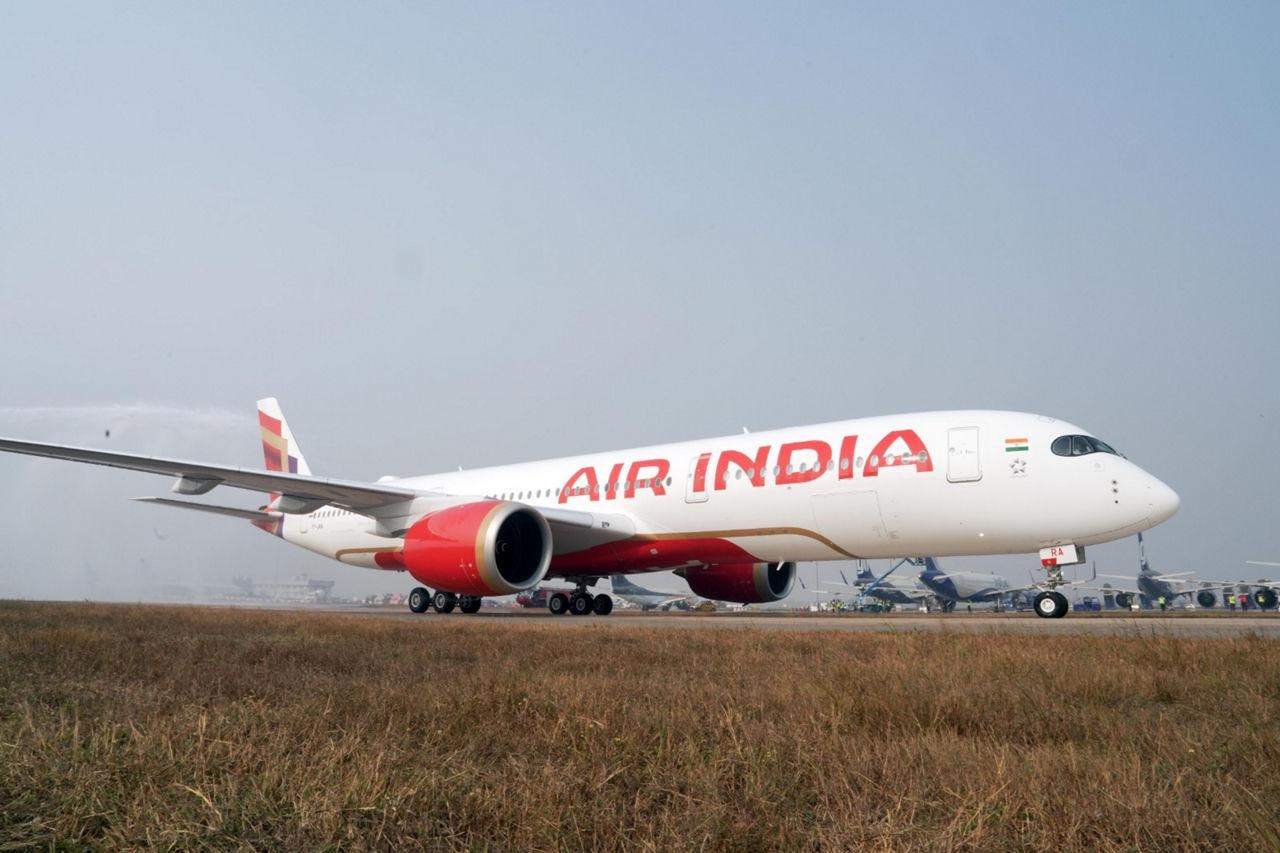
Air India Group, now under the ownership of the Tata Group, is advancing a landmark fleet renewal initiative that promises to transform its operational capabilities and competitive positioning within the Indian aviation sector. Central to this effort is an unprecedented order of 570 aircraft, among the largest in the history of commercial aviation. This extensive acquisition includes the latest models from Airbus and Boeing, notably the A321neo, A350-1000, 787-9 Dreamliner, and 777-9. These additions are expected to significantly expand Air India’s capacity and modernize its fleet.

Delivery Timeline and Deployment Plans

To date, the Air India Group—which comprises both Air India (AI) and Air India Express (IX)—has taken delivery of six Airbus A350-900s alongside more than 40 Boeing 737 MAX aircraft. The next phase of this fleet expansion is scheduled to commence in mid-2025, with the introduction of the first A321neo, A350-1000, and 787-9 Dreamliner aircraft. This phase represents a critical step in the airline’s strategy to increase capacity and enhance service offerings.

Air India Express will be the initial operator of the new A321neo, launching scheduled services from April 15, 2025. The inaugural routes will connect Delhi (DEL) with Bengaluru (BLR) and Srinagar (SXR), with subsequent expansions on April 20 to include Ayodhya (AYJ) and Jaipur (JAI). The A321neo will be configured with 180 economy seats and 12 business class seats, providing improved passenger options on key domestic routes. Currently, Air India operates two A321neos (registrations VT-RTC and VT-RTD) in a 192-seat dual-class layout.

Supply Chain Challenges and Operational Adjustments

Despite the progress, Air India continues to grapple with significant supply chain disruptions. CEO Campbell Wilson has acknowledged ongoing difficulties in procuring essential components such as engines, fuselages, and premium cabin seats. These challenges are expected to cause delivery delays from both Airbus and Boeing, potentially affecting the airline’s growth trajectory for the next four to five years. In response, Air India is extending the operational lifespan of older aircraft, which entails increased maintenance costs, and is facing obstacles in leasing additional planes due to global shortages. The airline is also exercising prudence regarding further Boeing orders amid manufacturing and regulatory constraints.

Widebody Fleet Expansion: A350-1000 and 787-9

The first A350-1000 destined for Air India is nearing completion at Airbus’s Toulouse facility and is anticipated to be delivered in 2026. Currently registered as F-WZFI, the aircraft will soon be re-registered under the VT-series for Indian operations. Concurrently, the initial Boeing 787-9 Dreamliners from the 2023 order are expected to arrive by the end of 2025. Three 787-9s are presently in production at Boeing’s Charleston, South Carolina plant, equipped with General Electric GEnx-1B engines.

Order Composition and Market Implications

Air India’s comprehensive 570-aircraft order includes 20 A350-900s, 20 A350-1000s, 140 A320neos, and 70 A321neos from Airbus, alongside 20 787-9 Dreamliners, 10 777X, and 190 737-8 MAX aircraft from Boeing. Additionally, a 2024 order comprises 10 more A350s and 90 A320 Family aircraft. This sweeping modernization is anticipated to provoke strategic responses from rival carriers, who may reassess their fleet plans in light of Air India’s expanded capacity. Industry analysts expect this development to intensify competition and elevate passenger service standards across the Indian aviation market.

Commitment to Sustainability and Efficiency

Air India’s investment in next-generation aircraft reflects a strong commitment to operational efficiency, passenger comfort, and environmental stewardship. The new A350 and 787-9 models offer substantial fuel savings and reduced emissions, aligning with global efforts to promote sustainable aviation. As these aircraft enter service from mid-2025 onward, Air India is positioned to lead the industry’s transition toward eco-friendly, high-capacity air travel.

More news
Dubai South Expands Aerospace Hub to Accommodate Growing Widebody Aircraft Demand

Dubai South Expands Aerospace Hub to Accommodate Growing Widebody Aircraft Demand

Dubai South Expands Aerospace Hub to Accommodate Growing Widebody Aircraft Demand Dubai South is undertaking a significant expansion of its aerospace hub to address the rising demand for widebody aircraft maintenance and cabin services. The upgrade focuses on enhancing the capabilities of the Mohammed Bin Rashid Aerospace Hub (MBRAH) at Dubai South, particularly through the introduction of advanced facilities designed for cabin work on large jets. This initiative reflects the increasing maintenance, repair, and overhaul (MRO) requirements from Gulf carriers and international fleets, reinforcing the region’s emergence as a key global aviation center. Enhanced Facilities and Industry Impact The expansion includes the launch of the Cabin Excellence Center at the Mohammed Bin Rashid Aerospace Hub, which will substantially increase the hub’s capacity to provide sophisticated cabin solutions. UUDS, the aerospace district within Dubai South, holds certifications from both the European Union Aviation Safety Agency (EASA) and the General Civil Aviation Authority (GCAA) for design, manufacturing, maintenance, and eco-friendly solutions. These credentials position the hub to deliver high-quality engineering, manufacturing, and cabin innovation services, further strengthening the region’s industrial ecosystem. Tahnoon Saif, CEO of MBRAH, emphasized the strategic importance of the new center, stating that it represents a major milestone in developing new industrial capabilities. He highlighted Dubai’s commitment to solidifying its status as a global aviation capital by fostering an environment where international players can expand and prosper. Challenges and Market Dynamics Despite the promising outlook, the expansion presents several challenges. Accommodating the increased volume of widebody aircraft necessitates robust infrastructure capable of supporting larger jets while maintaining operational efficiency. Additionally, Dubai South faces competitive pressures as other regional hubs invest in upgrading their own facilities and services to attract business aviation traffic. The market response to Dubai South’s expansion has been largely positive. Industry players such as F/LIST are expanding their presence in the Middle East to capitalize on the growing demand for cabin outfitting and related services. At the same time, major carriers like Emirates are investing heavily in new widebody aircraft models, including the Boeing 777X and Airbus A350-900, underscoring the region’s expanding influence in the global aviation sector. As Dubai South continues to develop its aerospace capabilities, the hub is set to play a crucial role in shaping the future of aviation in the Middle East, supporting both regional growth and enhanced international connectivity.
DGCA Investigates Engine Shutdown on Air India Boeing 777

DGCA Investigates Engine Shutdown on Air India Boeing 777

DGCA Investigates Engine Shutdown on Air India Boeing 777 Incident Overview and Immediate Response The Directorate General of Civil Aviation (DGCA) has initiated a formal investigation following an engine shutdown on an Air India Boeing 777-300ER shortly after takeoff from Delhi. Flight AI-887 experienced a sudden drop in oil pressure in its right-hand engine, prompting the flight crew to shut down the affected engine during the climb, in line with established safety protocols. The aircraft, carrying 335 passengers and crew members, remained airborne for nearly an hour before safely returning to Delhi. A senior DGCA official confirmed that the regulator will thoroughly examine the causes and safety implications of this unplanned engine shutdown, which is classified as a serious incident under aviation safety regulations. The Ministry of Civil Aviation has requested a detailed report from Air India and directed the DGCA to conduct a comprehensive probe. Air India has stated that the aircraft is currently undergoing technical inspections, and a replacement plane was arranged promptly to ensure passengers reached their destination without further delay. Regulatory Context and Industry Implications This investigation occurs amid heightened regulatory scrutiny within India’s aviation sector. Recent DGCA actions, including the dismissal of airline inspectors, have raised concerns regarding oversight and enforcement capabilities. The outcome of this probe may influence future safety directives, Notices to Airmen (NOTAMs), or enforcement measures should any regulatory shortcomings be identified. Air India’s Permanent Investigation Board will also review the incident under the supervision of the DGCA’s Director of Air Safety for the Northern Region. Industry analysts observe that such incidents can affect public confidence in airline safety and may attract increased market scrutiny of Air India’s operational standards. Competitors might use the situation to underscore their own safety records, while other carriers, including IndiGo—which recently experienced operational disruptions—could highlight their operational resilience in contrast. Aircraft History and Related Incidents The Boeing 777 involved in the incident is approximately 15 years old and has previously operated international routes to destinations such as Vienna, Vancouver, and Chicago, according to flight tracking data. This event follows a similar occurrence last week when an Air India Express flight bound for Visakhapatnam was cancelled at Vijayawada’s Gannavaram Airport after pilots detected an engine issue during taxiing. As the DGCA’s investigation progresses, its findings are anticipated to have broader implications for regulatory practices and safety standards across India’s aviation industry.
Boeing Sees Order Growth and Delivery Recovery Amid Ongoing Challenges

Boeing Sees Order Growth and Delivery Recovery Amid Ongoing Challenges

Boeing Sees Order Growth and Delivery Recovery Amid Ongoing Challenges A Shift Toward Stabilization and Optimism After several years dominated by crisis management, regulatory scrutiny, and diminished confidence, 2025 is emerging as a critical year for Boeing, reminiscent of the period following the 737 MAX grounding. For the first time since 2018, the company’s narrative is transitioning from one of crisis to cautious optimism, as signs of stabilization and selective recovery become evident across its commercial operations. In the first eleven months of the year, Boeing secured approximately 1,000 gross aircraft orders, with deliveries expected to reach between 560 and 570 units. This marks the company’s strongest annual performance in seven years. Equally important as the volume of orders is the quality of demand. Widebody aircraft have regained prominence, with 351 orders for the 787 and 173 for the 777X, providing rare long-term production visibility extending well into the next decade. More than half of these orders originated from three major customers—Qatar Airways, Emirates, and Turkish Airlines—underscoring Boeing’s sustained relevance in the long-haul market, while also highlighting ongoing concentration risks. Delivery Trends and Operational Challenges While deliveries are improving, the picture remains complex. Production output is stabilizing and gradually increasing but still falls short of historical peaks and remains heavily concentrated among North American customers. Boeing’s freighter aircraft continue to distinguish the company, reinforcing its structural advantage over Airbus in the cargo segment, even as the recovery of widebody passenger markets remains uneven. Despite these positive developments, Boeing’s recovery is fragile. The company continues to absorb significant losses and faces persistent safety concerns, particularly in its efforts to improve integration with Spirit AeroSystems. Certification delays, most notably with the 777X, and strained labor relations add further layers of complexity. The risk of missing ambitious delivery targets persists, especially as the timeline for the 737 MAX 7 has shifted, eliciting mixed reactions from the market. Boeing’s stock price has remained near $200, reflecting a balance between improved performance and lingering uncertainty. Competitive Landscape and Future Outlook Boeing’s main competitor, Airbus, has also encountered setbacks, recently reducing its delivery target due to quality issues with its A320 program. This development has provided Boeing with some breathing room, even as both manufacturers continue to grapple with supply chain disruptions and regulatory pressures. Looking ahead, Boeing anticipates higher deliveries of its 737 and 787 jets in the coming year, a development that could significantly enhance cash flow and further signal recovery. The company has made tangible progress in safety, quality, and production discipline, easing certain regulatory constraints and improving supply chain visibility. Nevertheless, the journey toward sustainable profitability and restored industry leadership remains arduous. In sum, 2025 represents a potential turning point for Boeing—not only in terms of headline figures but also in rebuilding credibility. While meaningful strides have been made, the company continues to navigate a complex environment marked by operational, financial, and reputational challenges. For the first time in years, Boeing appears to be moving forward, albeit on a difficult path.
AXIS Introduces Automated AI Pilot Debriefing

AXIS Introduces Automated AI Pilot Debriefing

AXIS Introduces Automated AI Pilot Debriefing Platform AXIS Flight Simulation has launched the AXIS AI Debriefing Station, an innovative automated platform designed to revolutionize pilot training and assessment. Utilizing artificial intelligence, the system monitors pilot performance during training sessions and proficiency checks by recognising flight manoeuvres, identifying the pilot at the controls, and analysing aircraft parameters in real time. This technology aims to provide a more objective and consistent evaluation process across various training environments. Enhancing Training Through Customisation and Data-Driven Insights The platform is tailored to meet the specific needs of Approved Training Organisations (ATOs), supporting Competency-Based Training and Assessment (CBTA) frameworks. It accommodates type-specific, Standard Operating Procedure (SOP), and organisation-specific evaluation criteria, thereby standardising assessments across instructors and aircraft types. Following each session, trainees and instructors receive comprehensive, data-driven reports via an online portal. These evaluations detail performance across competencies, manoeuvres, and observable behaviours, eliminating the need for manual tagging and enabling trainees to monitor their progress with greater precision. For instructors, the AI Debriefing Station significantly reduces administrative burdens by automatically capturing and analysing data that traditionally required intensive manual oversight. This shift allows instructors to concentrate more on human factors and decision-making skills during debriefings. The system also facilitates the identification of performance issues, comparison of trainee progress, and delivery of personalised recommendations for improvement. Training organisations benefit from a unified assessment approach, improved oversight of training quality, and streamlined implementation of CBTA. Marcell Surányi, Product Manager at AXIS Flight Simulation, emphasises the platform’s impact: “Our goal was to create a tool that empowers instructors and strengthens training organisations with reliable, objective insights. The AXIS AI Debriefing Station reduces workload, increases standardisation and ensures trainees receive the full benefit of every session. By automating data capture and analysis, instructors can focus their attention on shaping pilot performance in the cockpit.” Challenges and Industry Implications Despite its potential, the adoption of automated AI debriefing faces several challenges. Integrating the system with existing training infrastructures, ensuring the accuracy and reliability of AI-driven evaluations, and overcoming resistance from pilots accustomed to traditional debriefing methods remain significant hurdles. Initial market responses have included some scepticism, particularly regarding the transition from established practices. Nevertheless, early results suggest that the AXIS AI Debriefing Station is already delivering promising improvements in pilot performance monitoring and evaluation. As the aviation training sector evolves, competitors are expected to develop similar AI-driven debriefing solutions or enhance their existing technologies to maintain market relevance. The introduction of platforms like AXIS’s may well establish new benchmarks for pilot training and assessment, signalling a shift towards more automated, data-centric approaches in the industry.
IndiGo's Aircraft Leasing Strategy: Navigating Regulatory Waters

IndiGo's Aircraft Leasing Strategy: Navigating Regulatory Waters

IndiGo's Aircraft Leasing Strategy: Navigating Regulatory Waters Regulatory Extension and Leasing Context IndiGo has secured a final extension from the Directorate General of Civil Aviation (DGCA) to lease five narrow-body aircraft from Turkey, with the arrangement now extended until March 2026. The DGCA has explicitly stated that no further extensions will be granted beyond this deadline. This decision, confirmed amid speculation about a possible prolonged lease, is supported by a formal undertaking from IndiGo Airlines. The extension aims to bridge the operational gap until the airline’s long-range A321-XLR aircraft, expected to be delivered in February 2026, become operational. Currently, IndiGo operates 15 foreign-leased aircraft, including seven from Turkey, as it contends with a challenging leasing environment exacerbated by global delays in new aircraft deliveries. The DGCA underscored that wet leasing remains a strategic practice within the industry, enabling Indian carriers to meet passenger demand under international bilateral service agreements. Operational Challenges and Regulatory Scrutiny IndiGo’s leasing strategy is under increased regulatory scrutiny following recent operational disruptions that led to widespread flight cancellations. These disruptions triggered regulatory interventions, including fare caps and investigations, which may limit IndiGo’s financial flexibility and its ability to negotiate favorable leasing terms in the future. The airline’s operational difficulties have also caused reputational damage, potentially complicating future negotiations with lessors and industry partners. Market Response and Industry Implications Market reactions to IndiGo’s current situation have been mixed. Some analysts express concern over the financial impact of ongoing regulatory oversight and operational instability, while others remain cautiously optimistic about the airline’s long-term prospects, citing its dominant market position and ongoing efforts to modernize its fleet. Competitors may attempt to leverage IndiGo’s challenges to increase their market share, but the immediate focus within the industry remains on IndiGo’s recovery and compliance with regulatory requirements. As IndiGo endeavors to stabilize its operations and rebuild confidence among regulators, partners, and passengers, the final lease extension highlights both the opportunities and constraints facing Indian carriers in a volatile global aviation market. The coming months will be pivotal as the airline balances regulatory compliance, operational recovery, and preparations for the introduction of its next-generation fleet.
Rise Air Receives First ATR 72-600 in Canada

Rise Air Receives First ATR 72-600 in Canada

Rise Air Receives Canada’s First ATR 72-600 Turboprop Rise Air, based in Saskatoon, has taken delivery of Canada’s first ATR 72-600 turboprop, marking a significant milestone for the airline and the country’s regional aviation sector. Registered as C-GTNG (msn 1740), this aircraft is the first of three ATR 72-600s that Rise Air will acquire directly from ATR - Avions de Transport Régional. The new turboprop is expected to be ferried shortly to the airline’s Saskatoon base, where it will begin operations. Enhancing Regional Connectivity and Operational Capability The introduction of the ATR 72-600 reflects Rise Air’s strategic commitment to providing modern, safe, and reliable air transportation services to remote work sites and infrastructure projects across Saskatchewan. Derek Nice, president and chief executive officer of Rise Air, emphasized the importance of this acquisition in supporting vital economic activities in the region. The ATR 72-600’s capabilities are particularly suited to the challenging environments of northern Canada, where unpaved runways and isolated locations are common. As the first Canadian operator of this advanced turboprop, Rise Air addresses a critical gap in the market for carriers serving remote communities. The aircraft’s design and performance characteristics make it well adapted to the demanding conditions of far-northern operations. In previous statements, Nice indicated that the airline may consider expanding its ATR 72-600 fleet if the aircraft proves successful in these environments, highlighting the potential for growth in this niche market. Market Context and Industry Implications This delivery comes at a time when ATR remains the sole Western manufacturer producing large civilian turboprops, with no immediate competition from De Havilland Canada’s Dash 8-400, which has yet to resume production. The ATR 72-600 is widely regarded for its reliability and efficiency in remote operations, factors that are expected to generate a positive response from the market. Competitors may be prompted to upgrade their existing fleets or explore alternative aircraft to meet similar operational demands. Transport Canada’s type certification of both the ATR 72-600 and ATR 42-600, granted on November 27, 2025, has facilitated the entry of these aircraft into Canadian service. Alongside Rise Air, Hydro-Québec has also placed orders for three ATR 72-600s as part of its fleet renewal efforts. With this acquisition, Rise Air is poised to enhance connectivity and support economic development in some of Canada’s most remote and challenging regions, reinforcing its role as a key player in regional aviation.
Virgin Introduces AI Concierge Service

Virgin Introduces AI Concierge Service

Virgin Atlantic Launches AI Concierge Service to Enhance Travel Experience Virgin Atlantic has introduced an AI-powered digital Concierge aimed at simplifying travel planning for its customers. Developed in collaboration with software company Tomoro and utilizing OpenAI’s advanced multi-modal artificial intelligence, the service is now accessible on both the Virgin Atlantic and Virgin Atlantic Holidays websites. A New Era in Travel Planning The web-based Concierge enables users to plan, book, and explore upcoming trips through natural conversational interactions, accommodating input via tapping, typing, or voice commands. Beyond trip planning, the AI assistant also addresses inquiries related to the Flying Club loyalty program and general customer service, striving to deliver a seamless and personalized experience for travelers. Siobhan Fitzpatrick, Chief Experience Officer at Virgin Atlantic, emphasized the significance of the launch, stating, “Our aim is to deliver brilliantly different experiences while continuing our evolution from challenger to leader in premium travel. The launch of our new Concierge brings that philosophy to life, making travel feel personal, blending the warmth of our people with the power of technology to make every journey effortless.” She highlighted the initiative as a key step toward redefining premium service in the digital era and positioning Virgin Atlantic as the most loved travel company. Balancing Innovation with Service Excellence While the AI Concierge marks a notable advancement in Virgin Atlantic’s digital transformation, it also presents challenges. Integrating the new system smoothly with existing booking and customer service platforms will be essential to maintaining operational efficiency. Moreover, preserving the high standards of service traditionally associated with human concierges remains a priority. The airline must also manage customer expectations, as some travelers may harbor reservations about AI’s capacity to replicate the nuanced and empathetic service delivered by human agents. Industry analysts observe that competitors are likely to respond by either enhancing their own AI capabilities or emphasizing the value of human interaction to distinguish their offerings. Although airlines are increasingly adopting AI to improve operational efficiency, many consumers continue to prefer human contact, particularly in premium travel segments where personalized service is paramount. Currently available as a web application, Virgin Atlantic plans to extend the Concierge’s functionality by integrating it into a new mobile app scheduled for release in 2026. As the airline navigates the intersection of technological innovation and personalized service, the success of the AI Concierge will depend on its ability to adapt to evolving customer expectations in an increasingly digital landscape.
AI Flight to Mumbai Returns to Delhi After Engine Failure

AI Flight to Mumbai Returns to Delhi After Engine Failure

Air India Flight Returns to Delhi Following Engine Failure An Air India Boeing 777, operating flight AI 887 from Delhi to Mumbai, was compelled to return to Indira Gandhi International Airport shortly after takeoff on Monday morning due to an engine failure. The aircraft, carrying approximately 335 passengers and crew, departed Delhi at 6:10 am but landed safely back at 6:52 am after the flight crew detected a critical issue with the right-side engine during flap retraction. The crew observed a rapid drop in oil pressure in engine number two, which soon fell to zero. Following established emergency protocols, the engine was shut down, and the aircraft returned to Delhi. Airport authorities were promptly alerted and prepared for the emergency landing. All passengers and crew disembarked without injury. Air India arranged for a replacement Boeing 777 to transport the affected passengers to Mumbai later that morning, providing refreshments at the boarding gate to mitigate inconvenience. The Directorate General of Civil Aviation (DGCA) has initiated an investigation into the incident. The airline’s permanent investigation board will conduct a detailed inquiry under DGCA supervision. An Air India spokesperson emphasized that the safety and wellbeing of passengers and crew remain the airline’s highest priority and confirmed that the affected aircraft is undergoing necessary inspections. Similar Incident Raises Concerns Over Boeing 777 Safety This event follows a comparable engine failure involving a United Airlines Boeing 777-200ER in the United States. The aircraft, en route from Washington Dulles International Airport to Tokyo, experienced an engine malfunction shortly after takeoff, which resulted in a portion of the engine cover detaching and igniting a fire on the ground. The Federal Aviation Administration (FAA) confirmed the incident, noting that the aircraft, carrying 275 passengers and 15 crew members, returned safely to Dulles. United Airlines is arranging for the continuation of the flight on a different aircraft, while the FAA has launched a formal investigation. These incidents highlight the critical importance of rigorous safety protocols and the swift, coordinated response of flight crews and ground personnel. Aviation authorities in both India and the United States are conducting thorough investigations to ascertain the causes and implement measures to prevent similar occurrences in the future.
NASA Armstrong Advances Flight Research for 2025

NASA Armstrong Advances Flight Research for 2025

NASA Armstrong Advances Flight Research for 2025 In 2025, NASA’s Armstrong Flight Research Center in Edwards, California, continued to spearhead advancements in aeronautics, Earth science, exploration technologies, and emerging aviation systems. As a principal NASA test site, Armstrong’s multidisciplinary teams progressed projects from initial concept evaluations to comprehensive flight test campaigns. Their efforts focused on refining measurement instruments, enhancing safety protocols, and generating essential data to support NASA’s diverse mission portfolio. Situated in the Mojave Desert, Armstrong’s engineers, technicians, pilots, and mission support personnel applied rigorous engineering principles to address real-world performance challenges. Their work not only informed current aircraft operations but also laid a foundation for the next generation of aviation and exploration systems. The center’s achievements in 2025 highlighted the commitment of its workforce, who successfully navigated complex testing environments while upholding stringent safety and professionalism standards amid demanding conditions. Brad Flick, director of NASA Armstrong, emphasized the team’s dedication, stating, “We executed our mission work safely, including flight of the first piloted NASA X-plane in decades, while under challenging conditions. It tells me our people embrace the work we do and are willing to maintain high levels of professionalism while enduring personal stress and uncertainty. It’s a testimony to the dedication of our NASA and contractor workforce.” Armstrong also strengthened its partnerships with industry leaders, small businesses, and academic institutions, expanding opportunities for students and early career professionals. These collaborations reinforced the center’s reputation as a hub where innovation is validated through flight and research continues to shape the future of aviation and space exploration. Quiet Supersonic Flight and the Quesst Mission A central focus for Armstrong in 2025 was quiet supersonic research supporting NASA’s Quesst mission. The team prepared the X-59 quiet supersonic research aircraft for its inaugural flight by conducting electromagnetic interference tests, engine evaluations, and taxi preparations. The Schlieren, Airborne Measurements, and Range Operations for Quesst (SCHAMROQ) team completed aircraft integration and calibration flights using a shock-sensing probe, enhancing tools designed to characterize shock waves generated by the X-59. These efforts culminated in the X-59’s historic first flight on October 28, marking its arrival at Armstrong for continued testing. Concurrently, the Commercial Supersonic Technology (CST) team validated airborne measurement systems aboard NASA F-15 aircraft, establishing the technical groundwork for forthcoming community response studies. These studies aim to evaluate whether quieter supersonic sonic booms could facilitate the future of commercial supersonic travel. Navigating Technical and Market Challenges Looking forward, Armstrong faces significant challenges in ensuring the precision of new navigation systems and the reliability of advanced sensor technologies, particularly those related to supersonic parachute deployments. Overcoming these technical obstacles is critical as NASA pursues applications for future planetary missions and commercial space communications. The center’s advancements have attracted considerable attention within the broader aerospace sector. Industry observers are closely monitoring the implications of Armstrong’s innovations, while competitors—including other research institutions and commercial aerospace firms—are expected to intensify their development efforts in response. Through its sustained research initiatives and collaborative partnerships, NASA Armstrong remains at the forefront of aeronautics and space technology, actively shaping the trajectory of future exploration and commercial aviation.
Regent Reports Significant Progress in Technology, Business, and Manufacturing

Regent Reports Significant Progress in Technology, Business, and Manufacturing

Regent Reports Significant Progress in Technology, Business, and Manufacturing NORTH KINGSTOWN, R.I., Dec. 22, 2025 — REGENT Craft, the developer and manufacturer of Seaglider™ vessels, has announced a landmark year characterized by substantial advancements across technology, business development, and manufacturing. The company’s achievements in 2025 include the first-ever human operations on a full-scale Seaglider prototype, expanded international customer engagement, new defense contracts, and accelerated progress toward large-scale production. Billy Thalheimer, REGENT’s co-founder and CEO, emphasized the company’s elevated status within the advanced mobility sector. He stated, “We’ve proven the stability and capability of the full-scale Seaglider on the water, expanded our commercial and defense partnerships, advanced certification pathways, and built the infrastructure to produce Seagliders at scale.” Technological Breakthroughs and Certification Progress In 2025, REGENT’s Viceroy Seaglider prototype underwent full-scale testing, marking the world’s first crewed operations of a vessel of its kind. Since March, the prototype has been subjected to frequent on-water trials, enabling the company to validate and refine its technology at an industry-leading pace. REGENT’s intellectual property portfolio has expanded significantly, now including 10 granted and allowed utility patents, four design patents, and over 40 additional patents pending worldwide. Alongside these developments, REGENT has enhanced its simulation and autonomy systems, improving cockpit and training environments to better prepare crews for future commercial service. The company has also made decisive progress on regulatory matters, submitting its Design Basis Agreement to the U.S. Coast Guard and strengthening its collaboration with Lloyd’s Register to harmonize international certification standards. These efforts are critical as REGENT navigates the complex regulatory landscape surrounding new human flight operations. Expanding Global Demand and Defense Initiatives Demand for Seagliders surged throughout 2025, with growing interest from diverse markets including Hawai‘i, Brazil, Scotland, and the United Arab Emirates. While originally designed for coastal passenger transport, Seagliders are increasingly being considered for cargo delivery, last-mile logistics, and offshore energy applications. REGENT currently holds more than $10 billion in customer commitments, underscoring strong market confidence. On the defense front, REGENT established a dedicated business line, REGENT Defense, to support maritime national security missions. The company expanded its product offerings across the Squire and Viceroy platforms, integrating autonomy, AI-enabled hybrid configurations, and mission-specific adaptations. Additionally, REGENT extended its partnership with the U.S. Marine Corps Warfighting Lab, securing $15 million in contracted work. Challenges Amid Market Dynamics Despite its considerable momentum, REGENT faces challenges as it scales production and ensures regulatory compliance for its innovative Seaglider technology. The company must also contend with increasing competition from other autonomous underwater vehicle manufacturers. Market analysts suggest that REGENT’s technological and manufacturing progress may attract heightened investor interest, while competitors could respond with intensified research and development or strategic partnerships to maintain their positions in both defense and commercial sectors. As REGENT continues to advance its technology and broaden its market presence, its achievements in 2025 position the company as a leading force in the evolving landscape of advanced maritime mobility.
Ask AeroGenie











