Image

AeroGenie — Your Intelligent Copilot.

Ask anything. Analyze everything. Act instantly.

Trending

Categories

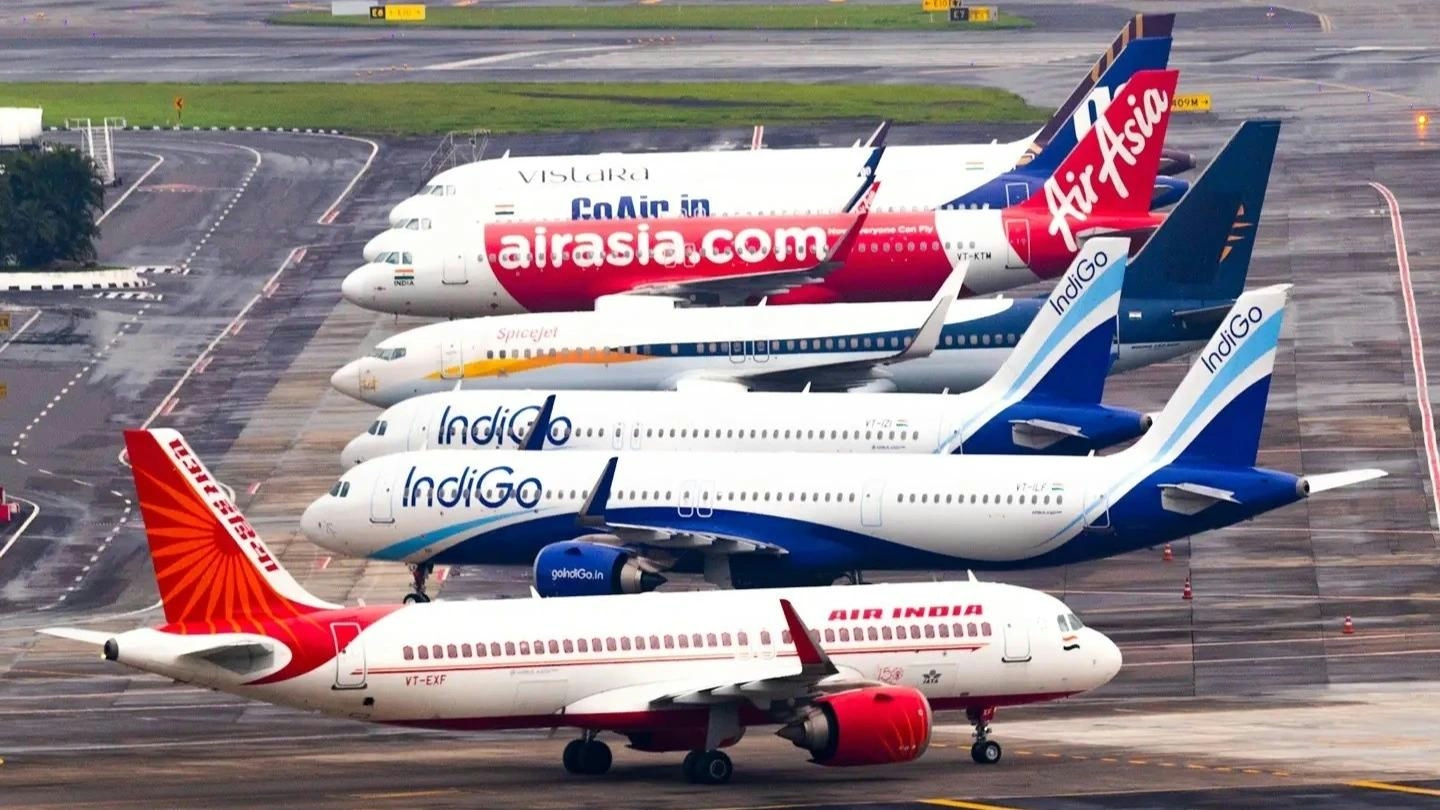
Air India Cancels Six Flights for Precautionary Checks as Normalcy Returns to Indian Skies
November 25, 2025By ePlane AI
Air India Cancels Six Flights for Precautionary Checks as Normalcy Returns to Indian Skies
0
0
Air India
Volcanic Ash Disruption
Precautionary Aircraft Inspection

Air India Cancels Six Flights for Precautionary Checks as Normalcy Returns to Indian Skies

Flight Disruptions Following Ethiopian Volcanic Eruption

Air India cancelled six domestic flights on Tuesday as a precautionary measure in response to the volcanic eruption in Ethiopia, which had disrupted Indian airspace the previous night. The ash cloud from the Hayli Gubbi volcano had drifted eastward, causing widespread flight disruptions across the region. However, as the ash moved towards China, most airlines were able to resume normal operations.

In an official statement, Air India listed the cancelled flights on November 25, which included routes between Chennai and Mumbai, Hyderabad and Delhi, Mumbai and Hyderabad, Hyderabad and Mumbai, Mumbai and Kolkata, and Kolkata and Mumbai. The airline stressed that these cancellations were essential to conduct thorough safety inspections on aircraft that had flown over the affected areas, prioritizing passenger safety above all.

On Monday, Air India had also cancelled seven international flights connecting Indian cities with Newark, New York, Dubai, Doha, and Dammam. Other carriers reported largely normal operations on Tuesday, although Akasa Air maintained its suspension of flights to and from Jeddah, Kuwait, and Abu Dhabi, a restriction first imposed on Monday. Indigo Airlines had diverted its Kannur–Ahmedabad flight as a precautionary measure.

Industry Response and Ongoing Challenges

While Indian airspace is gradually returning to normal, Air India’s decision to cancel flights for safety checks underscores the persistent challenges airlines face in maintaining operational stability amid unforeseen disruptions. These cancellations may cause inconvenience to passengers and complicate logistical arrangements, as travelers adjust their itineraries. Industry experts observe that such incidents often lead to heightened scrutiny of airline safety protocols, with competing carriers likely to emphasize their own commitment to passenger safety and operational reliability.

The broader aviation sector remains vigilant, as similar disruptions have prompted flight reductions in other parts of the world. In the United States, for example, the Federal Aviation Administration (FAA) has mandated cuts affecting major airlines including American, United, and Delta. These developments indicate that operational difficulties may continue to affect airline schedules and travel plans in the near term.

Despite these challenges, Air India continues to focus on maintaining service continuity. The airline recently resumed direct flights between Tel Aviv and Delhi, demonstrating a proactive approach to managing safety and operational adjustments. This approach highlights the complexities involved in navigating air travel amid natural events and the evolving dynamics of global aviation.

More news
IATA and CFM International Renew Engine Maintenance Agreement

IATA and CFM International Renew Engine Maintenance Agreement

IATA and CFM International Renew Engine Maintenance Agreement Strengthening Competition in Engine Maintenance The International Air Transport Association (IATA) has announced the renewal of its agreement with CFM International (CFM), extending their partnership through February 2033. This renewed accord seeks to enhance competition within the maintenance, repair, and overhaul (MRO) market for CFM engines, a joint venture between GE Aerospace and Safran Aircraft Engines. The move comes at a critical juncture as airlines grapple with persistent supply chain disruptions and rising maintenance costs, which have increasingly strained operational capacities. For years, airlines have faced restrictive aftermarket practices imposed by engine manufacturers, limiting competition and inflating expenses. These challenges have been exacerbated by constrained maintenance capacity and ongoing aerospace supply chain issues, resulting in grounded aircraft and escalating costs. A recent IATA study projects that these factors will add approximately $5.7 billion to engine leasing and maintenance expenditures for airlines in 2025. Willie Walsh, IATA’s Director General, emphasized the significance of the renewed agreement, describing it as a timely measure that, while not a comprehensive solution, introduces essential pro-competitive aftermarket practices crucial for the industry’s sustainability. He noted that if fully leveraged, the agreement could provide immediate relief in terms of cost and capacity, aiding airlines in meeting demand despite ongoing supply chain challenges. Walsh also commended CFM for spearheading this reform and called on other manufacturers to adopt similar approaches. CFM’s Commitment to an Open Aftermarket Gaël Méheust, President and CEO of CFM International, reaffirmed the company’s dedication to fostering an open and competitive MRO ecosystem. He highlighted that CFM’s network includes numerous third-party providers engaged in overhauling, repairing, and maintaining engines, which contributes to reduced ownership costs and greater choice for airlines. Despite recent supply chain difficulties, Méheust stressed that CFM remains focused on customer satisfaction. He pointed out that CFM pioneered this open MRO model with its CFM56 engines, where nearly 40 independent shops compete for work, with CFM itself performing only about one-third of overhauls. This approach is now being extended to the newer LEAP engines. Key Provisions and Industry Context Originally signed in 2019, the agreement incorporates conduct policies aimed at expanding opportunities for third-party providers of engine parts and MRO services. These commitments apply to all CFM commercial engines, including the widely used CFM56 and the newer LEAP models. The agreement ensures that maintenance options remain accessible by allowing airlines and MRO providers to utilize CFM technical manuals and repair instructions, even when engines contain non-CFM parts or repairs. It also safeguards warranties based on the root cause of issues rather than penalizing the use of alternative parts or repairs. Furthermore, the agreement seeks to increase effective maintenance capacity by enabling independent MRO providers to compete for engine work, thereby helping to alleviate maintenance backlogs. The renewal arrives amid heightened scrutiny of engine durability, particularly concerning CFM LEAP engines operating in challenging, dusty environments. Airlines are compelled to extend the service life of older aircraft due to delays in new aircraft deliveries, which is expected to increase maintenance demands. Competitors such as GE Aerospace, Rolls-Royce, and Pratt & Whitney are advancing their own engine technologies and inspection protocols in response. Recent incidents, including operational disruptions experienced by Spirit Airlines following Pratt & Whitney engine recalls, underscore the financial and operational risks linked to engine maintenance issues. These developments further highlight the critical importance of robust and competitive MRO practices across the aviation industry.
ExecuJet MRO Services Belgium Receives FAA Approval

ExecuJet MRO Services Belgium Receives FAA Approval

ExecuJet MRO Services Belgium Receives FAA Approval, Enhancing US Market Access ExecuJet MRO Services Belgium, a wholly owned subsidiary of Dassault Aviation, has secured approval from the US Federal Aviation Administration (FAA) to conduct line maintenance, Aircraft on Ground (AOG) support, and base maintenance on US-registered business aircraft. This certification complements the company’s existing European Aviation Safety Agency (EASA) Part 145 approval, further solidifying its standing as a globally recognized maintenance, repair, and overhaul (MRO) provider. Expanding Capabilities and Market Reach The FAA authorization enables ExecuJet MRO Services Belgium to perform line maintenance on Bombardier Challenger 300/350, Global 5000/5500, and Global 6000/6500 aircraft. Additionally, the company is approved for both line and base maintenance on Cessna Citation 560 XL/XLS and Citation 525 series models. Base maintenance up to C checks is also authorized on Dassault Falcon models, including the Falcon 7X, Falcon 8X, Falcon 9000EX EASy/DX/LX, and Falcon 2000 EX EASy/DX. Matthijs Hutsebaut, Regional Vice President for Europe at ExecuJet MRO Services, highlighted the significance of this milestone, noting that many US-registered aircraft operate or transit through Europe and require reliable maintenance and AOG support. The FAA approval not only enhances ExecuJet’s service portfolio but also expands its access to the US business aviation market, reinforcing its reputation as a trusted MRO partner. Strategic Positioning Amid Industry Challenges ExecuJet MRO Services Belgium holds certifications from multiple civil aviation authorities, including those in Aruba, Bermuda, the Cayman Islands, and Guernsey, alongside its EASA approvals. This broad regulatory compliance underscores the company’s commitment to meeting stringent international standards. Despite the promising opportunities presented by the FAA certification, ExecuJet faces a competitive MRO landscape. The company must balance competitive pricing with consistently high-quality service to attract and retain clients. Furthermore, agility in responding to evolving regulatory requirements remains essential. Market dynamics may lead to increased demand for ExecuJet’s services, while competitors might respond by enhancing their own capabilities or adjusting pricing strategies. Recent initiatives by ExecuJet include expanding maintenance offerings and integrating advanced communication technologies such as Starlink. These developments are expected to strengthen the company’s market position and appeal to a wider client base. ExecuJet operates world-class facilities across Africa, Asia, Australasia, Europe, and the Middle East, specializing in airframe, avionics, and engine maintenance. Its engineers are trained and certified on a diverse range of aircraft, including Dassault, Bombardier, Embraer, Gulfstream, and Hawker models, ensuring compliance with the highest regulatory and safety standards in the aviation industry.
New Developments Reshaping the Flying Taxi Market

New Developments Reshaping the Flying Taxi Market

New Developments Reshaping the Flying Taxi Market The concept of flying taxis is swiftly evolving from a futuristic vision into a tangible solution for urban transportation challenges. Fueled by rapid technological advancements and substantial financial investment, the flying taxi sector is on the cusp of significant expansion. This emerging mode of transport aims to alleviate urban congestion and transform the way cities manage mobility. Market Growth, Industry Dynamics, and Challenges Industry forecasts project the global flying taxi market to reach an estimated value of $9.54 billion by 2030, driven by a compound annual growth rate of 21.1%. This growth is underpinned by increased investment in the production of commercial-scale electric vertical takeoff and landing (eVTOL) aircraft, alongside breakthroughs in autonomous flight technologies that promise enhanced safety and reduced reliance on human pilots. The rising demand for environmentally sustainable transport solutions is also a critical factor, encouraging the adoption of zero-emission electric air taxis. Complementing these developments is the creation of dedicated infrastructure, such as vertiports, designed to support the operational needs of flying taxis, as well as progressive regulatory frameworks facilitating certification and commercialization. Key technological trends shaping the market include innovations in lightweight materials, advanced electric propulsion systems, and sophisticated autonomous navigation software. The sector is witnessing growth not only in intracity air mobility but also in intercity services, with increasing interest in multi-seat air taxis tailored for urban transit. Leading corporations in this space encompass a diverse group of aerospace and automotive giants, including Hyundai Motor Company, Boeing, Airbus, Zhejiang Geely, Cessna, Dassault Aviation, Textron, Vertical Aerospace, Archer Aviation, Embraer, Bell Textron, Joby Aviation, Wisk Aero, and Volocopter. These entities are heavily investing in research and development to expedite the global rollout of flying taxi services. Strategic collaborations are further accelerating progress; notably, in January 2025, Indian startup ePlane formed a partnership with Tata Consultancy Services (TCS) to develop advanced digital and engineering solutions for urban air mobility. This alliance leverages TCS’s expertise in cloud computing, the Internet of Things, and artificial intelligence to improve operational efficiency and enhance passenger experience. Despite the promising outlook, the flying taxi market confronts significant challenges. The current high cost of eVTOL services limits accessibility primarily to affluent individuals, which may disrupt traditional charter flight operators and executive jet manufacturers. Investor sentiment remains mixed, with optimism tempered by economic uncertainties and ongoing regulatory complexities. Market volatility is further influenced by factors such as Federal Reserve policy debates and fluctuating economic indicators anticipated in 2026, which could complicate the sector’s trajectory. Responses among competitors vary widely. Companies like Joby Aviation and Vertical Aerospace are advancing steadily through testing phases and regulatory compliance, while established automakers are exploring hybrid road-to-air vehicle concepts. Additionally, some industry leaders are investigating specialized applications, including advanced flying firefighting vehicles, to differentiate themselves in a competitive landscape. As the flying taxi industry continues to mature, the interplay between innovation, investment, regulatory progress, and market acceptance will be pivotal in determining the speed and scale at which these aerial mobility solutions become integrated into mainstream urban transportation.
David Kerr and Christian Gessner Join Awery Aviation Software

David Kerr and Christian Gessner Join Awery Aviation Software

David Kerr and Christian Gessner Join Awery Aviation Software Amid Industry Transformation Awery Aviation Software has announced the appointments of David Kerr and Christian Gessner to its leadership team, reinforcing the company’s commercial and strategic capabilities as it navigates a rapidly evolving global aviation environment. These additions come at a pivotal moment for the air cargo sector, which is confronting significant operational and regulatory challenges. Strengthening Leadership with Industry Expertise Christian Gessner joins Awery as Business Development Manager, bringing over two decades of experience in the air cargo industry. His background includes key roles at the International Air Transport Association (IATA) and various aviation software providers, where he has focused on sales, marketing, business transformation, and the advancement of air cargo technology. Gessner emphasized Awery’s reputation for delivering enterprise resource planning (ERP) solutions that support cargo operators in their daily operations while driving technology adoption in an industry traditionally slow to digitize. He stated, “I’m joining Awery to tackle a critical industry challenge: accelerating the adoption of practical technology that delivers measurable gains in efficiency, compliance, and performance for cargo operators worldwide.” David Kerr, joining Awery on a consultancy basis, brings extensive senior leadership experience from nearly a decade at American Airlines, complemented by senior roles at Etihad Cargo and European Cargo. Kerr highlighted his deep understanding of airline cargo operations and the challenges faced by Awery’s customers. He expressed enthusiasm about contributing to cross-industry initiatives and advancing the momentum of digitalisation with Awery’s practical tools, noting, “I am excited about the opportunity to join the dots of cross-industry initiatives, and to build on the current momentum of industry digitalisation with Awery’s practical and effective tools.” Navigating Market Disruptions and Regulatory Changes The appointments coincide with a period of significant disruption in the business aviation sector. Persistent supply chain issues and operational challenges continue to affect companies across the industry. Additionally, regulatory developments, such as the Federal Aviation Administration’s (FAA) plan to phase out leaded aviation petrol by 2030, are expected to necessitate substantial adjustments in fuel inventory management and may increase operating costs. These factors are compelling both established operators and new entrants to reassess their strategies, seeking to leverage insights and develop mitigation measures in response to shifting market dynamics. Awery’s decision to bolster its commercial team reflects a strategic commitment to customer-driven technology development and the facilitation of digital transformation within the air cargo industry. Tristan Koch, Chief Commercial Officer at Awery, remarked, “As Awery continues to grow, we are building out our team with the very best from the industry. Both David and Christian have established reputations within air cargo, and their experience will be invaluable in continuing Awery’s success as we expand our commercial reach.” With the addition of Kerr and Gessner, Awery aims to enhance its position as a provider of practical and effective solutions for cargo operators, supporting them through technological innovation and the broader operational challenges confronting the aviation sector.
Parata Air Begins Operations with AMOS

Parata Air Begins Operations with AMOS

Parata Air Launches Operations Supported by AMOS Maintenance Platform Parata Air, a South Korean start-up airline, has commenced commercial operations, utilizing the AMOS maintenance and engineering software from Swiss AviationSoftware (Swiss-AS) as the foundation of its technical operations. The airline entered the market with a fleet comprising four aircraft—two Airbus A330s and two Airbus A320s. At launch, one A330 and one A320 are actively serving routes, with the remaining two aircraft expected to join the fleet in the near future. Navigating a Competitive Market Landscape Parata Air operates both domestic flights within South Korea and international services to destinations including Japan and Southeast Asia. The airline faces a highly competitive environment dominated by established carriers such as Korean Air and Delta Air Lines. Korean Air, for instance, maintains a strong presence on the Seoul-Los Angeles route with 91 weekly flights, while Delta operates 38 weekly flights on the same corridor. Industry analysts anticipate that these incumbents may respond to Parata Air’s market entry with strategic measures such as enhanced marketing efforts, service improvements, or route adjustments aimed at protecting their market share. Furthermore, the uncertain outlook of the U.S. stock market for 2026 has introduced additional volatility, increasing sensitivity to policy changes that could affect the broader aviation sector. Implementation and Strategic Use of AMOS To support its launch and future expansion, Parata Air implemented the AMOS Airline Edition, which became operational in November 2025. This system underpins the airline’s maintenance planning, execution, and regulatory compliance from the outset. The Director of the Aircraft Maintenance Division at Parata Air emphasized the significance of this milestone, stating that AMOS was selected as the core maintenance system due to its strong alignment with airworthiness authority requirements. The platform standardizes workflows and records across planning, engineering, line maintenance, and materials management, providing the airline with essential visibility and control over daily operations. As a start-up, Parata Air benefited from a streamlined and efficient AMOS implementation process, supported by a technical team with prior experience using the system. This expertise enabled rapid setup and alignment of processes, ensuring that critical maintenance functions and regulatory compliance measures were established from day one. Looking ahead, the airline intends to expand its use of AMOS to incorporate financial management processes, further integrating its IT infrastructure to support operational growth. While Parata Air’s adoption of advanced maintenance technology positions it for operational efficiency and regulatory adherence, its ability to establish a sustainable market presence will depend on how effectively it competes with established carriers and adapts to evolving market conditions.
IBS Software Names Christophe Roux Head of Aviation Passenger Business

IBS Software Names Christophe Roux Head of Aviation Passenger Business

IBS Software Names Christophe Roux Head of Aviation Passenger Business IBS Software, a prominent AI-driven travel technology company, has appointed Christophe Roux as Senior Vice President and Head of Passenger Solutions. In this global capacity, Roux will lead the company’s Aviation Passenger Solutions (APS) division, overseeing strategy, growth, and delivery across passenger service and airline retail platforms. Leadership Amid Industry Transformation Roux’s arrival coincides with a pivotal period for the airline industry, which is increasingly embracing modern, customer-centric, and AI-enabled retailing models. His appointment follows IBS Software’s recent Strategic Collaboration Agreement with Amazon Web Services (AWS) to develop an AI-first retailing platform for airlines. This partnership places Roux at the forefront of advancing the company’s Passenger Solutions portfolio and expanding its influence on a global scale. With over 25 years of experience in airline IT, Roux brings a wealth of expertise in leading large-scale technology transformations and commercial innovations. His career began at Amadeus in Europe, where he contributed to foundational airline IT solutions and supported the company’s expansion into the Asia Pacific region. He later held senior leadership roles within the Emirates Group’s IT and Commercial divisions, driving modernization initiatives and strategic technology investments. Most recently, Roux led Amadeus’s airline business across the Middle East, Turkey, and Africa, overseeing significant regional growth. Navigating Challenges and Strategic Priorities Roux assumes leadership at a time when IBS Software faces a complex operating environment. The company must contend with ongoing supply chain disruptions, shifting regulatory frameworks, and operational challenges linked to potential tariffs and embargoes. These factors have intensified market scrutiny over IBS Software’s capacity to deliver reliable passenger management systems amid industry volatility. Concurrently, competitors are likely to pursue similar strategic appointments to bolster resilience and adaptability within their aviation passenger businesses. Somit Goyal, Chief Executive Officer of IBS Software, emphasized Roux’s qualifications, stating, “Christophe brings exceptional airline domain depth, a truly global perspective, and a strong point of view on the future of passenger and retail technology. As airline retailing undergoes a fundamental reinvention, Passenger Solutions sits at the heart of our growth strategy. Christophe’s leadership will be pivotal as we scale our platforms, accelerate AI-driven innovation, and help airlines redefine how they retail, serve, and engage travellers.” Roux expressed his enthusiasm for the role, noting, “I’m excited to join IBS Software at such an important moment in the evolution of airline passenger technology. IBS Software has a talented team and a growing portfolio that is well positioned to support airlines as they modernise retailing and passenger operations. I look forward to working closely with our teams and customers to accelerate growth and shape the future of passenger solutions.” As IBS Software confronts industry headwinds and intensifying competition, Roux’s appointment underscores the company’s strategic commitment to innovation and operational excellence within the rapidly evolving aviation passenger sector.
ValueJet Introduces VIKI, Africa’s First Full-Scale Airline AI Concierge

ValueJet Introduces VIKI, Africa’s First Full-Scale Airline AI Concierge

ValueJet Introduces VIKI, Africa’s First Full-Scale Airline AI Concierge ValueJet, a prominent Nigerian airline, has launched VIKI, an AI-powered digital concierge designed to transform passenger interaction with flight services. This initiative establishes ValueJet as the first airline in Africa to implement an AI concierge on a large scale, representing a notable advancement in the continent’s aviation industry. Enhancing Passenger Experience Through AI VIKI is a multilingual assistant equipped with both text and voice capabilities, allowing it to respond verbally to voice commands. This feature notably improves accessibility for visually impaired passengers. Travelers can engage with VIKI via widely used messaging platforms such as WhatsApp and Telegram to perform a range of tasks including booking and managing flights, modifying reservations, checking in online, receiving real-time travel updates, and accessing customer support. This eliminates the need for physical visits to airports or navigating complex websites. To begin using VIKI, customers simply save the number 09160012700 and initiate a conversation. Capt. Omololu Majekodunmi, Managing Director of ValueJet, emphasized the airline’s commitment to innovation, stating, “VIKI is more than a digital tool; she’s a symbol of our ambition to build smarter, safer, and more seamless experiences for travellers across Africa. This is just the beginning.” Strategic Digital Transformation and Operational Capabilities The introduction of VIKI aligns with ValueJet’s broader digital transformation strategy aimed at delivering seamless, customer-centric travel experiences. Temitope Ajijola, Head of Business Program and IT, highlighted the airline’s vision to simplify flight booking processes. “With VIKI, we’ve taken that vision to a new level. This is a major leap in our digital transformation, enabling faster, smarter service while opening new opportunities for customer engagement across digital platforms,” Ajijola explained. Beyond booking, VIKI offers functionalities such as online check-in, issuance of digital boarding passes, reservation modifications, and instant responses to inquiries about baggage policies, fare rules, and other travel-related matters. Ajijola described the interaction as intuitive and user-friendly: “You simply type something like, ‘Viki, I need a direct flight to Abuja tomorrow,’ and she’ll guide you through options, let you choose your seat, pay, and send your boarding pass, all in minutes.” Challenges and Industry Implications Despite its potential, the deployment of VIKI faces several challenges. Integrating sophisticated AI technology with existing airline systems, encouraging widespread customer adoption, and competing with established carriers—some of which may enhance their own AI or traditional customer service offerings—pose significant hurdles. There is also the possibility of skepticism regarding AI’s reliability in customer service roles. However, industry trends indicate a growing acceptance of AI within tourism and hospitality sectors, suggesting that ValueJet’s initiative may herald a broader shift toward AI-driven services in aviation. Trevor Henry, Chief Commercial Officer of ValueJet, remarked, “This launch marks a significant leap in how we connect with our passengers, delivering greater speed, flexibility, and control over their journey.” VIKI builds upon ValueJet’s existing internal AI systems, such as TOPS (Trusted Operations Policy Support) for staff, extending the airline’s AI leadership to its customers. As digital transformation continues to reshape the aviation landscape, ValueJet’s introduction of VIKI positions the airline at the forefront of innovation in African air travel.
UK Government unveils £43m funding competition for low-carbon aviation innovation

UK Government unveils £43m funding competition for low-carbon aviation innovation

UK Government Unveils £43 Million Funding Competition for Low-Carbon Aviation Innovation The UK government has announced a £43 million funding competition designed to accelerate the decarbonisation of the aviation sector. Starting in February, UK-based businesses, universities, and innovators will be invited to submit bids for a share of the fund. The competition targets research and development projects that align with the nation’s legally binding climate commitments, focusing on advancing low-carbon aviation technologies. Scope and Strategic Context The Department for Transport (DfT) has outlined that eligible proposals may encompass a range of initiatives, including the development of alternative fuels, innovative aircraft designs, and scientific research aimed at reducing contrails—condensation trails from aircraft exhaust that contribute to global warming. This funding initiative forms part of a broader government strategy to establish the UK as a global leader in low-emissions aviation technology. This competition builds upon substantial prior investments in the sector. Notably, the Aerospace Technology Institute programme has committed £2.3 billion over the next decade, while nearly £200 million has already been allocated through the Advanced Fuels Fund (AFF) to support alternative aviation fuels, including a £63 million tranche confirmed last summer. Complementing these investments, the government has introduced supportive policy measures such as the Sustainable Aviation Fuel (SAF) Mandate, which came into effect at the start of 2025. This mandate requires that 2% of the UK’s total jet fuel demand be met by SAF this year, increasing to 10% by 2030 and 22% by 2040. Further legislation is expected later this year to guarantee a set price for UK-based SAF producers, providing revenue certainty to stimulate market growth. Challenges and Industry Response The success of the £43 million competition will hinge on attracting a sufficient number of innovative proposals capable of delivering significant carbon reductions. Ensuring the long-term viability and scalability of the selected technologies remains a critical challenge, particularly given the sector’s ambitious climate targets. The announcement is anticipated to generate heightened interest from aviation technology firms and startups seeking government support to establish a foothold in the expanding low-carbon aviation market. This competitive environment may prompt increased research and development efforts as companies strive to outpace rivals and capture market share. Despite these initiatives, the government continues to face scrutiny over its approach to balancing aviation growth with climate objectives. Members of Parliament and the Climate Change Committee have expressed concerns that technologies such as SAF alone may be insufficient if the sector’s expansion proceeds unchecked. Recent approvals for airport expansions at Heathrow, Gatwick, and Luton have intensified these concerns. The Climate Change Committee has previously cautioned that while airport expansion might be compatible with climate and environmental targets, the associated environmental impacts could make achieving these goals significantly more difficult and costly. The committee also questioned whether the economic benefits of airport expansion justify the negative climate and environmental consequences. Transport Secretary Heidi Alexander has expressed optimism about the role of emerging technologies, stating, “Zero-emission aircraft, hydrogen fuels and other emerging technologies are vital to reduce the climate impacts from flying, and will enable us to deliver our airport expansion plans to boost connectivity and grow the economy.” As the competition opens, the government’s capacity to foster genuine innovation and ensure that these technologies fulfill their climate promises will be closely monitored by both industry stakeholders and environmental advocates.
Morgan Lewis Expands Aviation Finance Team with Mehtap Cevher Conti in New York

Morgan Lewis Expands Aviation Finance Team with Mehtap Cevher Conti in New York

Morgan Lewis Strengthens Aviation Finance Practice with Mehtap Cevher Conti in New York **New York, January 20, 2026** — Morgan Lewis has announced the appointment of Mehtap Cevher Conti as a partner in its New York finance practice, a strategic move designed to enhance the firm’s global capabilities in aviation finance. Conti joins from Hogan Lovells, bringing a wealth of experience advising financial institutions, aircraft lessors, and airlines on complex domestic and international aviation financings. Her expertise encompasses leasing, secured lending, and structured transactions, positioning her as a key asset in Morgan Lewis’s expanding aviation finance team. Expertise and Strategic Importance Conti’s practice covers a broad spectrum of aviation finance, including secured debt, export credit agency-supported transactions, revolving credit facilities, finance and operating leases, and portfolio acquisitions. She has a proven track record in structuring and executing asset-backed financings for commercial and investment banks, lessors, and airlines. Additionally, she advises on the purchase and financing of corporate aircraft and helicopters, underscoring her comprehensive knowledge of the sector. Jami McKeon, Firm Chair at Morgan Lewis, emphasized the significance of Conti’s addition, stating that her arrival “deepens our capabilities at the intersection of asset finance and transportation, where clients require nuanced, sector-specific counsel to navigate evolving market dynamics.” McKeon highlighted that Conti’s expertise aligns with the sophisticated, cross-border work increasingly demanded by clients pursuing complex financing strategies in a global market. Marjorie Crider, leader of the firm’s finance practice, noted Conti’s practical and solutions-oriented approach to highly structured capital arrangements, particularly within aviation. Crider remarked that Conti’s experience advising on advanced financing and leasing arrangements across the capital stack will be invaluable to clients navigating today’s evolving finance ecosystem. Bruce Silvers, partner and leader of Morgan Lewis’s global aviation practice, added that Conti’s arrival significantly enhances the firm’s US aviation finance offering and strengthens its global platform. He pointed out that her experience advising banks, lessors, and airlines on innovative and large-scale financing and leasing structures complements the firm’s existing capabilities, enabling Morgan Lewis to continue delivering coordinated, cross-border solutions to clients throughout the aviation industry. Market Context and Competitive Landscape Morgan Lewis’s expansion into aviation finance occurs amid a highly competitive environment, where established firms are actively vying for market share in this specialized sector. The firm faces challenges such as navigating complex aviation regulatory frameworks and building a robust client base in a market where expertise and reputation are paramount. Industry observers suggest that this strategic hire may invite scrutiny from both clients and competitors, as Morgan Lewis seeks to affirm its ability to provide specialized aviation finance services. Competitors are likely to respond by bolstering their own aviation finance teams or enhancing service offerings to maintain client loyalty. Morgan Lewis advises a broad range of aviation industry participants, including airlines, manufacturers, lenders, lessors, and investors, leveraging its global platform and extensive experience in cross-border aviation finance. The firm represents leading air carriers, manufacturers, and financial institutions in complex aircraft purchases, financings, and leasing transactions. To date, Morgan Lewis has advised more than 100 financial institutions on aircraft investments across multiple jurisdictions, underscoring its prominent position in the sector.
Electric Aircraft Market Outlook Through 2035

Electric Aircraft Market Outlook Through 2035

Electric Aircraft Market Set for Substantial Growth Through 2035 The global electric aircraft market is poised for significant expansion over the next decade, with its value projected to rise from $3.65 billion in 2025 to $6.54 billion by 2030. This growth, outlined in the "More Electric Aircraft Market Report 2026" by ResearchAndMarkets.com, corresponds to a compound annual growth rate (CAGR) of 12.2% from 2026 onward. The surge is primarily driven by the aviation sector’s transition from traditional hydraulic and pneumatic systems to advanced electric technologies. Drivers of Market Expansion Several key factors underpin this rapid growth. Increasing demand for fuel-efficient and low-emission aircraft is a major catalyst, alongside continuous innovations in electric propulsion systems. Regulatory pressures emphasizing sustainability are also accelerating the shift toward electric solutions. Global initiatives aimed at reducing aviation emissions have intensified research into hybrid-electric and fully electric propulsion technologies. These developments have heightened the need for lightweight electrical systems and more efficient energy storage, both essential for the broader adoption of electric aircraft. The rise of urban air mobility and electric vertical takeoff and landing (eVTOL) vehicles exemplifies emerging market opportunities. These technologies align with the growing emphasis on greener transportation options in urban environments. Concurrently, advancements in high-performance inverters, power conversion technologies, and energy storage are enabling the design of next-generation electric aircraft. The International Air Transport Association (IATA) forecasts global air passenger traffic to reach 4 billion by 2024, surpassing pre-pandemic levels. This increase is prompting airlines to invest in electric aircraft to meet the demands of commercial and business travelers with more sustainable fleets. Industry Developments and Challenges Leading aerospace companies are actively responding to these trends with substantial investments and strategic initiatives. ZeroAvia, for instance, is progressing in the development of electric and hydrogen-powered components, targeting certification for engines suitable for aircraft with up to 90 seats. The company is focusing on electric motors and silicon carbide inverters that comply with rigorous aerospace standards while reducing emissions. In a significant move, BAE Systems acquired Ball Aerospace & Technologies Corp. in February 2024, enhancing its capabilities in space, intelligence, and mission systems. This acquisition reflects a broader industry pattern of consolidating technological expertise to address both defense and civil aviation requirements. Despite the promising outlook, the electric aircraft market faces notable challenges. Technological barriers such as improving battery efficiency and reducing weight remain critical obstacles to widespread adoption. Additionally, evolving certification standards and regulatory frameworks introduce uncertainties that could affect market development timelines. The high initial costs associated with research, development, and infrastructure investment further complicate progress. To overcome these challenges, companies are increasing their investments in electric aircraft technologies and fostering collaborations between traditional aerospace manufacturers and technology firms. These partnerships aim to accelerate the advancement of electric propulsion systems and secure competitive advantages in a rapidly evolving market. As the industry continues to navigate these complexities, the pursuit of sustainable aviation is expected to remain a central focus shaping the electric aircraft market through 2035 and beyond.
line










