
Orchestrate AI insights into action

Trending
Categories
Air Traffic Controller Shortages Lead to Flight Delays
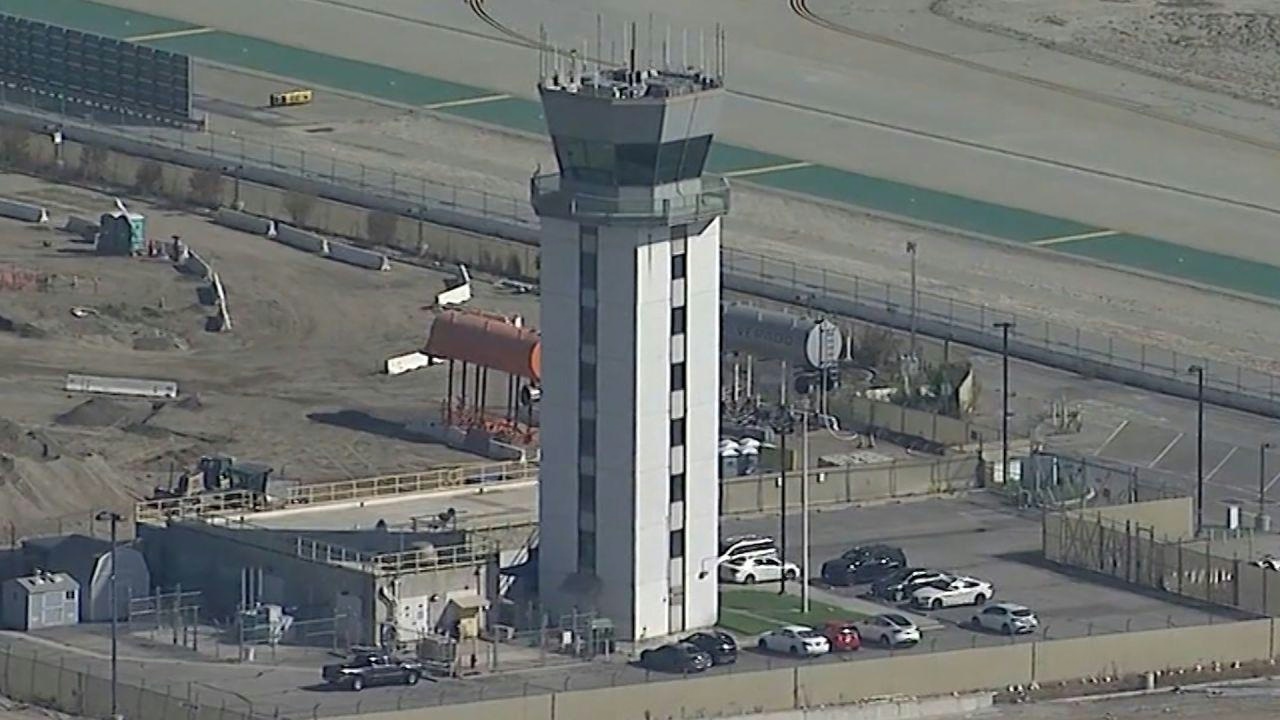
Air Traffic Controller Shortages Cause Widespread Flight Delays Amid Government Shutdown
The U.S. Federal Aviation Administration (FAA) is confronting severe staffing shortages at key airports and air traffic control centers across the country, resulting in escalating flight delays as the government shutdown extends into its seventh day. Major airports including Nashville, Boston, Dallas, Chicago, and Philadelphia, along with control centers in Atlanta, Houston, and the Dallas-Fort Worth region, have all reported diminished personnel levels, according to FAA officials.
Operational Challenges and Impact on Air Travel
The prolonged government closure has exacerbated operational difficulties, with repercussions felt throughout the national airspace system. On October 7, Transportation Secretary Sean Duffy cautioned that the integrity of the nation’s air traffic control system is at risk due to the ongoing shutdown. In response, the FAA has implemented slower takeoff procedures at several airports this week as facilities struggle to maintain sufficient staffing.
Flight tracking service FlightAware recorded over 6,000 flight delays on Monday and more than 3,000 on Tuesday, highlighting the extensive disruption. At Nashville International Airport, delays reached nearly two hours, while Chicago O’Hare experienced average delays of 41 minutes and Dallas-Fort Worth saw setbacks averaging 30 minutes, according to FAA data.
Union Concerns and Broader Implications
Union leaders representing air traffic controllers and airport security personnel have warned that conditions may worsen if the shutdown persists. The National Air Traffic Controllers Association (NATCA), the largest union for controllers, emphasized that it does “not endorse, support, or condone any federal employees participating in or endorsing a coordinated activity that negatively affects the capacity” of the National Airspace System. Despite this, the FAA has reported an increase in sick calls among workers, further straining operational capacity.
In Los Angeles, staffing shortages compelled the closure of air traffic control operations at Burbank Airport, necessitating intervention by another facility to manage air traffic. The disruptions extend beyond passenger flights, with cargo operations also experiencing delays, raising concerns about wider economic consequences.
The crisis has intensified scrutiny of the FAA’s staffing and training protocols. Airlines and industry competitors are adjusting flight schedules and preparing for increased operational costs as delays continue. With union leaders cautioning about deteriorating conditions and no resolution to the shutdown in sight, both travelers and airlines face ongoing uncertainty in the near term.

Etihad Airways Suspends Airbus A380 Flights on Key Route

Aditya Birla Group Seeks Approval for Aircraft Leasing in GIFT City

Qatar Airways Highlights Innovation and Connectivity at Arabian Travel Market 2026

Hong Kong's Five-Year Plan Includes Andrew Fan's Aircraft Parts Processing Hub Proposal

ACIA Aero Leasing Delivers ATR72-600 to Air Nostrum

RTX Appoints Jill Albertelli as Head of Pratt & Whitney

TAT Technologies Joins Beyond Aero Hydrogen Aircraft Program

AURAK Study Highlights Barriers to Air Taxi Adoption in Emerging Economies

Xiamen Air Selects Altitude for 787 Maintenance at Heathrow

Etihad and Swissport Extend Global Partnership
