
Orchestrate AI insights into action

Trending
Categories
American Airlines’ Decision Challenges Boeing’s Widebody Prospects
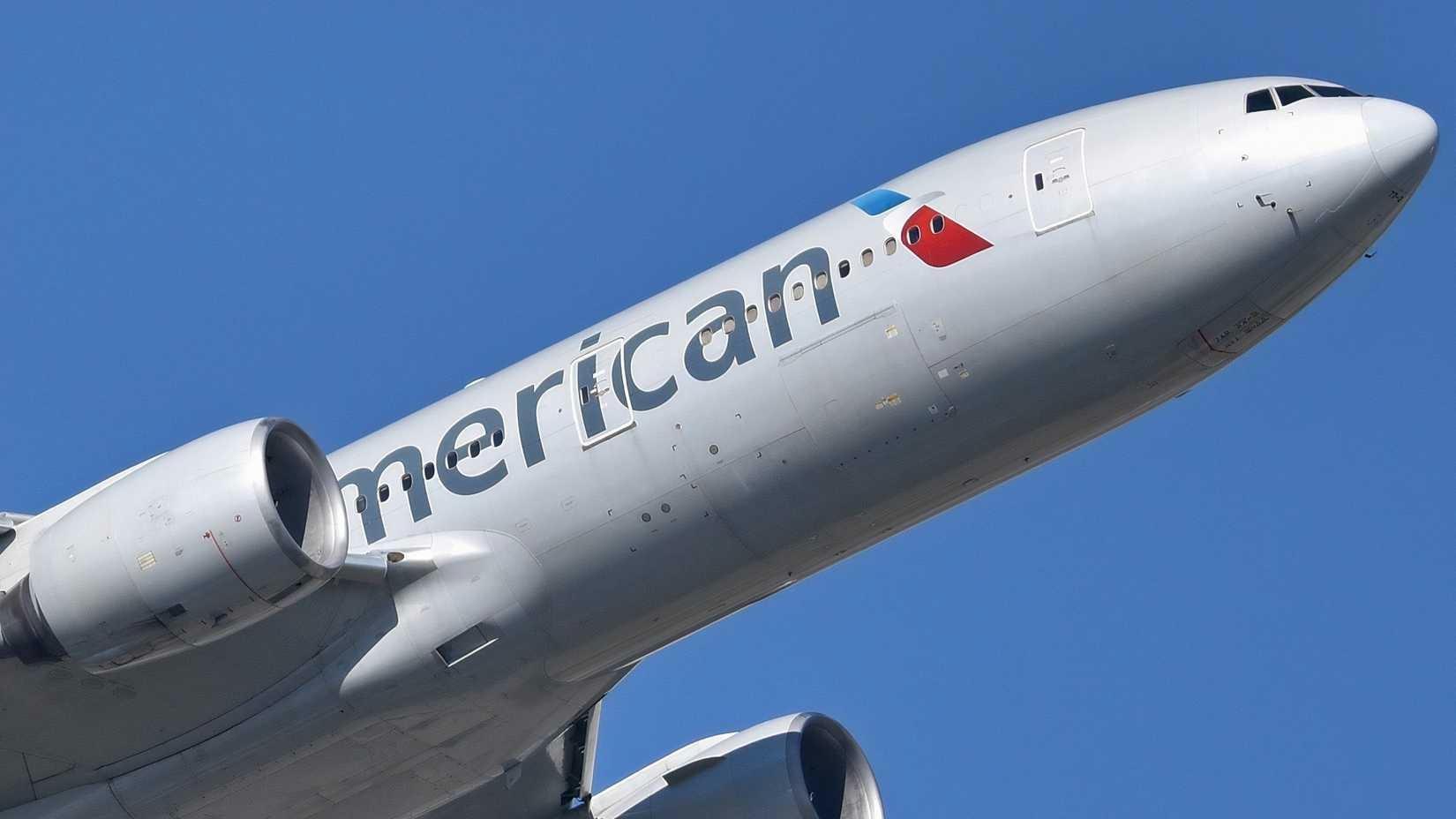
American Airlines’ Widebody Decision Poses New Challenge for Boeing
American Airlines is approaching a critical juncture in determining the future composition of its widebody fleet. The carrier has narrowed its options to two aircraft models: the Airbus A330-900neo and the Boeing 787-10. According to Chief Commercial Officer Nat Pieper, the decision process is in its “seventh or eighth inning,” with the replacement of the airline’s 47 Boeing 777-200ERs slated to begin in the 2030s. Pieper emphasized the uncertainty surrounding the outcome, stating that the choice “could go either way.”
Implications for Boeing and Fleet Strategy
This impending decision carries substantial weight for Boeing’s position in the widebody aircraft market. Historically, American Airlines has maintained a predominantly Boeing fleet, but the presence of the A330-900neo as a finalist signals a notable openness to alternative manufacturers. The Airbus A350, often considered a competitor in the widebody segment, is not under consideration due to its larger size, which does not align with the replacement needs for the 777-200ER.
The current competition between the A330-900neo and the 787-10 differs from previous evaluations, such as last year’s comparison between the A330-900 and the 787-9. The 787-10 offers distinct capabilities and trade-offs, altering the dynamics of American’s assessment. This decision may also reflect a broader industry practice where airlines foster competition among manufacturers to negotiate more advantageous pricing and contract terms.
In parallel with its fleet renewal, American Airlines is implementing strategic initiatives aimed at enhancing its competitive edge. The airline recently announced plans to reintroduce seatback entertainment screens and expand premium seating on its narrowbody aircraft, beginning with new deliveries in 2028. These enhancements are intended to elevate the passenger experience and narrow the profitability gap with competitors such as Delta and United, both of which have invested significantly in onboard amenities. Such service upgrades could influence Boeing’s sales approach, as American seeks aircraft that support its evolving standards and revenue objectives.
Challenges Facing Boeing
Boeing’s position is further complicated by the potential for a strike among its engineering workforce, which threatens to disrupt production schedules and delivery commitments. Any delays could undermine Boeing’s ability to fulfill American Airlines’ requirements on time, potentially swaying the decision in Airbus’s favor.
While earlier analyses suggested that Boeing was the likely frontrunner for the contract, the current environment introduces greater uncertainty. The final decision by American Airlines will not only shape its long-haul operations for the coming decades but may also have significant ramifications for Boeing’s competitiveness in the global widebody market.

Etihad Airways Suspends Airbus A380 Flights on Key Route

Aditya Birla Group Seeks Approval for Aircraft Leasing in GIFT City

Qatar Airways Highlights Innovation and Connectivity at Arabian Travel Market 2026

Hong Kong's Five-Year Plan Includes Andrew Fan's Aircraft Parts Processing Hub Proposal

ACIA Aero Leasing Delivers ATR72-600 to Air Nostrum

RTX Appoints Jill Albertelli as Head of Pratt & Whitney

TAT Technologies Joins Beyond Aero Hydrogen Aircraft Program

AURAK Study Highlights Barriers to Air Taxi Adoption in Emerging Economies

Xiamen Air Selects Altitude for 787 Maintenance at Heathrow

Etihad and Swissport Extend Global Partnership
