
Orchestrate AI insights into action

Trending
Categories
Aviation Industry Struggles Amid Worsening Jet Fuel Shortage
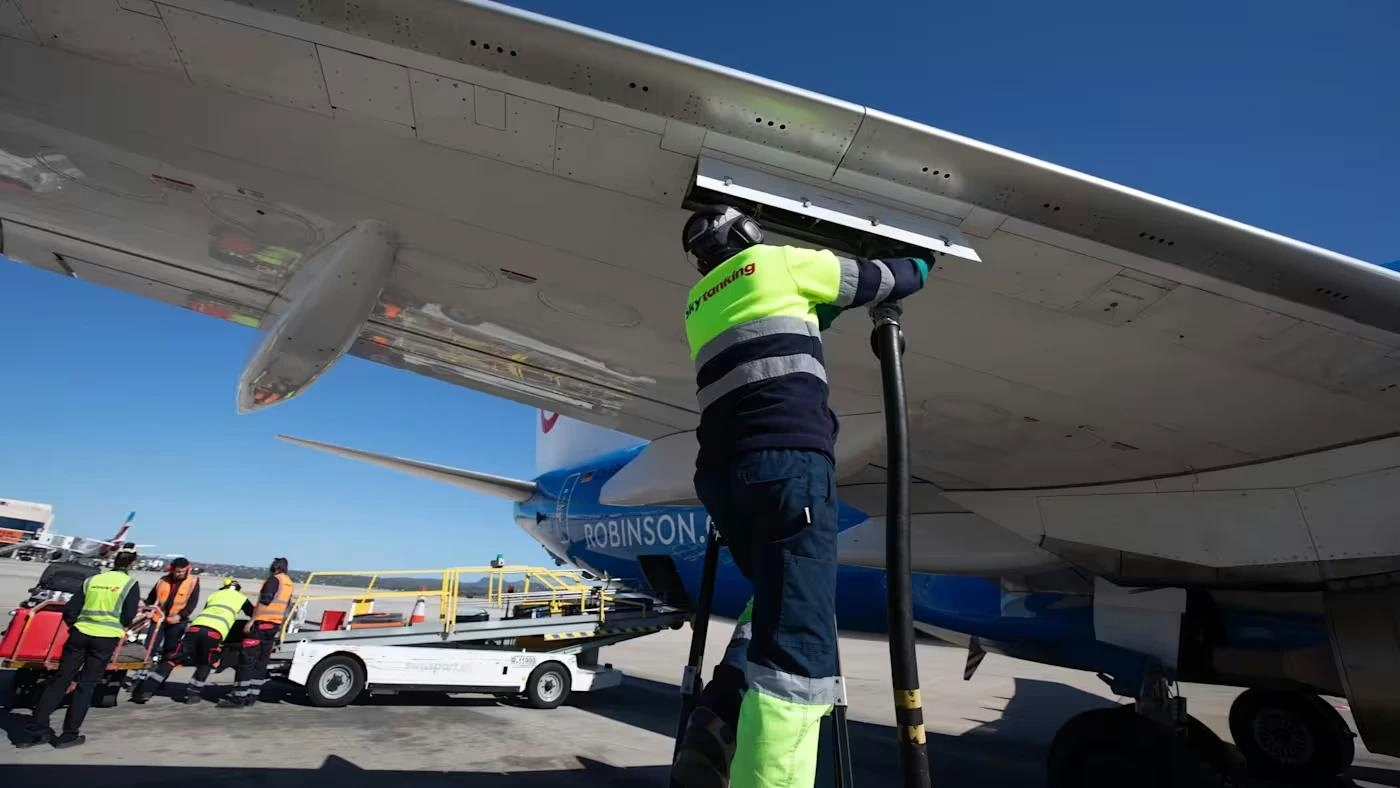
Aviation Industry Faces Severe Disruptions Amid Escalating Jet Fuel Shortage
Nigeria’s aviation sector is currently confronting a severe jet fuel (Jet A1) shortage that has led to widespread flight delays, cancellations, and operational disruptions across major airports in Lagos, Abuja, and other key domestic routes. This crisis has been exacerbated by escalating geopolitical tensions and persistent supply chain constraints. Since the onset of the US-Israel conflict and the closure of the Strait of Hormuz—a vital maritime passage responsible for approximately one-fifth of the global fuel supply—jet fuel prices have surged by more than 300 percent.
The shortage extends beyond Nigeria’s borders, affecting airlines worldwide. Jet fuel prices have doubled within weeks, significantly increasing operational costs for carriers globally. United Airlines CEO Scott Kirby recently indicated that airfares would need to increase by at least 20 percent for airlines to cover rising fuel expenses. The International Energy Agency has issued warnings that Europe may have only six weeks of jet fuel reserves remaining, heightening concerns over widespread flight cancellations and schedule reductions. Several major European airport hubs are already preparing for potential emergency fuel shortages, highlighting the global scale of the crisis.
Impact on Nigeria’s Aviation Sector and Industry Response
In Nigeria, the consequences have been immediate and profound. Airlines are struggling to maintain regular flight schedules, with Air Peace reducing its London-Heathrow service to three flights per week. Other carriers report extended waiting times and frequent rescheduling, sometimes multiple times within a single day. The Airline Operators of Nigeria (AON) recently threatened to shut down operations, prompting federal government intervention that urged a suspension of the planned action pending further stakeholder consultations.
Following discussions involving the Ministry of Aviation and Aerospace Development and oil marketers, authorities approved a 30 percent discount on debts owed by airlines to service providers. Despite this concession, operators are demanding a full waiver of fees from the Federal Airports Authority of Nigeria (FAAN), Nigerian Civil Aviation Authority (NCAA), and Nigerian Airspace Management Agency (NAMA), arguing that the current relief measures are inadequate given the magnitude of the crisis.
Adding to the sector’s challenges, the Aviation Ground Handlers Association of Nigeria (AGHAN) has issued a seven-day ultimatum warning that ground handling companies—including SAHCO and NAHCO—may suspend services from Tuesday, April 28, 2026, due to over N9 billion in outstanding debts owed by airlines.
Industry analysts stress that the crisis is not attributable to mismanagement by individual carriers nor is it unique to Nigeria. Aviation analyst Fred Chukwuelobe noted, “This is a global aviation challenge driven by supply constraints, price volatility, and persistent disruptions in the fuel value chain.” The global pricing of jet fuel, even for domestic supply, has further complicated efforts to stabilize the sector.
With logistical challenges intensifying and limited policy options available, observers warn that the aviation industry faces the prospect of prolonged disruptions unless immediate and coordinated interventions are undertaken. Both airlines and regulatory authorities are seeking a swift resolution, but the outlook remains uncertain as the crisis continues to evolve domestically and internationally.

Etihad Airways Suspends Airbus A380 Flights on Key Route

Aditya Birla Group Seeks Approval for Aircraft Leasing in GIFT City

Qatar Airways Highlights Innovation and Connectivity at Arabian Travel Market 2026

Hong Kong's Five-Year Plan Includes Andrew Fan's Aircraft Parts Processing Hub Proposal

ACIA Aero Leasing Delivers ATR72-600 to Air Nostrum

RTX Appoints Jill Albertelli as Head of Pratt & Whitney

TAT Technologies Joins Beyond Aero Hydrogen Aircraft Program

AURAK Study Highlights Barriers to Air Taxi Adoption in Emerging Economies

Xiamen Air Selects Altitude for 787 Maintenance at Heathrow

Etihad and Swissport Extend Global Partnership
