
Orchestrate AI insights into action

Trending
Categories
Boeing Sticks to 787 Delivery Goal Despite Seat and Engine Delays
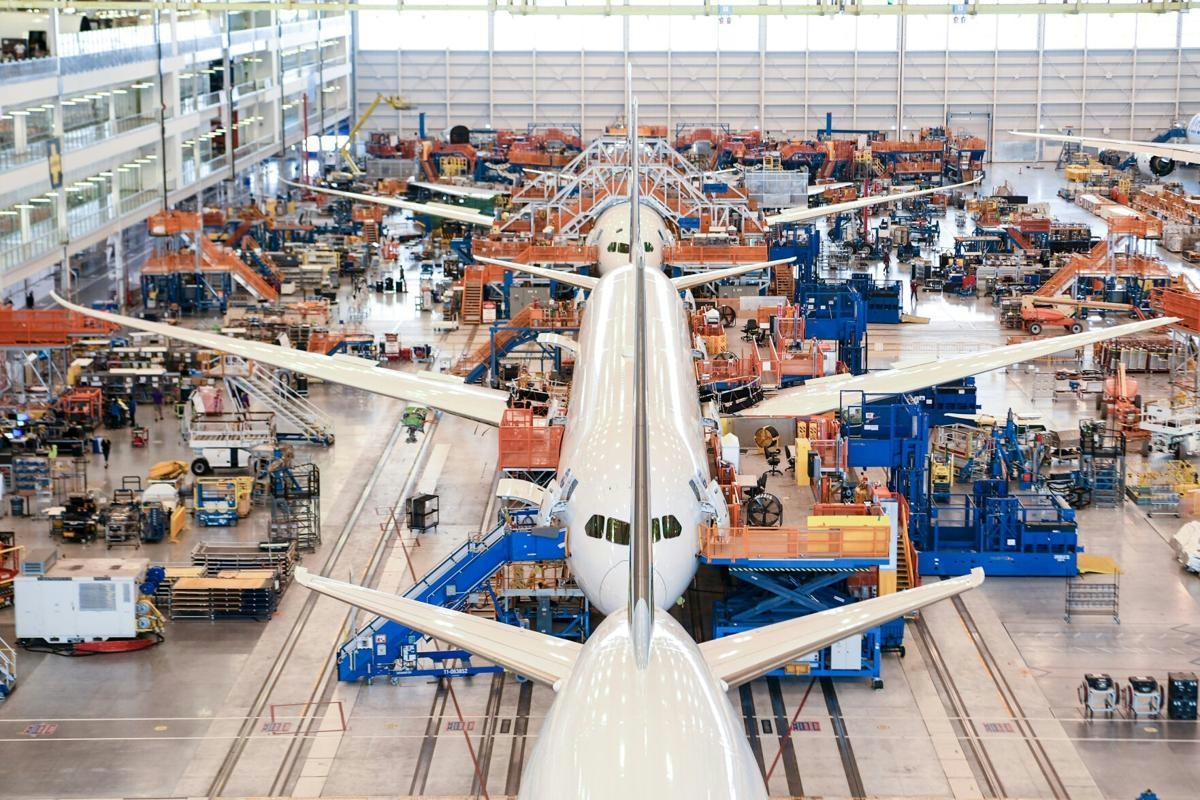
Boeing Maintains 787 Delivery Target Amid Supply Chain Challenges
Boeing remains committed to delivering between 90 and 100 787 Dreamliners this year despite ongoing delays caused by supply chain disruptions affecting premium seats and engine availability. The company reported delivering 15 aircraft in the first quarter and has increased production at its Charleston facility to eight planes per month, with plans to further raise output to ten monthly later in the year.
Certification and Supply Delays Impact Deliveries
During a first-quarter briefing on April 22, Chief Executive Kelly Ortberg acknowledged that certification delays for new premium seat configurations have hindered the delivery schedule. He emphasized that Boeing continues to collaborate closely with customers and the U.S. Federal Aviation Administration (FAA) to resolve these certification issues. The company has also introduced earlier partnerships in the development process and contractual off-ramps designed to mitigate future delays.
Ortberg explained that while these certification delays do not significantly affect factory production—since aircraft can be assembled without the certified seats—they do prevent completed jets from being handed over to customers. He described the current backlog as needing to “get the pig through the python,” noting that a substantial number of 787s are awaiting seat certification. Despite the extended certification timeline, Ortberg stressed that no major obstacles remain and that clearing this backlog will enable Boeing to resume deliveries at the planned pace.
Engine supply has also posed challenges. Ortberg described the quarter as “tough” regarding engine deliveries but assured that Boeing has implemented a recovery plan to maintain the production ramp-up.
Progress and Outlook Amid Operational Challenges
Despite these hurdles, Boeing’s commercial aircraft division showed signs of recovery in the first quarter of 2026, delivering 143 jets—the highest quarterly total since 2019—even with a temporary halt in 737 Max deliveries due to a wiring issue. The company reported a 10% increase in overall deliveries and a reduction in quarterly losses, indicating progress toward operational stability.
Ortberg highlighted that unlike the 737 program, the 787 does not benefit from an inventory buffer, making it more vulnerable to supply chain disruptions. However, improvements in production efficiency are evident, with rework hours decreasing by more than 25% compared to the same period last year as output increased from five to eight aircraft per month.
Looking forward, Boeing remains focused on resolving supply chain issues and meeting its delivery commitments. The company also faces potential risks from geopolitical tensions, particularly between the United States and China, which could affect its delivery schedule and order book in the Asia-Pacific market.
“We’ve done a good job of stabilizing as we’ve moved up in production rates,” Ortberg said. “Now, it’s about executing our recovery plans and working through the remaining certification and supply challenges to meet our commitments.”

Etihad Airways Suspends Airbus A380 Flights on Key Route

Aditya Birla Group Seeks Approval for Aircraft Leasing in GIFT City

Qatar Airways Highlights Innovation and Connectivity at Arabian Travel Market 2026

Hong Kong's Five-Year Plan Includes Andrew Fan's Aircraft Parts Processing Hub Proposal

ACIA Aero Leasing Delivers ATR72-600 to Air Nostrum

RTX Appoints Jill Albertelli as Head of Pratt & Whitney

TAT Technologies Joins Beyond Aero Hydrogen Aircraft Program

AURAK Study Highlights Barriers to Air Taxi Adoption in Emerging Economies

Xiamen Air Selects Altitude for 787 Maintenance at Heathrow

Etihad and Swissport Extend Global Partnership
