
Orchestrate AI insights into action

Trending
Categories
The Design Rationale Behind Airbus’s A321XLR Cabin Architecture
The Design Rationale Behind Airbus’s A321XLR Cabin Architecture
Airbus’s Airspace cabin concept, initially introduced in 2016 on the A330neo and A350 models, has now been extended to the A320neo family, including the newly launched A321XLR. Centered on four key pillars—comfort, services, ambience, and design—the Airspace cabin seeks to transform the passenger experience. It incorporates features such as increased personal space, larger overhead storage bins, modern lavatories, and customizable LED lighting to enhance the overall journey.
Widebody Comfort in a Single-Aisle Aircraft
The cabin architecture of the A321XLR was meticulously developed to bring the comfort typically associated with widebody aircraft to the single-aisle segment. This aircraft offers the widest single-aisle interior in its class, complemented by larger windows that allow more natural light into the cabin. The cabin altitude is maintained at 6,000 feet during cruise, a design choice aimed at reducing fatigue for both passengers and crew. Overhead bins have been expanded by 60 percent, significantly reducing the need for gate-checking luggage and facilitating faster boarding and disembarkation processes. These improvements contribute to quicker turnaround times for airlines, enhancing operational efficiency.
Innovations Focused on Passenger Well-Being
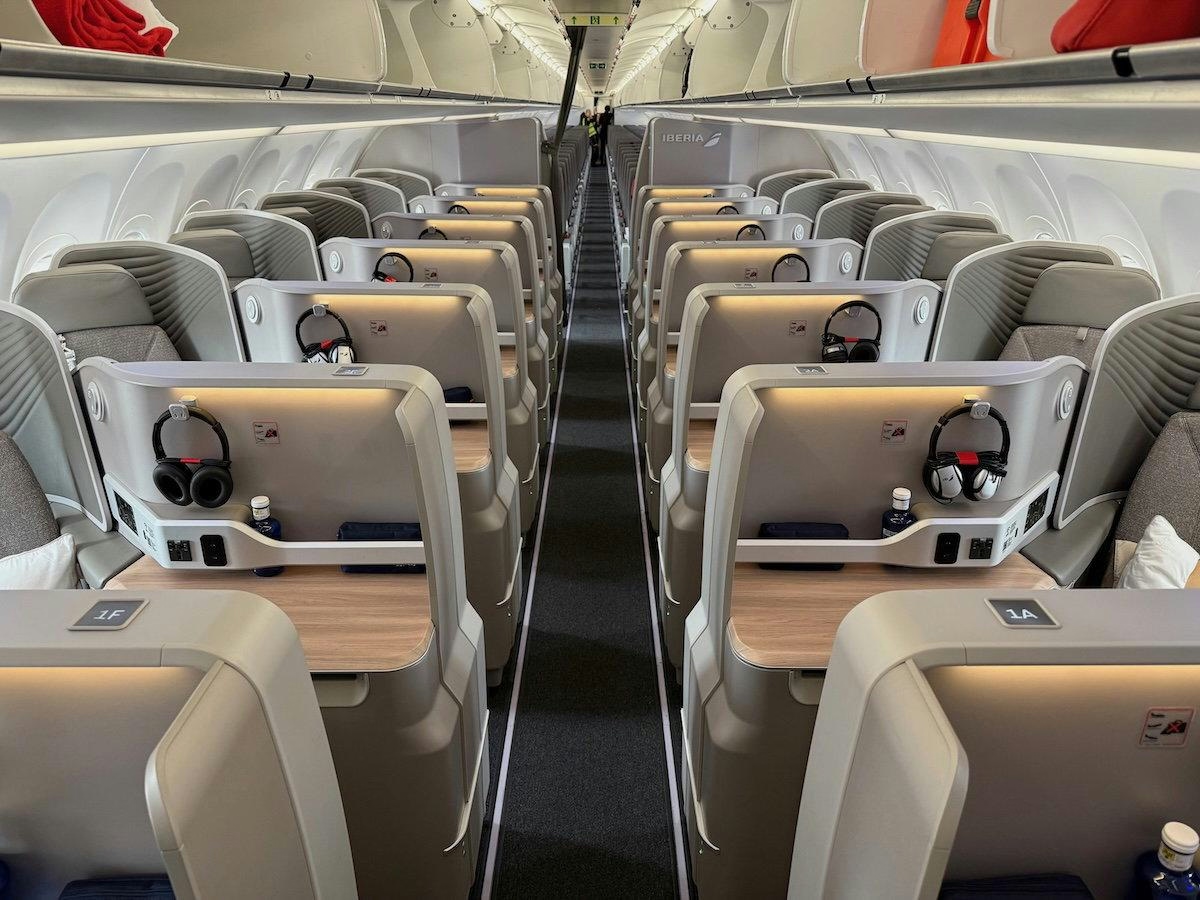
Passenger comfort and well-being are central to the A321XLR’s cabin design. The aircraft features customizable LED lighting systems that create a premium ambience while helping to alleviate the effects of jet lag. Standard amenities include in-seat wireless in-flight entertainment and seamless connectivity. The business class cabin, equipped with Thompson Aero Seating, offers lie-flat beds arranged in a 1-1 configuration, sliding doors for enhanced privacy, and suite-style amenities. Economy passengers benefit from wider seats than industry norms, measuring 18 inches in a 3-3 layout, alongside a walk-up snack bar designed to elevate the onboard experience.
Business class seats provide a 22-inch width and 46-inch pitch, complete with massage functions, USB and USB-C ports, power outlets, and ample storage space. The latest 4K Ultra High Definition 18-inch touchscreens deliver state-of-the-art in-flight entertainment, underscoring Airbus’s commitment to premium passenger experience.
Flexibility and Market Impact
The A321XLR offers airlines a highly flexible cabin configuration, ranging from an all-economy layout to a two-class arrangement featuring 14 lie-flat business seats and 168 economy seats. This adaptability allows the aircraft to serve short-, medium-, and long-haul routes effectively. Coupled with lower operating costs and improved fuel efficiency, the A321XLR presents a low-risk option for airlines seeking to open new long-haul markets. Major carriers such as United Airlines and Air Canada have embraced the aircraft, investing in it to replace aging fleets like the Boeing 757 and to leverage its extended range and sustainability advantages.
Competitive Landscape and Industry Response
The innovations introduced with the A321XLR, particularly the Airspace XL overhead bins and premium cabin features, are setting new industry standards. Competitors, including Boeing, are anticipated to respond by developing comparable long-haul capabilities within their narrow-body aircraft offerings. Airbus’s emphasis on sustainability, demonstrated by a 50 percent reduction in noise levels and lower CO2 emissions, further consolidates its competitive position in the market.
With the A321XLR, Airbus is advancing passenger comfort and operational flexibility while establishing new benchmarks for single-aisle aircraft. The Airspace cabin’s thoughtful design and advanced features are expected to influence the future of medium- and long-haul air travel, challenging competitors and elevating passenger expectations.

Etihad Airways Suspends Airbus A380 Flights on Key Route

Aditya Birla Group Seeks Approval for Aircraft Leasing in GIFT City

Qatar Airways Highlights Innovation and Connectivity at Arabian Travel Market 2026

Hong Kong's Five-Year Plan Includes Andrew Fan's Aircraft Parts Processing Hub Proposal

ACIA Aero Leasing Delivers ATR72-600 to Air Nostrum

RTX Appoints Jill Albertelli as Head of Pratt & Whitney

TAT Technologies Joins Beyond Aero Hydrogen Aircraft Program

AURAK Study Highlights Barriers to Air Taxi Adoption in Emerging Economies

Xiamen Air Selects Altitude for 787 Maintenance at Heathrow

Etihad and Swissport Extend Global Partnership
