
Orchestrate AI insights into action

Trending
Categories
How Aeroporti di Roma Uses AI to Enhance Airport Operations and Customer Experience
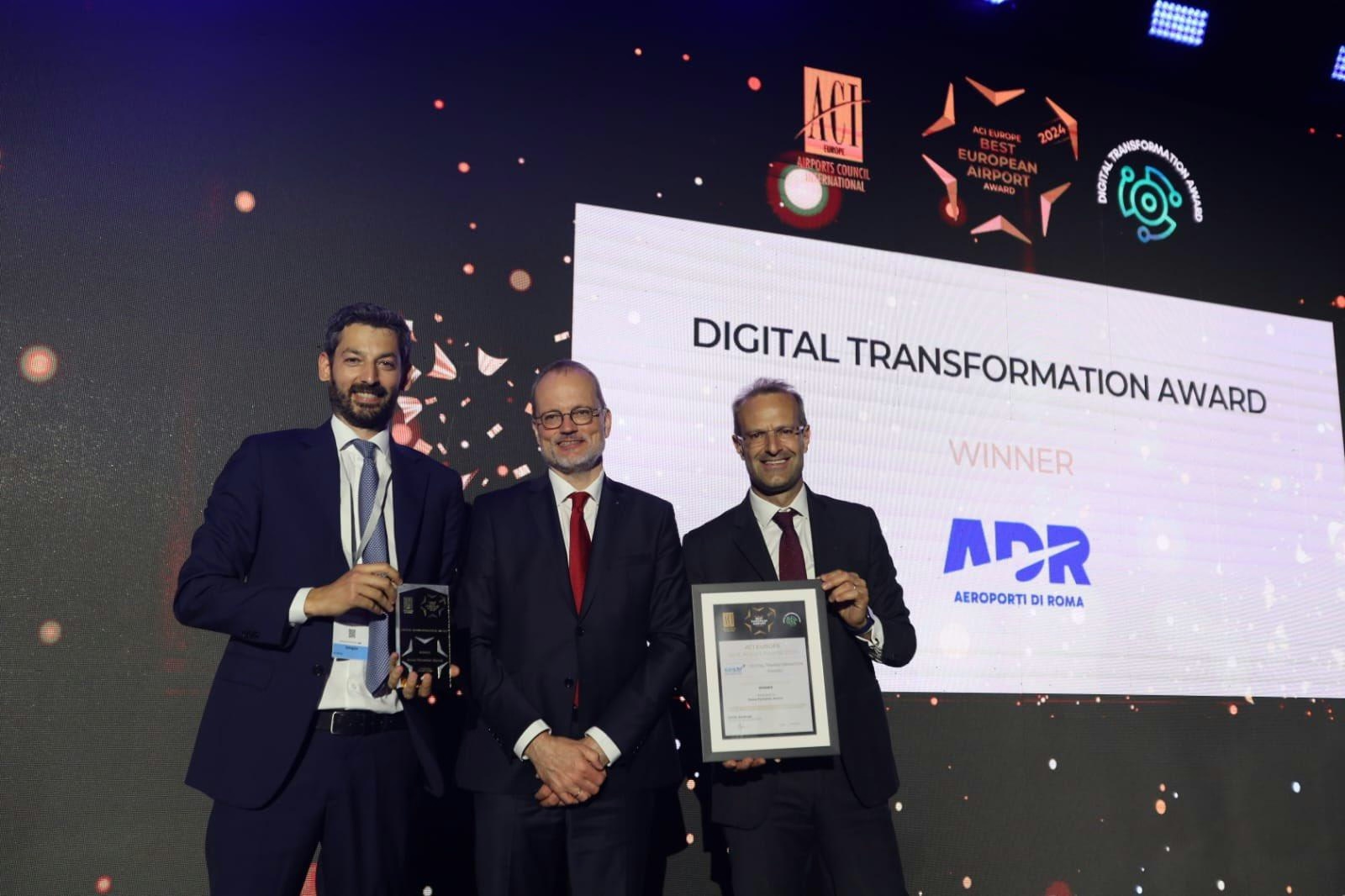
How Aeroporti di Roma Uses AI to Enhance Airport Operations and Customer Experience
Artificial intelligence (AI) is increasingly integral to Aeroporti di Roma’s strategy, not as a standalone technology but as a complementary capability that enhances human expertise. Since the launch of its ‘Runway to the Future’ innovation programme in 2022, the airport operator has intensified collaboration with startups to swiftly test and implement AI-driven solutions across its operational ecosystem.
Integrating AI Across Operations, Customer Engagement, and Safety
Emanuele Calà, Senior Vice President of Transformation & Technology at Aeroporti di Roma, will present these developments at the forthcoming APEX FTE EMEA and Ancillary & Retailing events in Dublin. He outlines a structured approach to AI adoption focused on three key domains: operational efficiency, passenger engagement, and safety enhancement.
AI is enabling a more predictable and data-driven management of airport processes. For instance, through a partnership with Assaia, AI-powered video analytics now monitor airside activities in real time, transitioning from passive observation to proactive identification and resolution of inefficiencies. The Aeroficial Intelligence Live Cockpit platform further consolidates diverse operational data streams, offering a comprehensive, real-time overview of aircraft movements. This capability facilitates early detection of potential congestion, supporting a shift toward a more anticipatory operational model.
Passenger interactions are also being transformed by AI. A newly developed chatbot provides travelers with real-time updates on flight status and other pertinent information through familiar communication channels such as WhatsApp. This approach shifts communication from a passive to a proactive model, ensuring passengers remain continuously informed and supported. Beyond operational efficiency, the initiative aims to foster transparency and build trust with travelers.
Safety remains a paramount concern, with AI delivering tangible benefits in this area as well. Optical systems developed by Argos AI are undergoing trials to automatically detect Foreign Object Debris at gates, thereby reducing operational risks and elevating safety standards. Additionally, weather resilience is being enhanced through Tomorrow.io’s AI-driven solutions, which integrate satellite data with predictive models to forecast disruptive weather conditions both locally and at other hubs. This capability improves coordination and disruption management across the network.
Challenges and Industry Implications
Despite these advancements, the adoption of AI presents significant challenges. The automation of airport processes raises concerns about potential job losses and workforce displacement, which could exacerbate economic inequality. There is also skepticism regarding AI’s capacity to manage the complex and unpredictable scenarios frequently encountered in airport operations. As Aeroporti di Roma advances its AI capabilities, it is likely that competitors will follow, potentially sparking an industry-wide race to adopt similar technologies. This trend may further concentrate technological power and wealth among leading companies, with broader implications for consumer spending and quality of life.
“Overall, AI is supporting a transformation in how operations are managed, how passengers are engaged, and how safety is ensured,” Calà concludes. “Most importantly, it is driving a shift from reactive to predictive processes, with human oversight remaining essential to guide, validate, and strengthen decision-making.” As AI evolves from a simple tool to a digital teammate, Aeroporti di Roma is navigating both the opportunities and complexities inherent in this technological transition.

Etihad Airways Suspends Airbus A380 Flights on Key Route

Aditya Birla Group Seeks Approval for Aircraft Leasing in GIFT City

Qatar Airways Highlights Innovation and Connectivity at Arabian Travel Market 2026

Hong Kong's Five-Year Plan Includes Andrew Fan's Aircraft Parts Processing Hub Proposal

ACIA Aero Leasing Delivers ATR72-600 to Air Nostrum

RTX Appoints Jill Albertelli as Head of Pratt & Whitney

TAT Technologies Joins Beyond Aero Hydrogen Aircraft Program

AURAK Study Highlights Barriers to Air Taxi Adoption in Emerging Economies

Xiamen Air Selects Altitude for 787 Maintenance at Heathrow

Etihad and Swissport Extend Global Partnership
