
Orchestrate AI insights into action

Trending
Categories
IATA Warns of Supply Chain and Decarbonization Challenges Amid Record Passenger Demand in 2025
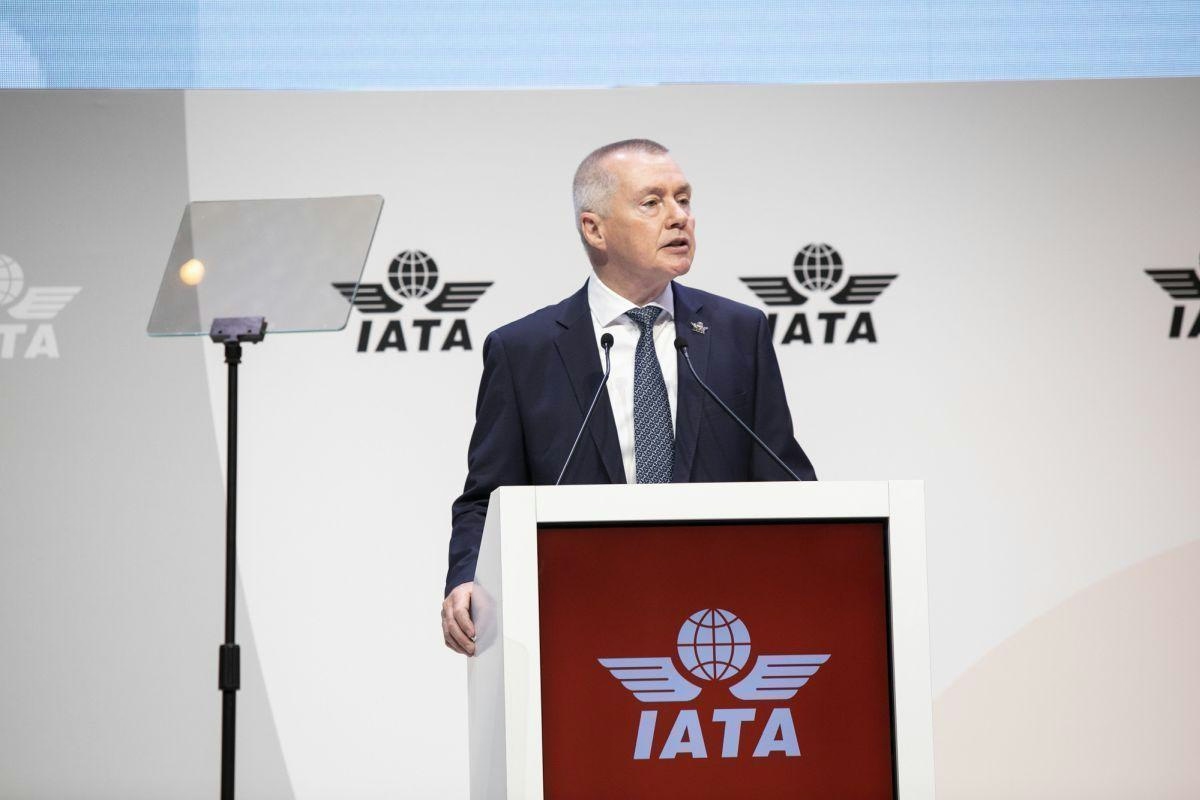
IATA Highlights Supply Chain and Decarbonization Challenges Amid Record Passenger Demand in 2025
The International Air Transport Association (IATA) has reported a remarkable surge in global air travel demand in 2025, with passenger traffic increasing by 5.3% year-on-year and capacity rising by 5.2%. This growth propelled the average load factor to an unprecedented 83.6%, reflecting airlines’ efforts to accommodate robust demand despite significant operational challenges.
Regional Growth and Operational Pressures
International travel emerged as the primary driver of this expansion, growing by 7.1%, while domestic markets experienced a more moderate increase of 2.4%, indicating a stabilization following the post-pandemic recovery phase. The Asia-Pacific region led in both growth and load factors, whereas North America lagged due to weaker domestic performance.
Nevertheless, IATA cautioned that the industry’s strong recovery is under threat from ongoing supply chain disruptions and slow progress in decarbonization efforts. Airlines encountered severe capacity constraints throughout 2025, exacerbated by delays in aircraft deliveries, engine maintenance bottlenecks, and broader supply chain complications. These issues contributed to an estimated $11 billion in additional costs, compelling carriers to extend aircraft service lives and optimize seat occupancy to maintain operational efficiency.
The fragility of global supply chains was further exposed by incidents such as the temporary Jet A-1 fuel shortage at Cape Town International Airport. Persistent challenges including tariffs, trade uncertainties, labor shortages, rising material costs, and volatility in freight markets continue to exert pressure on airline operations and profitability.
Decarbonization and Industry Challenges
Efforts to reduce aviation’s environmental impact face significant hurdles. The adoption of sustainable aviation fuel (SAF) remains limited, accounting for only 0.7% of the global fuel supply. High costs and constrained production capacity are major impediments, prompting IATA to call for urgent innovation and stronger government policies to accelerate emissions reductions. The sector’s reliance on long-lived aircraft further complicates the transition to greener technologies, a concern highlighted by industry figures such as Bill Gates.
Competition issues within the maintenance, repair, and operations (MRO) sector add another layer of complexity. IATA has warned that manufacturers’ business models often restrict aftermarket competition, potentially increasing costs and limiting airlines’ flexibility in fleet management.
Looking forward, IATA urges governments to enhance policy support in 2026 to bolster supply chain resilience and scale up SAF production. Without decisive intervention, the industry risks undermining its capacity to sustain growth and achieve ambitious climate goals.
Despite record passenger demand and near-84% load factors globally, the aviation sector confronts a multifaceted landscape of operational, economic, and environmental challenges. IATA’s warning underscores the imperative for coordinated action among governments, manufacturers, and airlines to secure the industry’s long-term sustainability and resilience.

Etihad Airways Suspends Airbus A380 Flights on Key Route

Aditya Birla Group Seeks Approval for Aircraft Leasing in GIFT City

Qatar Airways Highlights Innovation and Connectivity at Arabian Travel Market 2026

Hong Kong's Five-Year Plan Includes Andrew Fan's Aircraft Parts Processing Hub Proposal

ACIA Aero Leasing Delivers ATR72-600 to Air Nostrum

RTX Appoints Jill Albertelli as Head of Pratt & Whitney

TAT Technologies Joins Beyond Aero Hydrogen Aircraft Program

AURAK Study Highlights Barriers to Air Taxi Adoption in Emerging Economies

Xiamen Air Selects Altitude for 787 Maintenance at Heathrow

Etihad and Swissport Extend Global Partnership
