Image

AeroGenie — Your Intelligent Copilot.

Ask anything. Analyze everything. Act instantly.

Trending

Categories

Improving Aviation Safety with Shared Turbulence Data
February 27, 2026By ePlane AI
Improving Aviation Safety with Shared Turbulence Data
0
0
IATA Turbulence Aware
Lufthansa
Flight Safety

Improving Aviation Safety with Shared Turbulence Data

Lufthansa is enhancing aviation safety by participating in the “IATA Turbulence Aware” program, an initiative that collects anonymized, real-time turbulence data from flights operated by member airlines. This collaborative effort provides pilots with immediate insights into atmospheric conditions, thereby improving both flight safety and passenger comfort.

A Collaborative Network for Real-Time Turbulence Information

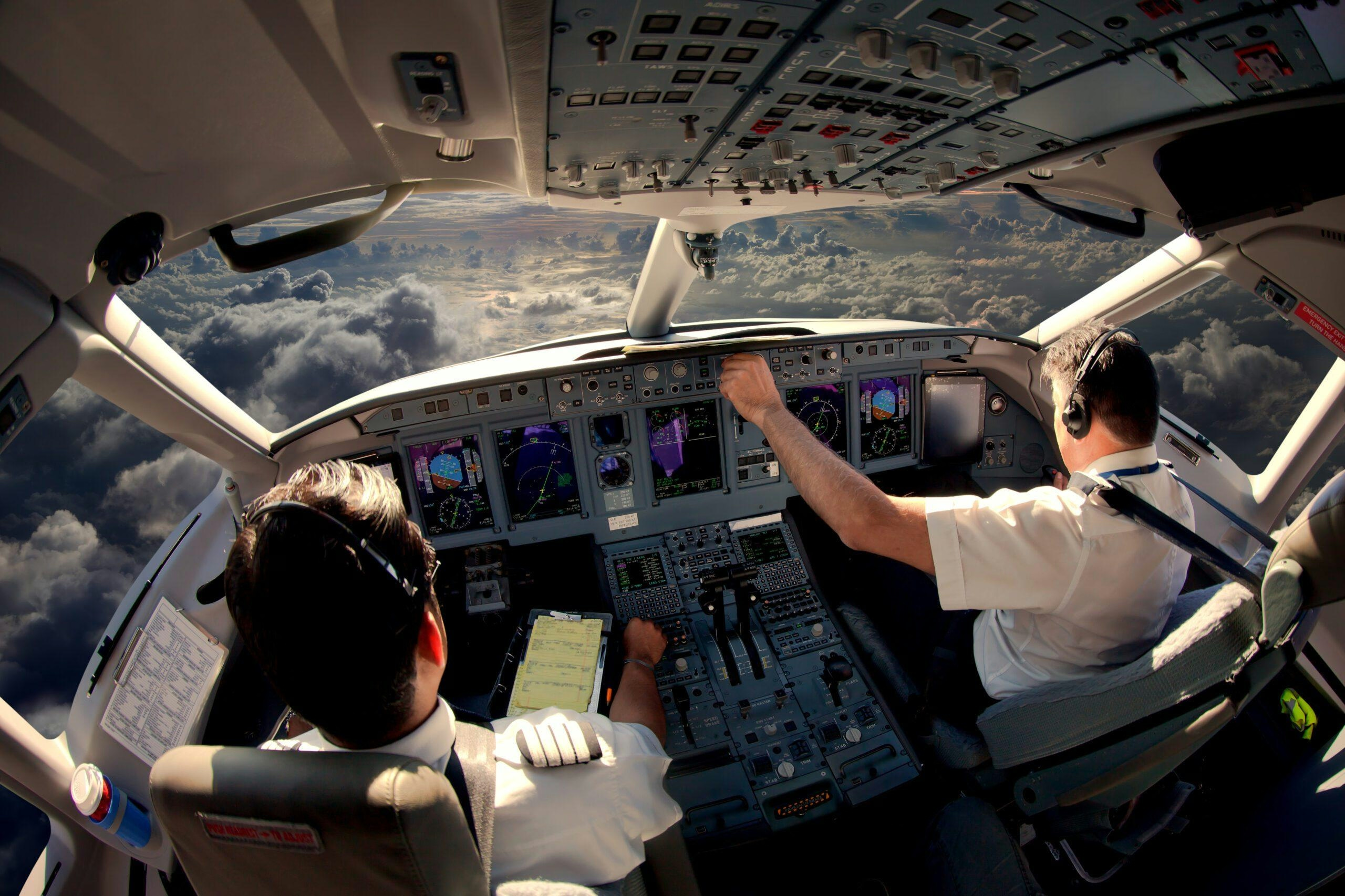
Through IATA Turbulence Aware, Lufthansa and its group carriers, Swiss International Air Lines and Edelweiss Air, contribute to a global network where thousands of aircraft are equipped with sensors that continuously measure turbulence intensity. The anonymized data collected is transmitted to a central database, enabling pilots to access detailed turbulence information directly on cockpit navigation displays. Colour-coded symbols indicate the location, altitude, timing, and severity of turbulence, allowing for more precise and efficient flight planning. This real-time data complements traditional weather forecasts, offering a more comprehensive understanding of in-flight conditions.

Francesco Sciortino, Hub Manager Frankfurt, highlighted the significance of the program, stating, “With ‘IATA Turbulence Aware’, we are setting new standards for safety and comfort in aviation. This technology enables us to offer our passengers a smoother and more pleasant flight experience while making an important contribution to safety in global aviation.”

Challenges and Regulatory Developments

Despite its benefits, the integration of shared turbulence data faces several challenges. Regulatory hurdles and the need for data standardization complicate seamless adoption across the industry. Technological complexities, including the integration of new data streams into existing cockpit systems, demand substantial investment and coordination. Furthermore, some airlines remain cautious about the reliability and practical advantages of shared data, prompting competitors to develop their own data collection and analysis capabilities to maintain a competitive edge.

Recent regulatory efforts, particularly in the United States, demonstrate a proactive approach to incorporating advanced air mobility and safety innovations. These initiatives seek to address the complexities of data sharing and technological integration, reflecting a broader industry commitment to enhancing aviation safety through collaboration and innovation.

As the aviation sector evolves, programs like IATA Turbulence Aware mark a significant advancement toward safer, more efficient, and more comfortable air travel, while underscoring the ongoing necessity for industry-wide cooperation and regulatory support.

More news
ACG Delivers Two Boeing 737 MAX 8 Aircraft to WestJet

ACG Delivers Two Boeing 737 MAX 8 Aircraft to WestJet

ACG Delivers Two Boeing 737 MAX 8 Aircraft to WestJet Amid Boeing’s Market Push Aviation Capital Group LLC (ACG), a global full-service aircraft asset manager, has completed the delivery of two Boeing 737 MAX 8 aircraft to Canadian carrier WestJet. The transaction, structured as a sale-and-leaseback agreement, was finalized with the handover of the aircraft in Seattle earlier this week. These planes, equipped with CFM LEAP-1B engines, represent a significant addition to WestJet’s fleet as the airline pursues its expansion strategy. Boeing’s Strategic Market Positioning This delivery coincides with a critical phase for Boeing, which has accelerated production and deliveries of its commercial aircraft to reach its highest output since 2018. The increased activity forms part of Boeing’s broader initiative to reclaim market share in the narrowbody segment, where Airbus currently maintains a dominant position in single-aisle aircraft sales. Despite intense competition, Boeing’s recent financial recovery and operational enhancements suggest a more stable and competitive stance within the global aviation industry. Carter A. White, Chief Commercial Officer at ACG, highlighted the significance of the transaction and the ongoing partnership with WestJet. He remarked, “We are pleased to finalize this transaction and further strengthen our long-standing relationship with WestJet.” White emphasized that the introduction of these modern, fuel-efficient aircraft will bolster WestJet’s fleet modernization efforts and support its continued growth. Industry Response and Future Outlook The market has reacted favorably to Boeing’s improved delivery performance, with airlines such as Ryanair revising their outlooks positively amid strong demand and more dependable aircraft handovers. Competitors in the industry are expected to maintain a rigorous focus on safety and production efficiency as they strive to sustain their market positions. In addition to the delivery milestone, White extended congratulations to WestJet on its 30th anniversary, wishing the airline and its team ongoing success. The arrival of the two Boeing 737 MAX 8 aircraft not only marks a key moment in WestJet’s fleet development but also reflects broader trends in the commercial aviation sector as manufacturers and carriers navigate evolving market dynamics.
GE Aerospace Awarded J85 Engine Readiness Contract

GE Aerospace Awarded J85 Engine Readiness Contract

GE Aerospace Awarded Contract to Enhance J85 Engine Readiness for US Air Force GE Aerospace has secured a contract from the US Defense Logistics Agency to improve the readiness of the J85 engine, which powers the US Air Force’s primary trainer aircraft, the T-38. The agreement entrusts GE Aerospace with delivering advanced fleet management and supply optimization solutions to support the Air Force’s pilot training operations. Digitally Enabled Sustainment and Data Integration This contract represents the first digitally enabled TrueChoice™ Defense agreement for the J85 engine. The initial term spans seven months, with an option to extend for an additional four years and five months. The program will utilize artificial intelligence and sophisticated data analytics to unify previously fragmented information from the US Air Force, the Defense Logistics Agency, and GE Aerospace. By consolidating these data sources, the platform aims to forecast parts demand, identify emerging supply chain constraints, and provide stakeholders with a comprehensive operational overview. This enhanced visibility is expected to facilitate faster decision-making, more efficient engine sustainment, and improved fleet readiness. The award follows a successful pilot initiative that integrated data from multiple organizations managing over 6,000 individual J85 engine components. The trial demonstrated that advanced analytics can enhance supply chain transparency, reduce delays, and enable more proactive maintenance and sustainment planning. Strategic Partnerships and Industry Challenges As part of the program, GE Aerospace is collaborating with Palantir to combine aerospace engineering expertise with advanced data integration and artificial intelligence capabilities. This partnership focuses on alleviating supply chain bottlenecks, improving parts availability, and enabling timely, data-driven decisions across the J85 sustainment ecosystem, thereby reinforcing operational capability for the Air Force. GE Aerospace faces several challenges in executing this contract. The company must maintain technological leadership amid competition from major rivals such as Pratt & Whitney and Rolls-Royce, who are expected to intensify efforts to develop advanced engine technologies and forge strategic partnerships. Additionally, GE Aerospace must ensure compliance with stringent defense and aviation regulations while effectively integrating AI and data analytics into its operations. Market response to the contract has been positive, with increased investor confidence in GE Aerospace’s capacity to fulfill complex defense contracts. The award is viewed as a significant advancement in strengthening the company’s position within the defense sector, while also prompting competitors to enhance their own offerings and market strategies. By leveraging advanced technology, strategic collaborations, and a focus on operational efficiency, GE Aerospace aims to establish a new benchmark for engine readiness and sustainment in support of the US Air Force’s training mission.
Nominal Advances Testing and Validation for Future Naval Combat Aircraft

Nominal Advances Testing and Validation for Future Naval Combat Aircraft

Nominal Advances Testing and Validation for Future Naval Combat Aircraft Key Role in U.S. Navy Flight Test Demonstration Nominal, a software company specializing in accelerating the deployment of mission-critical systems, has been instrumental in a recent U.S. Navy flight test demonstration designed to advance future Collaborative Combat Aircraft (CCA) initiatives. The demonstration was conducted in collaboration with the Naval Air Systems Command’s Strike Planning and Execution Program (PMA-281) and Aerial Targets Program (PMA-208). During the exercise, Shield AI and Kratos successfully operated two live BQM-177A subsonic aerial targets equipped with Shield AI’s Hivemind autonomy software. Throughout the test, the aircraft executed autonomous mission behaviors supported by Nominal’s Core software platform, which facilitated test planning, data collection, and post-flight analysis. Cameron McCord, CEO and co-founder of Nominal, emphasized the importance of keeping testing aligned with development, stating, “Autonomy at scale depends on testing that keeps pace with development. Demonstrations like this show how modern testing can help the Department validate manned-unmanned collaborative autonomy faster while maintaining rigor and confidence.” Enhancing Data Integration and Continuous Learning Nominal Core played a critical role in rapidly ingesting and organizing flight telemetry alongside supporting test data, enabling Navy and industry teams to collaboratively evaluate autonomy performance, vehicle response, and mission execution. The platform also aggregated insights from historical flight tests, providing essential context and fostering continuous learning to inform future test cycles. As the Navy advances AI-enabled autonomy and manned-unmanned teaming concepts, the BQM-177A remains an operationally relevant testbed for exercising sophisticated autonomy behaviors. Plans are underway to expand this demonstration with additional flight tests that will focus on more complex autonomy behaviors and mission scenarios. Challenges and Competitive Landscape Despite these advancements, the development of nominal testing and validation for future naval combat aircraft faces significant challenges. Ensuring compatibility with both current and next-generation naval systems, integrating advanced software-defined technologies, and meeting stringent performance and safety standards continue to pose considerable hurdles. The evolving defense landscape has intensified competition among contractors, with companies such as Saab and Divergent Technologies pioneering software-defined fuselage technologies. Meanwhile, the Royal Navy is accelerating development of its Peregrine and Proteus platforms, and the U.S. Navy is pursuing advanced anti-radiation missile capabilities, underscoring the urgency to integrate cutting-edge technologies. These market dynamics are driving competitors to accelerate development timelines and increase investment in advanced technologies to maintain a strategic advantage. As the Department of Defense advances collaborative autonomy, modernized testing approaches like those demonstrated by Nominal will be essential to delivering warfighting capabilities within operationally relevant timeframes. Founded in 2022, Nominal remains committed to transforming testing into a continuous, secure source of truth across complex defense programs, enabling the rapid and confident deployment of mission-critical systems. For further information, visit nominal.io.
Anduril’s YFQ-44A Completes Flight Using Dual Autonomy Software in CCA Test

Anduril’s YFQ-44A Completes Flight Using Dual Autonomy Software in CCA Test

Anduril’s YFQ-44A Completes Flight Using Dual Autonomy Software in CCA Test Milestone in Semi-Autonomous Flight for Collaborative Combat Aircraft Program Anduril has achieved a significant advancement in the U.S. Air Force’s Collaborative Combat Aircraft (CCA) program with its YFQ-44A aircraft successfully completing a flight employing two distinct mission autonomy software suites. This accomplishment represents a notable step forward in the development of semi-autonomous fighter-class systems and underscores the increasing focus on modularity and interoperability within the CCA initiative. Four months following its initial semi-autonomous flight, the YFQ-44A autonomously took off, navigated to a predetermined waypoint, and engaged Shield AI’s Hivemind mission autonomy software. Hivemind executed a series of complex test scenarios before the aircraft transitioned seamlessly to Anduril’s proprietary Lattice for Mission Autonomy software, which repeated the same test points prior to a safe landing. According to Anduril, this demonstration of dual-software operation highlights rapid progress since the company was selected to produce CCA prototypes in April 2024, achieving semi-autonomous flight within just 556 days. Integration and Collaboration Underpinning Dual Autonomy The successful integration of two independently developed autonomy stacks was facilitated by the early adoption of the Autonomy Government Reference Architecture (A-GRA) across both the aircraft and software systems. Engineers from Anduril and Shield AI collaborated closely to integrate Hivemind with the YFQ-44A’s flight control software, validating the combined system through extensive software-in-the-loop and hardware-in-the-loop simulations prior to the flight. During the test, Hivemind managed the aircraft through scenarios representative of future mission concepts, with both autonomy suites performing as intended. Anduril has invested significant internal resources over the past year to develop its Lattice for Mission Autonomy baseline, aiming to deliver a capability focused on air dominance and aligned with the CCA program’s modular, competitive framework. The Air Force’s CCA program emphasizes open hardware and software architectures, including the A-GRA standard, to enable rapid integration of diverse capabilities and foster a competitive ecosystem of software providers. Implications for the Future of Autonomous Combat Aircraft The successful demonstration of both Hivemind and Lattice software operating within a single sortie showcases the YFQ-44A’s modular design, which supports a wide range of mission systems, software suites, and payloads. This flexibility is considered essential for adapting to evolving Air Force requirements and maintaining a competitive advantage in a rapidly advancing technological landscape. Anduril’s progress occurs amid intensifying competition, particularly from General Atomics and its YFQ-42 platform, which continues to advance its own semi-autonomous flight tests. Ensuring interoperability with other systems and adapting to shifting Air Force priorities remain ongoing challenges for all CCA contenders. The Air Force’s validation of interoperable autonomy architectures across competing platforms further highlights the critical importance of open standards and cross-industry collaboration. Market responses to the YFQ-44A’s achievement reflect heightened interest in the CCA program’s trajectory, as industry stakeholders closely monitor which platforms and autonomy solutions will ultimately shape the future of military aviation. Anduril characterizes the recent flight as a significant milestone for its Lattice for Mission Autonomy system and a key component of broader efforts to deliver autonomy, flexibility, and operational speed to the Air Force. From prototype production to increasingly complex mission testing, Anduril intends to continue expanding the YFQ-44A’s operational capabilities in partnership with the U.S. Air Force and industry collaborators, as the competition to define the next generation of autonomous combat aircraft intensifies.
Rolls-Royce Reports Solid Financial Performance in 2025

Rolls-Royce Reports Solid Financial Performance in 2025

Rolls-Royce Reports Solid Financial Performance in 2025 Strong Financial Results Amid Ongoing Challenges Rolls-Royce has announced a year of robust financial and strategic progress in 2025, demonstrating significant improvements across all key performance indicators. The company’s transformation programme, implemented over the past three years, has delivered a marked enhancement in operational efficiency and profitability. This progress was achieved despite persistent supply chain constraints, which the group continues to manage proactively. Underlying operating profit rose by more than 40% to £3.46 billion in 2025, up from £2.5 billion in 2024, exceeding analyst expectations of £3.32 billion, according to FactSet. The operating margin improved to 17.3% from 13.8% the previous year, underscoring Rolls-Royce’s evolution into a high-performing, competitive, and growth-oriented enterprise. Division Performance and Operational Efficiency The Civil Aerospace division was a primary contributor to the company’s strong results, with an underlying operating margin of 20.5%, up from 16.6% in 2024. This improvement was driven by enhanced performance in the large engine aftermarket, contractual margin gains, and increased profitability in spare engines. Although engine deliveries declined due to supply chain disruptions, robust aftermarket activity and margin improvements more than compensated for this shortfall. The Defence division recorded an underlying operating margin of 14.4%, slightly higher than the 14.2% achieved in 2024, supported by improved outcomes across transport and combat programmes. Meanwhile, the Power Systems segment saw its operating margin rise to 17.4% from 13.1%, propelled by growth in power generation, particularly in data centres and government-related demand. Group-wide profitability was further bolstered by ongoing efficiency and simplification initiatives. Free cash flow increased to £3.3 billion from £2.4 billion in 2024, driven by higher operating profit, sustained growth in long-term service agreement balances, and strong working capital management, partially offset by net investment. At the end of the year, net cash stood at £1.9 billion, a substantial increase from £475 million a year earlier, while gross debt declined to £2.8 billion following bond repayments. The company maintained strong liquidity at £8.7 billion. Upgraded Outlook and Strategic Initiatives Reflecting its strengthened financial position, Rolls-Royce announced a multiyear share buyback programme of up to $12 billion. The company also raised its 2028 targets, now anticipating underlying operating profit between £4.9 billion and £5.2 billion. Looking ahead, Rolls-Royce projects profits exceeding £4 billion ($5.42 billion) in 2026, driven by continued growth in the aerospace sector. The group’s disciplined cost management and operational efficiency have enhanced its resilience and reduced volatility in free cash flow, positioning Rolls-Royce for sustained growth despite a challenging external environment.
Bjorn's Corner: AI and Aircraft Development Planning, Part 29

Bjorn's Corner: AI and Aircraft Development Planning, Part 29

Bjorn's Corner: AI and Aircraft Development Planning, Part 29 The Growing Complexity of Aircraft Development Timelines Recent analysis of Part 25 airliner programs reveals a significant extension in development timelines, with the period from program launch to Entry Into Service (EIS) having doubled since the 1960s and 1980s. This trend is particularly pronounced for aircraft developed after 2000 and is primarily attributed to increased complexity. Modern airliners incorporate advanced materials, highly optimized structural designs, and sophisticated avionics and flight control systems that demand extensive software integration. Although digital toolchains and Digital Twins have mitigated some delays, they have not reversed the overall lengthening of development cycles. The pressing question is whether artificial intelligence (AI) can effectively shorten these timelines. The Potential and Limitations of AI in Aircraft Development In previous discussions, four key factors contributing to extended development times were identified: the use of advanced materials, the widespread adoption of advanced electronics, the complexity of Electric Wiring Interconnection Systems (EWIS), and the intricacies of regulatory interaction and oversight. AI demonstrates promise in certain domains, particularly with the advent of generative AI technologies. These systems have the potential to assist in software development for advanced electronic systems by translating requirements into code and performing compliance and efficiency testing. However, the quality of machine-generated code remains inconsistent, and the industry continues to debate its reliability and practical effectiveness. Despite these advances, AI’s spatial intelligence capabilities remain limited. While it can generate static images or short video content, AI struggles with complex spatial tasks such as optimizing wire-bundle layouts for EWIS based on risk analyses. Although future improvements may reduce the engineering workload in these areas, current AI applications have minimal impact. AI’s role in regulatory coordination is even more constrained. Regulatory authorities tend to adopt conservative stances, and AI-generated Means of Compliance (MOCs) or Special Conditions are often perceived as either excessively stringent or insufficiently robust, depending on their origin. The involvement of multiple stakeholders—including regulators, original equipment manufacturers (OEMs), and industry groups—adds layers of complexity that typically require traditional negotiation and deliberation rather than automated solutions. Industry Dynamics and the Role of AI These challenges arise amid increasing pressure on major manufacturers such as Airbus and Boeing to raise production rates and make critical decisions regarding future aircraft programs. The market is responding to innovations like the A321XLR and Embraer’s E2, while competitors such as Saab and Divergent Technologies are advancing software-defined fuselage concepts, raising technological expectations. Concurrently, the AI sector itself is highly competitive, with new entrants like DeepSeek and Mistral challenging established players. Investor sentiment is shifting away from speculative AI infrastructure ventures toward industrial sectors that offer more predictable cash flows and tangible assets. Efforts to employ AI tools such as ChatGPT and Gemini during early feasibility phases to generate viable aircraft configurations and features have yielded underwhelming results. Generated outputs were often incomplete and lacked substantive insight, underscoring the current limitations of AI in transforming the earliest stages of aircraft development. While AI holds potential in select areas of aircraft development, significant obstacles remain. The complexity of the industry, the stringent regulatory environment, and the present capabilities of AI technology mean that human expertise and negotiation continue to be indispensable.
Asia-Pacific Aviation Faces a Defining Decade Shaped by Technology, Capacity, and Strategy

Asia-Pacific Aviation Faces a Defining Decade Shaped by Technology, Capacity, and Strategy

Asia-Pacific Aviation Faces a Defining Decade Shaped by Technology, Capacity, and Strategy The Asia-Pacific aviation sector is poised to enter a transformative decade characterized by rapid technological advancements, expanding capacity, and strategic realignments that will shape the future leadership of the industry. Passenger traffic has not only recovered but surpassed pre-pandemic levels, driven by resilient domestic markets and a strong resurgence in international travel. Despite this growth, airlines continue to grapple with persistent challenges, including narrow profit margins, escalating operational costs, and volatile geopolitical conditions. Domestic Markets and International Expansion Domestic air travel remains the cornerstone of the Asia-Pacific aviation industry, representing nearly three-quarters of total capacity. This robust domestic demand underpins overall traffic growth but also intensifies competition, resulting in congested routes and downward pressure on fares. In response, airlines are strategically recalibrating their networks to emphasize international expansion. Cross-border routes, particularly in premium market segments, have now exceeded pre-pandemic volumes. Notably, markets such as Japan–South Korea have experienced significant growth, propelled by the rise of low-cost carriers and strategic alliances that enhance operational efficiency and streamline services. China’s Pivotal Influence China continues to play a central role in shaping the region’s aviation landscape. This winter, nearly 390 million seats are scheduled in China alone, a figure that is three times greater than India’s capacity and far surpasses smaller hubs like Singapore. Government policies regarding route allocation and fleet acquisition exert considerable influence over capacity flows both within Asia and on a global scale. Recent policy adjustments have compelled airlines to redirect flights and expand long-haul services to destinations in Europe, Oceania, and South America, highlighting the sector’s increasing need for strategic flexibility in response to regulatory shifts. Fleet Modernization and Infrastructure Development The forthcoming decade will be marked by substantial fleet modernization and airport infrastructure expansion. Globally, the addition of approximately one billion seats is anticipated, with Southeast Asia and India capturing a significant portion of this growth. The introduction of new-generation narrow-body aircraft, such as the Airbus A321XLR, is facilitating direct flights between secondary cities, bypassing traditional hubs and reducing travel times. These aircraft are disrupting established market dynamics and production processes, enabling airlines to explore new route opportunities. Major infrastructure projects are reshaping regional capacity, including the development of Western Sydney International Airport, expanded terminals in Mumbai and Delhi, the construction of 18 new airports across China, the opening of Singapore Changi’s Terminal 5, and new facilities at Hong Kong International Airport. The proliferation of ultra long-haul routes is connecting cities without layovers, catering to the growing demand among premium travelers for seamless, direct services. Technological Innovation and Industry Evolution Technological innovation is redefining the future of aviation in the Asia-Pacific region. Advances in artificial intelligence, automation, and predictive analytics are transforming passenger experiences, capacity management, and revenue optimization. The region is also emerging as a leader in the electric vertical takeoff and landing (eVTOL) market, with carriers such as Japan Airlines and AirAsia demonstrating strong interest. Manufacturers like Embraer are targeting growth in both defense and eVTOL sectors, while Saab’s recent development of a ‘software-defined’ fuselage flight exemplifies ongoing innovation. Meanwhile, Airbus and Boeing face divergent challenges: Airbus maintains a lead in single-aisle aircraft sales, whereas Boeing is striving to regain market share in the narrowbody segment. Industry discussions, such as those highlighted in the MRO Middle East 2026 podcast, emphasize the sector’s focus on scaling capacity, addressing workforce shortages, and advancing engine maintenance capabilities. Navigating a Complex and Dynamic Future As the Asia-Pacific aviation sector contends with supply chain disruptions and geopolitical uncertainties, its success will depend on disciplined capacity management, the adoption of cutting-edge technologies, and the agility to adapt networks and fleets in a rapidly evolving environment. The coming decade promises to be one of both complexity and opportunity in one of the world’s most dynamic aviation markets.
India's DGCA Grounds Four VSR Aviation Jets, Increases Oversight

India's DGCA Grounds Four VSR Aviation Jets, Increases Oversight

India's DGCA Grounds Four VSR Aviation Jets and Enhances Regulatory Oversight India’s Directorate General of Civil Aviation (DGCA) has grounded four Learjet aircraft operated by VSR Aviation (Delhi International) following a comprehensive safety audit triggered by a fatal crash earlier this year. The accident, involving a Learjet 45XR (VT-SSK) at Baramati airstrip on January 28, occurred under conditions of low visibility and heavy fog, resulting in five fatalities. This tragedy has intensified scrutiny of aviation safety standards across the country’s non-scheduled operators. Findings from the DGCA Safety Audit The DGCA’s multidisciplinary audit revealed multiple non-compliances in VSR Aviation’s airworthiness, flight operations, and safety procedures. The four grounded aircraft—Learjet 40 VT-VRA, Learjet 40XR VT-VRS, and Learjet 45XRs VT-VRV and VT-TRI—are aged between 18 and 21 years and will remain out of service until they meet the required airworthiness standards. VSR Aviation has been instructed to submit a detailed root cause analysis addressing the deficiencies identified during the audit. This regulatory action is part of a broader industry-wide response to recent safety concerns, including a pilot report of a potential defect in a Boeing 787’s fuel control switch. The DGCA has expanded its oversight, conducting audits across various operators to ensure compliance with safety regulations. This increased vigilance has led to temporary groundings and operational adjustments, with airlines revising maintenance schedules and investors closely monitoring the evolving situation. VSR Aviation’s Operational Background and Previous Incidents VSR Aviation operates under a non-scheduled operator’s permit (NSOP #07/2014) with a diverse fleet that includes Learjet 45s, Legacy 600s, King Air B200s, and a PC-12 aircraft, which has been inactive since January 2024. Additionally, VSR Corporation Pvt holds a second NSOP (#04/2023) covering a King Air B350. The operator has a history of safety incidents, notably a Learjet 45XR (VT-DBL) crash at Mumbai International Airport on September 14, 2023, during heavy rain. Although that incident resulted in no casualties, VSR Aviation’s failure to respond to a European Aviation Safety Agency (EASA) inquiry led to the suspension of its third-country operator authorization in December 2024. Broader Safety Measures Following Recent Accidents The Baramati crash was the first of two fatal accidents involving Indian non-scheduled operators within a month. On February 23, a King Air C90 operated by Redbird Airways crashed during a medical evacuation mission in Jharkhand, causing seven fatalities. In response, the DGCA has introduced stricter safety protocols for all non-scheduled operators. These include mandatory online disclosure of aircraft age, maintenance history, and pilot experience, alongside the implementation of a safety ranking system for NSOP holders. The DGCA has also intensified audits of flight data and technical logs to detect unauthorized operations or falsified records. The first phase of these audits is expected to conclude by early March, with a second phase to follow. Penalties for violations will be significantly increased, with pilots facing license suspensions of up to five years and operators risking suspension of their operating licenses for non-compliance. Emphasis on Pilot Training and Weather Preparedness Given that both recent accidents occurred under challenging weather conditions, the DGCA has underscored the importance of recurrent pilot training focused on weather awareness and decision-making in uncontrolled environments. Operators are now mandated to provide real-time weather updates and enforce strict adherence to safety protocols. These measures reflect the regulator’s commitment to enhancing aviation safety amid an increasingly complex operational and regulatory landscape.
The Purpose of the Large Nose Door on the Boeing 747 Freighter

The Purpose of the Large Nose Door on the Boeing 747 Freighter

The Purpose of the Large Nose Door on the Boeing 747 Freighter While modern twin-engine jets dominate airport taxiways, the Boeing 747 Freighter remains a distinctive giant in global aviation, largely due to its signature upward-swinging nose door. This unique feature allows the aircraft to load oversized cargo—ranging from industrial turbines to 40-foot pipes—directly into its expansive hold. The nose door has become an essential asset in the global supply chain, providing a capability that few other airframes can match. Engineering Origins and the Iconic Hump The concept of the 747’s nose door dates back to the mid-1960s, when Boeing engineers anticipated that supersonic passenger jets would soon surpass subsonic travel. With this foresight, Joe Sutter and his team designed the 747 with a cargo-first philosophy, ensuring the aircraft could transition seamlessly from passenger service to freight operations if necessary. To optimize cargo efficiency, engineers concluded that front-loading was crucial for accommodating long, indivisible shipments. However, incorporating a door at the nose required relocating the cockpit above the main deck, resulting in the 747’s distinctive upper-deck “hump.” This innovative design allowed the entire nose to hinge upward, creating a direct and unobstructed path for large cargo. This feature distinguished the 747 from the narrow-body freighters of its era, which relied on more restrictive side doors. A Lasting Impact on Air Freight The decision to include the nose door proved invaluable in ways Boeing had not fully anticipated. Although the supersonic revolution faltered due to high costs and noise regulations, the 747’s front-loading capability became a cornerstone of the heavy-lift sector. In industries where the rapid export of massive precision machinery is critical, the nose door has been indispensable. It transformed the 747 from a widebody workhorse into a specialized logistics tool that has outlasted many contemporaries, including the supersonic jets it was originally designed to outlive. Engineering Marvel and Market Realities The nose door itself is an engineering marvel, designed to withstand the immense pressure differentials encountered during high-altitude flight while remaining operable on the ground. Unlike standard passenger doors, the 747’s nose is a motorized, heavy-duty component that hinges upward to create an opening approximately 10 feet high. This mechanism relies on a complex system of actuators and locking pins to maintain the structural integrity of the pressurized nose cone during flight. This design offers significant advantages in markets where traditional side-loading methods are less efficient, streamlining the loading and unloading of oversized cargo. However, the complexity of the nose door mechanism also introduces challenges, including higher maintenance and operational costs. Consequently, market reactions to the 747 Freighter have been mixed: some operators value its unmatched cargo flexibility, while others prefer more cost-effective alternatives. Competition and Industry Trends Competitors have introduced their own large cargo door designs, but none have matched the 747’s established reputation and widespread use in the freight market. The aircraft’s enduring presence is also influenced by broader industry trends, including the ongoing rivalry between Boeing and Airbus, which shapes demand and purchasing decisions across the aerospace sector. Despite evolving market dynamics and technological advancements, the Boeing 747 Freighter’s nose door remains a symbol of engineering ingenuity and a cornerstone of global heavy-lift logistics—demonstrating that a bold design choice from the 1960s continues to shape the industry today.
Delta Airlines Updates Baggage Policy for 2026

Delta Airlines Updates Baggage Policy for 2026

Delta Air Lines Revises Baggage Policy for 2026 Delta Air Lines, recognized for its premium status among U.S. carriers, is set to implement significant updates to its baggage policy in 2026. The revisions combine enhanced customer allowances with the integration of advanced technology, particularly affecting Basic Economy passengers. While these changes distinguish Delta from some competitors, they also present potential challenges for both travelers and the airline. Carry-On Allowances and Boarding Procedures Delta continues to stand out as one of the few major U.S. airlines permitting all passengers, including those in Basic Economy, to bring a full-size carry-on bag free of charge. Passengers may also bring a personal item, such as a purse or laptop bag, which must fit under the seat. The maximum dimensions for the carry-on are 22 x 14 x 9 inches (56 x 35 x 23 cm). However, Basic Economy travelers are assigned to the last boarding group (Group 8), which often results in overhead bin space being fully occupied by the time they board. In such instances, passengers may be required to gate-check their carry-on bags at no additional cost, retrieving them at the baggage carousel upon arrival. On smaller Delta Connection regional jets with 50 seats or fewer, travelers may need to "pink tag" their bags at the jet bridge and collect them immediately after landing. Checked Baggage Fees and Weight Limits Delta’s checked baggage fees for standard domestic flights remain consistent with industry norms and are charged per one-way trip. The first checked bag costs $35, the second $45, and the third $150. Weight limits vary by cabin class: Economy and Delta Comfort+ passengers may check bags weighing up to 50 pounds (23 kilograms), while First Class, Delta Premium Select, and Delta One passengers have a limit of 70 pounds (32 kilograms) per bag. The maximum allowable size for checked baggage is 62 linear inches, calculated by adding length, width, and height. Benefits for Frequent Flyers and Cardholders The airline offers substantial baggage fee waivers for frequent flyers and credit card holders. Holders of Delta SkyMiles American Express cards (Gold, Platinum, Reserve) receive the first checked bag free for themselves and up to eight companions on the same reservation. Medallion status members benefit from tiered allowances: Silver members receive one free bag up to 70 pounds, Gold members two free bags, and Platinum and Diamond members three free bags, all with the same weight limit. Active-duty U.S. military personnel traveling on orders are entitled to up to five free bags, each weighing up to 100 pounds. Technological Advancements in Baggage Handling Delta continues to lead the industry in baggage reliability through the use of cutting-edge technology. Every checked bag is tagged with Radio Frequency Identification (RFID), enabling real-time tracking via the Fly Delta app. In 2026, the airline will introduce a new artificial intelligence system designed to optimize ground logistics and enhance baggage handling efficiency. This investment reflects Delta’s commitment to improving the passenger experience through innovation. Industry Implications and Potential Challenges Despite the customer-friendly nature of Delta’s updated policy, enforcing new carry-on size rules may lead to confusion and disputes at airports. Passengers could respond negatively if they perceive the changes as inconvenient. Competitor airlines may react by adopting similar policies or advancing their own digital baggage tracking solutions, as demonstrated recently by American Airlines. Furthermore, Delta’s deployment of AI in baggage handling raises important considerations regarding cybersecurity and ethical data use, issues likely to attract scrutiny as such technologies become more widespread. As these updates take effect, travelers are advised to familiarize themselves with the latest baggage guidelines to ensure a seamless airport experience.
line










