
Orchestrate AI insights into action

Trending
Categories
Incheon Airport Passenger Traffic Increases 7% in First Quarter; Aviation MRO Hub Planned by 2032
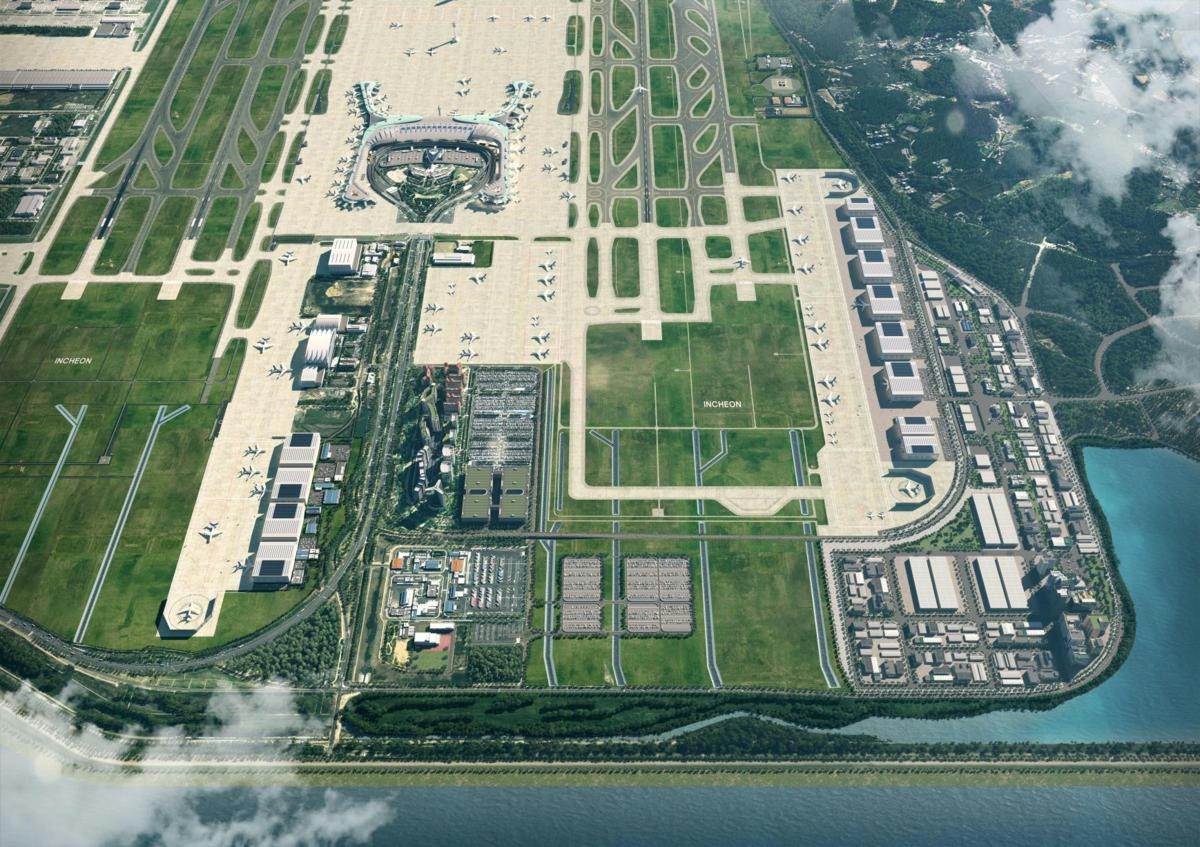
Incheon Airport Passenger Traffic Increases 7% in First Quarter
Incheon International Airport has reported a 7% increase in international passenger traffic during the first quarter of the year, reaching 19.78 million travelers. This growth, announced by Incheon International Airport Corporation at its first-half media briefing, reflects a steady recovery in air travel demand following the disruptions caused by the COVID-19 pandemic. Revenue for the period rose by 5.4% year-on-year to 706.8 billion won ($515 million), while operating profit increased by 1.9% to 230.2 billion won ($168 million). Flight operations and cargo volumes also saw modest gains of 2.5% and 2.4%, respectively.
The surge in passenger numbers has been largely driven by sustained demand for travel to Japan and a rebound in inbound visitors from China, supported by the extension of visa exemptions for Chinese group tourists. Conversely, routes to Southeast Asia and the Middle East experienced declines of 4.7% and 16%, respectively, attributed to security concerns and reduced flight schedules. Looking forward, Incheon Airport anticipates continued passenger growth, though at a slower pace. Rising oil prices, influenced by the ongoing U.S.-Iran conflict, have led some low-cost carriers to reduce their route offerings, potentially dampening future demand. The airport projects total passenger traffic to reach approximately 75.07 million this year, representing a 2% increase over 2023.
Strategic Development of an Aviation MRO Hub by 2032
Incheon Airport is advancing plans to establish a comprehensive aviation maintenance, repair, and overhaul (MRO) hub as part of its long-term growth strategy. The proposed Advanced Aviation Complex will cover 710,000 pyeong (2.35 million square meters) within the airport grounds and is expected to be operational by 2032. This facility aims to provide a full range of MRO services, including aircraft conversion, heavy maintenance, and parts and engine servicing, positioning Incheon as a key player in the global aviation services market.
Despite these ambitions, the airport faces several challenges. A potential merger within South Korea’s airport sector has raised concerns regarding operational stability and market competition. Additionally, questions remain about whether existing infrastructure can adequately support the anticipated increase in passenger volumes. Regional competition is intensifying, with Chinese airports projected to climb global rankings by 2025, threatening Incheon’s regional dominance. In response, airlines are investing in premium passenger amenities, exemplified by the recent opening of a new Korean Air first-class lounge at Incheon, designed to enhance the traveler experience.
Incheon International Airport remains committed to expanding its role as a leading global aviation hub by capitalizing on passenger growth and diversifying its business through ventures such as the MRO complex.

Etihad Airways Suspends Airbus A380 Flights on Key Route

Aditya Birla Group Seeks Approval for Aircraft Leasing in GIFT City

Qatar Airways Highlights Innovation and Connectivity at Arabian Travel Market 2026

Hong Kong's Five-Year Plan Includes Andrew Fan's Aircraft Parts Processing Hub Proposal

ACIA Aero Leasing Delivers ATR72-600 to Air Nostrum

RTX Appoints Jill Albertelli as Head of Pratt & Whitney

TAT Technologies Joins Beyond Aero Hydrogen Aircraft Program

AURAK Study Highlights Barriers to Air Taxi Adoption in Emerging Economies

Xiamen Air Selects Altitude for 787 Maintenance at Heathrow

Etihad and Swissport Extend Global Partnership
