Image

Orchestrate AI insights into action

Join the AeroGenie waitlist today!

Trending

Categories

NASA Studies Public Response to Air Taxi Noise
February 19, 2026By ePlane AI
NASA Studies Public Response to Air Taxi Noise
0
0
NASA
Air Taxi Noise
Advanced Air Mobility

NASA Studies Public Response to Air Taxi Noise

Investigating Community Reactions to Emerging Air Mobility

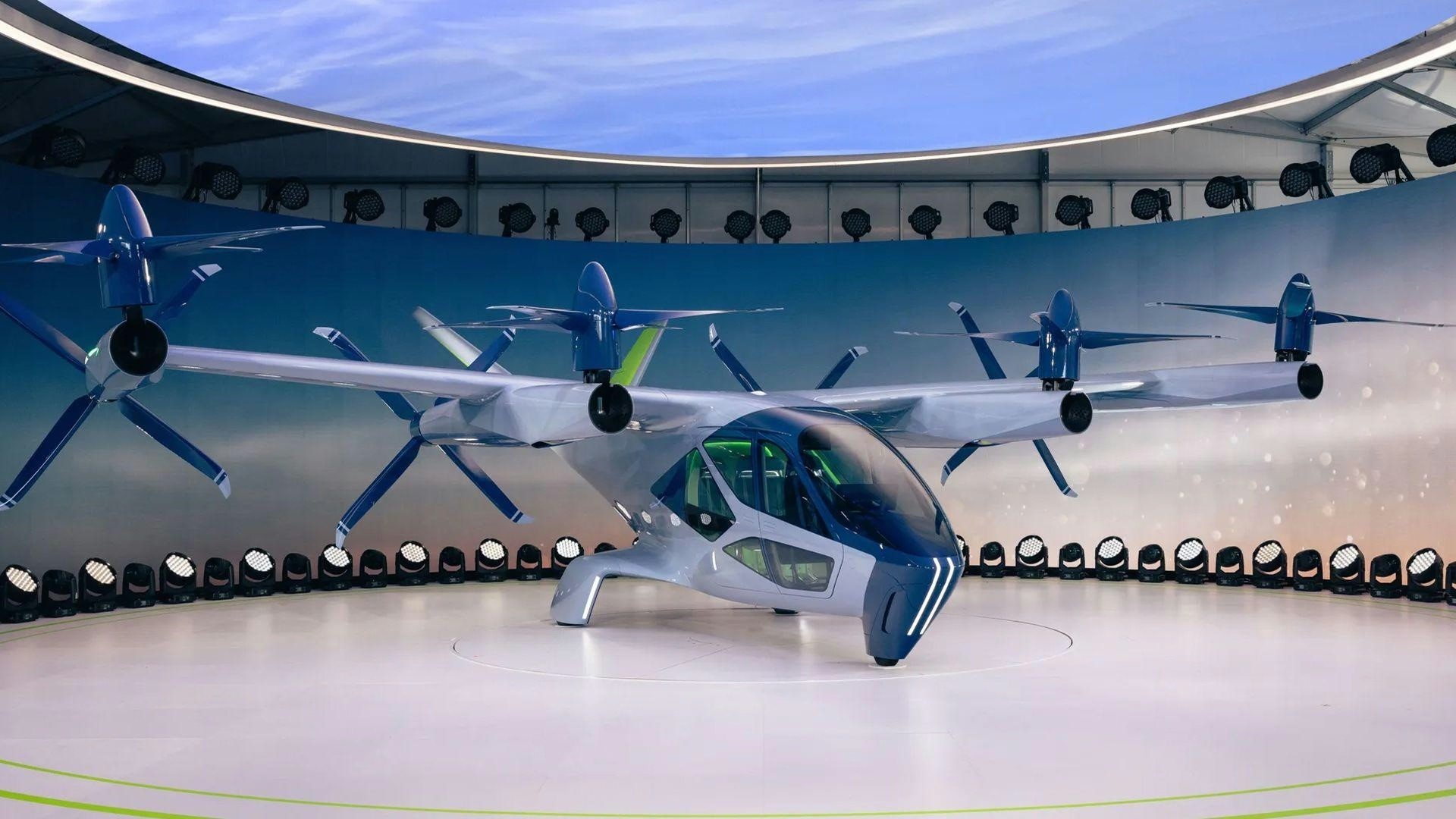
As advanced air mobility (AAM) aircraft prepare to enter U.S. airspace, NASA is conducting research to understand how communities might respond to the novel sounds these vehicles will introduce. The focus of this investigation is on air taxis—small aircraft intended for short-distance passenger transport, including personal travel and emergency medical services. NASA’s aeronautics division recently completed a study designed to assess public annoyance and sensitivity to these new noise sources.

The research, titled the Varied Advanced Air Mobility Noise and Geographic Area Response Difference (VANGARD) test, involved 359 participants from Los Angeles, New York City, and Dallas-Fort Worth. Conducted between late August and September 2025, the study exposed participants to 67 simulated aircraft sounds derived from NASA and industry concept designs. To ensure impartial feedback, participants were not informed of the manufacturers nor shown images of the aircraft. This methodology aimed to isolate auditory perception from visual or brand biases.

Key Findings and Methodology

Preliminary results indicate that residents in noisier urban environments reported higher levels of annoyance from air taxi sounds compared to those living in quieter suburban areas. While researchers continue to analyze the data, early interpretations suggest that individuals accustomed to elevated background noise may exhibit increased sensitivity to additional sound disturbances. Participants rated their annoyance after hearing each aircraft flyover simulation and provided their zip codes, allowing researchers to classify their home environments by ambient noise levels.

Most participants completed the study remotely using personal audio devices, while a control group of 20 individuals participated on-site at NASA’s Langley Research Center using standardized listening equipment. The consistency of responses between these groups reinforces the reliability of the findings.

Addressing Public Concerns Amid Industry Progress

The introduction of air taxis has sparked community opposition in certain regions, notably Southern California, where petitions have circulated expressing concerns over noise pollution and the impact of low-flying aircraft. These public apprehensions underscore the significance of NASA’s research in guiding both industry stakeholders and policymakers.

Despite skepticism, companies such as Vertical Aerospace and Archer Aviation continue to advance their air taxi initiatives, aiming to secure regulatory certifications from the Federal Aviation Administration (FAA) and UK authorities by 2028. Their progress highlights the pressing need to understand and mitigate community reactions to the noise generated by these emerging aircraft.

NASA’s ongoing studies, including the VANGARD test, seek to facilitate the safe and considerate integration of air taxis into communities. The insights gained are expected to inform future aircraft design and operational strategies, balancing technological innovation with the comfort and well-being of residents.

More news
Widebody Conversions Surpass Narrowbodies for First Time in Over 15 Years

Widebody Conversions Surpass Narrowbodies for First Time in Over 15 Years

Widebody Freighter Conversions Outpace Narrowbodies for the First Time Since 2009 In a notable development within the air cargo sector, widebody freighter conversions surpassed narrowbody conversions in 2025, marking the first such occurrence since 2009. This shift, highlighted by aviation advisory firm IBA during its recent webinar, reflects changing dynamics in the cargo aircraft market, driven largely by a slowdown in narrowbody conversions amid an oversupplied market. John Whaley, senior aviation analyst at IBA, emphasized the significance of this trend, noting that fewer than 20 narrowbody conversions were completed in 2025, a steep decline from approximately 70 in 2024. This downturn follows a post-pandemic surge when many aircraft owners converted idle passenger jets to freighters to meet heightened cargo demand. The resulting oversupply has since curtailed activity in the narrowbody segment. Challenges and Market Dynamics in Widebody Conversions Despite widebody conversions outnumbering narrowbodies, the widebody sector itself experienced a year-on-year decline, with 30 conversions completed in 2025 compared to 40 in 2024. Whaley attributed this to limited availability of suitable aircraft, as many widebodies remain in passenger service due to their high residual value. “Widebody capacity is limited and it seems to be getting worse, not better,” he remarked. This evolving landscape is influencing broader industry strategies. Airlines such as Ethiopian Airlines are engaging with Airbus to acquire widebody models like the A350, signaling a strategic emphasis on expanding regional and long-haul operations. This trend is expected to heighten competition among carriers focusing on widebody fleets. Concurrently, robust engine maintenance activity reported by Safran, despite geopolitical tensions in the Middle East, underscores sustained demand for widebody engine services. GE Aerospace’s marked increase in Leap engine deliveries further illustrates the growing market for widebody aircraft engines, prompting manufacturers to consider scaling production and enhancing engine durability to maintain competitiveness. Outlook and Emerging Trends in Freighter Conversions Looking forward, IBA anticipates a gradual correction in the narrowbody oversupply, though not before 2028. Narrowbody conversions are projected to remain just above 20 in 2026, while widebody conversions are expected to rise slightly above 30. This growth is likely to be supported by new widebody conversion programs and improved feedstock availability as more aircraft retire from passenger service. Whaley noted that while 2025 was a relatively quiet year following record passenger-to-freighter conversions in 2023, overall conversion activity is expected to increase modestly in 2026. IBA forecasts a pickup in both widebody and narrowbody conversions between 2028 and 2030. The market is also witnessing the introduction of new conversion programs, particularly for the 777P2F. The operator base for this model is expanding, with recent deliveries including IAI’s first two 777-300ERSFs to Kalitta Air and the initial aircraft for Fly Meta. Additionally, Challenge Group added its first 777-300ERSF to its fleet in March, reflecting growing investment and interest in widebody freighter conversions as airlines and lessors adapt to shifting cargo and passenger market conditions.
Pegasus Airlines Uses Artificial Intelligence to Improve Passenger Experience in Europe and the Middle East

Pegasus Airlines Uses Artificial Intelligence to Improve Passenger Experience in Europe and the Middle East

Pegasus Airlines Leverages Artificial Intelligence to Enhance Passenger Experience in Europe and the Middle East Pegasus Airlines, Turkey’s foremost low-cost carrier, is advancing its digital transformation through a strategic partnership with Overwatch AI, a U.S.-based firm specializing in artificial intelligence solutions. This collaboration has led to the deployment of an AI-powered operations platform aimed at streamlining decision-making processes, increasing operational efficiency, and improving data accessibility across Pegasus’s extensive network spanning Europe, the Middle East, and North Africa. The platform equips pilots, cabin crew, and operations personnel with real-time information, enabling them to make informed decisions on critical issues such as weather disruptions, aircraft maintenance, regulatory compliance, and airport logistics. By utilizing natural language queries, staff can swiftly retrieve essential data, thereby reducing response times and facilitating smoother flight operations. Enhancing Operational Reliability and Efficiency Operating approximately 30,000 flights monthly, Pegasus Airlines serves a diverse clientele of leisure and business travelers across key destinations in Europe, the Middle East, and North Africa. The integration of Overwatch AI’s platform is anticipated to reduce delays, optimize route management, and improve coordination with airports. For passengers, these improvements promise more reliable schedules, punctual departures, and fewer disruptions—factors that are particularly important for those undertaking multi-destination journeys or attending time-sensitive engagements. The AI system’s capacity to centralize and analyze vast quantities of operational data enables Pegasus to respond promptly to unforeseen challenges such as severe weather or technical malfunctions. This responsiveness not only enhances the passenger experience but also supports the broader tourism ecosystem, benefiting hotels, cultural sites, and local businesses that depend on consistent travel flows. Addressing Industry Challenges and Market Dynamics While Pegasus Airlines’ adoption of AI represents a significant technological advancement, it also introduces new challenges. Maintaining passenger trust in AI-driven services remains paramount, especially as travelers become increasingly aware of the technology’s influence on their travel experience. The airline must carefully balance automation with human oversight to uphold safety and reliability standards. Furthermore, Pegasus operates within an industry marked by geopolitical tensions and fuel market volatility, factors that complicate long-term strategic planning. Competitors such as Ryanair have underscored the difficulties airlines face in managing fuel supply risks and adapting to rapidly shifting market conditions. As more carriers invest in AI to enhance their operations, Pegasus will need to continue innovating to sustain its competitive advantage. Industry Implications and Future Prospects The aviation sector is closely monitoring Pegasus Airlines and other carriers as they integrate AI into their operational frameworks. Increased scrutiny is expected regarding the dependability of AI systems and the necessity of maintaining human oversight in critical decision-making processes. For Pegasus, the successful implementation of AI technology could establish a new benchmark for operational resilience and passenger satisfaction within the region. As Pegasus Airlines expands its digital capabilities, travelers can anticipate more predictable and efficient journeys across Europe, Turkey, and beyond, contingent upon the airline’s ability to navigate the evolving challenges associated with technology adoption and a complex global environment.
Inside Turkish Airlines’ vision for contextual, AI-ready retailing: Rethinking how offers are created, priced and managed end-to-end

Inside Turkish Airlines’ vision for contextual, AI-ready retailing: Rethinking how offers are created, priced and managed end-to-end

Inside Turkish Airlines’ Vision for Contextual, AI-Ready Retailing Airline retailing is experiencing a profound transformation, with Turkish Airlines emerging as a key innovator in this evolving landscape. Historically, airline products have been defined indirectly through fares, booking classes, and rigid rules, which constrained flexibility and differentiation. The advent of new offer and order models now allows airlines to explicitly define and manage prices and offers in real time, tailoring them to the specific context of each customer interaction. Yılmaz Goralı, Vice President of Airline Retailing – Product Development at Turkish Airlines, will elaborate on this evolution at the forthcoming APEX FTE EMEA and APEX FTE Ancillary & Retailing events in Dublin. Goralı underscores that Turkish Airlines, through its technology-focused subsidiary Turkish Technology, approaches this shift not as a mere upgrade but as a fundamental structural overhaul. He explains, “We operate a large technology landscape across the group, from passenger systems to cargo, MRO, and ground operations. When we talk about retailing, we are looking at it as a system-level question. We are building a Modern Airline Retailing platform that moves decision-making closer to the customer.” This platform, while currently being refined within Turkish Airlines, is conceived with broader industry ambitions. The objective is to “productise” these capabilities for the wider aviation sector, enabling airlines to respond more dynamically to customer needs and preferences. The Shift Toward Modular, Contextual Retailing Ancillary revenue, once considered a supplementary income stream, has evolved into a core growth driver for airlines. However, as Goralı notes, the effort to sell differentiated services has revealed the limitations of legacy systems. Traditional fare construction logic, inventory controls, and distribution standards were not designed for a marketplace where products vary depending on who is buying, when, and through which channel. This has prompted a shift toward modular product design, contextual pricing, and continuous engagement beyond the initial booking. Goralı emphasizes that “the interaction does not end at purchase—it continues through the journey, at check-in, at the airport, and inflight. Each of these becomes a retailing opportunity.” Despite the promise of this new approach, Turkish Airlines’ vision for contextual, AI-ready retailing faces significant challenges. Elevated fuel costs and geopolitical disruptions in the Middle East have dampened growth prospects across the industry. At the same time, competition is intensifying as travel technology companies such as Amadeus expand their offerings into retailing, biometric identity, artificial intelligence, hospitality, and payments. These competitors increasingly leverage AI for smarter e-commerce pricing and dynamic revenue management, seeking to mitigate the impact of rising operating costs. Adoption of AI within the travel and retail sectors remains limited. Research from the Global Business Travel Association (GBTA) reveals that 58% of corporate travel buyers report minimal impact from AI on their programs, underscoring the nascent stage of industry-wide transformation. As Turkish Airlines advances its retailing capabilities by structuring offers based on passenger profiles, travel segments, and service context, it exemplifies a broader industry shift from traditional fare construction to offer construction. In this emerging paradigm, the fundamental unit of commerce is no longer a fare alone but a tailored offer, managed end-to-end and primed for AI-driven personalization.
GE Confident Leap Turbofans Can Match CFM56 Durability

GE Confident Leap Turbofans Can Match CFM56 Durability

GE Confident Leap Turbofans Can Match CFM56 Durability Design Enhancements Target Durability Challenges GE Aerospace has expressed strong confidence that its Leap turbofan engines will ultimately achieve the long-term durability standards set by the widely respected CFM56 engines. This assurance follows a series of design improvements and component upgrades aimed at addressing heat-related durability issues. GE, which co-owns CFM International with Safran Aircraft Engines, is currently implementing high-pressure turbine (HPT) updates for the Leap-1A model, which powers the Airbus A320neo family, and is preparing similar enhancements for the Leap-1B, the exclusive engine for the Boeing 737 Max. These updates respond to operational challenges, particularly in hot and dusty environments such as the Middle East, where operators have had to overhaul Leap engines sooner than expected. In 2024, GE introduced a durability improvement package for the Leap-1A, which the company claims will double the time between required overhauls. Despite these initial hurdles, GE delivered 640 Leap engines in the first quarter of 2026, marking a 50% increase year-on-year. CFM International anticipates delivering over 2,000 Leap engines throughout 2026, even as it contends with rising raw material costs and ongoing supply chain pressures. Addressing Technical and Operational Concerns Mohamed Ali, GE’s commercial engines and services chief executive, highlighted the evolutionary nature of engine development during a recent briefing at GE’s Evendale, Ohio facility. He noted that the CFM56 itself underwent multiple generations before reaching its current level of reliability and expressed no doubt that the Leap will follow a similar trajectory. This milestone is particularly important as operators have raised concerns about the reliability of new-generation engines, including both the Leap and Pratt & Whitney’s competing PW1000G geared turbofans. Some industry observers have speculated that the higher core temperatures in these modern engines could limit their longevity compared to established models like the CFM56. Carlos Perez, GE vice-president of product safety, quality, and engineering, elaborated on the technical challenges involved. The high-pressure turbine, a critical component, is exposed to air temperatures reaching approximately 1,650°C (3,000°F), several hundred degrees hotter than in previous engine models. While advanced cooling systems protect metallic parts, the complex geometry of the air paths—with tolerances as fine as a human hair—makes achieving consistent durability difficult. Perez explained that unexpectedly high temperatures in the field can cause a phenomenon known as creep, a form of plastic deformation in turbine blades that can eventually lead to blade loss. Ali further emphasized that improvements in engine durability are typically realized over time. He cited the GE90 engines, which initially faced skepticism but now maintain on-wing times of 5,000 to 6,000 cycles. Similarly, the GEnx engines used on the Boeing 787 and 747-8 experienced significant durability gains following early operational setbacks. Market Outlook and Regulatory Scrutiny Despite these technical advancements, concerns persist regarding regulatory responses to recent Leap engine smoke incidents. A Department of Transportation inspector has called for more decisive action from the Federal Aviation Administration (FAA) in addressing these issues. Meanwhile, Safran remains optimistic about the commercial aviation market, reporting a high volume of shop visits in the first quarter of 2026. With ongoing technical refinements and a strong delivery pipeline, GE and Safran are confident that the Leap engine will ultimately match the CFM56’s longstanding reputation for durability and reliability.
Emirates Introduces First Airbus A380 Featuring New Three-Class Configuration

Emirates Introduces First Airbus A380 Featuring New Three-Class Configuration

Emirates Unveils First Airbus A380 with New Three-Class Cabin Configuration Emirates has launched its first fully retrofitted Airbus A380 featuring a new three-class cabin layout, marking a pivotal advancement in the airline’s extensive fleet modernization program. The upgraded aircraft, registered A6-EUX, is the first former two-class A380 to incorporate a Premium Economy cabin and is currently operating on the Dubai–Birmingham route. This development forms part of Emirates’ broader 219-aircraft retrofit initiative, designed to standardize the onboard experience and enhance the airline’s competitive position in premium long-haul travel. Enhanced Cabin Layout and Passenger Experience The reconfigured A380 now accommodates 76 Business Class seats, 56 Premium Economy seats, and 437 Economy Class seats. The newly introduced Premium Economy section is situated on the upper deck in a 2-3-2 seating arrangement, featuring redesigned interiors and upgraded materials developed in-house by Emirates Engineering in Dubai. This transformation aligns with a wider industry trend, as airlines increasingly invest in differentiated cabin products to attract higher-yield passengers and meet evolving traveler expectations. By introducing Premium Economy on aircraft that previously lacked an intermediate cabin, Emirates aims to capture growing demand from travelers seeking enhanced comfort without the premium cost of Business Class. This strategic move not only promotes product consistency across Emirates’ long-haul network but also supports a more balanced revenue model, with premium seating contributing to profitability while maintaining high overall capacity. Operational Challenges and Market Impact The implementation of the new three-class configuration involves extensive modifications and retrofitting, requiring significant time and resources that may affect aircraft availability. Market response has been favorable, with increased interest from Premium Economy travelers. However, this innovation is likely to prompt competitors to accelerate their own cabin upgrades to remain competitive. Emirates also plans to introduce en-suite bathrooms in First Class suites, a move that could elevate luxury standards within the industry, though such enhancements entail substantial costs and may reduce seat capacity. Despite these operational and competitive challenges, Emirates continues to demonstrate robust financial performance. The airline reported a net profit of Dhs19.7 billion for the fiscal year 2025-26, maintaining steady profitability amid disruptions caused by regional conflicts. Progress of the Retrofit Program and Future Outlook Emirates’ retrofit program, one of the largest in the aviation sector, has already seen 95 aircraft completed—comprising 42 Airbus A380s and 53 Boeing 777s—highlighting the airline’s accelerated execution and commitment to premium standardization across its network. Additional A380 conversions are scheduled through 2026, positioning Emirates to meet shifting demand for premium travel while ensuring consistency across its global fleet. As Emirates advances its cabin modernization and expands its Premium Economy offering, the airline is reinforcing its premium brand identity and setting new benchmarks for passenger experience, even as it manages the complexities inherent in large-scale fleet transformation.
Coforge Introduces Aeronova.AI to Transform Airline Retailing

Coforge Introduces Aeronova.AI to Transform Airline Retailing

Coforge Launches Aeronova.AI to Drive Airline Retail Transformation Coforge has introduced Aeronova.AI, a dedicated framework designed to assist airlines in navigating the complex transition to Offer, Order, Settlement, and Delivery (OOSD) operations. Officially unveiled on May 21, 2026, Aeronova.AI aims to modernize airline retailing capabilities while ensuring revenue continuity, operational stability, and a consistent customer experience throughout the transformation process. Overcoming Challenges in Airline Retail Execution As airlines increasingly adopt modern retailing strategies, they confront significant challenges in managing legacy Passenger Name Record (PNR) systems alongside emerging order-native platforms. Aeronova.AI addresses this issue by providing a structured acceleration layer that incorporates reusable assets, AI-driven automation, and airline-specific execution playbooks. This framework is intended to translate strategic retail ambitions into actionable and scalable solutions. Erika Moore, Chief Officer of Strategy & Growth at Coforge’s Travel, Transportation, and Hospitality division, highlighted that the main barriers for airlines lie not in ambition but in execution, coexistence, and scalability. She explained, “Aeronova.AI is built to help airlines move from strategy to production safely, reducing mobilization risk and accelerating the shift to modern, order-led retailing.” Strategic Implementation and Industry Impact Aeronova.AI is designed for phased, real-world adoption, allowing airlines to advance from pilot projects to full production operations at a controlled pace. The platform complements existing and emerging retailing systems rather than replacing them, addressing governance and scalability challenges that often hinder transformation efforts. By supporting revenue flows and ensuring financial auditability, Aeronova.AI seeks to maintain operational stability during the transition. This launch reflects Coforge’s commitment to delivering technology-driven solutions tailored specifically to the airline sector, drawing on decades of experience in airline and travel technology. Competitive Landscape and Market Dynamics Coforge’s entry into the airline retail technology market occurs amid intensifying competition from established industry players. Companies such as Amadeus are expanding their travel technology portfolios into biometric identity, artificial intelligence, hospitality, and payments, raising the standards for innovation and integration. Industry analysts note ongoing skepticism about the ability of new entrants like Coforge to effectively integrate AI within the complex airline retail ecosystem. Competitors including Sabre are enhancing their AI capabilities and establishing new data partnerships to sustain their market positions. Meanwhile, firms like Waracle and FIS are making significant investments in AI and data-driven solutions, further intensifying the competitive environment. As the travel technology sector continues to evolve rapidly, the success of Aeronova.AI will depend not only on its technical strengths but also on its capacity to deliver measurable value and seamless integration within a crowded and fast-changing marketplace.
Emirates Expands Premium Economy to New York City on Retrofitted Airbus A380s

Emirates Expands Premium Economy to New York City on Retrofitted Airbus A380s

Emirates Expands Premium Economy Service to New York City Emirates is advancing its premium cabin strategy by introducing Premium Economy service on its New York City route, extending the offering beyond its existing flagship destinations of Los Angeles, Chicago, Sydney, and Melbourne. This development forms part of a comprehensive fleet modernization program, under which the airline is refurbishing its Airbus A380 aircraft and upgrading other widebody jets to meet growing global demand for enhanced comfort at a price point below Business Class. Fleet Modernization and Strategic Deployment Instead of awaiting new aircraft deliveries, Emirates is retrofitting its current fleet, redesigning interiors to incorporate additional Premium Economy seats while preserving a strong Business Class presence. This approach signals a strategic shift from treating Premium Economy as a niche product to establishing it as a fundamental component across the airline’s long-haul network. By deploying these upgraded aircraft on routes with a high concentration of premium travelers, Emirates aims to attract a broader mix of leisure and business passengers seeking elevated comfort and value. The decision to expand Premium Economy to New York City—a highly competitive and commercially vital market—highlights Emirates’ commitment to strengthening its premium positioning. The airline seeks to enhance premium revenue streams and optimize yield management by increasing the availability of premium seats. With plans to introduce refreshed cabin products to 99 destinations by the end of 2026, Emirates is reinforcing Dubai’s role as a global transfer hub and reshaping the competitive landscape of long-haul aviation. Commercial Implications and Market Impact Emirates’ strategy offers several commercial advantages. By upgrading existing aircraft, the airline accelerates the rollout of Premium Economy, reducing dependence on manufacturing timelines and enabling a more agile response to market demand. The flexible deployment of retrofitted A380s and other widebodies allows Emirates to extend premium offerings across a wider range of routes, fostering consistency in the passenger experience. The airline’s sustained profitability, despite challenges such as regional conflicts, positions it well to navigate competitive pressures in key markets like New York. As Emirates expands its premium footprint, competitors may respond with similar enhancements or new service offerings, potentially intensifying competition for premium travelers. Market observers anticipate increased interest from business travelers and premium leisure passengers attracted by the improved comfort and value proposition of Premium Economy. Emirates’ ongoing refurbishment program and focus on maximizing aircraft revenue potential are designed to align capacity with demand and improve route profitability. By integrating Premium Economy into its core network strategy and leveraging a large-scale fleet modernization initiative, Emirates is enhancing the customer experience while reinforcing its competitive edge in the global aviation sector. The expansion to New York City represents a significant milestone in the airline’s ambition to establish a world-leading premium offering across its long-haul network.
Autonomous System Developed for Pilotless Cargo Aircraft

Autonomous System Developed for Pilotless Cargo Aircraft

Autonomous System Developed for Pilotless Cargo Aircraft Advancing Autonomous Aviation for Heavy Cargo Merlin, Inc. has announced a significant breakthrough in autonomous aviation with the introduction of the Merlin Pilot for Commercial Cargo, an AI-driven flight system engineered to enable pilotless operations in large cargo aircraft. While autonomous flight technology has made considerable strides in recent years, the primary challenge has evolved beyond achieving uncrewed flight to ensuring these systems can safely navigate complex, real-world airspaces alongside traditional aircraft and air traffic control. Historically, autonomous flight systems have been confined to smaller aircraft such as the Cessna 150 and the Cessna 208B Grand Caravan. However, the expanding market for heavy cargo planes, exemplified by models like the Lockheed Martin Hercules, represents the true growth opportunity. Boeing projects a demand for approximately 2,800 new builds and conversions of large cargo aircraft over the next two decades. This surge coincides with a critical shortage of qualified pilots, raising concerns about staffing the growing fleet. While public acceptance of pilotless passenger flights remains limited, cargo operations offer a more immediate and pragmatic application for autonomous technology. Development and Capabilities of the Merlin Pilot Founded in 2018 and headquartered in Boston, Merlin has dedicated several years to developing and testing its autonomous system across five different aircraft types, including real-world commercial route trials in Alaska and New Zealand. The Merlin Pilot, part of the company’s Condor product family designed for large, multi-crew aircraft, is aircraft-agnostic and can be retrofitted into existing airframes. Its sophisticated multi-sensor suite integrates GPS, inertial guidance, radar, radio altimeters, and environmental sensors. The system’s flight software supports autonomous control, collision avoidance, and obstacle detection. A notable feature is its integrated natural language processing model, which enables the system to comprehend and respond to air traffic control communications in a manner akin to a human pilot. Despite these technological advancements, significant challenges remain. Regulatory approval for autonomous flight systems is complex, with stringent safety requirements and the necessity for seamless integration into existing logistics and air traffic management frameworks. Merlin is addressing these challenges through a phased deployment strategy, initially introducing the system as an advanced cognitive co-pilot working alongside a human safety pilot. This approach aligns with regulatory expectations and facilitates the collection of operational data critical for the eventual certification of fully autonomous flight. Market Response and Industry Competition The market’s reaction to autonomous cargo aircraft has been mixed. Traditional logistics companies have expressed skepticism, citing concerns over reliability, safety, and integration with established supply chains. Concurrently, competition within the sector is intensifying. Firms such as Near Earth Autonomy are developing comparable autonomous systems, accelerating development timelines and driving increased investment as companies vie to establish a foothold in this emerging market. Matt George, CEO and founder of Merlin, emphasized the urgency of the moment: “The pilot shortage is structurally impacting operators and comes at a time when the conversion market is at record volume. The window to integrate autonomy, both during the Passenger-to-Freighter (P2F) conversion and in aircraft being currently built, is open, making this a particularly pivotal moment.” As Merlin and its competitors advance, the future of autonomous cargo aviation will hinge not only on technological innovation but also on overcoming regulatory, operational, and market acceptance challenges.
Bamboo Airways Parent Company Announces Major Fleet Expansion and Operational Shift

Bamboo Airways Parent Company Announces Major Fleet Expansion and Operational Shift

Bamboo Airways Parent Company Announces Major Fleet Expansion and Operational Shift Vietnam’s aviation industry is on the cusp of significant change as FLC Group, the parent company of Bamboo Airways, reveals an ambitious new aircraft leasing strategy. This initiative signals a substantial fleet expansion and a strategic realignment of operations, aimed at stabilizing the airline’s performance and supporting growth in one of Asia’s most dynamic travel markets. Strategic Shift: Establishment of FLC Aircraft Investment and Leasing JSC In February 2026, FLC Group launched FLC Aircraft Investment and Leasing JSC, a dedicated subsidiary focused on aircraft leasing and trading. Initially capitalized at approximately VND 1.5 trillion (USD 60 million), the company swiftly increased its capital to VND 6 trillion within a matter of weeks. Beyond leasing, the subsidiary’s remit includes aircraft sales, spare parts support, aviation services, and logistics, positioning it as a cornerstone for a comprehensive aviation ecosystem. This internal leasing arm is designed to reduce Bamboo Airways’ dependence on third-party lessors and external financing, which often entail high costs and limited operational flexibility. By gaining greater control over fleet availability and financial planning, the airline aims to better adapt to fluctuating demand across domestic and international routes. Navigating Industry Challenges and Competitive Pressures Despite the ambitious expansion, Bamboo Airways faces a complex operational environment. The airline must contend with regulatory challenges and infrastructure constraints similar to those experienced by global lessors such as TrueNoord in Africa. Additionally, managing rapid growth amid shifting demand patterns—an issue familiar to carriers like AirAsia—will be critical to avoid fleet overcapacity or underutilization. Financial pressures also present significant risks. Rising fuel prices and ongoing geopolitical tensions threaten to increase operating costs and affect route profitability. Maintaining operational efficiency and safety standards under these conditions will be essential for Bamboo Airways to realize its growth objectives. The announcement is expected to intensify competition within Vietnam’s aviation sector. Rival airlines may respond by revising their own fleet strategies or making strategic investments, akin to Singapore Airlines’ long-term support for Air India. Bamboo Airways’ challenge will be to leverage its new leasing capabilities to enhance flexibility, control costs, and uphold service quality amid heightened industry scrutiny. Bamboo Airways’ Evolution and Future Prospects Since its founding in 2017 as a hybrid carrier combining full-service and low-cost models, Bamboo Airways expanded rapidly, primarily utilizing leased Airbus A320 and A321 aircraft. However, the airline’s trajectory was disrupted by corporate scandals and restructuring, leading to changes in ownership and strategic direction. With the support of FLC Group’s new leasing subsidiary, Bamboo Airways is now positioning itself for a sustainable recovery. This integrated approach aims not only to strengthen the airline but also to bolster Vietnam’s broader travel and tourism sector, reinforcing the country’s ambitions as a regional aviation hub. As competition intensifies in Vietnam’s skies, Bamboo Airways’ fleet expansion and operational shift will be closely monitored by industry stakeholders and travelers worldwide.
Delta Air Lines Phases Out Boeing 777 Fleet

Delta Air Lines Phases Out Boeing 777 Fleet

Delta Air Lines Phases Out Boeing 777 Fleet Delta Air Lines, one of the largest carriers in the United States, has officially retired its Boeing 777 fleet, marking a significant transformation in its long-haul operations. The decision, announced in 2020, surprised many within the aviation community given the Boeing 777’s widespread popularity and proven reliability among global airlines. However, Delta’s move was a strategic response to shifting industry dynamics, evolving travel patterns, and the imperative for enhanced operational efficiency. The Boeing 777 Legacy at Delta Delta introduced the Boeing 777 in 1999, deploying both the 777-200ER and 777-200LR variants to expand its reach into ultra-long-haul markets. These aircraft enabled the airline to inaugurate ambitious routes to Asia and Australia, with the 777-200LR’s extended range facilitating non-stop flights such as Atlanta to Johannesburg and Los Angeles to Sydney. Over nearly two decades, the 777 became a cornerstone of Delta’s international strategy, valued for its reliability and capacity. The airline’s final Boeing 777 flight occurred on October 31, 2020, operating from New York JFK to Los Angeles. Reflecting on the aircraft’s contribution, Delta’s Chief Operating Officer Gil West remarked, “The 777 has been a reliable part of Delta’s success since it joined the fleet in 1999 and because of its unique operating characteristics, opened new non-stop, ultra-long-haul markets that only it could fly at that time.” Strategic Considerations Behind the Retirement Despite the Boeing 777’s strong reputation, it was not the most cost-effective aircraft within Delta’s fleet. The onset of the COVID-19 pandemic, which drastically curtailed global travel demand, presented an opportunity for the airline to streamline its operations. Older widebody aircraft like the 777 consumed more fuel and incurred higher maintenance costs compared to newer models such as the Airbus A330, which Delta had already begun integrating. By retiring all 18 of its 777s, Delta aimed to reduce operating expenses and better align capacity with uncertain long-haul demand. This decision also reflected broader industry trends, as rising fuel prices compelled airlines to reassess their route networks and fleet compositions. Operational Challenges and Market Pressures Delta’s transition away from the 777 has not been without difficulties. The airline has recently experienced operational disruptions, including flight cancellations linked to internal crew restrictions. These challenges have complicated the integration of newer aircraft and the adjustment to a more streamlined fleet. At the same time, competitors such as Alaska Airlines have intensified competition at key hubs, seeking to capitalize on Delta’s operational vulnerabilities. Persistently high fuel prices have further pressured airlines, including Delta, to cut routes and reevaluate their long-haul strategies. While Boeing continues to deliver new aircraft models, Delta’s current operational hurdles may affect its capacity to seamlessly incorporate these planes into service. Looking Ahead The retirement of the Boeing 777 marks the conclusion of a significant chapter for Delta Air Lines, while simultaneously signaling a shift toward a more cost-effective and flexible operational model. As the airline contends with ongoing operational challenges and a competitive market environment, its ability to adapt will be critical in shaping the future of its long-haul operations.
line









