
Orchestrate AI insights into action

Trending
Categories
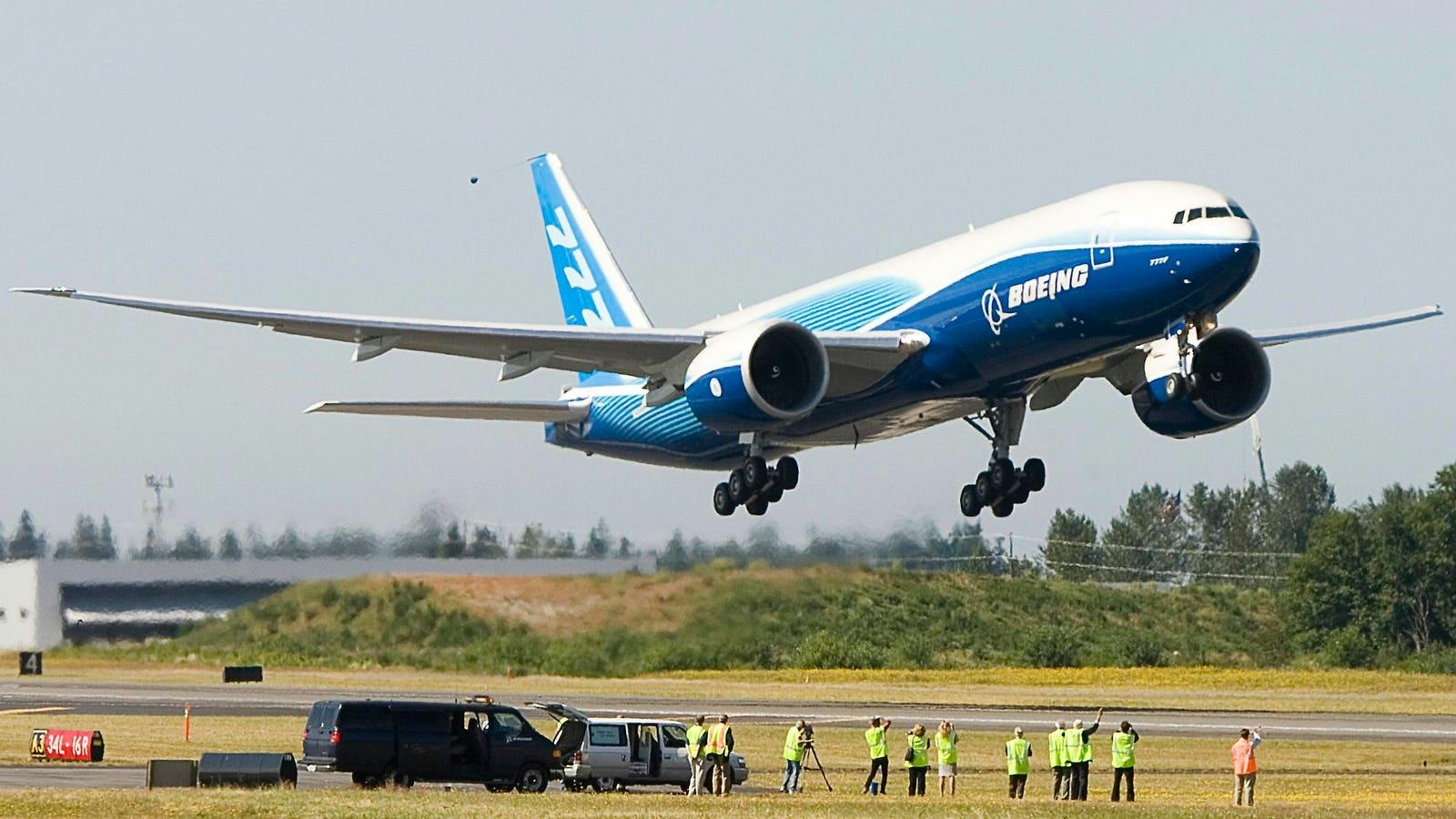
New Aircraft to Succeed the Boeing 777-200LR
New Aircraft to Succeed the Boeing 777-200LR
The introduction of the Boeing 747 in the late 1960s marked a pivotal moment in commercial aviation, inaugurating the era of widebody airliners and enabling airlines to expand long-haul routes across continents. Over the following decades, widebody aircraft became the cornerstone of global carriers, shaping the modern travel experience and driving continuous innovation in aircraft design and operational efficiency.
Among the significant milestones in this evolution was the Boeing 777-200LR, launched in the mid-2000s. Designed specifically for ultra-long-range flights, the 777-200LR set new records for nonstop commercial travel and became a preferred choice for airlines connecting distant cities. However, advancements in technology have since produced aircraft that match or exceed the 777-200LR’s range while offering superior fuel efficiency and reduced operating costs. Consequently, airlines are increasingly turning to the next generation of widebody jets to replace their aging 777-200LR fleets.
The Boeing 777-200LR: A Brief History
The Boeing 777 program originated in the 1980s amid growing competition in the widebody market, spurred by the development of aircraft such as the McDonnell Douglas MD-11 and Airbus A330/A340. To maintain its leadership position, Boeing abandoned plans for a stretched 767 derivative in favor of a clean-sheet design. The company collaborated closely with eight major airlines—including United Airlines, British Airways, and Cathay Pacific—to ensure the new aircraft would meet the evolving demands of the industry.
The first Boeing 777 was unveiled in April 1994 and entered commercial service with United Airlines in June 1995, operating flights between London Heathrow and Washington Dulles. Over time, Boeing expanded the 777 family with variants such as the 777-200ER and 777-300, culminating in the introduction of the second-generation 777-200LR. Renowned for its exceptional range capabilities, the 777-200LR became emblematic of long-haul performance, with more than 1,750 Boeing 777s delivered worldwide.
Technological Advancements and Market Shifts
The 777 series introduced several technological innovations, including fully digital fly-by-wire controls and the extensive use of composite materials, which enhanced both performance and reliability. As the aviation industry increasingly prioritizes efficiency and sustainability, newer aircraft models are emerging to succeed the 777-200LR.
The transition to these next-generation jets faces challenges, notably regulatory delays such as the Federal Aviation Administration’s certification process for Boeing’s 777X, which has affected the timeline for the aircraft’s entry into service. Despite these obstacles, market confidence remains robust. Emirates, for instance, has committed to purchasing 65 additional Boeing 777X aircraft, underscoring strong demand for the new model. Meanwhile, competition between Boeing and Airbus is intensifying, with both manufacturers expected to present their latest widebody aircraft at the 2025 Dubai Airshow.
In parallel, airlines are adapting their existing fleets to maintain competitiveness. American Airlines’ decision to retrofit its older 777-200ERs with the new Flagship Suite highlights a broader industry emphasis on enhancing the premium passenger experience, even as newer aircraft prepare to assume a central role.
As the Boeing 777-200LR nears retirement, the commercial aviation sector stands on the cusp of another transformation, shaped by technological progress, regulatory developments, and shifting market dynamics.

Etihad Airways Suspends Airbus A380 Flights on Key Route

Aditya Birla Group Seeks Approval for Aircraft Leasing in GIFT City

Qatar Airways Highlights Innovation and Connectivity at Arabian Travel Market 2026

Hong Kong's Five-Year Plan Includes Andrew Fan's Aircraft Parts Processing Hub Proposal

ACIA Aero Leasing Delivers ATR72-600 to Air Nostrum

RTX Appoints Jill Albertelli as Head of Pratt & Whitney

TAT Technologies Joins Beyond Aero Hydrogen Aircraft Program

AURAK Study Highlights Barriers to Air Taxi Adoption in Emerging Economies

Xiamen Air Selects Altitude for 787 Maintenance at Heathrow

Etihad and Swissport Extend Global Partnership
