
Orchestrate AI insights into action

Trending
Categories
Norse Atlantic Airways Announces Significant Job Cuts and Shift to Leasing Strategy
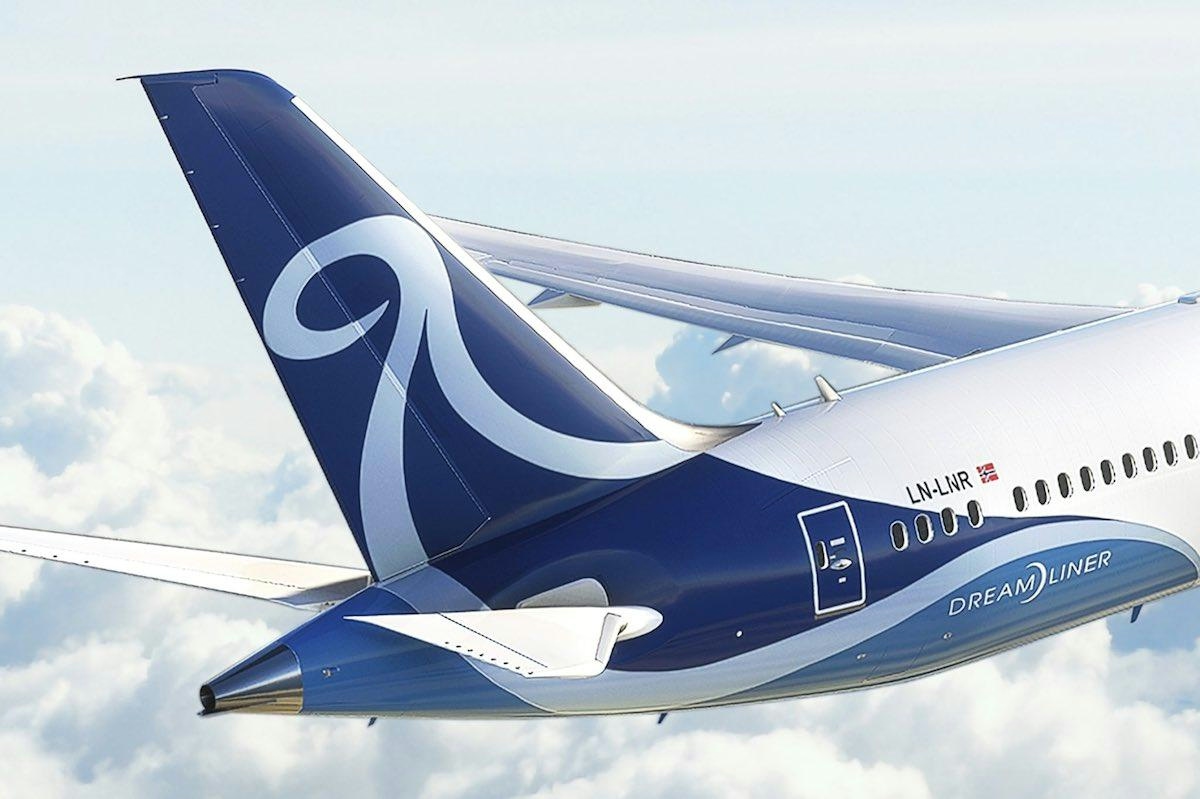
Norse Atlantic Airways Announces Major Job Cuts and Strategic Shift to Leasing Amid Industry Turbulence
Norse Atlantic Airways, the Norwegian long-haul carrier, has initiated a comprehensive restructuring plan in response to escalating economic challenges within the global aviation industry. The initiative, dubbed “Project Falcon,” aims to reduce annual costs by up to $50 million, primarily through a 35% reduction in its administrative workforce, equating to approximately 75 positions. Alongside these cuts, the airline is implementing furloughs and temporary pay reductions for flight crews to better align payroll expenses with actual flight activity.
Operational Challenges and Route Adjustments
The airline’s restructuring comes amid volatile fuel prices and geopolitical tensions that have significantly increased jet fuel costs. These pressures have compelled Norse Atlantic to discontinue its Los Angeles routes, citing unsustainable operating expenses. This situation reflects a wider industry trend, with competitors such as Ascend Airways returning their fleets and relinquishing their UK Air Operator Certificate due to similar difficulties in the wet-lease market.
Strategic Pivot to ACMI Leasing Model
Central to Norse Atlantic’s revised strategy is a decisive shift toward the ACMI (Aircraft, Crew, Maintenance, and Insurance) leasing model. Rather than relying solely on direct ticket sales, the airline plans to lease its fleet of Boeing 787 Dreamliners—including crew and maintenance services—to other carriers. This approach is intended to stabilize fleet utilization and reduce exposure to the volatility of demand on long-haul routes.
Since its establishment in 2021, Norse Atlantic has sought to fill the void left by Norwegian Air Shuttle’s long-haul operations but has faced persistent challenges from high operating costs and intense competition from established network carriers. The current restructuring reflects management’s acknowledgment of the need for a leaner and more adaptable corporate structure. The significant administrative reductions are justified as necessary to centralize processes and eliminate redundancies, while operational flexibility is being enhanced through a reorganization of crew bases. This will enable the airline to deploy crews more efficiently in response to fluctuating demand, thereby lowering fixed costs associated with permanent locations.
Impact on Workforce and Industry Context
Flight crews are also experiencing uncertainty, with furloughs and temporary pay cuts introduced to better synchronize staffing levels with seasonal demand. These measures aim to directly link payroll expenses to actual flight hours, mitigating financial risks during periods of reduced bookings. Although unions have voiced concerns—particularly given Norse Atlantic’s initial assurances of more stable working conditions compared to some low-cost competitors—management maintains that these steps are critical for the airline’s survival and long-term job security.
This restructuring occurs amid a broader wave of strategic realignments across the aviation sector. Notably, the appointment of AirBaltic’s former COO as head of EuroAtlantic Airways signals ongoing shifts as airlines adapt to market volatility. Norse Atlantic’s concurrent strategic review and recent capital raise are designed to bolster financial resilience and restore investor confidence.
Norse Atlantic’s leadership emphasizes that returning to profitability remains the foremost priority. By adopting the ACMI leasing model and streamlining operations, the airline aims to navigate current industry turbulence and establish a sustainable position in an increasingly unpredictable market.

Etihad Airways Suspends Airbus A380 Flights on Key Route

Aditya Birla Group Seeks Approval for Aircraft Leasing in GIFT City

Qatar Airways Highlights Innovation and Connectivity at Arabian Travel Market 2026

Hong Kong's Five-Year Plan Includes Andrew Fan's Aircraft Parts Processing Hub Proposal

ACIA Aero Leasing Delivers ATR72-600 to Air Nostrum

RTX Appoints Jill Albertelli as Head of Pratt & Whitney

TAT Technologies Joins Beyond Aero Hydrogen Aircraft Program

AURAK Study Highlights Barriers to Air Taxi Adoption in Emerging Economies

Xiamen Air Selects Altitude for 787 Maintenance at Heathrow

Etihad and Swissport Extend Global Partnership
