
Orchestrate AI insights into action

Trending
Categories
Operators Consider Expanding In-House Heavy Maintenance Following UPS MD-11F Crash
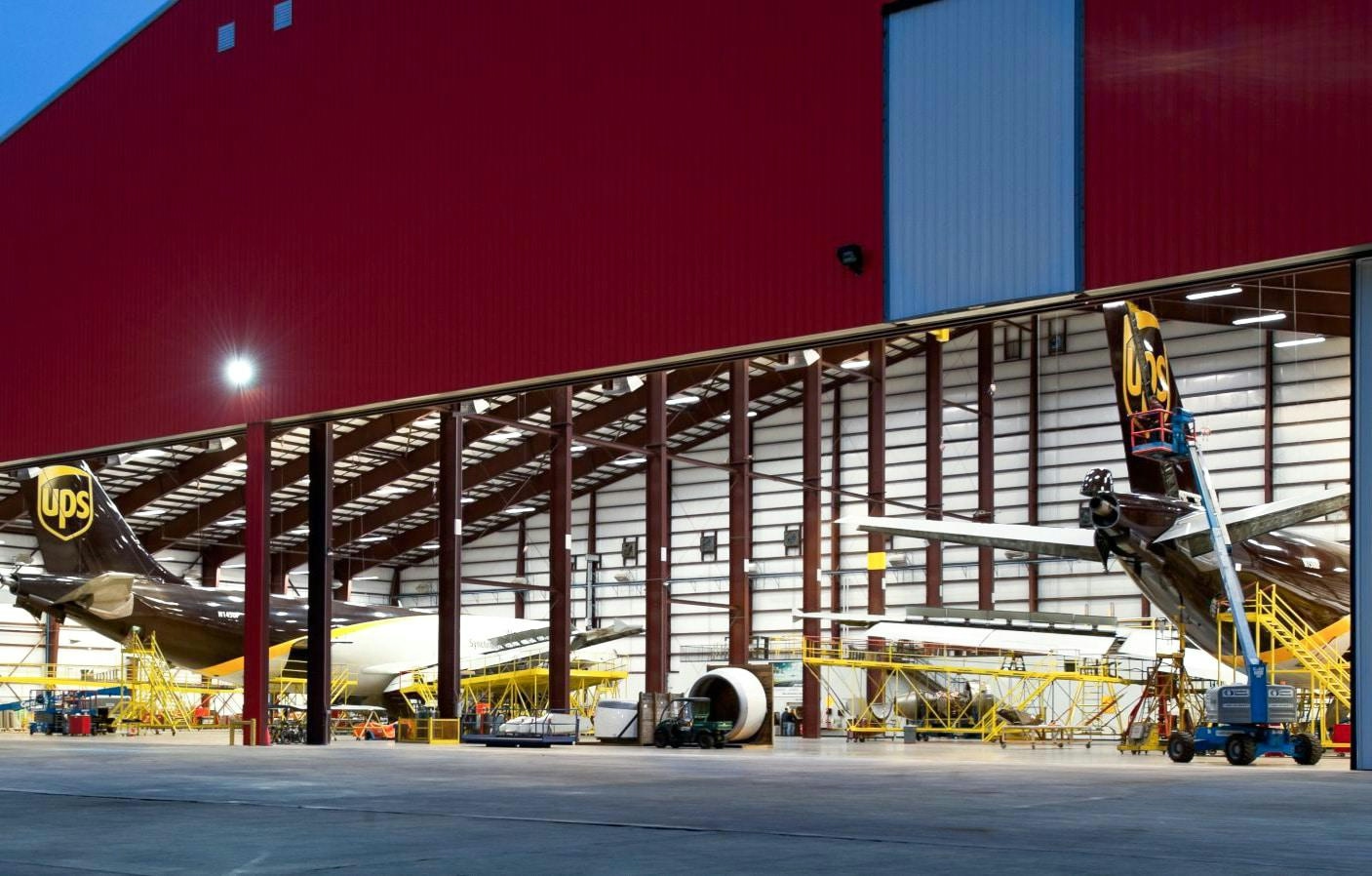
Operators Reevaluate Maintenance Strategies Following UPS MD-11F Crash
In the aftermath of the recent UPS MD-11F crash, cargo operators worldwide are reassessing their maintenance approaches, with many contemplating the expansion of in-house heavy maintenance capabilities. The incident has intensified scrutiny from regulators and industry stakeholders, prompting a thorough reevaluation of existing safety and maintenance protocols.
Regulatory Response and Operational Impact
Both the Federal Aviation Administration (FAA) and Boeing have advised suspending MD-11F operations pending comprehensive safety evaluations. Consequently, major carriers including UPS and FedEx have grounded their MD-11 fleets, resulting in significant disruptions to global supply chains. This grounding has not only constrained cargo capacity but also contributed to increased market volatility as shippers and logistics providers adjust to the sudden reduction in available aircraft.
The heightened regulatory oversight following the crash is expected to complicate efforts to expand in-house heavy maintenance. Operators now face more stringent compliance requirements and intensified inspections, potentially slowing initiatives to internalize maintenance operations. Nevertheless, some carriers view this challenge as an opportunity to elevate safety standards and decrease dependence on third-party maintenance providers.
Industry Reactions and Future Outlook
Competitors are exerting additional pressure on maintenance organizations to uphold rigorous safety practices. This increased focus on maintenance quality is anticipated to drive further investment in training, technology, and infrastructure among operators aiming to sustain or grow their MD-11F fleets.
The incident has also sparked a broader industry dialogue regarding the future of heavy maintenance for aging freighter aircraft. As operators deliberate the costs and benefits of expanding in-house capabilities, they remain attentive to regulatory developments and market responses. The results of ongoing safety assessments and the eventual reinstatement of the MD-11F will likely influence maintenance strategies across the cargo sector for years ahead.
Meanwhile, the industry continues to navigate uncertainty as operators, regulators, and maintenance providers collaborate to restore confidence in the safety and reliability of the MD-11F fleet.
Comments

Etihad Airways Suspends Airbus A380 Flights on Key Route

Aditya Birla Group Seeks Approval for Aircraft Leasing in GIFT City

Qatar Airways Highlights Innovation and Connectivity at Arabian Travel Market 2026

Hong Kong's Five-Year Plan Includes Andrew Fan's Aircraft Parts Processing Hub Proposal

ACIA Aero Leasing Delivers ATR72-600 to Air Nostrum

RTX Appoints Jill Albertelli as Head of Pratt & Whitney

TAT Technologies Joins Beyond Aero Hydrogen Aircraft Program

AURAK Study Highlights Barriers to Air Taxi Adoption in Emerging Economies

Xiamen Air Selects Altitude for 787 Maintenance at Heathrow

Etihad and Swissport Extend Global Partnership
