
Orchestrate AI insights into action

Trending
Categories
Pilots and Airlines Use AI to Optimize Seatbelt Sign Timing
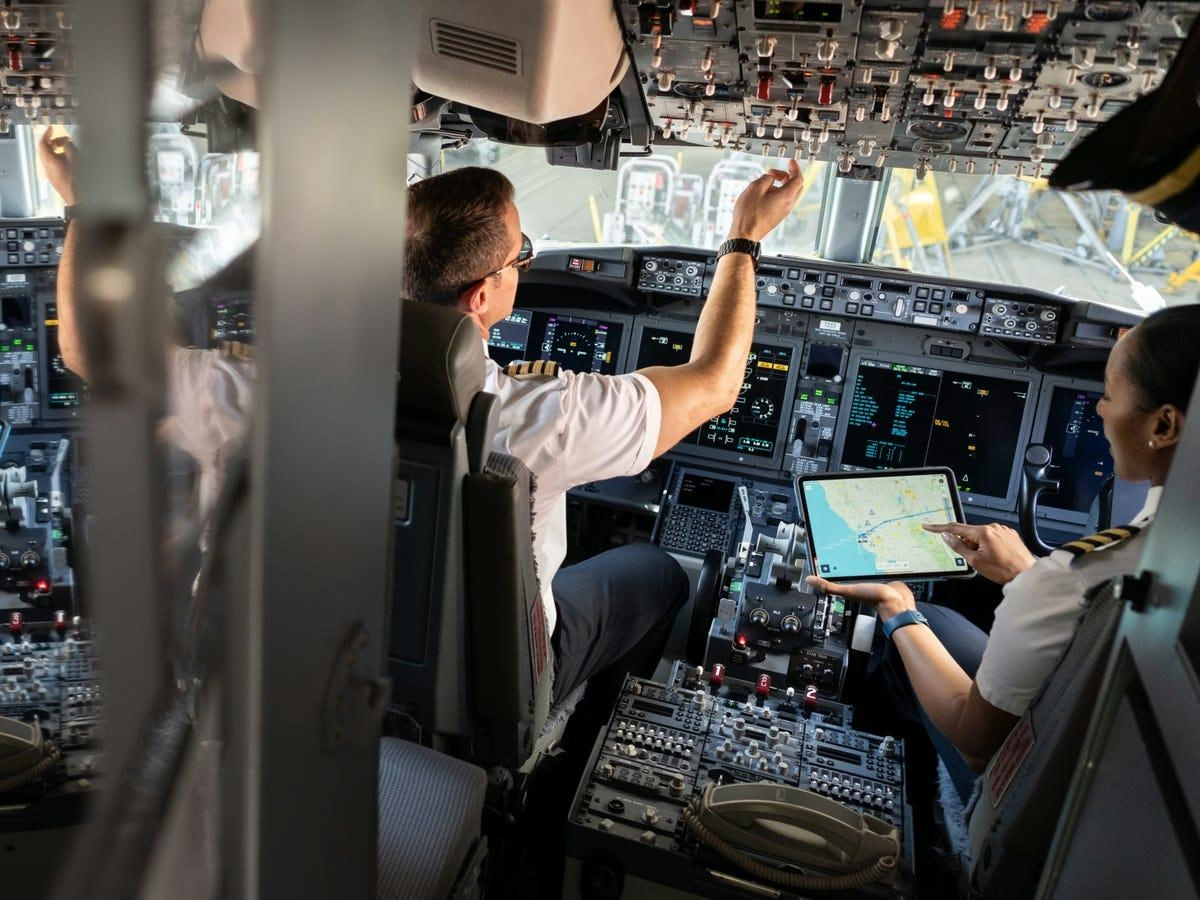
Pilots and Airlines Employ AI to Enhance Seatbelt Sign Timing
Airline passengers frequently question the timing of the seatbelt sign, particularly why it is not always illuminated during turbulence or why it sometimes activates only after a sudden jolt. Captain Will Ware, a veteran US airline pilot with over four decades of experience, explains that the decision to turn the seatbelt sign on or off involves a complex balance of safety considerations, passenger comfort, and the logistical challenges of managing hundreds of individuals onboard. “We don’t want to just leave the seatbelt sign on for the entire flight; that’s not providing much hospitality,” Ware remarked.
Challenges in Turbulence Prediction
Turbulence remains a persistent and unpredictable hazard in aviation, capable of causing serious injuries when passengers or crew are unbuckled. Traditionally, pilots have relied on a combination of weather forecasts, reports from other aircraft, air traffic control updates, and their own experience to anticipate turbulence. However, these sources can be incomplete, subjective, or slow to reflect real-time conditions, complicating efforts to optimize seatbelt sign usage.
Integration of AI and Real-Time Data
In response to these challenges, airlines are increasingly turning to artificial intelligence and real-time data analytics to improve turbulence forecasting and refine the timing of seatbelt sign activation. Captain Ware is actively involved in the development and deployment of SkyPath, an AI-driven platform currently utilized by major carriers including United Airlines, Delta Air Lines, and Japan Airlines. SkyPath aggregates weather data collected from iPads equipped with sensors aboard aircraft already in flight, integrating this information with other sources to deliver pilots a comprehensive, real-time assessment of turbulence conditions ahead.
The AI model underpinning SkyPath processes and analyzes this data, enabling predictions of turbulence up to 24 hours in advance with an accuracy rate reportedly around 90 percent. Ware described the system’s functionality: “My iPad gives me a little message that says, ‘You might have moderate turbulence in 13 minutes.’ So I can call the flight attendants and say, ‘Hey, I want you to be sitting down in 10 minutes.’ Then I can turn on the sign, and hopefully, before you hit it, everyone is safely seated.” He compared the platform to Google Maps, where individual vehicles contribute data to create a broader picture of traffic conditions.
Industry Implications and Limitations
While AI tools like SkyPath are bolstering pilots’ ability to forecast turbulence more accurately, several challenges remain. Scaling these AI solutions across entire fleets, addressing skill gaps among flight crews, and maintaining transparency regarding the use of AI-generated information are ongoing concerns. Additionally, some passengers may remain skeptical about the effectiveness of AI-driven seatbelt sign optimization, questioning whether such innovations truly enhance safety or comfort.
The competitive landscape within the airline industry is evolving as more carriers adopt advanced AI systems, prompting rivals to accelerate their own technological initiatives. Concurrently, the Federal Aviation Administration (FAA) is exploring AI-supported solutions to improve the management of U.S. airspace, a development that could further influence industry dynamics. Nonetheless, analysts caution that widespread implementation of these technologies will require considerable time.
Despite the growing role of AI, Captain Ware underscores that human judgment remains indispensable in the cockpit. “There’s never going to be a perfect tool that tells us exactly when turbulence is going to happen,” he said. “I think passengers think we have a radar for turbulence, but we’re really just using the best tools available to make the safest call.”

Etihad Deploys Widebody Fleet to Meet Strong Demand

Korean Air Finalizes $36.2 Billion Deal with Boeing

Australia’s RFDS Queensland Section Orders Six King Air 260Cs

Korean Air Finalizes Order for 103 Boeing Jets and Engines

Embraer E195-E2 Features Distinctive Engine Placement Among Regional Jets

What Passengers Can Expect on Boeing’s New 777X Jet

How Ethiopian Airlines Became Africa’s Leading Carrier Amid Gulf Competition

Joby Aviation Extends Autonomous Flight Capabilities with Cross-Country Tour
Strengthening Europe's Aviation Supply Chain Amid Uncertainty
The Evolution of the Aircraft Maintenance Engineer Role
