
Orchestrate AI insights into action

Trending
Categories
Qatar Airways Unveils the World’s First Digital Cabin Crew Member
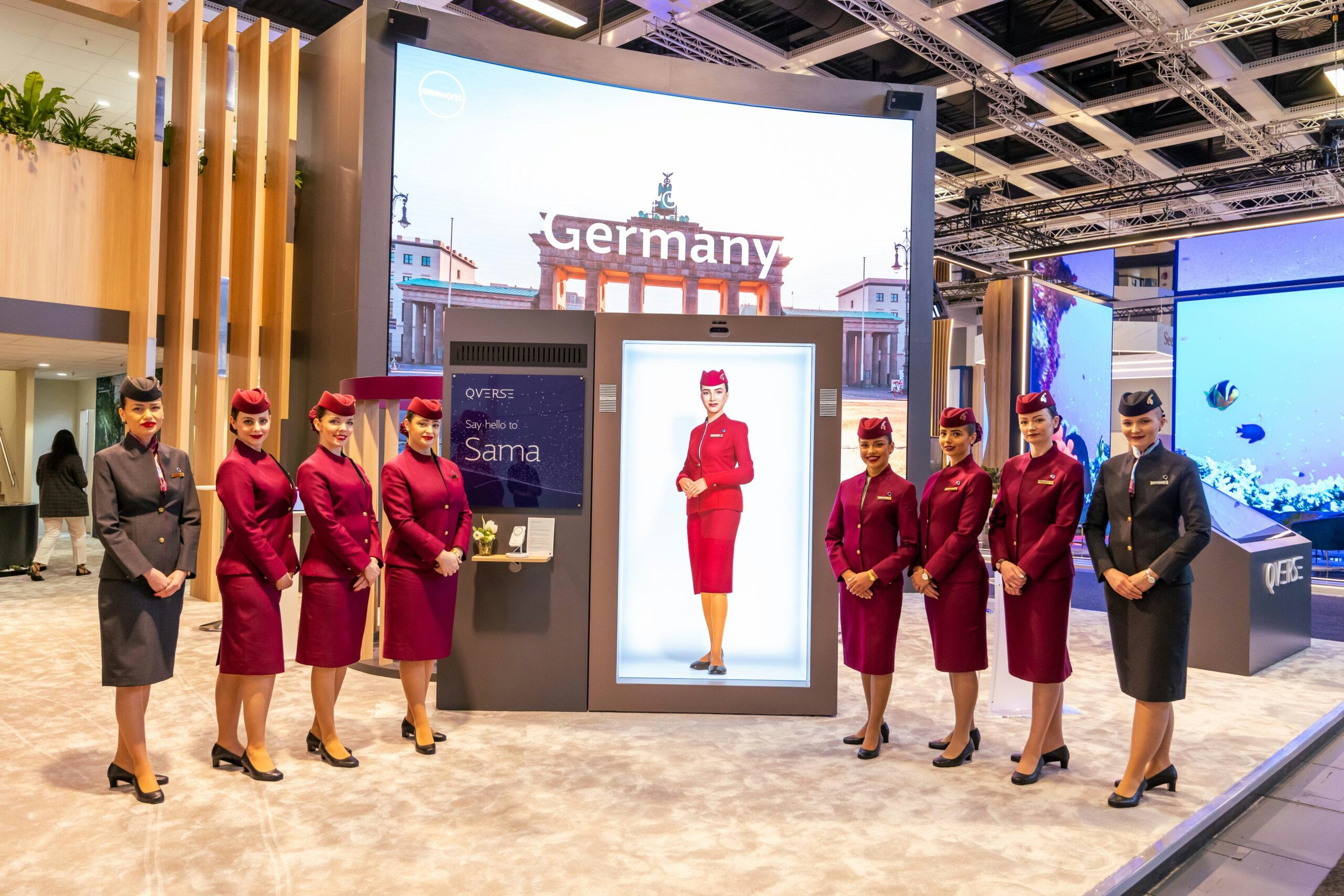
Qatar Airways Unveils the World’s First Digital Cabin Crew Member
In a pioneering advancement for the aviation sector, Qatar Airways has introduced “Q-Bot,” the world’s first fully digital, AI-powered cabin crew member. This innovative system is designed to assist passengers throughout their journey, representing a significant milestone in the integration of artificial intelligence within commercial aviation.
A New Era of Passenger Assistance
Q-Bot is not a physical robot but a sophisticated digital interface embedded within the airline’s cabin systems. Passengers can access the AI assistant via personal seat screens or the Qatar Airways mobile application. Utilizing natural language processing and machine learning, Q-Bot interacts with travelers in multiple languages, providing real-time flight updates, answering inquiries about onboard services and safety protocols, and managing routine requests such as meal orders or entertainment suggestions. For instance, a request for a vegetarian meal is immediately processed, with Q-Bot coordinating with human crew members to ensure timely delivery.
Complementing Human Service with Technology
Qatar Airways stresses that Q-Bot is intended to augment rather than replace its human cabin crew. By automating routine questions and service tasks, the airline aims to enable its staff to concentrate on delivering the personalized, high-quality service for which it is renowned. CEO Akbar Al Baker remarked, “At Qatar Airways, we believe that innovation is key to providing unmatched service. Q-Bot represents our commitment to leveraging technology to ensure our passengers enjoy a safe, comfortable, and personalized journey.”
Challenges and Industry Implications
The introduction of Q-Bot places Qatar Airways at the forefront of aviation technology, yet it also introduces new challenges. Regulatory approval for AI-driven cabin systems remains a critical hurdle, as authorities carefully evaluate safety and privacy concerns. Passenger acceptance is another factor; while tech-savvy travelers may welcome the digital assistant, some traditional passengers might prefer human interaction or express skepticism toward AI.
Integrating Q-Bot with existing crew operations demands meticulous coordination to maintain service quality and ensure a seamless passenger experience. Industry analysts suggest that Qatar Airways’ initiative could set a precedent, encouraging competitors to explore similar digital solutions or, alternatively, to emphasize traditional human service as a competitive advantage.
Part of a Broader Digital Strategy
The launch of Q-Bot follows Qatar Airways’ series of technology-driven initiatives, including ventures into in-flight gaming and partnerships with platforms such as Fortnite. These efforts underscore the airline’s strategy to engage younger, digitally native audiences and to anticipate evolving passenger expectations.
How Q-Bot Enhances the In-Flight Experience
Q-Bot offers a range of features designed to improve passenger convenience and comfort. It provides real-time flight information, including updates on arrivals, connections, and delays. Passengers can place service requests for meals, drinks, or amenities directly from their seats. The AI assistant also offers personalized entertainment recommendations across movies, music, and games, while reinforcing safety procedures and emergency instructions. Its multilingual capabilities ensure effective communication with a diverse global clientele.
As Q-Bot continuously learns from passenger interactions, its functionality is expected to expand, further enriching the in-flight experience. Whether this digital innovation becomes an industry standard or sparks debate over the role of technology in hospitality, Qatar Airways has undeniably established a new benchmark in the evolution of air travel.

Etihad Airways Suspends Airbus A380 Flights on Key Route

Aditya Birla Group Seeks Approval for Aircraft Leasing in GIFT City

Qatar Airways Highlights Innovation and Connectivity at Arabian Travel Market 2026

Hong Kong's Five-Year Plan Includes Andrew Fan's Aircraft Parts Processing Hub Proposal

ACIA Aero Leasing Delivers ATR72-600 to Air Nostrum

RTX Appoints Jill Albertelli as Head of Pratt & Whitney

TAT Technologies Joins Beyond Aero Hydrogen Aircraft Program

AURAK Study Highlights Barriers to Air Taxi Adoption in Emerging Economies

Xiamen Air Selects Altitude for 787 Maintenance at Heathrow

Etihad and Swissport Extend Global Partnership
