Image

AeroGenie — Your Intelligent Copilot.

Ask anything. Analyze everything. Act instantly.

Trending

Categories

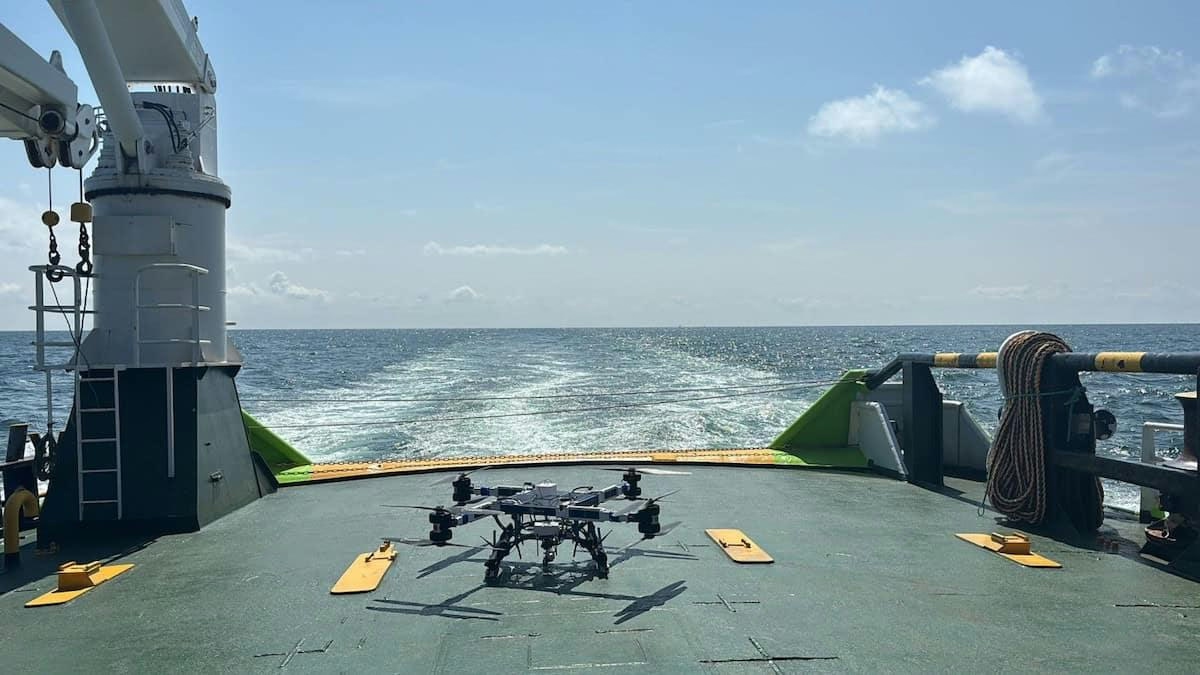
Skylift UAV Conducts First Beyond-Visual-Line-of-Sight Drone Trials in the Solent
January 26, 2026By ePlane AI
Skylift UAV Conducts First Beyond-Visual-Line-of-Sight Drone Trials in the Solent
0
0
Skylift UAV
BVLOS Operations
Drone Trials UK

Skylift UAV Completes Pioneering Beyond-Visual-Line-of-Sight Drone Trials in the Solent

Skylift UAV has successfully conducted its inaugural beyond-visual-line-of-sight (BVLOS) drone trials in the Solent, marking a pivotal advancement for unmanned aerial operations within the United Kingdom. These trials, designed to evaluate the safe and effective operation of drones beyond the direct line of sight of their operators, represent a critical step toward broadening the scope of commercial drone applications, including logistics, surveillance, and emergency response.

Overcoming Technical Challenges in Complex Environments

A significant challenge during the BVLOS trials was ensuring reliable real-time video transmission over low-bandwidth communication links. This technical obstacle is being actively addressed by companies such as Videosoft Global, which is developing advanced streaming solutions to maintain consistent communication and control. Such capabilities are essential for BVLOS operations, particularly in complex and busy environments like the Solent waterway, where uninterrupted data flow is crucial for operational safety and effectiveness.

Industry Momentum and Competitive Advances

Skylift UAV’s successful demonstration arrives amid growing industry interest in BVLOS capabilities. The market has responded swiftly, with increased focus on technologies that enhance precision and reliability. For instance, Volatus Aerospace recently incorporated Trimble’s PX-1 RTX technology to improve the accuracy of drone deliveries, highlighting the rising demand for sophisticated navigation and control systems in BVLOS missions.

In parallel, competitors are intensifying their efforts to advance drone performance. Windracers has notably extended its drone range to 2,000 kilometers while doubling payload capacity, signaling a competitive drive toward longer-range and more demanding operations. Meanwhile, XTI Aerospace, having faced setbacks in vertical takeoff and landing (VTOL) aircraft development, has redirected its focus toward drone technology, further heightening competition within the BVLOS sector.

Regulatory Implications and Industry Outlook

Industry experts suggest that as more companies demonstrate successful BVLOS operations, regulatory authorities may be compelled to revise existing guidelines, potentially facilitating wider commercial adoption. The Solent trials not only underscore Skylift UAV’s technical prowess but also exemplify a broader industry shift toward longer-range, more autonomous drone operations.

As the sector continues to evolve, overcoming technical challenges such as reliable video transmission and precise navigation will remain critical differentiators. With competitors rapidly advancing their BVLOS capabilities, Skylift UAV’s achievement in the Solent positions the company prominently within this dynamic and increasingly competitive market.

More news
Boeing and Airbus Shares Rise Amid Potential Saudi Jet Order Talks

Boeing and Airbus Shares Rise Amid Potential Saudi Jet Order Talks

Boeing and Airbus Shares Rise on Prospective Saudi Aircraft Order Shares of Boeing and Airbus experienced modest gains on Thursday afternoon following reports that Saudi Arabia’s national carrier, Saudia, is engaged in preliminary discussions with both manufacturers regarding a potential aircraft purchase that could become the largest in the airline’s history. Each company’s stock rose approximately 0.5%, outperforming broader market declines as investors reacted favorably to the prospect of a substantial new contract. Details of the Potential Order and Saudia’s Fleet Strategy According to sources cited by Bloomberg, Saudia is contemplating the acquisition of at least 150 new aircraft, encompassing both narrowbody and widebody models. The airline, which currently operates a fleet of around 200 planes, is considering this purchase as part of a dual strategy to replace aging aircraft and expand its overall capacity. While specific models and quantities remain undecided, the discussions are understood to be in the early stages. This potential transaction follows a series of significant orders from Saudia in recent years. Earlier in 2024, the airline placed an order for 105 Airbus narrowbody jets, and in 2023, it committed to acquiring more than three dozen Boeing 787 Dreamliners, with options for an additional 10 aircraft. These developments underscore Saudia’s ongoing efforts to modernize and grow its fleet amid increasing demand for air travel in the Middle East. Implications for Boeing, Airbus, and the Aerospace Industry For Boeing and Airbus, securing an order of this scale would present both opportunities and challenges. Both manufacturers are currently under pressure to increase production rates to meet rising global demand, and a new large-scale order would further strain their supply chains and delivery schedules. Company leadership is expected to prioritize future aircraft decisions and production planning as competition intensifies. Market response to the news has been broadly positive, with investors viewing the potential Saudi order as a significant boost for both aerospace giants. However, the competitive landscape remains complex. Airbus continues to lead the single-aisle market, while Boeing is striving to regain its position in the narrowbody segment. Meanwhile, other manufacturers face their own strategic challenges: Embraer is focusing on increasing sales of its E2 jets rather than launching new airliner programs, and Bombardier is contending with heightened regulatory scrutiny following calls from former U.S. President Donald Trump to revoke certificates for all Bombardier Global aircraft. As Saudia evaluates its options, the outcome of these negotiations could have far-reaching implications not only for Boeing and Airbus but also for the broader commercial aviation sector. The potential order highlights the ongoing competition for market share among major manufacturers and the operational complexities involved in meeting the demands of rapidly expanding airlines.
Ahmed bin Saeed Opens Record Editions of MRO and Aircraft Interiors Middle East

Ahmed bin Saeed Opens Record Editions of MRO and Aircraft Interiors Middle East

Ahmed bin Saeed Opens Record Editions of MRO and Aircraft Interiors Middle East DUBAI, United Arab Emirates – His Highness Sheikh Ahmed bin Saeed Al Maktoum, President of the Dubai Civil Aviation Authority and Chairman of Emirates Airline and Group, officially inaugurated the largest-ever editions of MRO Middle East and Aircraft Interiors Middle East (AIME) 2026 at the Dubai World Trade Centre. The two-day, co-located events attracted over 300 exhibitors and approximately 9,000 attendees, highlighting the Middle East’s growing prominence as a global hub for aviation services, innovation, and investment. Expanding Market and Workforce Challenges The record turnout at this year’s event reflects the rapid expansion of the Middle East’s aviation aftermarket sector, which is forecasted to achieve the world’s second-fastest compound annual growth rate over the next decade. As demand intensifies for maintenance, repair, and overhaul (MRO) services alongside advanced cabin interior solutions, the industry is presented with both significant opportunities and challenges. A critical concern remains the shortage of qualified maintenance technicians, a problem exacerbated by workforce losses during the pandemic. This has led MRO providers to compete aggressively for skilled talent and to increase investments in workforce training programs to sustain growth. Fraser Currie, Chief Strategy and Commercial Officer of DAE Engineering, emphasized the region’s momentum during the panel discussion “Strategic Infrastructure Developments: Middle East MRO Landscape.” He noted, “The boom that Dubai and the region is having is incredible. People are making a choice to come here, with the old and well-tested UAE mantra of ‘build it and they will come’. Aerospace is expanding, Airbus is building facilities at DWC, flydubai is building its own facility, and by 2030 Emirates will be moving its hangars to DWC. This region is a friendly, supportive environment where people want to work, and that is why we are seeing this boom, along with access to some of the largest expanding markets in the world.” Innovation and Strategic Investments on Display At the 17th edition of the events, exhibitors showcased cutting-edge developments in cabin design, AI-powered maintenance tools, robotics, supply chain solutions, ground support equipment, and safety technologies. A particular focus remained on robust aftermarket support for older aircraft models, as global air traffic demand continues to rise steadily. Andi Fahrurrozi, President and CEO of GMF AeroAsia, announced the opening of the company’s new Middle East facility, describing it as a strategic response to the region’s rapid fleet support growth. “This is not just a new location, but a direct response to the incredible growth of fleet support in this region. By bringing Heavy and Line Maintenance closer to our partners, we are providing faster turnaround times and strengthening the regional aviation ecosystem at the same time,” he stated. In a fireside interview, Steven Greenway, CEO of flyadeal, Saudi Arabia’s youngest and fastest-growing low-cost carrier, discussed the airline’s expansion and the swift development of maintenance capabilities within the kingdom. He remarked, “Every LCC today is looking at what capability they can bring in house, and flyadeal is no different. Saudi Arabia has invested billions of dollars in a major maintenance facility in Jeddah, and the landscape will change dramatically over the next couple of years.” As the Middle East’s MRO market continues to gain momentum, industry leaders at MRO Middle East and AIME 2026 remain focused on innovation, workforce development, and strategic investment to address the evolving demands of the sector.
Profile: Ben Sibbald

Profile: Ben Sibbald

Profile: Ben Sibbald From London to Germany: A Career Shaped by Circumstance and Ambition Ben Sibbald’s journey into the world of airline payments was not a predetermined path but rather a series of fortuitous decisions shaped by personal and professional circumstances. In the period leading up to Brexit, Sibbald relocated from London to Germany, motivated by his wife’s job opportunities in both Cambridge and Germany and a desire to experience life abroad before new political and economic barriers took hold. Nearly ten years on, he has established himself in a village south of Frankfurt and now serves as Head of Payments at Hahnair, a global leader in airline distribution solutions. Sibbald’s entry into finance was, by his own admission, “by luck.” His career began in an outbound call centre before progressing through retail banking at HSBC and advancing into corporate banking. Eventually, he specialised in payments with CashFlows, a diverse background that now informs his approach to one of the airline industry’s most complex challenges: managing payments across an extensive and international network. Navigating Complexity in Global Airline Payments Hahnair operates on a formidable scale, connecting more than 400 airlines with over 100,000 travel agencies across 190 markets worldwide. This expansive reach facilitates ticket sales from major metropolitan hubs to emerging destinations, but it also introduces significant complexity. Integrating a wide array of payment methods across diverse regions requires not only advanced technological solutions but also a nuanced understanding of local markets and regulatory environments. Sibbald and his team are tasked with ensuring seamless payment acceptance while navigating a complex web of global financial regulations. They maintain strong partnerships with airlines and travel agents, acting as the critical link between customers and travel companies. “We are the bridge between customers and travel companies, helping them to complete the transaction,” Sibbald explains. “If the transaction’s not completed, you don’t get the service.” The team’s responsibilities extend beyond transaction facilitation. They continuously evaluate which payment methods are essential, desirable, or could provide marketing advantages. This process involves researching emerging payment options, consulting with external partners, implementing new solutions, and managing these systems throughout their lifecycle. Challenges and Industry Dynamics The challenges faced by Sibbald and Hahnair are considerable. Compliance with a patchwork of international financial regulations remains a constant concern, alongside the need to maintain trust and cooperation within Hahnair’s extensive network of partners. As the company expands its payment services, it attracts close scrutiny from market observers who monitor its financial health and strategic direction. Competitors are also intensifying their efforts, innovating payment solutions and seeking exclusive partnerships to secure or enhance their market positions. In this competitive landscape, Sibbald’s role demands not only expertise but also adaptability. His progression from a UK call centre to leading payments at one of the world’s most expansive airline networks exemplifies the unpredictability and opportunity inherent in the global travel industry. As Hahnair continues to evolve, Sibbald’s capacity to navigate complexity and drive innovation remains central to the company’s ongoing success.
AutoFlight Introduces First 5-Ton eVTOL Capable of Carrying 10 Passengers

AutoFlight Introduces First 5-Ton eVTOL Capable of Carrying 10 Passengers

AutoFlight Unveils the World’s First 5-Ton eVTOL Capable of Carrying 10 Passengers Chinese electric vertical takeoff and landing (eVTOL) developer AutoFlight has introduced the ‘Matrix,’ a groundbreaking aircraft designed to carry up to 10 passengers with a maximum takeoff weight of 5,700 kilograms. This marks a significant advancement in the eVTOL sector, where most models currently accommodate between four and six passengers. The company recently demonstrated the Matrix’s capabilities through a successful public full transition flight, which involved vertical takeoff, cruising, and vertical landing—a milestone AutoFlight claims is a world first for an eVTOL of this size. Design and Technical Features The Matrix boasts a spacious cabin measuring 5.25 meters in length, 1.8 meters in width, and 1.85 meters in height, outfitted with amenities such as washbasins and lavatories. It offers multiple interior configurations, including a VIP layout for six passengers and a hybrid-powered cargo variant. The aircraft’s dimensions include a 20-meter wingspan, 17.1 meters in length, and 3.3 meters in height. Its design incorporates a compound wing lift and cruise configuration with a triplane layout supported by a six-arm structure. The distributed propulsion system utilizes up to 20 fifth-generation lift motors, providing redundancy that ensures continued flight capability even in the event of single or dual engine failures. During the demonstration flight, the Matrix operated alongside AutoFlight’s two-ton CarryAll cargo eVTOL, underscoring the company’s advancements in aerodynamics, high-power electric propulsion, and flight control systems. Tian Yu, AutoFlight’s CEO and founder, described the Matrix as “not only a rising star in the aviation industry but also an ambitious industry disruptor,” emphasizing its potential to challenge prevailing perceptions that eVTOLs are limited to short-haul, low-load operations. According to Yu, the Matrix is poised to reshape the operational parameters of eVTOL routes. Market Implications and Challenges AutoFlight asserts that the Matrix’s increased passenger capacity and economies of scale could substantially reduce transportation costs per seat-kilometer and ton-kilometer, potentially transforming the economics of urban and intercity air mobility. The aircraft is designed to serve a broad range of scenarios, from urban commuting to intercity feeder routes, thereby supporting the expansion of the low-altitude air mobility ecosystem. Despite these technological strides, AutoFlight faces considerable challenges in a rapidly evolving and competitive eVTOL market. Regulatory approval processes remain complex and uncertain, while the high initial costs of development and production pose financial hurdles. The company also contends with established competitors such as Joby Aviation and Vertical Aerospace, particularly in the Asia-Pacific region, which is emerging as a critical arena for dominance in urban air taxi and tourism markets. The debut of the Matrix is expected to stimulate increased interest in advanced air mobility solutions, prompting competitors to accelerate their own eVTOL development and expand service offerings. As AutoFlight pushes the boundaries of eVTOL technology, its future success will depend not only on technical innovation but also on its ability to navigate regulatory landscapes and maintain a competitive edge in the global market.
CloudSEK Identifies Cybersecurity Risks in Aviation Supply Chain Using SVigil

CloudSEK Identifies Cybersecurity Risks in Aviation Supply Chain Using SVigil

CloudSEK Identifies Cybersecurity Risks in Aviation Supply Chain Using SVigil Highlighting Vulnerabilities in Aviation Supply Chains CloudSEK has brought attention to significant cybersecurity vulnerabilities within the aviation supply chain, particularly those arising from third- and fourth-party vendors. In a recent disclosure on LinkedIn, the company revealed that a single exposed vendor credential—lacking multi-factor authentication—could have potentially allowed unauthorized access to critical airport systems across a network of 200 airports. Importantly, this risk was identified without the presence of malware or an active breach, underscoring the inherent dangers posed by external access points that lie beyond traditional security perimeters. The findings emphasize the growing complexity of securing aviation infrastructure, where the interconnectedness of vendors and suppliers creates multiple potential entry points for cyber threats. This scenario illustrates how even a seemingly minor lapse in vendor security protocols can have far-reaching implications for the broader aviation ecosystem. SVigil: A Proactive Approach to Supply Chain Security CloudSEK’s SVigil platform is designed to address these challenges by providing continuous monitoring of vendor ecosystems, exposed credentials, and supply-chain risks. By detecting vulnerabilities before they escalate into security incidents, SVigil offers aviation operators and other highly regulated, uptime-sensitive industries a proactive tool to mitigate emerging threats. The platform’s ability to monitor complex vendor networks in real time positions it as a critical asset in the evolving landscape of cybersecurity risk management. Industry Challenges Amplifying Cybersecurity Risks The urgency for enhanced supply-chain cybersecurity in aviation is compounded by a range of broader industry challenges. According to Everstream Analytics, geopolitical fragmentation and shifting trade policies are disrupting global supply chains, complicating efforts to manage risk effectively. Additionally, reports from Logistics Management highlight ongoing difficulties faced by the aviation sector, including tariffs, trade uncertainty, labor shortages, rising material costs, and infrastructure vulnerabilities. These factors collectively exacerbate the sector’s exposure to cyber threats. Emerging risks in the software supply chain further intensify these concerns. Recent vulnerabilities, such as the Shai-Hulud flaw reported by CSO Online, demonstrate how dependencies on software components can introduce critical security gaps. The World Economic Forum has also observed that industries like financial services, which rely on a limited number of suppliers and often lack comprehensive supply chain visibility, are particularly susceptible to cyber risks—a dynamic increasingly relevant to aviation. Implications for Stakeholders and the Cybersecurity Market For investors and industry stakeholders, these converging challenges signal a growing demand for robust third-party and supply-chain risk monitoring solutions. Should CloudSEK successfully establish SVigil as an indispensable layer of defense for large, distributed infrastructure operators, the company is well-positioned to capitalize on expanding cybersecurity budgets and heightened regulatory scrutiny. As the aviation industry contends with operational and geopolitical uncertainties, comprehensive supply-chain security is emerging as a vital element of resilience and competitive advantage within the broader cybersecurity and risk intelligence market.
Aerotranscargo, GMF, and AIR ONE Technics Form MRO Alliance for 747 Freighter Fleet

Aerotranscargo, GMF, and AIR ONE Technics Form MRO Alliance for 747 Freighter Fleet

Aerotranscargo, GMF, and AIR ONE Technics Form Strategic MRO Alliance for Boeing 747 Freighter Fleet Aerotranscargo FZE (ATC FZE), PT Garuda Maintenance Facility Aero Asia Tbk (GMF), and AIR ONE Technics DWC-LLC (AOT) have entered into a strategic partnership aimed at enhancing maintenance, repair, and overhaul (MRO) services for Boeing 747 freighter aircraft. The collaboration, formalized through a Memorandum of Understanding (MoU) signed in Dubai, will guide joint maintenance operations throughout 2026 and 2027. Partnership Scope and Capabilities This alliance unites GMF’s extensive global MRO expertise with ATC FZE’s operational experience managing a widebody freighter fleet, alongside AIR ONE Technics’ technical capabilities based at the Mohammed Bin Rashid Aerospace Hub in Dubai South. The partnership is designed to ensure the continued airworthiness and operational reliability of ATC FZE’s Boeing 747 fleet, while fostering technical collaboration across Indonesia, the Middle East, and Europe. The MoU was signed by Guneet Mirchandani, Chairman of ATC FZE; Andi Fahrurrozi, CEO of GMF; and Ayrat Gilmutdinov, CEO of AOT. Both Aerotranscargo FZE and AIR ONE Technics operate as subsidiaries of AIR ONE International Holdings, a global network of cargo airlines and aviation companies providing flexible airfreight capacity through long-term charters, ACMI solutions, and scheduled services. AIR ONE Technics, headquartered at the Mohammed Bin Rashid Aerospace Hub, currently provides line maintenance and airworthiness management for ATC FZE’s fleet, which comprises eleven Boeing 747-400 freighters and two Boeing 777 freighters. The company is rapidly expanding its support capabilities for the Group’s Boeing 747 and 777 freighters across the UAE, Europe, and Asia. GMF, Indonesia’s largest and most integrated MRO provider, brings over 76 years of experience servicing more than 190 customers in over 70 countries. The company holds over 30 safety and airworthiness certifications from major aviation authorities, including the FAA (United States), EASA (Europe), CAA UK (United Kingdom), CASA (Australia), and DGCA (Indonesia). Market Context and Challenges While the alliance is positioned to strengthen the partners’ technical capabilities and expand their market reach, it faces several challenges. Maintaining competitive pricing amid increased MRO activity will be critical, as will navigating the complex regulatory environments spanning multiple regions. Achieving seamless integration of operations and technologies among the three companies will be essential to fully realize the benefits of the partnership. The broader MRO market is experiencing intensified competition, with major players such as the Adani Group expanding their own service offerings. Industry analysts suggest that this new alliance may prompt rival MRO providers to pursue strategic partnerships or acquisitions to bolster their capabilities and preserve market share. As Aerotranscargo, GMF, and AIR ONE Technics advance their collaboration, the alliance is expected to play a significant role in supporting the operational reliability of Boeing 747 freighter fleets and influencing the competitive dynamics of the global MRO sector.
ST Engineering Signs Memorandum of Understanding with Ramco Systems

ST Engineering Signs Memorandum of Understanding with Ramco Systems

ST Engineering and Ramco Systems Forge Strategic Partnership to Advance Aerospace Digital Solutions Global aviation software provider Ramco Systems has entered into a Memorandum of Understanding (MoU) with the Commercial Aerospace division of ST Engineering, a prominent technology, defence, and engineering conglomerate. The agreement marks the beginning of a long-term strategic collaboration aimed at developing next-generation digital solutions for the aerospace industry worldwide. Joint Innovation Centre to Drive Aerospace Digital Transformation As part of the MoU, both companies will evaluate the feasibility of establishing a jointly operated Competency Centre and Innovation Lab in Singapore. This facility is envisioned as a hub for pioneering digital innovation and artificial intelligence (AI)-enabled solutions, particularly targeting critical aspects of aviation maintenance, repair, and overhaul (MRO). The partnership will combine ST Engineering’s extensive expertise in Airframe, Engine, and Component MRO, along with its original equipment manufacturer (OEM) and engineering capabilities—including nacelle design, cabin interiors, and passenger-to-freighter conversions—with Ramco’s advanced aviation software and agentic AI platform. The signing ceremony took place at the Singapore Airshow 2026, with Jeffrey Lam, President of Commercial Aerospace at ST Engineering, and P.R. Venketrama Raja, Chairman of Ramco Group, in attendance. Jeffrey Lam emphasized the strategic importance of the collaboration, stating, “This potential collaboration builds on our ongoing digital transformation journey. By pairing our operational experience and know-how with Ramco’s aviation and AI expertise, we can unlock new avenues to boost MRO efficiency and further enhance the value delivered to our customers.” Sandesh Bilagi, President and COO of Ramco Systems, expressed enthusiasm about the partnership, noting, “We are delighted to partner with ST Engineering, a global leader in commercial aerospace services, to shape the next generation of digital aviation platforms. Ramco will support this initiative with its aviation product suite and AI-driven platforms, enabling the agility, regulatory compliance, and operational depth required to scale with confidence. This collaboration reflects our shared vision of co-creating future-ready solutions for the aviation ecosystem.” Opportunities and Challenges Ahead While the partnership is poised to accelerate digital transformation and improve operational efficiency within the aerospace sector, ST Engineering faces several challenges. These include navigating complex regulatory compliance for integrating new technologies, managing potential supply chain disruptions, and ensuring effective collaboration with Ramco Systems. The announcement has already sparked increased investor interest in ST Engineering’s innovation capabilities. At the same time, competitors such as Turkey’s STM and Qatar’s Barzan Holdings may intensify their own technological development efforts and strategic partnerships to maintain competitive positioning. Headquartered in Singapore, ST Engineering operates across Asia, Europe, the Middle East, and the United States, serving customers in over 100 countries. The group reported revenues exceeding $11 billion in fiscal year 2024 and ranks among the largest companies listed on the Singapore Exchange. It is included in major indices such as MSCI Singapore, the FTSE Straits Times Index, and the Dow Jones Best-in-Class Asia Pacific Index. The company continues to leverage technology and innovation to address real-world challenges, with a commitment to fostering a more secure and sustainable future.
HAECO and Saudia Sign Agreement for GE90 Engine Support

HAECO and Saudia Sign Agreement for GE90 Engine Support

HAECO and Saudia Forge Partnership for GE90 Engine Support HAECO has formalized a new agreement with Saudia to provide comprehensive support services for GE90 engines, including overhaul operations. This collaboration marks a significant step in HAECO’s strategic expansion into key markets. Under the terms of the agreement, HAECO will perform engine overhauls at its dedicated GE90 facility in Xiamen, capitalizing on its established reputation for quality workmanship, punctual delivery, and cost-effective solutions. To date, the company has completed over 1,100 GE90 engine overhauls, demonstrating its deep expertise in servicing these complex, high-performance powerplants. Gerald Steinhoff, Chief Commercial Officer of HAECO, emphasized the alignment of values between the two companies, stating, “We are pleased to support Saudia with their maintenance requirements. Our commitment to safety and quality aligns closely with Saudia’s operational objectives, and we look forward to applying our extensive experience and capabilities to support their GE90 fleet effectively.” Advanced Facilities and Authorizations The HAECO Group offers a comprehensive range of engine overhaul services, specializing in full overhauls, testing, and component repairs for GE90-110/115B engines at its Xiamen facility. This site is equipped with a state-of-the-art test cell capable of handling thrust levels up to 150,000 pounds. As an authorized GE90 Service Provider and holder of a GE Branded Service Agreement (GBSA), HAECO enjoys priority access to GE Aviation’s inventory, ensuring adherence to the highest operational standards. Market Dynamics and Regulatory Considerations The agreement emerges amid intensifying competition within the regional engine support sector. Established players such as CFM and Rolls-Royce have developed significant operations in Singapore, while strategic investments by companies like RTX are enhancing support capabilities for next-generation aircraft platforms. These competitive pressures are likely to drive providers to intensify marketing efforts and improve service offerings to maintain and grow their market share. Furthermore, the partnership between HAECO and Saudia is expected to attract heightened scrutiny from aviation regulators, who are increasingly vigilant in enforcing stringent safety and maintenance standards in a rapidly evolving industry. Despite these challenges, the collaboration is poised to reinforce the relationship between HAECO and Saudia, positioning both companies to better navigate the competitive environment and address the evolving demands of the global aviation sector.
Vertical Aerospace Selects Evolito as Engine Supplier for Valo eVTOL

Vertical Aerospace Selects Evolito as Engine Supplier for Valo eVTOL

Vertical Aerospace Selects Evolito as Engine Supplier for Valo eVTOL Vertical Aerospace has announced Evolito as the long-term supplier of electric propulsion units (EPUs) for its Valo eVTOL aircraft, marking a pivotal advancement in its certification-driven approach to electric aviation. This partnership is explicitly focused on achieving type certification, with both companies committed to jointly certifying the propulsion system with the UK Civil Aviation Authority (CAA), followed by concurrent validation with the European Union Aviation Safety Agency (EASA). Vertical Aerospace aims to certify the Valo eVTOL to safety standards comparable to those of large commercial aircraft, targeting entry into service by 2028. Strategic Partnership and Certification Focus Evolito joins established collaborators Honeywell, Syensqo, and Aciturri as a core supplier on the Valo program, reinforcing Vertical Aerospace’s strategy of partnering with industry leaders capable of navigating certification processes rather than relying on bespoke or experimental solutions. Dave Shilliday, Vice President and General Manager of Advanced Air Mobility at Honeywell Aerospace, emphasized the disciplined engineering and long-term vision embodied by the Valo project, highlighting its potential to bring electric flight into practical, real-world service. Evolito’s selection is grounded in its engineering expertise and experience with axial-flux electric motors and fully integrated EPUs. These propulsion units combine lightweight motors with high-integrity, Design Assurance Level A (DAL-A) power electronics within a single certified package. For eVTOL aircraft, propulsion systems must deliver high torque, redundancy, and fault tolerance while minimizing weight. Evolito’s architecture is designed to meet these stringent requirements, offering transport category-level safety that facilitates the certification process. David King, Chief Engineer at Vertical Aerospace, noted that the collaboration focuses on delivering a propulsion system that balances performance, redundancy, and reliability to meet airliner-level safety standards while remaining practical for commercial operations. Evolito’s existing CAA Design Organisation Approval further strengthens the partnership by enabling the design and approval of safety-critical systems within a recognized regulatory framework. This capability reduces program risk and eases the certification burden for Vertical, which is prioritizing full certification over demonstration flights. Challenges and Industry Implications Despite the strategic benefits, Vertical Aerospace faces significant challenges in advancing the Evolito-powered Valo eVTOL. Ensuring the reliability and safety of the new EPUs will require extensive testing and validation across diverse operational environments. Both companies must navigate rigorous regulatory hurdles to secure certification, and any delays or technical setbacks could raise concerns among investors and stakeholders, particularly given Evolito’s relative track record and the maturity of its technology. The partnership is also poised to intensify competition within the advanced air mobility sector. Competitors such as Eve Air Mobility may accelerate efforts to secure their own advanced propulsion technologies, potentially triggering a competitive race to market dominance. Evolito’s Expanding Role in Advanced Air Mobility Evolito is an established player in the advanced air mobility landscape, having been selected to supply electric propulsion systems for Electra’s EL9 hybrid-electric aircraft and Flying Whales’ LCA60T heavy-lift cargo airship. These engagements demonstrate Evolito’s versatility and capability to support multiple certification-driven platforms. Chris Harris, CEO of Evolito, expressed enthusiasm about the collaboration, stating, “Our engines are designed to meet the rigorous demands of aerospace. We’re excited to contribute to the success of Vertical’s Valo eVTOL and the broader future of electric flight.”
China’s Drone Eyes Global Expansion

China’s Drone Eyes Global Expansion

China’s Drone Makers Pursue Global Expansion Amid Intensifying Competition China, recognized as the world’s leading drone manufacturing hub, is accelerating its efforts to expand internationally in response to mounting domestic competition and emerging opportunities abroad. Chinese manufacturers are developing drones capable of carrying larger payloads, while transport companies are exploring air taxi services, both crewed and autonomous. These advancements are supported by government initiatives that have relaxed airspace restrictions and introduced incentives to stimulate a burgeoning “low-altitude economy,” thereby propelling industry growth. Feipeng’s Strategic Push into Southeast Asia and the Middle East Aerospace Times Feipeng, a prominent Chinese civil drone manufacturer, is spearheading this global expansion. At the Singapore Airshow, Harry Kang, Feipeng’s international business president, emphasized the necessity of targeting overseas markets to mitigate the intense competition within China. “The domestic Chinese market is too competitive. Going overseas is a step we must take,” Kang stated. At the event, Feipeng unveiled two new drone models: an inspection drone priced between $180,000 and $200,000, and a specialized platform designed for forest fire control and maritime rescue, costing between $40,000 and $50,000. The company aims to increase its overseas sales from the current 10–15% to 50% within three years, contingent on regulatory acceptance and market confidence. Feipeng’s international expansion gained momentum in 2024 with the launch of its FP-981C Sagittarius Cargo drone, priced at approximately $400,000 to $420,000. To enhance global brand recognition, the company names its drones after the 12 zodiac signs. Kang highlighted Feipeng’s competitive pricing, attributing it to a fully domestic supply chain that enables the company to offer lower costs than international rivals. Southeast Asia and the Middle East have emerged as key target markets due to increasing demand. Feipeng has reported annual revenues exceeding 100 million yuan for two consecutive years and is focusing on countries such as Indonesia, Malaysia, and Thailand. Indonesia, with its archipelago of over 17,000 islands, is a priority market where Feipeng has already partnered with government agencies for emergency and disaster response. Kang noted that Indonesian customers generated the highest number of inquiries at the airshow, describing the country as “our main target market of the year.” In the Middle East, Feipeng sees significant potential in addressing logistical challenges posed by desert environments, particularly in Saudi Arabia, the region’s largest market. Regulatory and Competitive Challenges on the Global Stage Despite these ambitions, Chinese drone manufacturers face considerable obstacles in their global expansion. Regulatory scrutiny is intensifying, especially in Western markets. The U.S. Federal Communications Commission, for instance, has banned certain foreign-made drones over security concerns, a move that threatens U.S. agricultural productivity and signals potential resistance in other international markets. Meanwhile, the global last-mile drone delivery sector is rapidly expanding, driven by advances in precision agriculture and technology, but competition remains fierce. Established industry players such as Honeywell are broadening their defense market presence in the Asia-Pacific region, while companies like Ondas are working to integrate autonomous combat systems, further intensifying the competitive landscape. As Chinese manufacturers like Feipeng strive to capture a larger share of the international drone market, they must navigate complex regulatory environments and contend with strong competition from established global leaders.
line










