Image

Orchestrate AI insights into action

Join the AeroGenie waitlist today!

Trending

Categories

Sora Completes Critical VTOL Tests for 30-Seat Electric Aircraft
June 25, 2026By ePlane AI
Sora Completes Critical VTOL Tests for 30-Seat Electric Aircraft
0
0
Sora Aviation
Electric VTOL Aircraft
Flight Testing

Sora Advances VTOL Flight Testing for 30-Seat Electric Aircraft

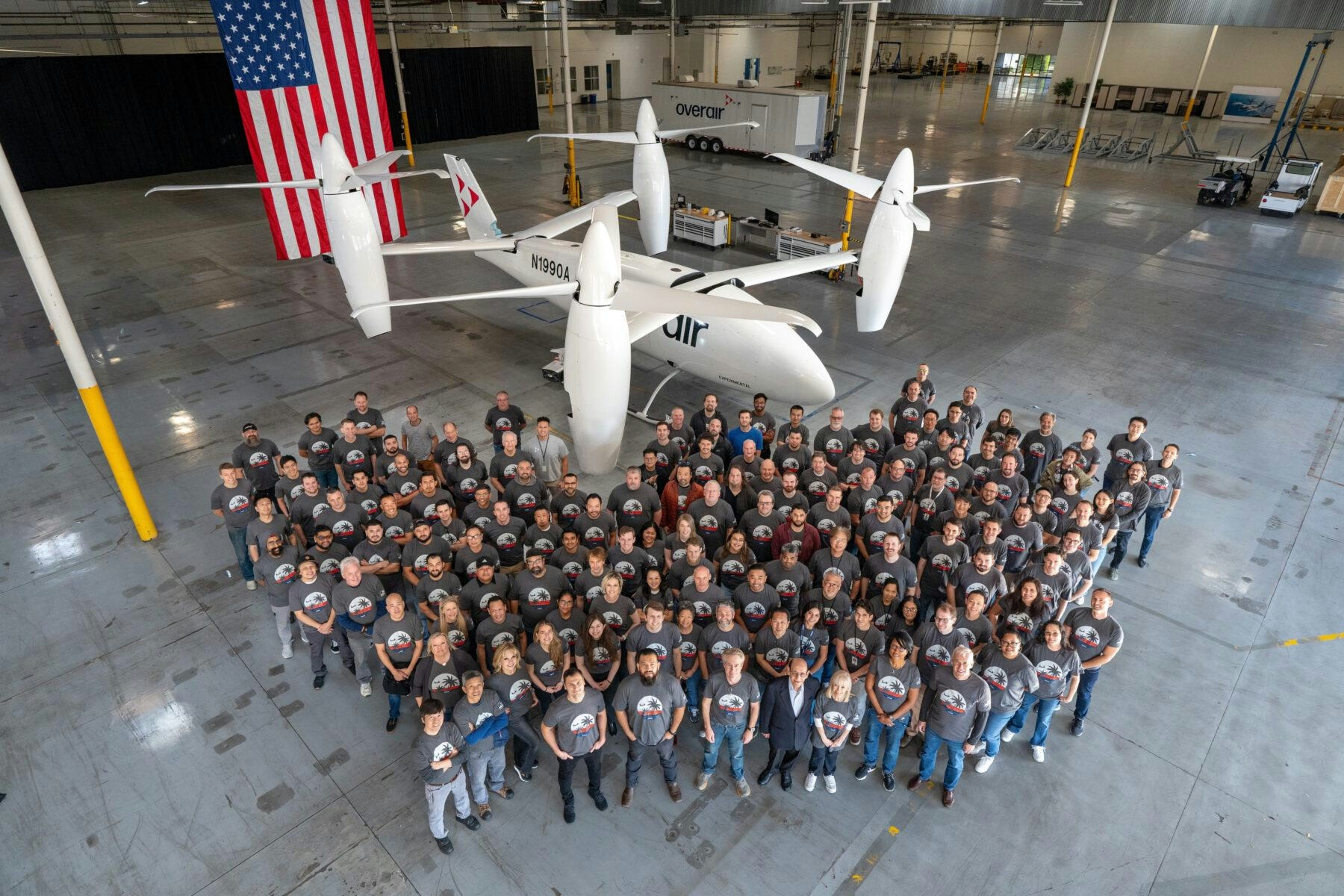
Sora Aviation has reached a pivotal milestone in the development of its 30-seat electric vertical take-off and landing (eVTOL) aircraft by successfully completing a critical phase of VTOL flight testing. This achievement marks a significant step forward in the company’s ambition to introduce larger-scale electric aviation solutions, diverging from the prevailing industry focus on smaller air taxis designed for four to five passengers. The British firm’s S-1 project aims to redefine advanced air mobility by targeting a higher passenger capacity.

Subscale Demonstrator Validates Design and Performance

The recent test campaign took place over several months at the Snowdonia Aerospace Centre in Wales, employing a subscale demonstrator to assess flight characteristics, stability, and control during repeated VTOL operations. Although considerably smaller than the intended full-scale S-1 aircraft, the demonstrator was meticulously engineered to replicate essential aerodynamic features such as configuration, center of gravity, and rotor arrangement. This methodology enables Sora’s engineering team to validate computational models and refine the aircraft’s design before progressing to a full-scale prototype, which the company plans to fly by 2028.

Furqan Afzal, CEO of Sora Aviation, emphasized the significance of this phase, stating, “This milestone demonstrates the maturity of our development approach and the strength of the engineering foundations underpinning the S-1 programme. We’ve deliberately invested in a rigorous test and validation strategy that combines simulation, laboratory testing, wind tunnel campaigns, and representative flight demonstrators. The results we’re seeing continue to reinforce our confidence that the S-1 can deliver the performance, safety, and economics required to transform advanced air mobility at scale.”

Navigating Industry Challenges and Market Competition

Sora’s focus on a 30-seat eVTOL aircraft distinguishes it within a rapidly evolving market where most competitors concentrate on smaller, urban-centric vehicles. The advanced air mobility sector has witnessed accelerated progress, with companies such as Honda and Textron making notable strides—Honda recently completed its first full-scale eVTOL flight, while Textron’s CJ4 Gen3 approaches certification. Nonetheless, the industry continues to grapple with significant challenges, including regulatory uncertainty, commercial viability, and market adoption.

A recent report from the US government highlighted these ongoing obstacles, underscoring the complexity of regulatory, operational, and commercial factors that delay the entry of electric aircraft into service. As manufacturers intensify efforts to secure Federal Aviation Administration (FAA) certification and gain market acceptance, Sora’s larger aircraft concept introduces additional engineering and certification complexities. These include more stringent requirements for flight control systems, structural integrity under increased loads, and propulsion integration.

Despite these challenges, Sora’s use of scaled demonstrators aligns with established aerospace development practices. Employing subscale models allows manufacturers to validate aerodynamic performance and flight control systems early in the design process, mitigating risks before committing to costly full-scale prototypes. Dr. Luke Bowen, Chief Technology Officer at Sora Aviation, noted, “Flight testing is one of several complementary tools we use to build confidence in the aircraft design.”

As competition intensifies with players like Eve Air Mobility entering the market, Sora’s ability to differentiate its product and successfully navigate regulatory hurdles will be critical as it advances toward the next phase of development.

More news
Airbound and Andhra Pradesh Sign Agreement on Drone Delivery

Airbound and Andhra Pradesh Sign Agreement on Drone Delivery

Airbound and Andhra Pradesh Sign Agreement to Launch Drone Delivery Network Partnership to Establish Scalable Aerial Logistics Bengaluru-based aerospace company Airbound has entered into a Memorandum of Understanding (MoU) with the Andhra Pradesh Drone Corporation (APDC) to develop a scalable drone delivery network across the Amaravati Capital Region. The agreement, formalized in New Delhi, was signed by APDC Chairperson and Managing Director Geetanjali Sharma and Airbound Founder and CEO Naman Pushp, in the presence of Union Minister for Civil Aviation Kinjarapu Ram Mohan Naidu. This collaboration marks a significant advancement in India’s aerial logistics sector, aiming to integrate drone technology into regional supply chains. The initiative, known as the Amaravati Capital Region Drone Delivery Network (ACR DDN), seeks to connect the cities of Amaravati, Vijayawada, and Guntur. It is designed to support logistics for healthcare, e-commerce, and commercial sectors. Pilot operations are set to begin in Guntur, with an ambitious target of achieving 10,000 daily drone flights across Andhra Pradesh within the next year. If successful, this scale of operation could position Andhra Pradesh among the world’s largest commercial drone networks. Technological Innovation and Economic Implications At the core of the project is Airbound’s proprietary blended-wing-body tailsitter aircraft. Constructed from lightweight carbon fibre and weighing only 1.5 kilograms, the unmanned aerial vehicle (UAV) features a payload-to-weight ratio of 1.5:1, significantly surpassing the conventional industry standard of 4:1. This innovative design enables delivery costs to be reduced by up to twenty times compared to traditional methods, with transit expenses potentially as low as 10 paise per kilometre. Union Civil Aviation Minister Kinjarapu Ram Mohan Naidu praised Airbound’s technological progress as a reflection of India’s growing capabilities in next-generation aviation. He underscored the potential for domestic development and scaling of such advanced technologies to enhance connectivity, create high-skilled employment opportunities, and stimulate economic growth. Challenges and Competitive Landscape Despite the promising outlook, the project faces several challenges. Regulatory uncertainties persist as India’s drone policies continue to evolve, potentially affecting the deployment timeline and operational scope. The integration of drone technology in densely populated urban environments presents logistical complexities that must be addressed. Furthermore, competition from established global players is intensifying. For example, Walmart has announced plans to expand its drone delivery network to 270 locations, aiming to serve 40 million U.S. residents by 2027. Such developments may prompt accelerated efforts by competitors to establish drone logistics capabilities in India. Market analysts have expressed reservations regarding the feasibility and profitability of large-scale drone delivery in regions characterized by high population density and complex airspace management. Additionally, India’s advancements in drone warfare technology, including the development of compact missile systems deployable from drones, could influence the regulatory and strategic framework governing commercial drone operations. Nonetheless, the partnership between Airbound and APDC represents a bold initiative to transform logistics in Andhra Pradesh. It may also serve as a pioneering model for the deployment of drone-enabled delivery networks across India.
Hyundai’s Supernal and Microsoft to Collaborate on Urban Air Mobility Projects

Hyundai’s Supernal and Microsoft to Collaborate on Urban Air Mobility Projects

Hyundai’s Supernal and Microsoft Join Forces to Advance Urban Air Mobility Hyundai Motor Company is intensifying its efforts to revolutionize next-generation transportation through a strategic collaboration between its advanced air mobility subsidiary, Supernal, and technology giant Microsoft. This partnership is designed to harness Microsoft’s cloud computing and artificial intelligence capabilities to accelerate the development of software-defined vehicles (SDVs) and urban air mobility (UAM) platforms. By integrating cutting-edge digital infrastructure with its automotive expertise, Hyundai aims to position itself as a leading contender in the nascent UAM industry. Pioneering Software-Defined Vehicles and Air Mobility Platforms Software-defined vehicles, often characterized as “computers on wheels,” depend on proprietary operating systems and sophisticated software to manage vehicle functions and enable over-the-air updates. Hyundai plans to introduce its first SDV by late 2027, directly challenging established players such as Tesla. The company views the integration of advanced software as essential not only for ground transportation but also for the emerging air mobility sector, where seamless connectivity and real-time data processing are critical. Despite the technological promise, Hyundai’s air mobility ambitions face significant financial challenges. Over the past five years, Supernal has reported cumulative losses amounting to $1.5 billion, prompting investor concerns about the sustainability of Hyundai’s UAM strategy. Market analysts remain cautious, questioning whether the collaboration with Microsoft will be sufficient to mitigate these financial pressures and yield concrete advancements in a market that is still largely unproven. Navigating Market Challenges and Competitive Pressures The urban air mobility market remains in its early stages, grappling with a complex array of technological, regulatory, and societal obstacles. Regulatory frameworks governing UAM are still under development in many jurisdictions, with safety, noise pollution, and infrastructure requirements posing significant hurdles. Public acceptance is equally critical, as communities weigh the potential benefits of reduced urban congestion against concerns over noise and disruption. Hyundai’s partnership with Microsoft is also expected to intensify competition within the sector. Established autonomous mobility companies such as Waymo may accelerate their own UAM initiatives in response, seeking to maintain or expand their market positions. The race to commercialize urban air mobility is thus poised to become increasingly competitive, with major players pursuing strategic alliances and technological innovation. Despite these challenges, Hyundai remains steadfast in its commitment to transforming urban transportation. By combining Supernal’s aviation expertise with Microsoft’s digital prowess, the company aims to overcome current obstacles and secure a foothold in the future of urban mobility. The ultimate success of this collaboration will hinge on Hyundai’s ability to innovate technologically while effectively managing financial constraints and navigating evolving regulatory landscapes.
Airbus Expands Its Supplier Network in China

Airbus Expands Its Supplier Network in China

Airbus Expands Its Supplier Network in China European aerospace giant Airbus is intensifying its collaboration with Chinese suppliers, highlighting China’s growing strategic significance as the company scales up its global aircraft production. At the recent fourth China International Supply Chain Expo in Beijing, Airbus took a leading role as a “chain leader,” showcasing a collaborative network that includes 11 key Chinese and international suppliers specializing in materials, aerostructures, manufacturing, and logistics. Strengthening Supply Chain Resilience Amid Global Challenges This expansion occurs against a backdrop of persistent supply chain challenges faced by global aircraft manufacturers, who are striving to meet rising airline demand. Airbus’s strategy to diversify its supplier base within China and neighboring regions aims to foster a more competitive and resilient industrial ecosystem. John Harrison, Airbus’s general counsel and head of public affairs, emphasized China’s dual importance as both a critical market and a production hub during an aerospace supply-chain forum at the expo. China represents Airbus’s largest single-country market for commercial aircraft, accounting for approximately 20 percent of the company’s annual deliveries. Airbus jets constitute about 55 percent of China’s in-service civil aviation fleet. Over the past four decades, Airbus’s relationship with China has evolved from straightforward aircraft sales to a comprehensive industrial partnership encompassing engineering, manufacturing, final assembly, maintenance, and aircraft recycling. Currently, Airbus collaborates with around 200 Chinese suppliers, integrating locally produced components across its commercial aircraft programs. Industrial Growth and Strategic Partnerships in China George Xu, CEO of Airbus China, reported that the company’s industrial cooperation value in China surpassed $1.4 billion in 2025, with expectations for continued growth as production rates increase. More than half of Airbus’s direct procurement spending in China is sourced from the Aviation Industry Corp of China (AVIC), which stands as Airbus’s largest global aerostructures supplier outside of engine manufacturers. The two A320-family final assembly lines in Tianjin are pivotal to Airbus’s global production strategy, supporting the ambitious target of manufacturing 75 single-aisle aircraft per month by 2027. Among the suppliers featured alongside Airbus at the expo was Zhejiang Xizi Aviation Manufacture Co., a key provider of components for the A220, A320, and A350 aircraft. General Manager Mo Chi noted that Airbus-related business accounts for roughly 80 percent of the company’s operations, driving significant advancements in manufacturing standards and management systems. Zhejiang Xizi also supplies parts to Boeing and China’s domestically developed passenger jets, underscoring its broad industry reach. Challenges and Competitive Pressures Despite these advancements, Airbus’s expansion in China faces notable challenges. Recent supply chain disruptions have caused delivery delays, such as those experienced by Qantas, leading to increased scrutiny of Airbus’s production schedules. These setbacks have impacted Airbus’s competitive position, particularly as rival Boeing reported higher delivery rates in May 2026. Additionally, competitors like Brazil’s Embraer are seeking to exploit Airbus’s difficulties with its A220 program. In response to these pressures, Airbus is also adjusting its supplier relationships. The company, together with Safran, recently acquired Tikehau Capital’s stake in metal supplier Aubert & Duval, reflecting broader efforts to secure critical materials and reinforce supply chain stability. Despite these headwinds, Airbus remains steadfast in its commitment to expanding its industrial footprint in China, viewing the country as a comprehensive strategic partner across manufacturing, research, and aircraft lifecycle services.
CISCE Highlights Low-Altitude Economy, Aviation Supply Chain, and New Materials Innovations

CISCE Highlights Low-Altitude Economy, Aviation Supply Chain, and New Materials Innovations

CISCE Highlights Innovations in Low-Altitude Economy, Aviation Supply Chain, and New Materials BEIJING, June 25, 2026 — The Fourth China International Supply Chain Expo (CISCE) is emphasizing the future of advanced manufacturing under the theme "Making Production More Efficient." Central to the event is the Advanced Manufacturing Chain Section, which showcases the entire manufacturing value chain—from research and development and design to advanced materials, critical components, intelligent manufacturing, and high-end equipment. This comprehensive focus underscores the sector’s pivotal role in accelerating technological adoption and fostering international cooperation. Focus on Low-Altitude Economy and Aviation Supply Chain A prominent feature of this year’s expo is the 1,000-square-meter Low-Altitude Economy Zone, which gathers over 30 established companies and startups from key regions such as Shanghai, Zhejiang, Jiangsu, and Shenzhen. The zone presents complete aircraft systems, critical components, and practical applications including emergency response and smart logistics, reflecting significant strides toward commercial deployment in the low-altitude economy. Despite this progress, industry experts caution that the sector continues to grapple with challenges such as material shortages, elevated costs, labor deficits, and geopolitical uncertainties, as revealed by recent industry surveys. In the aviation sector, Airbus is exhibiting alongside 15 leading aerospace manufacturers from around the globe, offering a comprehensive view of the aviation value chain. Exhibits range from advanced materials and fasteners to operational services and composite recycling technologies. On June 22, Airbus, the Industrial and Commercial Bank of China (ICBC), and the Aviation Industry Corporation of China (AVIC) jointly hosted the "Finance Empowering the Aviation Industry" forum. This event convened stakeholders from both aviation and finance sectors to explore collaborative strategies addressing ongoing challenges. The aviation maintenance segment is currently experiencing a maintenance "super cycle," characterized by increased expenditure but also significant disruptions caused by persistent supply chain issues. Advances in New Materials and Cross-Sector Integration The new materials segment at CISCE highlights groundbreaking developments in materials technology. Jilin Chemical Fiber is showcasing its T1200-grade ultra-high-strength carbon fiber, recognized as the highest-strength carbon fiber produced at industrial scale worldwide, with applications spanning commercial aircraft to deep-space exploration. Sinochem is presenting an integrated materials portfolio designed for humanoid robots, featuring biomimetic flexible skin and tendon cables for robotic hands. The Aluminum Corporation of China is exhibiting a range of advanced materials and components, including aluminum used in the C919 passenger aircraft, lightweight automotive body materials, infrared germanium lenses, specialty alumina, and high-performance copper products. International exhibitors such as Siemens and Honeywell are debuting products in China, including industrial artificial intelligence agents, intelligent decision-support systems, and low-carbon technologies. Their participation reflects the increasing integration of multinational corporations into China’s manufacturing ecosystem. The expo also highlights how companies like Airbus and Wuliangye Group are responding to supply chain challenges by expanding their product lines to include advanced materials and components. Cross-sector participation is a notable feature of this year’s exhibition. Gree Group is making its CISCE debut with a focus on smart factories and precision manufacturing. Meanwhile, Wuliangye Group, traditionally known for its spirits, has transitioned from the Green Agriculture Chain Section to the Advanced Manufacturing Chain Section, now showcasing precision machine tools, automotive parts, and ultra-high-voltage insulators as part of its strategic expansion into advanced manufacturing. The event further underscores the critical role of third-party logistics providers, as emphasized at the concurrent SCALA event, in mitigating ongoing supply chain challenges. By bringing together specialized small and medium-sized enterprises alongside industry leaders, CISCE aims to enhance collaboration and resilience across the global supply chain.
Groundbreaking for FAA Air Taxi Testing Facility in Oklahoma City

Groundbreaking for FAA Air Taxi Testing Facility in Oklahoma City

FAA Breaks Ground on Air Taxi Testing Facility in Oklahoma City Oklahoma City is set to become a pivotal hub in the advancement of urban air mobility following the Federal Aviation Administration’s (FAA) groundbreaking ceremony for its new Vertical Procedures and Analysis Range (V-PAR) facility. Valued at $8 million, the V-PAR will function as a dedicated testing ground for air taxi technologies, focusing on the safe integration of vertical takeoff and landing (VTOL) aircraft into the national airspace system. Advancing Aviation Innovation and Safety At the ceremony, Steven Bradbury, U.S. Deputy Secretary of Transportation, underscored the significance of the project as a major step forward in aviation innovation. He emphasized that the facility will play a critical role in incorporating VTOL aircraft into the air traffic control system, ensuring their safe operation within the increasingly complex airspace. Bradbury highlighted the paramount importance of safety, noting that without secure integration, air taxis would fail to serve their intended purpose, whether transporting passengers across metropolitan areas or delivering vital medical supplies. The V-PAR facility aims to address the operational and safety challenges unique to air taxis, which represent a transformative shift in urban transportation. The project has received widespread support from a diverse coalition of stakeholders, including state and local governments as well as tribal nations such as the Choctaw and Cherokee. Bradbury remarked on the collaborative nature of the initiative, pointing to the involvement of multiple states and local authorities. Challenges Facing Air Taxi Adoption Despite the enthusiasm surrounding the V-PAR, significant obstacles remain on the path to widespread air taxi deployment. Regulatory challenges continue to impede progress, as illustrated by the FAA’s recent approval of Honda’s all-electric air taxi, which currently faces limitations such as a 15-minute flight endurance due to persistent battery storage constraints across the industry. Additionally, ongoing legal disputes among leading manufacturers—including Joby, Archer, and Vertical—threaten to delay certification processes and undermine investor confidence. A recent report from the Government Accountability Office (GAO) further highlights the uncertainty surrounding the commercial introduction of electric aircraft. The report points to regulatory, commercial, and operational barriers that persist despite initiatives like the Trump administration’s eVTOL Integration Pilot Program, which has provided some momentum. The business model for air taxis remains largely unproven, and airports nationwide have expressed concerns about safely integrating these new aircraft alongside conventional planes. Industry Optimism and Local Commitment Nonetheless, industry leaders maintain a cautiously optimistic outlook. Archer Aviation, for instance, cites its designation as the official air taxi provider for the 2028 Los Angeles Olympics and continued backing from the White House’s eVTOL Integration Pilot Program as indicators of progress. The company aims for broad adoption of its technology by 2026. Local officials in Oklahoma City view the FAA’s new testing facility as a vital component in overcoming existing challenges and advancing the technology. Bradbury described the project as modest in scale but significant in its potential impact on the future of aviation. Construction of the V-PAR facility is scheduled for completion by June next year, marking a critical milestone in the United States’ efforts to transition air taxis from conceptual innovation to operational reality.
AMTRA Aero Acquires A330-200 for Dismantling

AMTRA Aero Acquires A330-200 for Dismantling

AMTRA Aero Acquires Airbus A330-200 for Dismantling Amid Market Shifts AMTRA Aero Component Solutions, affiliated with the US-based lessor AMTRA Aero, has recently acquired a former Azul Linhas Aéreas Brasileiras Airbus A330-200 for dismantling purposes. The 23.4-year-old aircraft, registered as N529CG (msn 529), was last owned by Cargo Aircraft Management, according to ch-aviation data. Throughout its operational history, the aircraft has been operated by several carriers, including Turkish Airlines, Gulf Air, and notably Middle East Airlines (MEA), which was the launch customer and took delivery of the aircraft in May 2003. The A330-200 is equipped with Rolls-Royce RB211 Trent 772B-60 engines. Market Dynamics and Fleet Transitions This acquisition occurs amid significant changes in the A330 market. Airlines such as KLM are actively phasing out their A330-200 fleets, influenced partly by delays in the delivery of newer Airbus A350 freighters and a broader industry trend favoring more modern, fuel-efficient aircraft. These developments are reshaping demand for older A330 models and their components, creating a complex environment for aircraft asset management. Industry analysts have highlighted the potential impact on the engine trading market, which is already experiencing volatility. Lee Whitehurst, an industry expert, has warned that an influx of A330 aircraft entering the aftermarket could lead to a sharp correction in engine values and spare parts pricing. As AMTRA Aero moves forward with dismantling the A330-200, these market forces are likely to influence both the valuation of salvaged components and the overall economics of aircraft recycling. Strategic Positioning in Used Serviceable Material Supply Despite the challenges posed by shifting market conditions, AMTRA Aero Component Solutions aims to capitalize on the ongoing demand for Used Serviceable Material (USM). By harvesting parts from the retired A330-200, the company seeks to support airlines, maintenance organizations, and aviation asset owners as they navigate the current transition in fleet composition. This strategic move underscores the growing importance of sustainable asset management and component reuse in the evolving aviation landscape.
Final A-10 Engine Completed After 50 Years, Marking End of an Era in Military Aviation

Final A-10 Engine Completed After 50 Years, Marking End of an Era in Military Aviation

Final A-10 Engine Completed After 50 Years, Marking End of an Era in Military Aviation The completion of the final General Electric TF34 engine for the A-10 Thunderbolt II, known affectionately as the “Warthog,” at Davis-Monthan Air Force Base represents a significant milestone in the aircraft’s storied history. After nearly five decades of continuous support, this event signals the gradual winding down of the maintenance operations, expertise, and infrastructure that have sustained one of the United States’ most iconic close air support platforms. A Milestone at Davis-Monthan Air Force Base On May 21, 2026, personnel from the 355th Component Maintenance Squadron (CMS), alongside base leadership, gathered to mark the completion of the last A-10 engine build at Davis-Monthan. The engine had successfully passed its final test cell run on April 30, meeting the stringent standards required for operational readiness. The assembly of an A-10 engine is a painstaking process that typically spans a month, with each phase governed by exacting technical protocols, underscoring the critical nature of maintaining combat aircraft. Master Sgt. Eugene Rich III, propulsion flight chief for the 355th CMS, emphasized the collective effort behind this final build, noting that the entire maintenance shop contributed rather than the usual smaller team. He highlighted the life-saving impact of these engines, reflecting on the vital role maintainers have played throughout the A-10’s operational tenure. Davis-Monthan’s association with the A-10 dates back to the 1970s, establishing the base as a central hub for the aircraft’s daily operations. For decades, maintainers at the base have supported deployments, training exercises, and routine missions—work that, while often unseen, has been indispensable to both pilots and ground forces. The A-10 was the first Air Force aircraft specifically engineered for close air support, a mission that requires flying low and slow in proximity to ground troops engaged in combat. The Warthog’s Legacy and the Future of Close Air Support The A-10’s distinctive capabilities have long fueled debate regarding its retirement. Its ability to loiter over battlefields, operate from austere environments, and deliver a combination of precision-guided and unguided munitions has made it a uniquely effective platform. The aircraft’s signature GAU-8/A Gatling gun, capable of firing 3,900 rounds per minute, alongside its capacity to carry up to 16,000 pounds of ordnance, established the Warthog as a formidable ground-attack asset. However, the completion of the final engine also symbolizes a broader transition within military aviation. The U.S. Air Force is moving toward replacing the A-10 with newer platforms such as the F-35 and F-15, which are expected to assume its close air support and combat search-and-rescue roles. Although the A-10’s retirement has been postponed amid ongoing discussions in Congress and the Pentagon, the shift toward next-generation aircraft is underway. This transition is prompting strategic adjustments across the defense industry. Companies like MTU are pursuing new partnerships, including collaborations with AeroDesignWorks, to realign their military engine development strategies toward future combat aircraft. Meanwhile, Europe’s ambitions for a sixth-generation fighter have encountered setbacks, with France and Germany dissolving their joint program, reflecting evolving alliances and priorities in global military aviation. As the last A-10 engine leaves the assembly line, it not only closes a chapter for Davis-Monthan Air Force Base but also marks the end of an era for the Warthog and the generations of Airmen who have maintained its mission readiness over the past fifty years.
Nagpur Poised to Become India’s MRO Hub

Nagpur Poised to Become India’s MRO Hub

Nagpur Poised to Become India’s MRO Hub Strategic Importance and Government Vision Union Civil Aviation Minister K. Rammohan Naidu recently underscored Nagpur’s rising prominence as a potential Maintenance, Repair, and Overhaul (MRO) hub in India. Speaking on Thursday, Naidu highlighted the central government’s intensified efforts to reduce the country’s dependence on foreign aircraft servicing. He emphasized that the Narendra Modi administration is committed to fostering a self-reliant aviation maintenance ecosystem, with Nagpur positioned at the core of this strategic initiative. Naidu pointed to Nagpur’s strategic location, favourable climatic conditions, and excellent connectivity as key factors that make the city an ideal candidate for developing a robust MRO industry. He noted that Indian airlines currently rely heavily on foreign countries for engine components, spare parts, and major repairs. This dependence not only leads to significant foreign exchange outflows but also increases operational costs, ultimately affecting passengers. Existing Infrastructure and Expansion Plans Nagpur already hosts a strong aviation maintenance base, anchored by Air India Engineering Services Limited (AIESL) and the AAR Indamer facility located in the Mihan Special Economic Zone. The AIESL complex, developed in partnership with Boeing, services both narrow-body and wide-body aircraft for domestic and international carriers. Meanwhile, the AAR Indamer facility, which spans nearly 30 acres, specializes in maintenance, retrofitting, and painting of Airbus and ATR aircraft. The city’s aviation infrastructure is set to be further enhanced by the proposed construction of a second runway at Nagpur airport. This expansion is expected to increase the airport’s capacity and attract global MRO business from regions such as Southeast Asia and West Asia. Union Minister Nitin Gadkari also expressed strong support for the growth of Nagpur’s aviation repair ecosystem, describing the city as an “ideal destination for aircraft maintenance and repairs.” Gadkari acknowledged the foundational work of former Union Minister Praful Patel in establishing the MRO ecosystem despite early challenges and noted that numerous foreign companies already bring their aircraft to Nagpur for servicing. He added that the airport’s expansion would also bolster cargo operations and aviation-linked industries across Asia. Industry Challenges and Talent Development Nagpur’s emergence as a key MRO hub occurs amid significant challenges facing the global aviation sector. The industry is currently experiencing a maintenance ‘super cycle’ characterized by increased spending, but this growth is constrained by acute shortages of skilled labor and materials, rising costs, and geopolitical uncertainties. These factors are compelling MRO providers to tighten supply chains and adopt more disciplined sourcing strategies. To address the talent shortage, initiatives such as the collaboration between Gati Shakti Vishwavidyalaya and the Directorate General of Civil Aviation are underway. These efforts aim to modernize Aircraft Maintenance Engineering education and strengthen the pipeline of skilled professionals. Such measures are critical to ensuring that Nagpur—and India more broadly—can meet the growing demand for qualified aviation maintenance personnel. As government and industry stakeholders work to navigate these challenges, Nagpur is well positioned to play a pivotal role in India’s ambition to become a global leader in aircraft maintenance and repair.
Government Considers Ending Aircraft Leasing Tax by 2030

Government Considers Ending Aircraft Leasing Tax by 2030

Government Proposes Phasing Out Aircraft Leasing Tax by 2030 The Lula administration is preparing a proposal to gradually eliminate the withholding income tax on aircraft leasing contracts by 2030, aiming to alleviate financial pressures on Brazil’s airline industry. This initiative, currently being developed by the Ministry of Ports and Airports in collaboration with the Finance Ministry’s economic team, will require congressional approval before implementation. Current Tax Framework and Proposed Changes At present, airlines are subject to a 3% income tax on leasing contracts, which allow carriers to rent aircraft from foreign owners. Under existing tax regulations, this rate is scheduled to increase incrementally, returning to its original 15% by 2027. Government officials have expressed concern that such a rise would significantly increase operational costs for airlines, potentially resulting in higher airfares and diminished demand for air travel. The draft proposal maintains the 3% tax rate through 2027, followed by a gradual reduction of one percentage point annually until the tax is fully eliminated in 2030. This plan has garnered support within the Finance Ministry’s economic team and has been under internal discussion since the previous year. Initial reports of the negotiations appeared in Folha de S.Paulo and were subsequently confirmed by Valor. Some government representatives contend that the current tax is based on a misinterpretation, as payments for leased aircraft are made to foreign owners and do not constitute income remitted abroad by Brazilian airlines. However, the administration has yet to determine whether to present the proposal to Congress as a formal bill or through a provisional presidential decree, both of which would necessitate amendments to existing legislation. Government and Industry Perspectives Ports and Airports Minister Tomé Franca has publicly underscored the importance of maintaining and gradually reducing the tax rate to support the aviation sector. In an interview with Valor, Franca emphasized that such measures ultimately benefit Brazilian travelers by facilitating more accessible air travel. The government’s proposal emerges amid growing pressure from airlines, which cite rising costs—including those driven by increased international oil prices and jet fuel expenses—as factors that could compel fare hikes or service reductions. In response to these challenges, the government has introduced several initiatives to ease the sector’s financial burden, including federal credit lines and exemptions from PIS/Cofins taxes on aviation kerosene (QAV). Market Implications and Industry Outlook Industry analysts suggest that the potential phase-out of the leasing tax could significantly alter competitive dynamics within Brazil’s aviation market. Airlines that have benefited from favorable tax conditions may need to adjust pricing strategies and enhance operational efficiency to mitigate cost increases. Meanwhile, competitors might explore alternative financing arrangements or seek new cost advantages, potentially leading to short-term market volatility as stakeholders adapt to the anticipated policy changes. As the government finalizes its proposal, the aviation sector and its competitors remain attentive to developments, recognizing that the outcome could have far-reaching effects on ticket pricing, market share, and the broader travel industry in Brazil.
Forum Highlights Emerging Technologies in Aviation

Forum Highlights Emerging Technologies in Aviation

Forum Highlights Emerging Technologies in Aviation The Civil Aviation Authority (CAA) convened the Advanced Air Mobility (AAM) Forum on Thursday, centering the discussion on the theme “From Vision to Safe and Sustainable Operations within the National Aviation Strategy 2040.” The event attracted over 150 participants representing more than 40 organizations, including government agencies, military and security bodies, aviation industry stakeholders, technology providers, Omani enterprises, investors, academic institutions, and youth engaged in emerging technologies. Advancing Oman’s Aviation Vision This forum forms a critical component of the CAA’s broader strategy to realize the ambitions of Oman Vision 2040 and the National Aviation Strategy 2040. The initiative seeks to position the Sultanate at the forefront of the rapidly evolving global aviation landscape by fostering an AAM ecosystem that prioritizes innovation, sustainability, and economic diversification. In his opening address, Eng Nayef bin Ali al Abri, Chairman of the CAA, underscored that Advanced Air Mobility has transitioned from a conceptual idea to a defined national priority and a burgeoning economic sector. He reaffirmed Oman’s dedication to leading global aviation transformation in alignment with the objectives of Oman Vision 2040. Al Abri detailed the CAA’s central role in crafting regulatory and legislative frameworks, enhancing safety and security standards, and nurturing an environment conducive to innovation and investment. Oman’s strategy for AAM is deliberate and phased, beginning with establishing regulatory foundations, progressing to the development of unmanned air traffic management systems, and ultimately advancing toward the safe and sustainable deployment of advanced aerial technologies. Strategic Partnerships and Industry Challenges A significant highlight of the forum was the signing of multiple agreements and Memoranda of Cooperation (MoC) designed to strengthen the AAM ecosystem and prepare the sector for future technological advancements. Among these, a MoC was formalized between the CAA, the Ministry of Transport, Communications and Information Technology, and the Ibn Firnas Center for Unmanned Aircraft. This collaboration aims to enhance institutional coordination in the development of drone and AAM systems, support innovation, facilitate operational trials, and build national expertise in unmanned aircraft systems. These efforts are expected to contribute to a more efficient and sustainable digital and logistics economy. Furthermore, the Foundational Charter for the Advanced Air Mobility System in Oman was signed, establishing a unified framework that integrates government entities, private sector participants, and strategic partners. The charter delineates shared principles, partner responsibilities, and governance mechanisms to ensure the sector’s safe, regulated, and sustainable growth, thereby enabling innovation in aviation and smart mobility. Despite these advances, industry leaders have identified challenges that could impact the sector’s growth. Tony Lefebvre, CEO of Signature Aviation, emphasized infrastructure capacity as a critical constraint, especially as emerging technologies such as Honda’s electric vertical takeoff and landing (eVTOL) aircraft and Vaeridion’s electric Microliner garner increasing market attention. The Aviation Cleantech Coalition has also advocated for comprehensive policy frameworks to support research and development in zero-emission and hybrid-powered aircraft, highlighting the necessity of robust regulatory backing. On the global stage, competition is intensifying. European companies are actively developing next-generation disruptive aircraft technologies, while the European Union is establishing support mechanisms to sustain the competitiveness of clean, European-made aircraft. These international developments underscore the importance of Oman’s proactive and strategic approach in cultivating a resilient and innovative aviation sector capable of meeting future demands.
line