
Orchestrate AI insights into action

Trending
Categories
Sustainable Fuels Expected to Reach Pumps, Fleets, and Flights by 2026
Sustainable Fuels Expected to Reach Pumps, Fleets, and Flights by 2026
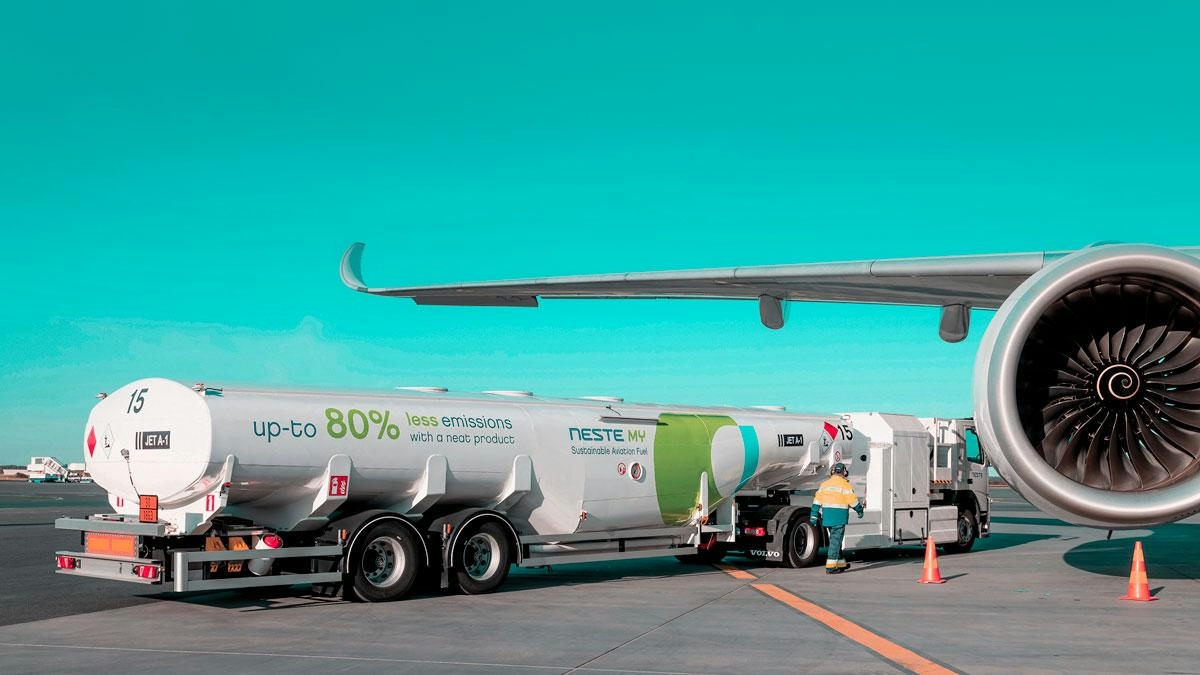
The global energy landscape is undergoing a significant transformation as sustainable fuels increasingly integrate into transportation sectors. However, the transition anticipated by 2026 presents considerable technical and economic challenges that demand urgent attention from industry stakeholders. While some Sustainable Aviation Fuel (SAF) and renewable diesel are currently blended into conventional fuels at retail pumps, the majority of substantial volumes remain confined to dedicated fleet depots, secured through long-term procurement agreements.
Aviation’s Accelerating Demand and Production Challenges
The aviation sector is experiencing rapid change driven by stringent mandates and the adoption of CORSIA-eligible fuel standards, which have intensified demand for SAF. This demand frequently outpaces the current capacity for industrial-scale production, creating a distinct market segment for SAF. In 2025, global SAF production reached approximately 2 million tonnes, representing a mere 0.7% of total airline fuel consumption. Ambitious targets, such as the SAF Grand Challenge’s goal of producing 3 billion gallons annually by 2030 and 35 billion gallons by 2050, underscore the scale of the challenge. Yet, scaling industrial production to meet these targets remains a formidable obstacle.
A recent market guide for 2026 outlines a broad spectrum of sustainable fuel options, ranging from E15 gasoline blends to advanced synthetic e-Fuels. Key developments anticipated between 2025 and early 2026 indicate a shift from localized pilot projects toward repeatable, bankable production models, including Ethanol-to-Jet (ETJ) and Hydrotreated Vegetable Oil (HVO). Despite this progress, significant barriers persist. High production costs, limited availability of competitively priced SAF, and difficulties in securing financing for expansion continue to impede growth. Moreover, the commercial-scale infrastructure necessary for advanced electro-sustainable aviation fuel (eSAF) remains underdeveloped, posing a critical challenge to meeting stringent European Union mandates.
Market Dynamics and Regional Variations
Responses within the market are varied. Some airlines, such as Wizz Air, are proactively investing in SAF start-ups to secure future supply chains. Conversely, operators in regions like Brazil express concern over their capacity to comply with mandates due to insufficient SAF availability. Industry competitors are adopting diverse strategies: companies like Ineratec are pioneering synthetic green fuels, while SkyNRG has inaugurated its first SAF production facility in Singapore, signaling growing international momentum.
Understanding the alternative fuel landscape requires distinguishing between physical market availability and ongoing development efforts. The 2026 outlook reveals a market still largely dominated by background blending, with consumer access heavily influenced by regional infrastructure and government policies. In the United States, ethanol blends such as E10 constitute over 98% of gasoline sold, meaning most drivers use biofuels unknowingly. However, dedicated alternative fuel stations offering higher blends like E85, renewable diesel, or biodiesel remain significantly less prevalent than conventional gasoline outlets.
Adoption Patterns Across Consumers, Fleets, and Aviation
Sustainable fuel adoption is progressing at three distinct paces, shaped by market dynamics, infrastructure, and regulatory frameworks. For consumers, particularly in the U.S., biofuel blends are integrated seamlessly through standard background blending, requiring no modifications to vehicles, though the sustainability benefits often remain invisible at the retail level. Fleet operations benefit from centralized supply contracts and streamlined documentation, facilitating easier adoption of renewable fuels. In contrast, the aviation sector faces regulatory mandates that drive SAF uptake, but supply constraints and elevated costs continue to pose substantial challenges.
Strategic investment in expanding production capacity is essential to transition sustainable fuels from peripheral components to primary energy sources. As the 2026 horizon approaches, overcoming barriers related to production scalability, financing, and infrastructure development will be critical for sustainable fuels to achieve widespread penetration across retail pumps, fleet operations, and commercial aviation.
Embraer Delivers 2,000th E-Jet as Airbus A220 Seeks Market Share

iniBuilds Releases Second In-Depth A380 Video
Ryanair and Alaska Airlines Apply AI to Operational Decision-Making

Digital Payments, AI, and Aviation Strengthen Philippines-India Relations
PlaneSense Suspends PC-12 Jet Card Sales
How AI Could Transform Bird-Strike Prevention for Business Aviation
American Airlines and Boeing Complete First 737 MAX Landing Gear Swap

Vietjet and Thales sign major MRO and AI deals in Paris
Etihad CEO Cites Aircraft Capacity as Limiting Factor Amid Growth in China and Africa

Artificial Intelligence Enters the Cockpit
