
Orchestrate AI insights into action

Trending
Categories
Technical Issues Ground Thai Airways Airbus A350 Fleet
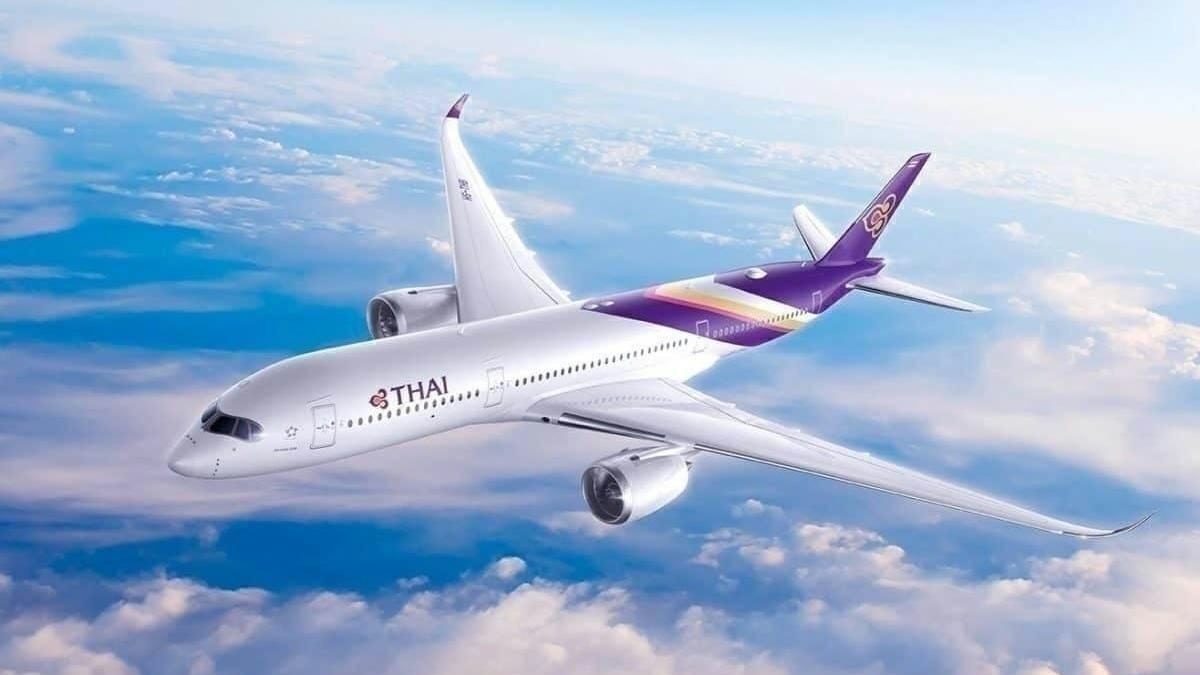
Technical Issues Ground Thai Airways Airbus A350 Fleet
Thai Airways is currently grappling with significant operational disruptions as technical difficulties with its Airbus A350 fleet have forced several aircraft out of service. The Bangkok-based airline has confirmed that shortages of Rolls-Royce Trent XWB engines, which power its A350-900s, are severely constraining its expansion plans and overall capacity. Consequently, the carrier now anticipates a modest 4% increase in seat capacity for 2026, a notable reduction from the 10% growth initially forecast for this year.
Engine Maintenance Delays and Fleet Impact
At the heart of the problem are extended engine maintenance turnaround times. While routine overhauls for the Rolls-Royce Trent XWB engines typically require around three months, Thai Airways reports that these periods have doubled to six months due to widespread supply chain disruptions affecting the aviation industry. This challenge is not isolated to Thai Airways; other regional carriers, including Vietnam Airlines, have encountered similar delays with their Boeing 787 Dreamliner fleets, citing prolonged maintenance schedules and parts shortages.
Thai Airways operates a fleet of 23 Airbus A350-900 aircraft, with an average age of 7.8 years. However, two of these aircraft are currently grounded, leaving only 21 in active service. This situation is particularly problematic given the airline’s recent restructuring efforts aimed at streamlining its fleet and reducing operational costs. The retirement of several aircraft types has increased Thai Airways’ reliance on its remaining widebody jets, amplifying the impact of any technical disruptions.
Strategic Responses and Industry Implications
In response to these challenges, Thai Airways is actively pursuing fleet expansion through negotiations with Boeing to convert options on its existing 787 Dreamliner order into firm commitments. This follows a February 2024 agreement for 45 aircraft. Nevertheless, delays in aircraft deliveries from both Airbus and Boeing have compelled the airline to explore the leasing market, where competition for available widebody aircraft remains intense. The carrier has cautioned that without securing additional aircraft, its growth trajectory could stall, potentially affecting its broader recovery and competitive positioning.
The technical setbacks have also drawn attention from aviation authorities and passengers alike, raising concerns about operational reliability and the potential erosion of customer confidence. Competitors may capitalize on these vulnerabilities to attract travelers and increase their market share while Thai Airways contends with capacity limitations.
Looking forward, some industry-wide relief may emerge as Pratt & Whitney has announced plans to address PW1500G engine issues by late 2026, which could help mitigate similar technical challenges. For the time being, however, Thai Airways faces considerable pressure to sustain operations and reassure stakeholders amid a turbulent period for its fleet and future growth prospects.

Etihad Airways Suspends Airbus A380 Flights on Key Route

Aditya Birla Group Seeks Approval for Aircraft Leasing in GIFT City

Qatar Airways Highlights Innovation and Connectivity at Arabian Travel Market 2026

Hong Kong's Five-Year Plan Includes Andrew Fan's Aircraft Parts Processing Hub Proposal

ACIA Aero Leasing Delivers ATR72-600 to Air Nostrum

RTX Appoints Jill Albertelli as Head of Pratt & Whitney

TAT Technologies Joins Beyond Aero Hydrogen Aircraft Program

AURAK Study Highlights Barriers to Air Taxi Adoption in Emerging Economies

Xiamen Air Selects Altitude for 787 Maintenance at Heathrow

Etihad and Swissport Extend Global Partnership
