
Orchestrate AI insights into action

Trending
Categories
Which Aircraft Will Delta Air Lines Soon Operate Exclusively in the US?
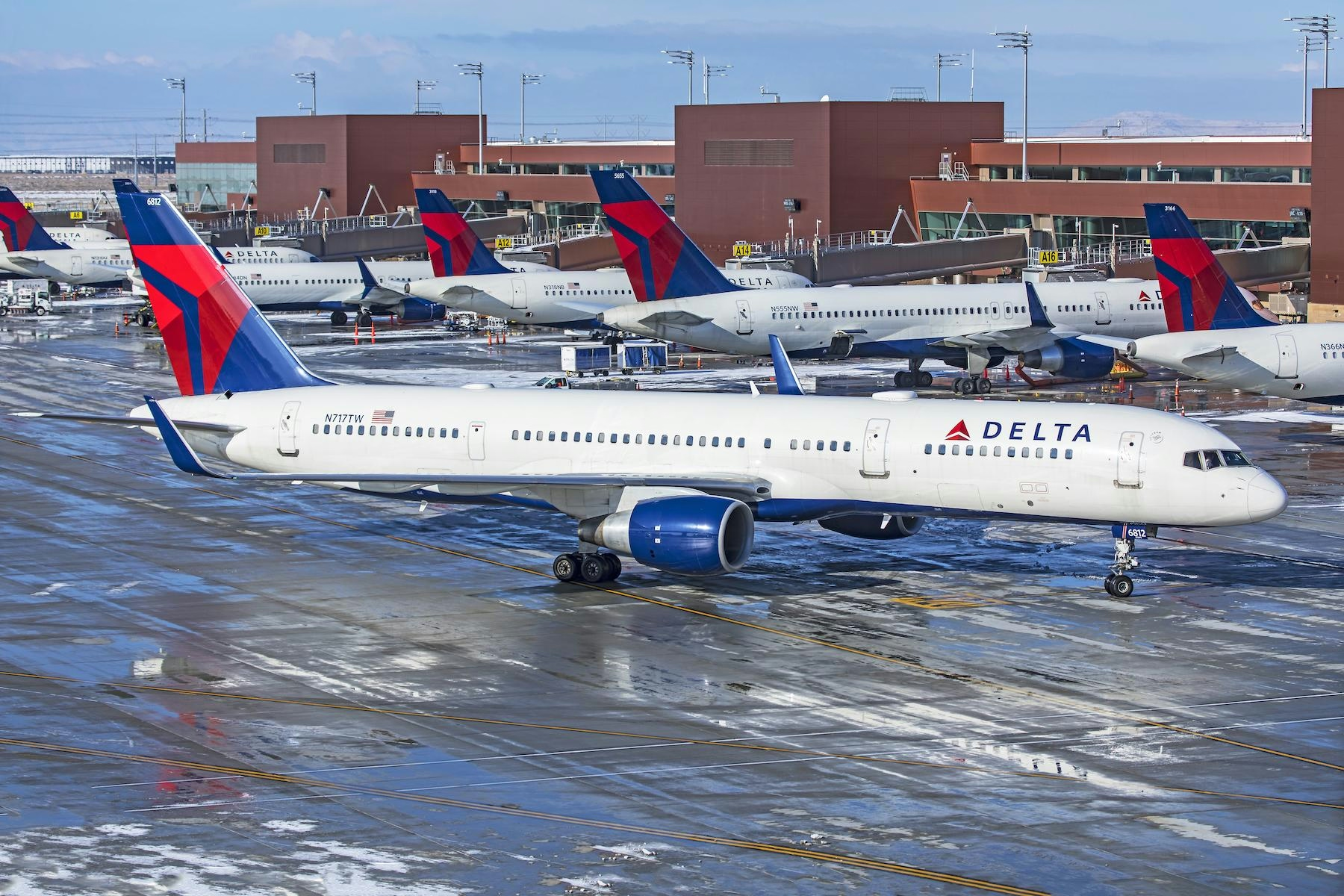
Which Aircraft Will Delta Air Lines Soon Operate Exclusively in the US?
Delta’s Airbus A350-1000 Acquisition and Fleet Strategy
Delta Air Lines is poised to become the exclusive U.S. operator of the Airbus A350-1000, following its recent order for 20 aircraft with options for an additional 20. The first deliveries are anticipated in 2026, although potential delays could extend this timeline to 2027. The A350-1000, the largest commercial passenger aircraft currently in serial production, can accommodate up to 480 passengers. This development comes as Boeing phases out the 777-300ER and the industry awaits the delayed introduction of the Boeing 777X.
Delta’s preference for Airbus widebodies has been evident since its 2008 merger with Northwest Airlines. Although the airline initially inherited an order for Boeing 787-8s, it canceled this in 2016 to focus on expanding its Airbus fleet. The A350-900 has replaced Delta’s Boeing 747-400s and 777s, while the A330neo has taken over many routes previously served by the 767. Several factors contributed to Delta’s shift away from Boeing, including concerns over engineering reliability, early technical challenges with the 787, and tensions following Boeing’s anti-dumping complaint related to Delta’s purchase of the Airbus A220 (formerly Bombardier CSeries). In contrast, Delta has expressed strong confidence in Airbus’s engineering and values the common type rating shared by the A330neo and A350, which streamlines pilot training and maintenance operations.
Current and Future Fleet Composition
At present, Delta is the only U.S. carrier operating both the Airbus A330neo and A350-900. With the introduction of the A350-1000, Delta will uniquely operate this flagship Airbus model domestically. While United Airlines has also placed orders for the A350-900, its deliveries are not expected until 2030, further solidifying Delta’s early lead in this segment.
The Airbus A350-1000, which entered commercial service in 2018, measures 243 feet in length and typically seats approximately 369 passengers in a two-class configuration. It was designed to replace the A340-600 and compete directly with the Boeing 777-300ER. The aircraft offers a range of up to 9,000 nautical miles, exceeding the capabilities of any current Boeing model. Airbus claims the A350-1000 achieves a 25% lower fuel burn per seat compared to the 777-300ER, although Boeing maintains that its forthcoming 777X will surpass the A350 in performance.
Looking beyond widebodies, Delta is also expected to operate the Boeing 737 MAX and Airbus A220 exclusively within the U.S. market. This approach presents challenges related to regulatory approval, pilot training, and fleet integration. Nevertheless, it positions Delta to compete effectively against rivals such as United Airlines, which may respond with their own fleet modernization efforts and capacity adjustments to protect market share.
Delta’s evolving fleet strategy, emphasizing exclusive operation of advanced Airbus and Boeing models, reflects its commitment to operational efficiency, reliability, and maintaining a competitive edge in the U.S. airline industry.

Etihad Airways Suspends Airbus A380 Flights on Key Route

Aditya Birla Group Seeks Approval for Aircraft Leasing in GIFT City

Qatar Airways Highlights Innovation and Connectivity at Arabian Travel Market 2026

Hong Kong's Five-Year Plan Includes Andrew Fan's Aircraft Parts Processing Hub Proposal

ACIA Aero Leasing Delivers ATR72-600 to Air Nostrum

RTX Appoints Jill Albertelli as Head of Pratt & Whitney

TAT Technologies Joins Beyond Aero Hydrogen Aircraft Program

AURAK Study Highlights Barriers to Air Taxi Adoption in Emerging Economies

Xiamen Air Selects Altitude for 787 Maintenance at Heathrow

Etihad and Swissport Extend Global Partnership
