
Orchestrate AI insights into action

Trending
Categories
Why Production of the World’s Most Reliable Twin-Aisle Aircraft Has Ended
Why Production of the World’s Most Reliable Twin-Aisle Aircraft Has Ended
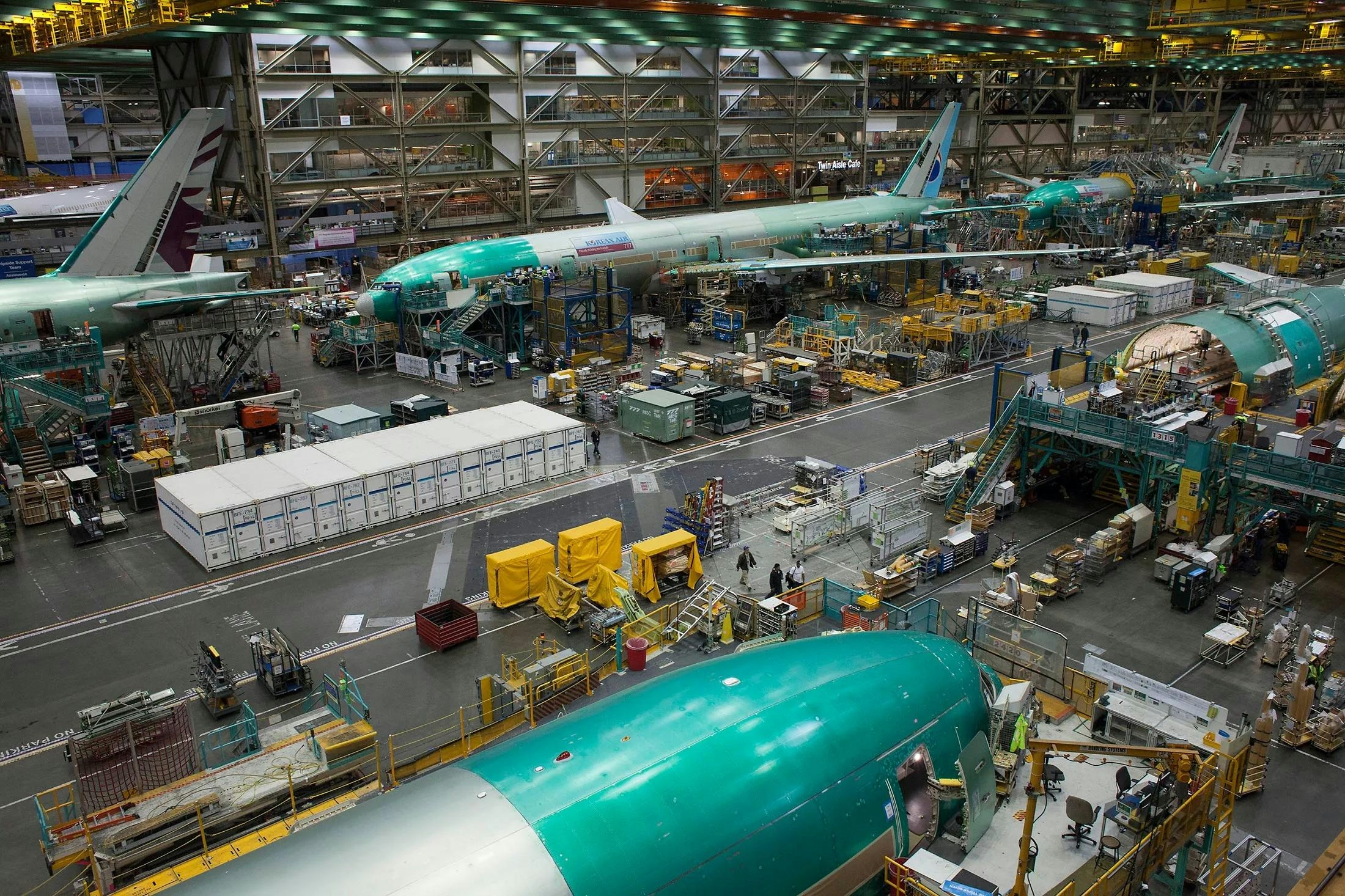
Boeing, a global leader in commercial aircraft manufacturing, has long been recognized for its innovation and reliability in aviation. Its commercial division, Boeing Commercial Airplanes, employs nearly 50,000 people worldwide, with major production facilities located in Everett, Washington, and Charleston, South Carolina. Over its century-long history, Boeing has introduced a series of iconic aircraft, including the Model 40A, the 707, the 737 family, and the legendary 747. Among its most successful widebody jets is the Boeing 777 series, particularly the 777-300ER, which has become a cornerstone for long-haul carriers around the world.
The End of the 777-300ER Era
The Boeing 777-300ER stands as the best-selling variant within the 777 family, with over 800 units delivered globally. Celebrated for its reliability and operational efficiency, it has served as the backbone of numerous international fleets. However, Boeing has officially ceased production of the 777-300ER, marking the end of a significant chapter in commercial aviation history.
This decision was influenced by several factors. By the late 2010s, the majority of major airlines had already acquired their 777-300ER fleets, leading to a decline in demand for new aircraft of this model. The commercial aviation market itself underwent a transformation, with airlines increasingly favoring smaller, more versatile aircraft—an inclination that was further accelerated by the COVID-19 pandemic’s disruption of long-haul travel patterns. Consequently, Boeing shifted its focus toward sustaining production of the 777 freighter variant while gradually winding down passenger versions.
The 777-300ER will be succeeded by the next-generation 777-9, part of the forthcoming 777X family. This new line of aircraft incorporates advanced technologies, including more powerful engines, a composite wing structure, and a modernized cabin design, all intended to address the evolving requirements of airlines in a competitive market.
Industry Shifts and Market Impact
The conclusion of production for Boeing’s most reliable twin-aisle aircraft occurs amid broader shifts within the aerospace industry. Notably, Airbus’s A320 family has surpassed the Boeing 737 in total deliveries, marking a pivotal milestone and intensifying competition between the two aerospace giants. This development has raised concerns regarding Boeing’s capacity to engineer and certify new aircraft, particularly as the 777X program continues to face delays.
With the cessation of both the 777-300ER and 737 production lines, Boeing confronts significant challenges in maintaining its market share and recovering from recent operational and reputational setbacks. The aviation sector as a whole is poised to experience changes in demand and supply dynamics as manufacturers recalibrate their strategies to align with shifting airline preferences and evolving global travel trends.
The Legacy of the 777
Boeing’s decision to end production of the 777-300ER reflects both technological advancement and changing market realities. Originally developed in the late 1980s to bridge the gap between the smaller 767 and the larger 747, the 777 series provided airlines with a long-range, twin-engine aircraft that offered lower operating costs. Its enduring legacy continues to influence the industry as airlines and manufacturers adapt to a new era in commercial aviation, shaped by innovation, heightened competition, and evolving passenger demands.

Etihad Airways Suspends Airbus A380 Flights on Key Route

Aditya Birla Group Seeks Approval for Aircraft Leasing in GIFT City

Qatar Airways Highlights Innovation and Connectivity at Arabian Travel Market 2026

Hong Kong's Five-Year Plan Includes Andrew Fan's Aircraft Parts Processing Hub Proposal

ACIA Aero Leasing Delivers ATR72-600 to Air Nostrum

RTX Appoints Jill Albertelli as Head of Pratt & Whitney

TAT Technologies Joins Beyond Aero Hydrogen Aircraft Program

AURAK Study Highlights Barriers to Air Taxi Adoption in Emerging Economies

Xiamen Air Selects Altitude for 787 Maintenance at Heathrow

Etihad and Swissport Extend Global Partnership
