
Orchestrate AI insights into action

Trending
Categories
Why Qatar Airways’ Fleet Mix Makes It One Of The Most Flexible Global Carriers
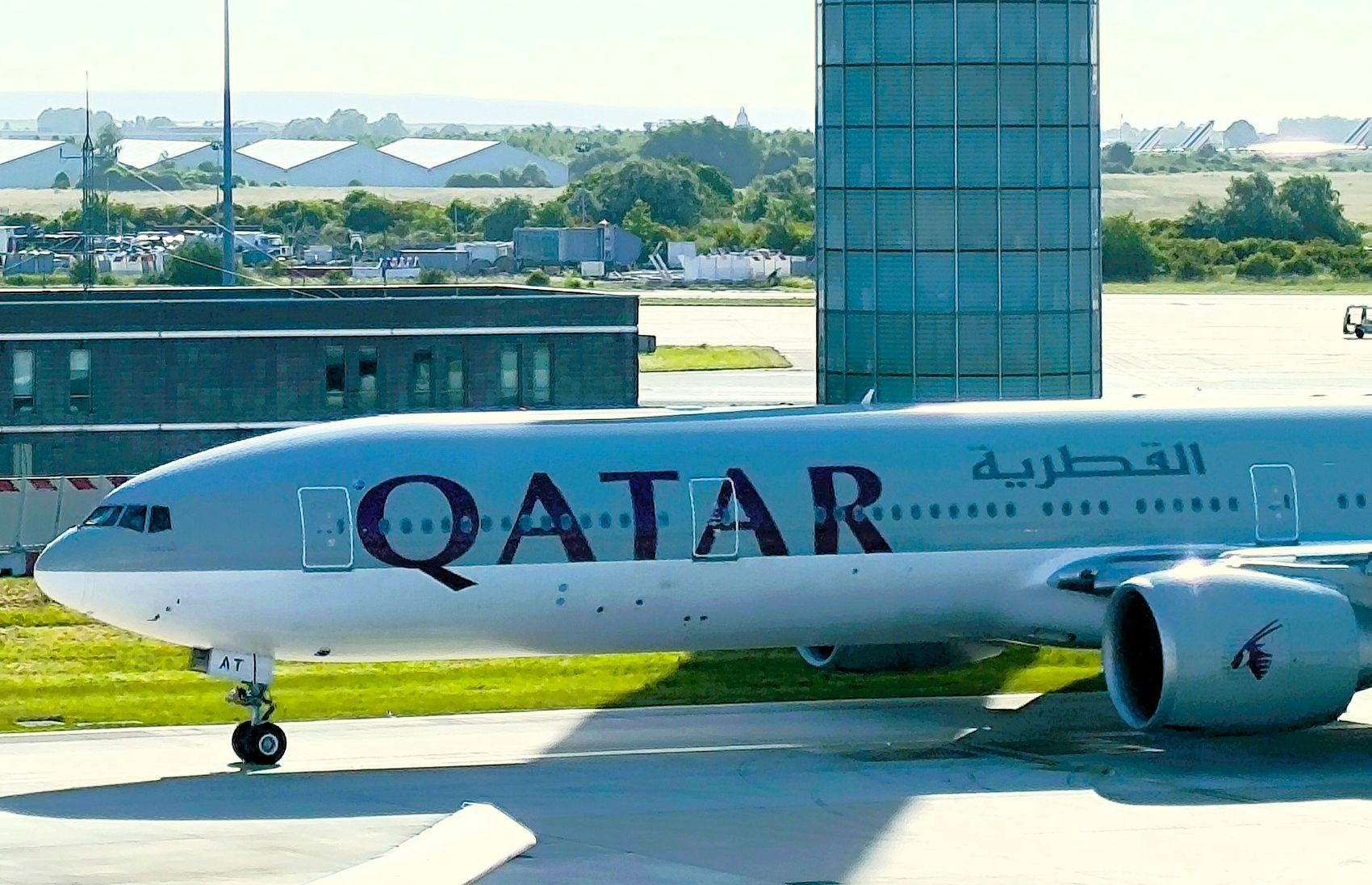
Qatar Airways’ Fleet Mix: A Pillar of Global Flexibility
Over the past twenty years, Qatar Airways has evolved from a modest regional airline into one of the most globally connected carriers. Operating from its strategically positioned hub at Hamad International Airport in Doha, the airline links cities across Europe, Asia, Africa, Oceania, and the Americas through a meticulously designed hub-and-spoke network. While geographic location plays a significant role in this extensive connectivity, the airline’s diverse fleet composition is equally vital. This variety enables Qatar Airways to align aircraft size, range, and capacity precisely with the specific demands of each route, enhancing operational efficiency and passenger experience.
Qatar Airways maintains a broad mix of widebody and narrowbody aircraft, covering nearly every segment of long-haul travel. Smaller jets serve to feed passengers into Doha, while larger intercontinental aircraft, including the Boeing 777 and Airbus A350, facilitate connections between distant cities across continents. This fleet flexibility allows the airline to adjust capacity and route planning with agility, responding effectively to shifting market demands and operational challenges. The anticipated introduction of next-generation aircraft such as the Boeing 777X and 787-10 is expected to further augment this adaptability.
Strategic Growth and Industry Positioning
Since its relaunch in 1997 under government leadership, Qatar Airways has rapidly expanded to become the flag carrier of the State of Qatar. Today, it operates one of the youngest and most technologically advanced widebody fleets in the industry, emphasizing long-haul connectivity, premium cabin products, and high-frequency international service. Its network spans more than 170 destinations across six continents, offering travelers efficient connections between major global cities with relatively short transit times through Doha.
Membership in the Oneworld alliance further extends Qatar Airways’ global reach, enabling strategic partnerships with carriers such as American Airlines and British Airways. The airline is widely recognized for its premium passenger experience, with its Qsuite business class frequently ranked among the world’s best. Consistent high rankings in global airline assessments, including the Skytrax World Airline Awards, reinforce its reputation for quality and service excellence.
Despite its strengths, Qatar Airways faces challenges that test its operational flexibility. Geopolitical disruptions, such as the temporary closure of Qatari airspace in June which led to operational suspensions, underscore the risks inherent in the region. Additionally, growing traveler caution regarding connections through the Middle East may impact the airline’s market positioning, necessitating strategic adjustments to maintain competitiveness.
In response to evolving industry demands, Qatar Airways continues to innovate. Its rollout of advanced in-flight connectivity solutions, including the adoption of Starlink satellite technology, has been positively received and is shaping passenger expectations across the sector. Competitors are taking note; for instance, Air Canada’s recent order of Airbus A350-1000s highlights the increasing importance of fleet flexibility as a competitive advantage.
Combined with one of the largest international cargo operations, Qatar Airways’ extensive and adaptable fleet solidifies its role as a key global connector. As the airline continues to evolve, its capacity to deploy the right aircraft on the right routes—while navigating complex industry and geopolitical challenges—remains central to its standing as one of the world’s most flexible global carriers.

Etihad Airways Suspends Airbus A380 Flights on Key Route

Aditya Birla Group Seeks Approval for Aircraft Leasing in GIFT City

Qatar Airways Highlights Innovation and Connectivity at Arabian Travel Market 2026

Hong Kong's Five-Year Plan Includes Andrew Fan's Aircraft Parts Processing Hub Proposal

ACIA Aero Leasing Delivers ATR72-600 to Air Nostrum

RTX Appoints Jill Albertelli as Head of Pratt & Whitney

TAT Technologies Joins Beyond Aero Hydrogen Aircraft Program

AURAK Study Highlights Barriers to Air Taxi Adoption in Emerging Economies

Xiamen Air Selects Altitude for 787 Maintenance at Heathrow

Etihad and Swissport Extend Global Partnership
