
将人工智能洞察转化为可执行行动

热门趋势
Categories
AI Express Withdraws from Noida and Hindon Airport Launches
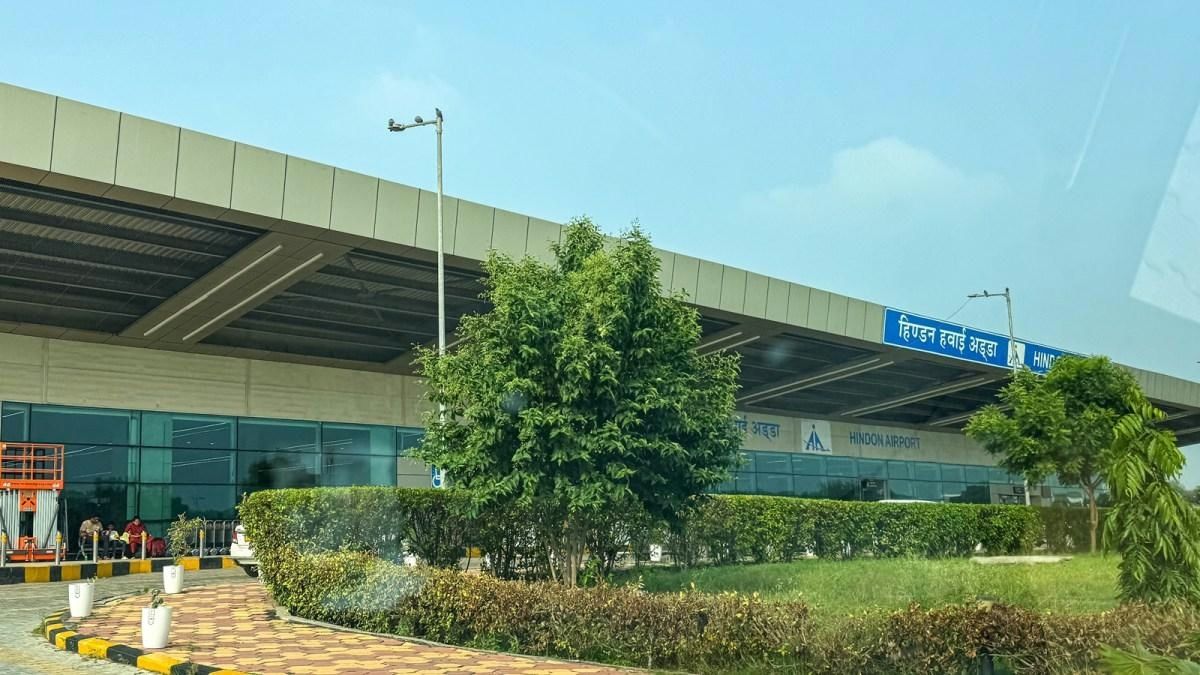
AI Express Withdraws from Noida and Hindon Airport Launches Amid Operational Challenges
Scaled-Back Launch at Noida International Airport
Noida International Airport (NIA) is scheduled to begin operations next Monday, albeit with a reduced scope following the indefinite postponement of Air India Express flights from the new facility. The airport’s initial operations will be led by IndiGo, with Akasa Air commencing services the following day. IndiGo is expected to maintain its position as the dominant carrier at NIA for the foreseeable future. This shift comes as Air India Express, the budget arm of the Tata-backed Air India Group, withdraws from both Noida and Ghaziabad’s Hindon Airport amid mounting financial losses and operational difficulties.
Operational and Safety Concerns Impacting Air India Express
The decision to pull Air India Express from these airports coincides with a period of intense scrutiny for Air India. The airline is currently grappling with operational turbulence, including the imminent release of the final report on the Ahmedabad crash and ongoing safety violations that have raised questions about its reliability. These developments have prompted cautious market reactions, with competitors likely to leverage their focus on safety and operational efficiency to strengthen their market positions.
Sources within the industry attribute the withdrawal primarily to cost-cutting measures by the Air India Group. The group appears reluctant to invest in new facilities at airports serving regions already covered by Delhi’s Indira Gandhi International Airport (IGIA). The reduction in Air India Express flights is part of a broader network rationalisation strategy aimed at aligning capacity with market demand. Presently, Air India Express operates exclusively from Delhi IGIA within the National Capital Region.
Decline in Hindon Airport Operations and Infrastructure Constraints
The exit of Air India Express has significantly reduced flight activity at Hindon Airport. Once handling approximately 25 daily aircraft movements during the previous winter, the airport now manages only eight daily flights, with IndiGo operating five and Star Air three. This decline accelerated following IndiGo’s scaling back of operations and Air India Express’s withdrawal of its 10 daily flights. Hindon’s operational challenges, including limited infrastructure with only two parking bays for commercial aircraft and restricted daylight operating hours, have further exacerbated the situation. These constraints occasionally force incoming flights to divert to Delhi IGIA, highlighting the airport’s limited capacity.
Broader Industry Pressures and Future Prospects
The Indian aviation sector is also contending with external pressures such as rising operating costs influenced by the ongoing conflict in West Asia. Airlines across the country have been compelled to rationalise routes and frequencies, reflecting a global trend. In response, Hindon Airport is undertaking infrastructure expansion efforts, including the addition of parking bays and plans to enlarge its passenger terminal to accommodate anticipated future growth.
The challenges faced by Air India coincide with broader transformations in the Indian economy, particularly within the IT outsourcing sector, which is increasingly shaped by the rise of artificial intelligence. According to NASSCOM, AI’s expanding role may indirectly impact sectors like aviation, potentially altering market dynamics and operational strategies.
Despite the current difficulties, industry officials express cautious optimism. A senior airline executive remarked, “We are waiting to take off once the current challenges subside. The runway is there. The intent is there.” As Noida International Airport prepares to open, the aviation sector looks forward to a period of renewed stability and growth.

Etihad Airways Suspends Airbus A380 Flights on Key Route

Aditya Birla Group Seeks Approval for Aircraft Leasing in GIFT City

Qatar Airways Highlights Innovation and Connectivity at Arabian Travel Market 2026

Hong Kong's Five-Year Plan Includes Andrew Fan's Aircraft Parts Processing Hub Proposal

ACIA Aero Leasing Delivers ATR72-600 to Air Nostrum

RTX Appoints Jill Albertelli as Head of Pratt & Whitney

TAT Technologies Joins Beyond Aero Hydrogen Aircraft Program

AURAK Study Highlights Barriers to Air Taxi Adoption in Emerging Economies

Xiamen Air Selects Altitude for 787 Maintenance at Heathrow

Etihad and Swissport Extend Global Partnership
