
将人工智能洞察转化为可执行行动

热门趋势
Categories
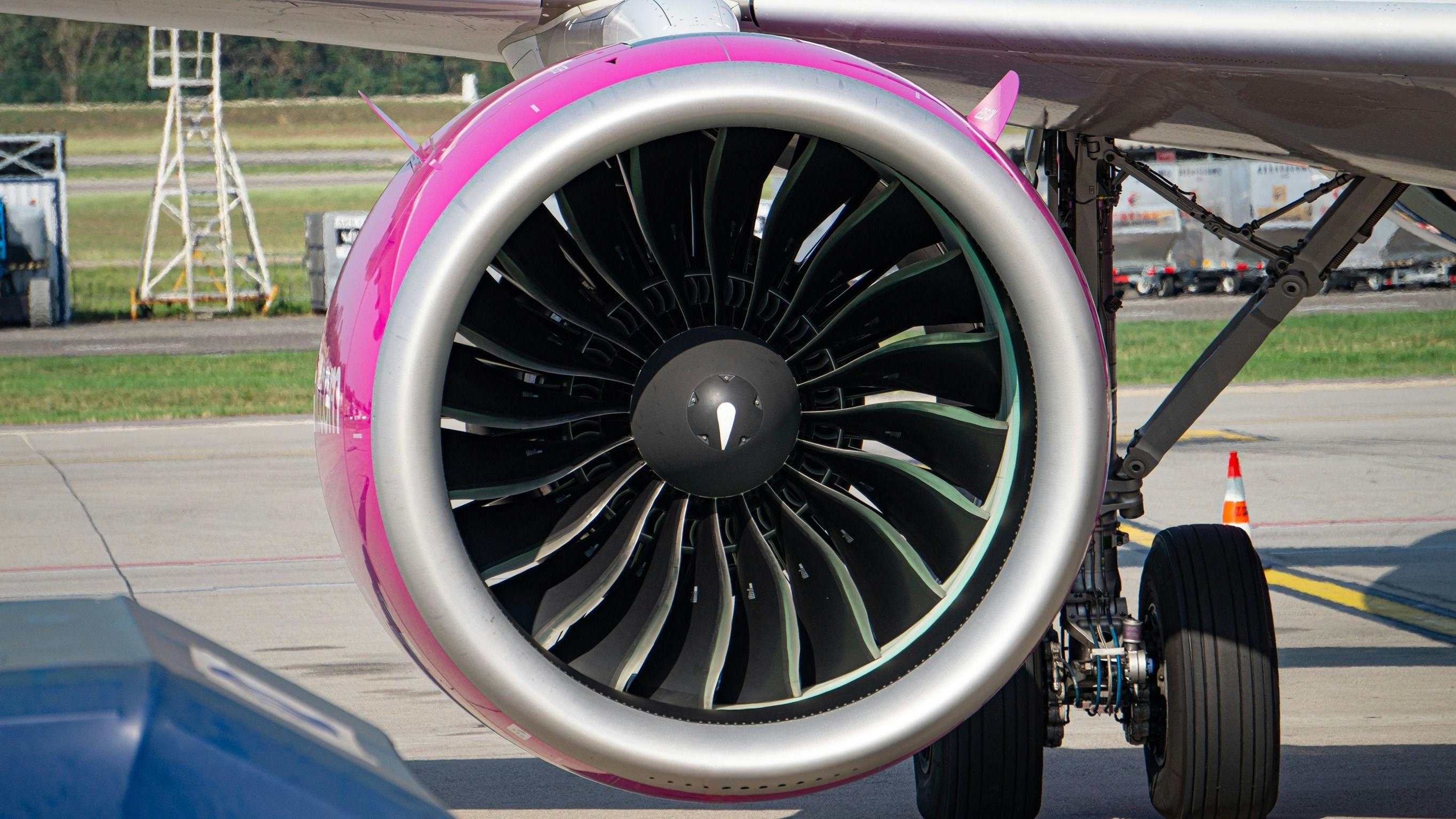
Airbus A320 Engine Market Shifts as Leap and GTF Gain Share While CFM56 Declines
Airbus A320 Engine Market Shifts as Leap and GTF Gain Share While CFM56 Declines
The global Airbus A320 fleet is experiencing a marked transformation as airlines increasingly replace legacy engines with next-generation propulsion systems. This shift reflects broader industry priorities centered on efficiency, sustainability, and fleet modernization. Analysis of utilization data, benchmarked each February from 2019 through 2026, reveals the pace and impact of these changes.
Transition from Legacy to Next-Generation Engines
In February 2019, the A320 market was dominated by older engine models. The CFM International CFM56 powered over 300,000 flights, accounting for more than 55% of total A320 activity, while the International Aero Engines (IAE) V2500 represented just over 30%. At that time, next-generation engines such as the CFM LEAP and Pratt & Whitney PW1000G geared turbofan (GTF) collectively accounted for only 13 to 15% of flights.
By February 2020, the onset of the COVID-19 pandemic led to a reduction of approximately 10,000 A320 flights. Despite this decline, the share of flights powered by LEAP and GTF engines increased to nearly 20%, reflecting the gradual integration of A320neo-family aircraft into airline fleets.
The most significant developments have occurred since the pandemic. By February 2023, A320 flight activity not only recovered but exceeded pre-pandemic levels, with growth continuing into 2024 before stabilizing through 2025 and early 2026. Although overall flight volumes have plateaued, the composition of the fleet has continued to evolve rapidly.
Decline of Legacy Engines and Rise of New Technologies
Legacy engines are steadily losing market share. The proportion of flights powered by CFM56 engines declined from approximately 43% in 2024 to around 42% in 2026, while V2500-powered flights decreased from 23% to 22% over the same period. These trends reflect the ongoing retirement of older A320ceo models and accelerated fleet renewal programs among major carriers.
Conversely, next-generation engines have gained substantial traction. The CFM LEAP engine now powers over 25% of all A320 flights worldwide, establishing it as the fastest-growing engine type in the narrowbody segment. Its appeal is driven by fuel burn and CO₂ emissions reductions of 15 to 20% compared to previous-generation engines, alongside lower maintenance costs.
The Pratt & Whitney GTF accounts for less than 10% of A320 utilization. Although it offers efficiency improvements comparable to the LEAP, its adoption has been hindered by durability and maintenance challenges affecting early production units. These issues have necessitated ongoing repairs and retrofits to enhance reliability. Additionally, Airbus has encountered production slowdowns due to Pratt & Whitney’s inability to meet contracted GTF engine deliveries, resulting in reduced A320neo production rates and impacting Airbus’s delivery schedules. This ongoing Pratt & Whitney engine crisis highlights the complexities involved in transitioning to new technologies, even as airlines strive to modernize their fleets.
The contrasting trajectories of the CFM56 and the LEAP and GTF engines underscore the aviation industry’s commitment to modernization, operational efficiency, and environmental responsibility. While legacy engines continue to constitute a significant portion of the global fleet, their role is steadily diminishing as airlines prioritize performance, cost savings, and sustainability in the evolution of narrowbody aircraft.

Etihad Airways Suspends Airbus A380 Flights on Key Route

Aditya Birla Group Seeks Approval for Aircraft Leasing in GIFT City

Qatar Airways Highlights Innovation and Connectivity at Arabian Travel Market 2026

Hong Kong's Five-Year Plan Includes Andrew Fan's Aircraft Parts Processing Hub Proposal

ACIA Aero Leasing Delivers ATR72-600 to Air Nostrum

RTX Appoints Jill Albertelli as Head of Pratt & Whitney

TAT Technologies Joins Beyond Aero Hydrogen Aircraft Program

AURAK Study Highlights Barriers to Air Taxi Adoption in Emerging Economies

Xiamen Air Selects Altitude for 787 Maintenance at Heathrow

Etihad and Swissport Extend Global Partnership
