
将人工智能洞察转化为可执行行动

热门趋势
Categories
Airbus Projects Asia-Pacific Aviation Services Market to Reach $138.7 Billion by 2044
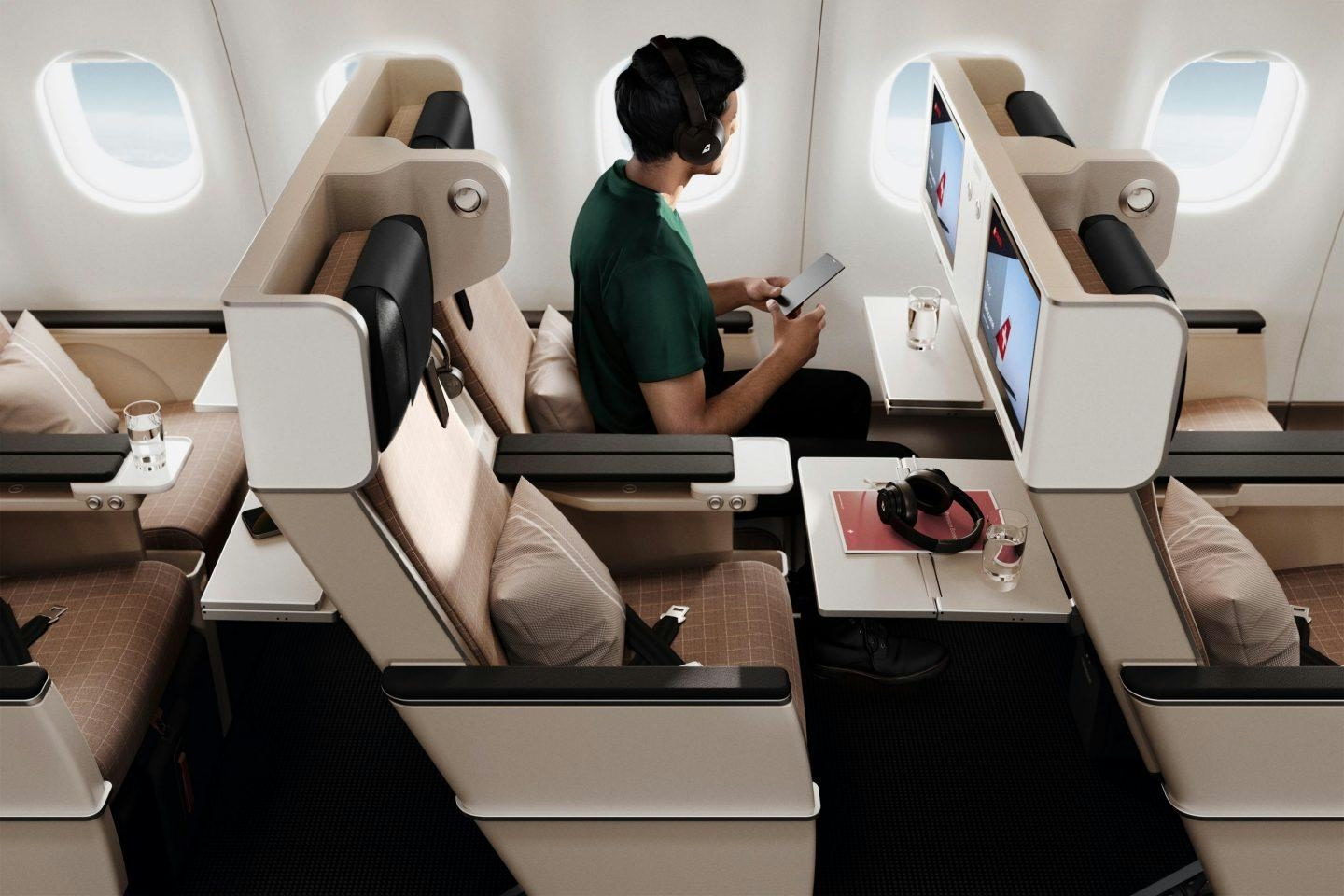
Airbus Projects Asia-Pacific Aviation Services Market to Reach $138.7 Billion by 2044
Robust Growth Forecast for Asia-Pacific Aviation Services
Airbus has projected that the Asia-Pacific aviation services market will expand significantly, reaching an estimated value of US$138.7 billion by 2044, according to its latest Global Services Forecast (GSF). The region, encompassing major markets such as China and India, is expected to experience a compound annual growth rate (CAGR) of 5.2% over the next two decades. This growth is driven by strong air traffic increases and substantial fleet expansion.
Passenger traffic in Asia-Pacific is anticipated to grow at an annual rate of 4.4%, surpassing the global average of 3.6%, thereby maintaining its position as the fastest-growing air travel market worldwide. The region will require approximately 19,560 new passenger aircraft by 2044, representing 46% of global demand. This surge in demand underscores the critical role Asia-Pacific will play in shaping the future of global aviation services.
Competitive Landscape and Market Dynamics
Airbus faces intensifying competition within the Asia-Pacific market. Chinese manufacturer Comac is actively expanding its presence and pursuing European certification, signaling a potential shift in regional market dynamics. Concurrently, Boeing remains a formidable competitor in the narrowbody aircraft segment, increasing pressure on Airbus as it accelerates production rates to meet rising demand.
The GSF identifies five principal service segments driving growth in the region. Off-wing maintenance is projected to grow from US$37.1 billion in 2025 to US$100 billion by 2044, propelled by expanding and aging fleets, although supply chain constraints and labor shortages pose ongoing challenges. On-wing maintenance is expected to reach US$14 billion by 2044, supported by significant investments in maintenance, repair, and overhaul (MRO) infrastructure across India, Indonesia, Malaysia, and the Philippines, which will enhance regional capabilities.
Demand for modifications and upgrades, including complex retrofits and cabin modernization, is forecast to increase from US$3.8 billion to US$6.2 billion as airlines introduce premium products and in-flight connectivity to meet evolving passenger expectations. The digital and connectivity segment is anticipated to quadruple to US$11.2 billion, driven by accelerated adoption of artificial intelligence and data analytics for predictive maintenance and operational efficiency. Training requirements will also rise sharply, with the region expected to need over 1.06 million new aviation professionals by 2044—including 282,000 pilots, 302,000 technicians, and 473,000 cabin crew—pushing training demand to US$7.7 billion amid a shift toward Competency-Based Training and Assessment (CBTA).
In addition to these segments, Maintenance Operations Support is projected to reach US$46.4 billion, and Ground Operations are forecast at US$31 billion. Both areas are increasingly influenced by automation and digitalization efforts aimed at improving efficiency.
Broader Industry Developments and Technological Innovation
Beyond commercial aviation services, Airbus is advancing innovation in other sectors. Its H160 helicopter is positioned as a competitor to Leonardo’s AW139 in the medium rotorcraft market, while the A321XLR program is driving production innovation at Airbus’ Hamburg facility. However, Airbus is also managing challenges, including delays in its satellite business, notably with the Superbird-9 launch.
As the aviation ecosystem continues to evolve, Asia-Pacific—led by South Asia and China—will be central to the next phase of global aviation services growth. While mature markets will continue to provide scale, the rapid expansion, shifting competitive dynamics, and technological advancements in Asia-Pacific are poised to reshape capacity, capabilities, and investment priorities across the industry worldwide.
American Airlines Plans to Receive New Aircraft Deliveries in 2026
Delta Flight Returns to Atlanta Airport Due to Engine Trouble

Samoa Airways Recovers Damaged DHC-6-300 Aircraft
Man Ingested by Frontier Airlines Engine Marks Denver’s Sixth Airfield Security Breach in Three Years

The Advantages and Disadvantages of Owning Versus Leasing a Private Jet
Former Spirit Employees Express Concerns Over AI Partnership With Google
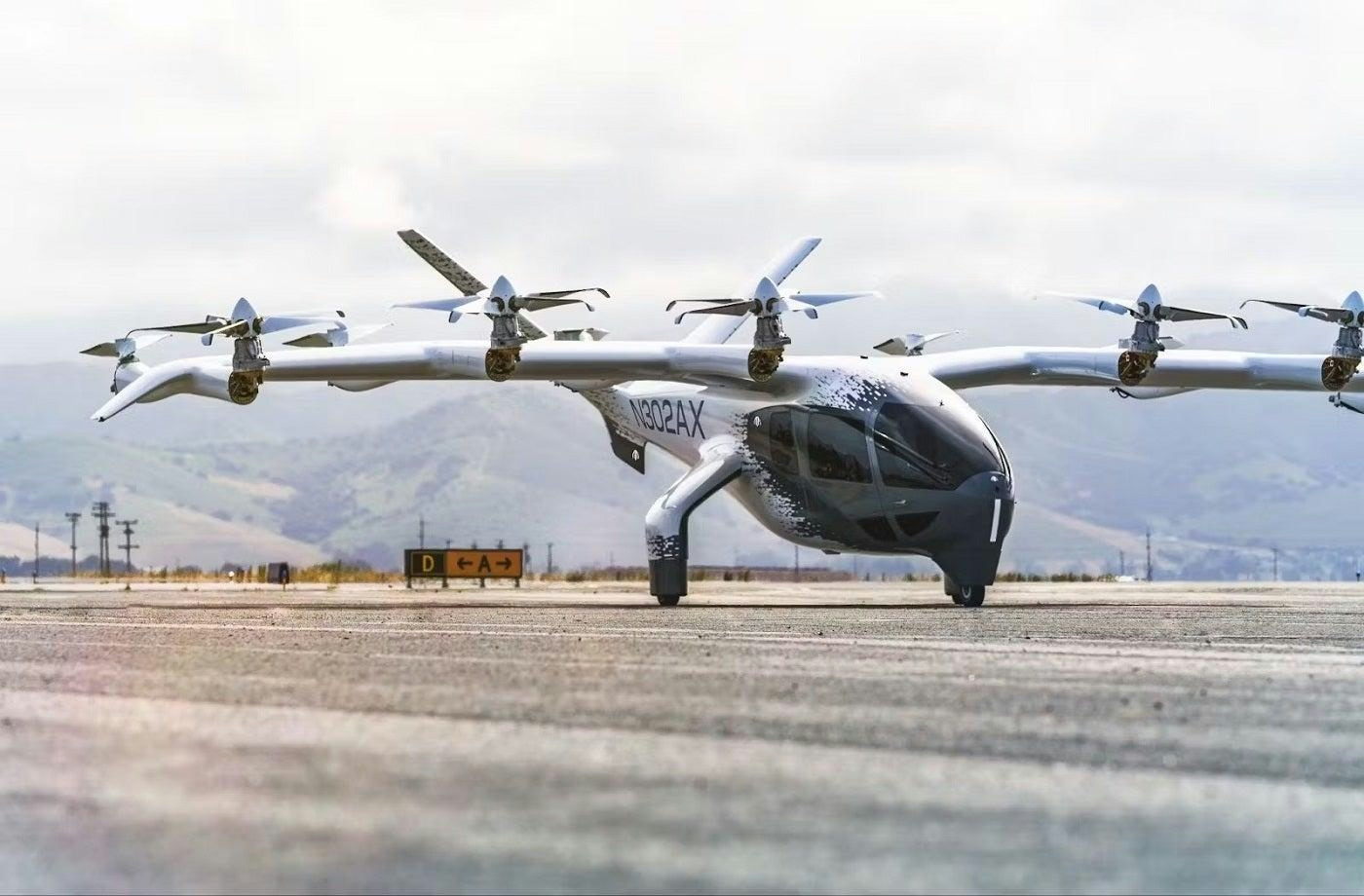
China Certifies Pilotless Air Taxi for Export; Sri Lanka First Buyer
US Pilot Hourly Pay Ranges from $90 for Regional to $465 for Widebody Flights

NASA Chooses University Teams to Support Aviation Research

Airbus Conducts Freighter First Flight as Delivery Figures Influence Stock
