
将人工智能洞察转化为可执行行动

热门趋势
Categories
Aircraft Delivery Delays Challenge Aviation’s 2050 Net-Zero Goal
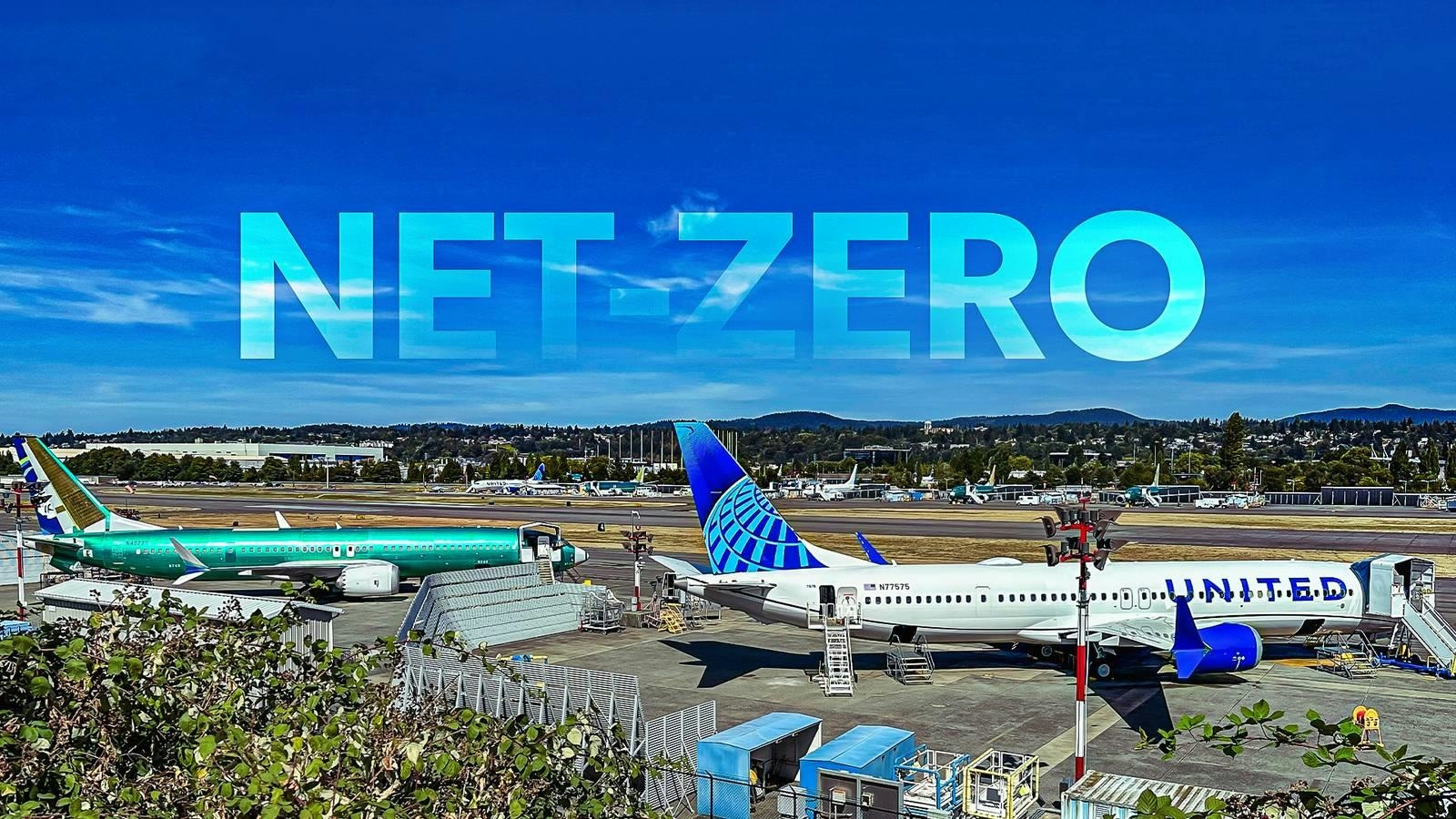
Aircraft Delivery Delays Challenge Aviation’s 2050 Net-Zero Goal
The Aviation Sector’s Climate Commitment
Aviation, responsible for approximately 2.5% to 2.8% of global carbon emissions annually, faces increasing scrutiny as it strives to meet its ambitious target of net-zero carbon emissions by 2050. When accounting for non-CO₂ effects such as contrails and other greenhouse gases, the sector’s total climate impact may reach as high as 5%. In response, the International Air Transport Association (IATA) and its member airlines pledged in 2021 to achieve net-zero emissions by mid-century, setting a precedent for the industry’s environmental responsibility.
IATA’s strategy to reach this goal involves a multifaceted approach. Central to the plan is the widespread adoption of sustainable aviation fuels (SAF), alongside technological advancements in aircraft and engine design, operational efficiencies, and the eventual integration of hydrogen and electric propulsion systems. For emissions that cannot be eliminated directly, the roadmap includes carbon capture, storage, and offsetting mechanisms. Willie Walsh, the outgoing Director General of IATA, outlined the envisioned breakdown: 65% of emissions reductions through SAF, 13% via new propulsion technologies such as hydrogen, 3% from efficiency improvements, and the remaining 19% addressed through carbon capture and offsets. However, he emphasized that the actual distribution will depend on the cost-effectiveness of these solutions over time.
Obstacles to Progress: Delivery Delays and Fuel Adoption
Despite the clear framework, the aviation industry’s trajectory toward net-zero is increasingly uncertain. At IATA’s 82nd Annual General Meeting in Rio de Janeiro, Walsh acknowledged that while the 2050 target remains achievable, the sector is “clearly off track.” Two primary challenges are impeding progress: persistent delays in aircraft deliveries and the slow uptake of sustainable aviation fuels.
Fleet renewal is a critical component in reducing emissions, as newer aircraft models offer significantly improved fuel efficiency. For instance, the Airbus A320neo family consumes approximately 15% less fuel than its predecessors. However, ongoing delays in the delivery of new aircraft are hindering airlines’ efforts to modernize their fleets, forcing continued reliance on older, less efficient planes that contribute disproportionately to emissions.
Simultaneously, the global market for sustainable aviation fuel remains nascent and limited in scale. Projections indicate that SAF will constitute only 0.8% of global jet fuel consumption by 2026, with production estimated at 2.4 million tonnes—far below the volume required to meet net-zero targets. Walsh has cautioned that the sluggish pace of the global energy transition, coupled with the “teeny, tiny and embryonic” state of the SAF market, casts doubt on the feasibility of achieving the 2050 goal under current conditions.
Uncertain Path Forward
Faced with these significant hurdles, industry leaders are increasingly contemplating whether a revised, more attainable timeline for net-zero emissions is necessary. As the aviation sector contends with supply chain bottlenecks and the slow scaling of alternative fuel production, the journey toward a sustainable future remains fraught with uncertainty. The coming years will be critical in determining whether the industry can accelerate its transformation or must recalibrate its environmental ambitions.

Hong Kong's Five-Year Plan Includes Andrew Fan's Aircraft Parts Processing Hub Proposal

ACIA Aero Leasing Delivers ATR72-600 to Air Nostrum

RTX Appoints Jill Albertelli as Head of Pratt & Whitney

TAT Technologies Joins Beyond Aero Hydrogen Aircraft Program

AURAK Study Highlights Barriers to Air Taxi Adoption in Emerging Economies

Xiamen Air Selects Altitude for 787 Maintenance at Heathrow

Etihad and Swissport Extend Global Partnership

Sepehran Airlines B737 Returns to Mashhad After Tyre and Engine Issues

Etihad Deploys Widebody Fleet to Meet Strong Demand

Korean Air Finalizes $36.2 Billion Deal with Boeing
