
将人工智能洞察转化为可执行行动

热门趋势
Categories
Airline Disruptions Reflect Structural Changes in Post-Covid Aviation
Airline Disruptions Reflect Structural Changes in Post-Covid Aviation
The New Normal of Airline Operations
Airline disruptions, once considered rare exceptions, have become an operational reality in the contemporary aviation industry. Airlines now contend daily with a complex array of challenges including adverse weather, technical malfunctions, air traffic restrictions, airport congestion, crew shortages, and security incidents. Each of these factors can trigger cascading effects throughout entire flight networks. The manner in which airlines respond to these disruptions significantly influences passenger experience, operational efficiency, and commercial performance.
Disruptions—whether cancellations, substantial delays, missed connections, or aircraft diversions—rarely impact a single flight in isolation. Instead, they initiate a chain reaction requiring the repositioning of aircraft, rescheduling of crews, re-accommodation of passengers, and reallocation of ground resources. Managing these consequences demands continuous coordination among a broad spectrum of stakeholders, including airlines, airports, ground handlers, air navigation service providers, and regulatory authorities.
Structural Shifts Since the Covid-19 Pandemic
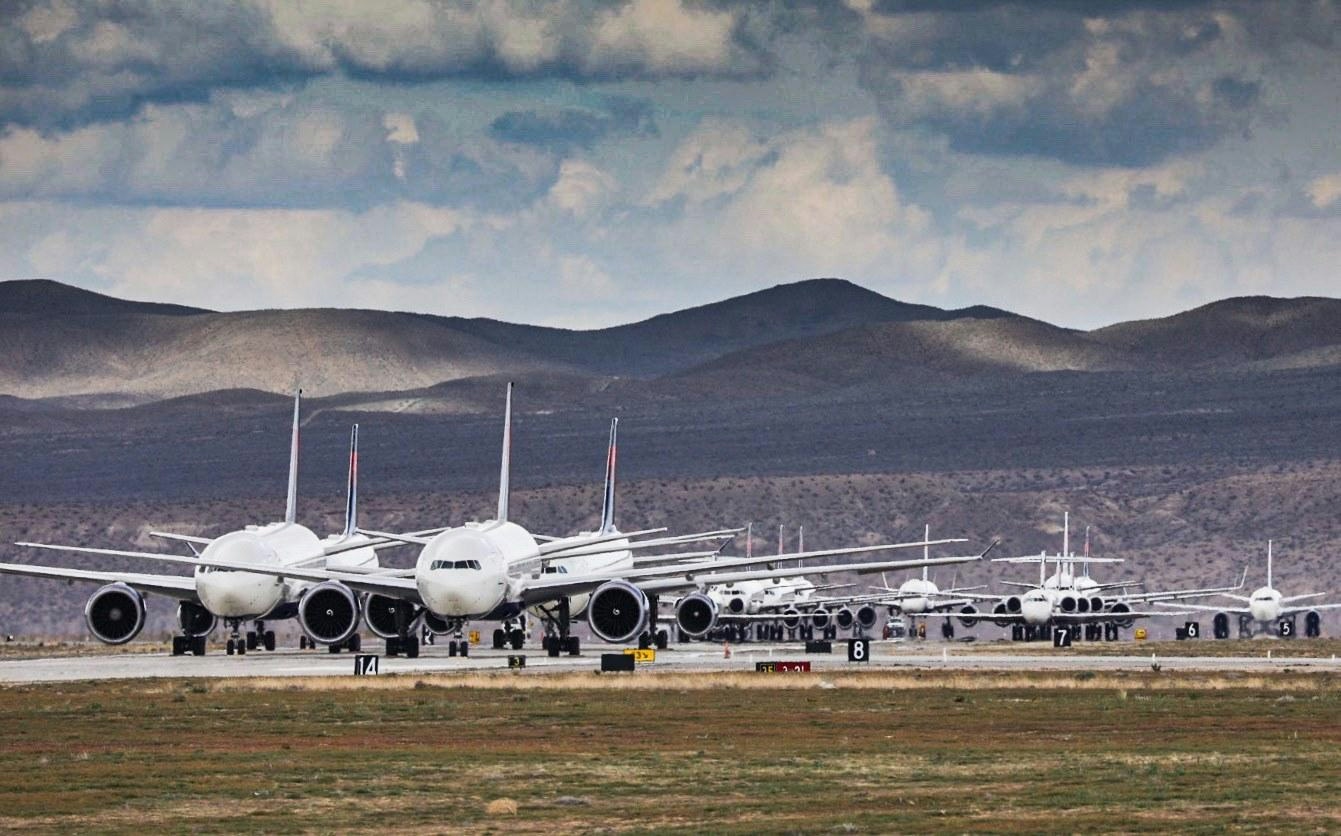
Since the onset of the Covid-19 pandemic, disruption has evolved into a structural characteristic of global aviation. Although passenger demand has largely rebounded, industry capacity has not kept pace. Aircraft manufacturers face significant order backlogs, while persistent supply chain constraints limit access to essential maintenance components. These challenges, compounded by weather events, airport congestion, air traffic management restrictions, labor shortages, and emerging geopolitical risks, have collectively diminished operational flexibility.
Airlines now operate leaner networks with minimal spare aircraft and crew availability, heightening the risk that even minor disruptions will escalate and incur substantial recovery costs. This shift reflects a fundamental change in the industry's operational dynamics, where resilience is increasingly tested by constrained resources and external pressures.
Geopolitical and Regulatory Pressures
Recent geopolitical developments have further complicated the aviation landscape. The ongoing conflict in the Gulf region has precipitated a fuel shock, driving jet fuel prices upward and disrupting critical air corridors. In response, global airlines have revised downward their profit forecasts for 2026. The International Air Transport Association (IATA) identifies rising fuel costs and regional instability as key factors prompting airlines to eliminate unprofitable routes and maintain elevated fares.
Long-term strategic planning within the industry is adapting accordingly. Spare engine availability, once considered a contingency, is now recognized as a structural necessity, as demonstrated by recent long-term leasing agreements. Concurrently, airlines face increasing regulatory demands, including mandates for sustainable aviation fuels, lifecycle emissions regulations, carbon pricing mechanisms, and feedstock limitations. These evolving requirements are reshaping the economic framework of air travel and adding layers of complexity to operational planning.
Operational Risks and Disruption Management
Among the various operational risks, bird strikes remain particularly unpredictable and impactful. Typically occurring during take-off and landing phases, bird strikes can inflict engine damage, cracked windscreens, and other defects that may ground aircraft for extended periods, thereby disrupting schedules and passenger itineraries across networks.
Acknowledging the inevitability of disruptions, airlines are investing in structured disruption management programs. The objective is not to eliminate all disruptions—many of which lie beyond their control—but to mitigate operational impacts and restore customer confidence through timely communication, coordinated decision-making, and consistent service recovery. Effective disruption management now necessitates enterprise-wide collaboration across flight operations, engineering, commercial teams, customer experience, and corporate communications, alongside seamless coordination with external partners.
Experience indicates that passengers are generally more accepting of disruptions when they are managed transparently and professionally, with prompt support provided. In an era marked by persistent operational and geopolitical challenges, the capacity to manage disruption effectively has become a defining attribute for airlines worldwide.

Etihad and Swissport Extend Global Partnership

Sepehran Airlines B737 Returns to Mashhad After Tyre and Engine Issues

Etihad Deploys Widebody Fleet to Meet Strong Demand

Korean Air Finalizes $36.2 Billion Deal with Boeing

Australia’s RFDS Queensland Section Orders Six King Air 260Cs

Korean Air Finalizes Order for 103 Boeing Jets and Engines
Embraer E195-E2 Features Distinctive Engine Placement Among Regional Jets

What Passengers Can Expect on Boeing’s New 777X Jet

How Ethiopian Airlines Became Africa’s Leading Carrier Amid Gulf Competition

Joby Aviation Extends Autonomous Flight Capabilities with Cross-Country Tour
