
将人工智能洞察转化为可执行行动

热门趋势
Categories
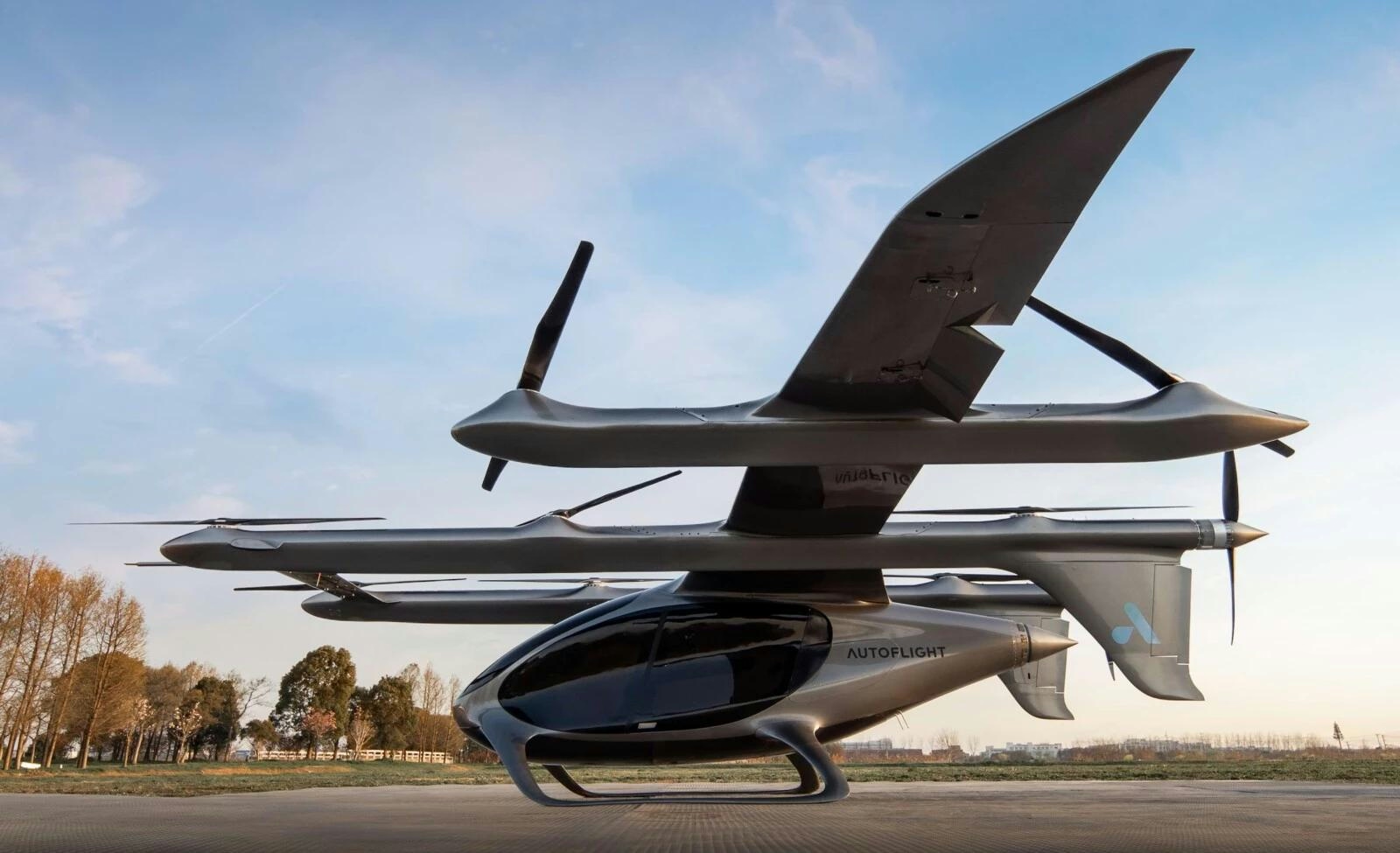
AutoFlight Conducts First 2-Ton eVTOL Tea Transport Trial in China
AutoFlight Conducts First 2-Ton eVTOL Tea Transport Trial in China
Pioneering Autonomous Cargo Delivery in Challenging Terrain
AutoFlight has successfully completed China’s inaugural 2-ton class electric vertical takeoff and landing (eVTOL) cargo transport trial, marking a significant advancement in autonomous logistics for remote and mountainous regions. The trial involved the company’s CarryAll V2000CG aircraft autonomously delivering fresh spring tea over a distance of approximately 120 kilometres between Anshun and Guiyang in Guizhou province. The flight, which traversed difficult terrain, was completed in just 37 minutes—substantially faster than traditional road transport.
Following the aerial segment, the tea was transported by high-speed rail nearly 2,000 kilometres to Shanghai. This integrated “eVTOL plus rail” logistics model facilitated same-day delivery, ensuring that perishable goods reached urban markets within 24 hours. The demonstration highlights the potential for rapid and efficient supply chains that combine emerging aerial technologies with existing infrastructure.
Technical Capabilities and Industry Implications
The CarryAll V2000CG is a fully autonomous, unmanned aircraft capable of carrying a maximum payload of 400 kilograms, with a range of up to 200 kilometres and a cruising speed of approximately 180 kilometres per hour. Its vertical takeoff and landing capability enables point-to-point delivery without the need for runways, making it particularly suitable for regions with limited infrastructure. The aircraft has received Type, Production, and Airworthiness Certification from the Civil Aviation Administration of China, clearing the way for broader commercial deployment.
AutoFlight highlighted several benefits demonstrated by the trial, including significantly reduced delivery times, enhanced freshness for perishable products, and a lower environmental footprint due to the aircraft’s fully electric propulsion system. Li Yun, Chief Commercial Officer at AutoFlight, described the operation as an innovative logistics model that “breaks logistics bottlenecks in high-altitude mountainous areas” by combining autonomous eVTOL air transfer with high-speed rail trunk lines.
Challenges and Future Prospects
Despite the successful trial, widespread adoption faces several challenges. Regulatory approval remains a critical obstacle as authorities work to develop standards for large-scale autonomous cargo operations. Market acceptance will also be tested as businesses and consumers adjust to new logistics paradigms. Furthermore, competition within the eVTOL sector is intensifying, with rival companies accelerating technological development and pursuing strategic partnerships to enhance their market positions.
The trial has already generated increased interest from both commercial and military sectors, which recognize the potential of eVTOL technology for diverse cargo transport applications. Beyond agricultural logistics, AutoFlight is exploring the use of its eVTOL platforms in emergency response, offshore operations, and intercity freight. The company is also advancing its passenger eVTOL program, with a six-seat model currently undergoing certification amid the evolving market for advanced air mobility.
AutoFlight’s achievement reflects the growing momentum behind eVTOL technology in China and internationally, as the industry confronts regulatory, technical, and market challenges in its effort to transform the future of logistics and transportation.

Etihad Airways Suspends Airbus A380 Flights on Key Route

Aditya Birla Group Seeks Approval for Aircraft Leasing in GIFT City

Qatar Airways Highlights Innovation and Connectivity at Arabian Travel Market 2026

Hong Kong's Five-Year Plan Includes Andrew Fan's Aircraft Parts Processing Hub Proposal

ACIA Aero Leasing Delivers ATR72-600 to Air Nostrum

RTX Appoints Jill Albertelli as Head of Pratt & Whitney

TAT Technologies Joins Beyond Aero Hydrogen Aircraft Program

AURAK Study Highlights Barriers to Air Taxi Adoption in Emerging Economies

Xiamen Air Selects Altitude for 787 Maintenance at Heathrow

Etihad and Swissport Extend Global Partnership
