
将人工智能洞察转化为可执行行动

热门趋势
Categories
Boeing quietly dethroned Airbus at the Farnborough Airshow
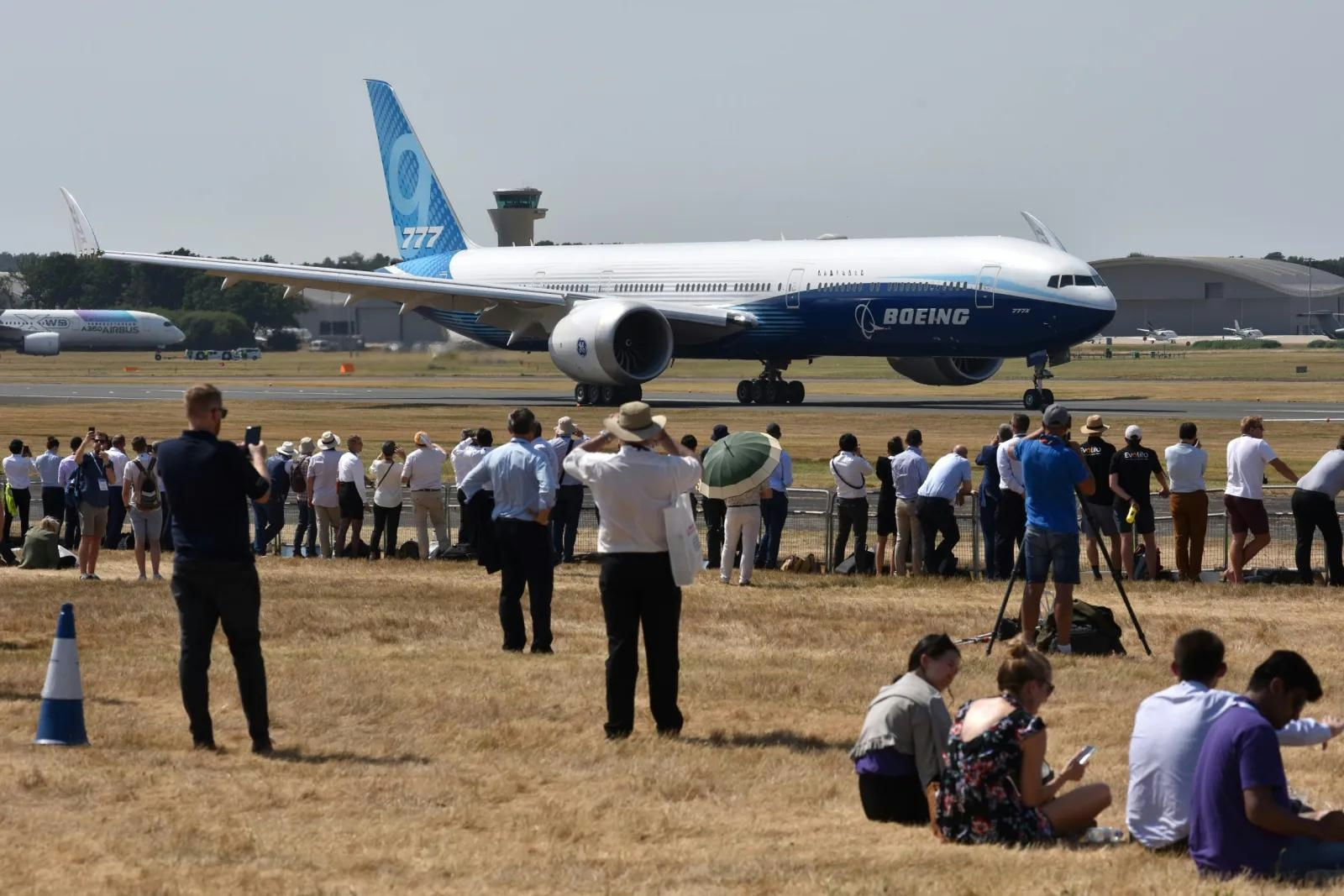
Boeing Quietly Surpasses Airbus at Farnborough Airshow
Boeing has marked a significant milestone in its ongoing recovery by narrowly outpacing Airbus in aircraft orders at the 2024 Farnborough Airshow. Securing commitments for 173 aircraft compared to Airbus’s 154, the American aerospace giant achieved a feat it has not managed at a major airshow in four years. This development signals a potential shift in momentum following a prolonged period of safety controversies, production setbacks, and reputational challenges.
Leadership and Market Confidence
Boeing’s CEO, Kelly Ortberg, played a prominent and hands-on role throughout the event, underscoring a leadership approach focused on rebuilding trust with customers and stakeholders. Having relocated to Seattle to be closer to Boeing’s manufacturing operations, Ortberg actively participated in order signings and engaged with the media, projecting confidence in the company’s trajectory. Industry observers noted this renewed faith among operators. Augusto Viansson Ponte, director at Alton Aviation Consultancy, remarked, “They were in a pretty bad spot a while ago, and I think that there is confidence from the operators in the fact that they will resolve that.”
This resurgence follows a turbulent chapter for Boeing, including the fallout from the 737 Max crisis and ongoing production challenges with the 787 and the yet-to-be-certified 777X. At last year’s Paris Airshow, Boeing refrained from announcing any orders in the aftermath of the Air India Flight 171 crash, allowing Airbus to dominate with 142 orders. The Farnborough results this year suggest that airlines are gradually restoring their trust in Boeing’s capacity to deliver.
Strategic Developments and Financial Performance
Beyond commercial aviation, Boeing also showcased its Ghost Bat drone, signaling its ambitions in the autonomous fighter aircraft sector and highlighting its competitive positioning in defense technology. This move reflects the company’s broader strategy to diversify and innovate amid a rapidly evolving aerospace landscape.
Despite these encouraging signs, Boeing’s recovery remains incomplete. The company reported a $428 million loss in the second quarter, with revenues of $24.6 billion impacted by a $280 million charge related to the Air Force One replacement program. Its share price has declined approximately 8% over the past year, though it experienced a 5% increase following the airshow. Analysts at RBC Capital Markets acknowledged investor appreciation for Boeing’s steady progress in deliveries, production increases, and free cash flow generation. Deutsche Bank analysts similarly noted that Boeing continues to demonstrate improvement in executing against a strong demand environment.
Boeing’s intensified focus on ramping up production of the 737 Max, now approved to reach 47 jets per month, positions the company to better compete with Airbus, which has dominated recent airshows. However, challenges persist, including issues with early 777-9 deliveries—referred to internally as the “terrible teens”—and ongoing supply chain constraints.
Market Context and Outlook
This year’s Farnborough Airshow was marked by a relative absence of blockbuster deals and high-profile airline announcements, reflecting a market still adjusting to backlogs and exercising caution amid persistent supply chain difficulties. In an internal memo, Ortberg acknowledged the progress while urging continued effort, stating, “Thank you for doing your part to get us back to the Boeing we all know we can be—let’s keep it going,” while also cautioning that “two quarters don’t make a year.”
Boeing’s understated victory at Farnborough suggests the company is regaining its footing, yet the path to full recovery remains complex as the aerospace industry navigates ongoing challenges and evolving market dynamics.

Etihad and Swissport Extend Global Partnership

Sepehran Airlines B737 Returns to Mashhad After Tyre and Engine Issues

Etihad Deploys Widebody Fleet to Meet Strong Demand

Korean Air Finalizes $36.2 Billion Deal with Boeing

Australia’s RFDS Queensland Section Orders Six King Air 260Cs

Korean Air Finalizes Order for 103 Boeing Jets and Engines

Embraer E195-E2 Features Distinctive Engine Placement Among Regional Jets

What Passengers Can Expect on Boeing’s New 777X Jet

How Ethiopian Airlines Became Africa’s Leading Carrier Amid Gulf Competition

Joby Aviation Extends Autonomous Flight Capabilities with Cross-Country Tour
