
将人工智能洞察转化为可执行行动

热门趋势
Categories
China Sets Five-Year Targets for C919 Production, New Engine Development, and Reduced Foreign Dependence
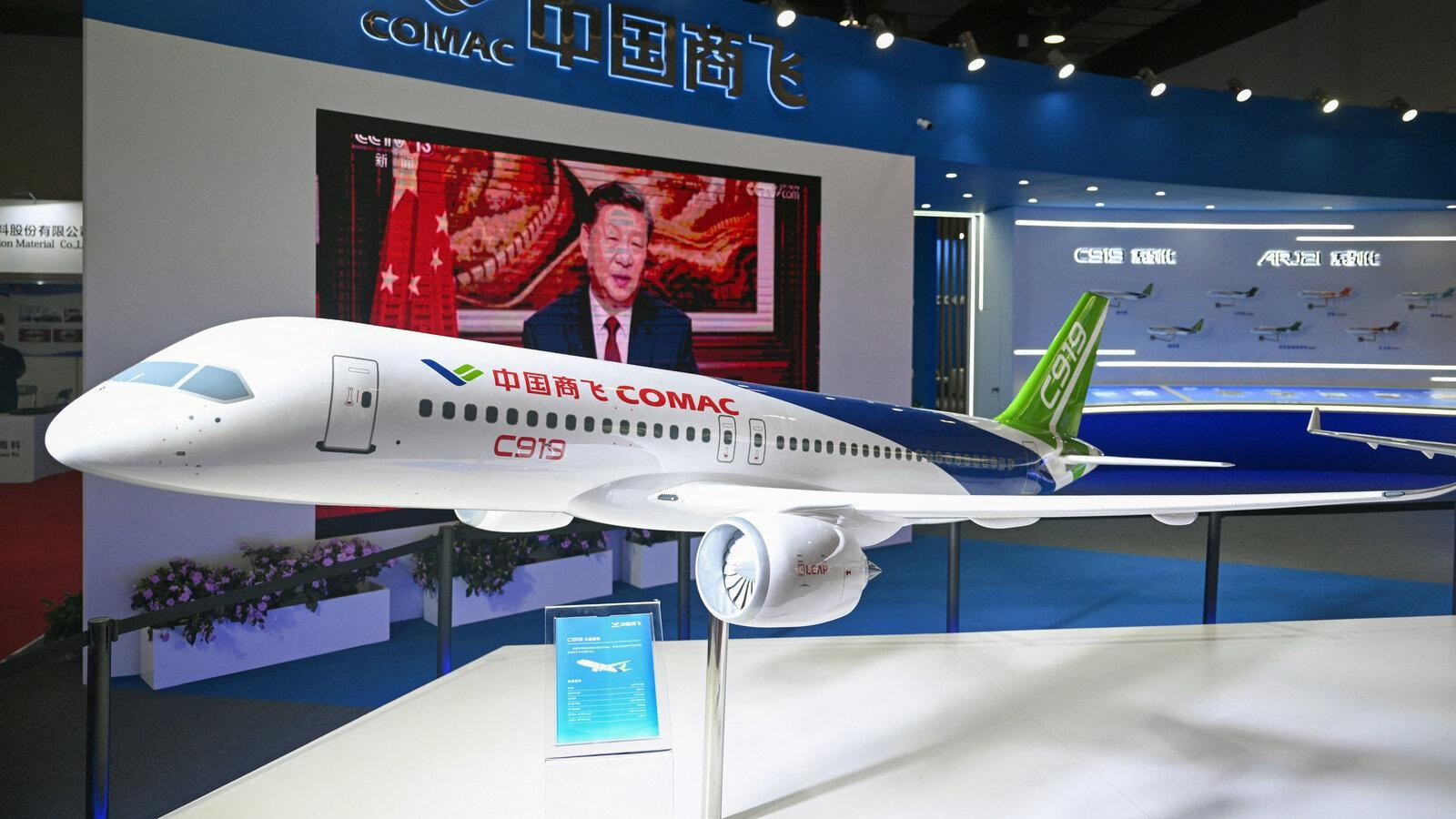
China Sets Ambitious Five-Year Targets for Aviation Industry Expansion
China is intensifying its efforts to expand its domestic commercial aircraft industry by setting ambitious targets for the production of its C919 narrowbody jet, the development of new engines, and the reduction of reliance on foreign suppliers. This initiative, outlined in the forthcoming national five-year plan covering 2026 to 2030, also encompasses the C909 regional jet and the C929 widebody aircraft. It forms a central component of China’s broader strategy to challenge the longstanding dominance of Boeing and Airbus in the global aviation market.
Strategic Objectives and Industry Focus
The upcoming five-year plan, expected to be ratified by China’s top legislative body this week, aims to guide the country’s socio-economic and industrial development with a strong emphasis on the aerospace sector. Key objectives include increasing aircraft production capacity, strengthening domestic supply chains, and accelerating the certification and deployment of the CJ-1000 high-bypass turbofan engine, which is developed entirely within China. The plan further calls for the development of specialized aircraft variants, such as a high-plateau model tailored for operations at high-altitude airports where thinner air presents challenges to engine performance and lift.
Industry experts highlight the critical nature of the next five years for the success of these aircraft programs and the deepening of component localization, particularly in engine manufacturing. Brian Yang Bo, a seasoned aviation consultant, remarked, “For the C919, the key words are output and supply chains. This is a candid admission of the challenges it has faced, and thus the focus is squarely on stabilizing and growing output.” The C919, produced by the Commercial Aircraft Corporation of China (Comac), entered domestic service in May 2023 and is widely regarded as the flagship of China’s aviation ambitions.
Challenges and Global Market Dynamics
Despite these ambitious plans, China’s aviation sector faces significant technological and market challenges. Developing widebody jets and advanced engines that can compete on a global scale remains a formidable hurdle. Investor skepticism has been evident, with stock prices of companies involved in the sector experiencing volatility amid doubts about China’s ability to meet its production and technological targets. Meanwhile, established aerospace manufacturers in the United States and Europe are responding by intensifying research and development efforts and forging strategic partnerships to protect their market positions.
The five-year plan also addresses vulnerabilities exposed by recent global disruptions and geopolitical tensions. It underscores the importance of building resilient supply chains and reducing dependence on foreign technology and components. By prioritizing innovation and self-reliance, China aims to strengthen its position in the global aerospace industry. However, the path forward will require overcoming both technical challenges and competitive pressures in the international market.
As China embarks on implementing this comprehensive five-year roadmap, the coming years will be pivotal in determining its ability to realize these ambitious goals and reshape the competitive dynamics of the global aviation sector.

Etihad Airways Suspends Airbus A380 Flights on Key Route

Aditya Birla Group Seeks Approval for Aircraft Leasing in GIFT City

Qatar Airways Highlights Innovation and Connectivity at Arabian Travel Market 2026

Hong Kong's Five-Year Plan Includes Andrew Fan's Aircraft Parts Processing Hub Proposal

ACIA Aero Leasing Delivers ATR72-600 to Air Nostrum

RTX Appoints Jill Albertelli as Head of Pratt & Whitney

TAT Technologies Joins Beyond Aero Hydrogen Aircraft Program

AURAK Study Highlights Barriers to Air Taxi Adoption in Emerging Economies

Xiamen Air Selects Altitude for 787 Maintenance at Heathrow

Etihad and Swissport Extend Global Partnership
