
将人工智能洞察转化为可执行行动

热门趋势
Categories
Chinese Lab Flies World’s First Megawatt-Class Hydrogen Turboprop Engine Amid Airbus Delays
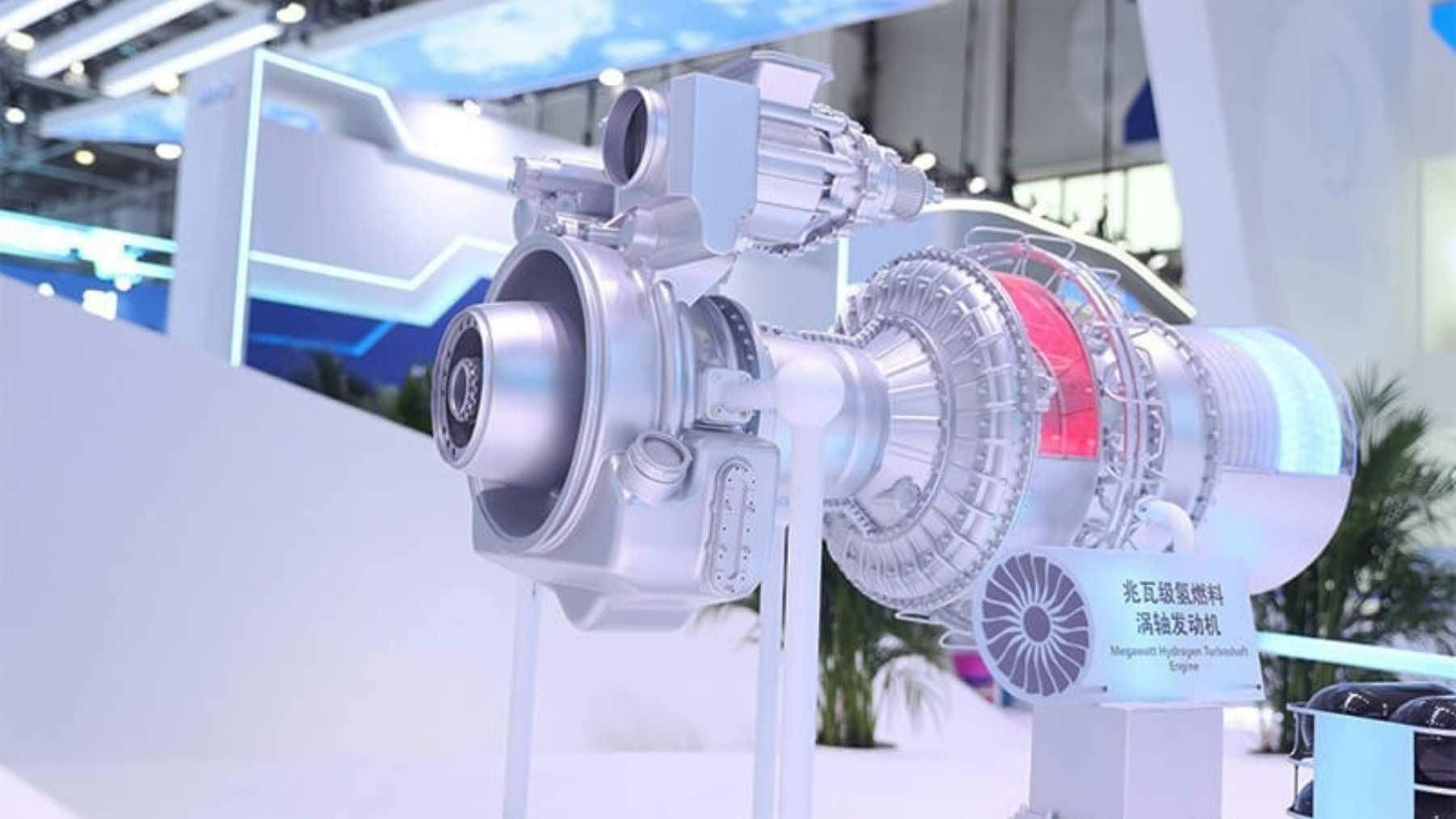
Chinese Lab Achieves World’s First Megawatt-Class Hydrogen Turboprop Flight Amid Airbus Delays
On April 4, 2026, a significant milestone in aviation was reached in Zhuzhou, a midsized industrial city in China’s Hunan province. The W5000, a 7.5-ton unmanned cargo aircraft, completed a 16-minute flight covering 36 kilometers at an altitude of 300 meters and a cruising speed of 220 kilometers per hour. Unlike conventional aircraft powered by Jet A fuel, the W5000 was propelled by liquid hydrogen stored at minus 253 degrees Celsius, which was fed directly into a turboprop engine known as the AEP100. This engine was developed by the Hunan Aviation Powerplant Research Institute, a subsidiary of the state-owned Aero Engine Corporation of China (AECC).
This flight marks the world’s first airborne demonstration of a hydrogen turboprop engine in the megawatt class. The AEP100 produces over one megawatt of shaft power, approximately 1,340 horsepower, positioning China at the forefront of hydrogen propulsion technology. This achievement comes at a time when European aerospace giant Airbus is facing setbacks in its own hydrogen-powered aircraft initiatives. Recent delays in the delivery of the A350 and A320neo models, coupled with a sharp decline in first-quarter profits due to engine supply shortages, highlight the challenges established manufacturers encounter as they transition to new propulsion systems.
Technical Innovation and Industry Implications
The AEP100 is a gas turbine engine rather than a fuel cell system. Liquid hydrogen is stored cryogenically in a vacuum-insulated tank and metered into a combustion chamber, where it combusts with oxygen from ambient air. The expanding gases then drive a turbine, which, through a reduction gearbox, spins a propeller. This mechanical design is reminiscent of Pratt & Whitney Canada’s PT6 and PW100 engine families, which have powered regional turboprops for decades. However, the AEP100 distinguishes itself through an advanced fuel system, a modified combustor, and sophisticated thermal management techniques that enable the safe handling and combustion of hydrogen at extremely low temperatures.
While the engine’s output of one megawatt is a notable technical achievement, it remains insufficient for powering larger regional airliners. For context, a Bombardier Q400 typically uses two engines rated at approximately 5,000 shaft horsepower each. Nevertheless, China’s successful demonstration represents a significant leap forward in hydrogen propulsion technology and has the potential to reshape the competitive landscape. The AECC’s development roadmap anticipates technology validation by 2028, the introduction of regional aircraft powered by hydrogen engines by 2035, and mainstream commercial adoption by 2050.
China’s progress in hydrogen propulsion may compel other manufacturers to accelerate their research and development efforts in this domain. As Airbus and other industry leaders grapple with the complexities of new propulsion technologies, the successful flight of the AEP100 underscores both the technical challenges involved and the evolving dynamics in the race toward cleaner aviation. The gap between laboratory innovation and commercial application is narrowing, signaling an accelerating pace of change within the aerospace sector.

Etihad Airways Suspends Airbus A380 Flights on Key Route

Aditya Birla Group Seeks Approval for Aircraft Leasing in GIFT City

Qatar Airways Highlights Innovation and Connectivity at Arabian Travel Market 2026

Hong Kong's Five-Year Plan Includes Andrew Fan's Aircraft Parts Processing Hub Proposal

ACIA Aero Leasing Delivers ATR72-600 to Air Nostrum

RTX Appoints Jill Albertelli as Head of Pratt & Whitney

TAT Technologies Joins Beyond Aero Hydrogen Aircraft Program

AURAK Study Highlights Barriers to Air Taxi Adoption in Emerging Economies

Xiamen Air Selects Altitude for 787 Maintenance at Heathrow

Etihad and Swissport Extend Global Partnership
