
将人工智能洞察转化为可执行行动

热门趋势
Categories
Comparing the Engine Sizes of the Airbus A380 and A320
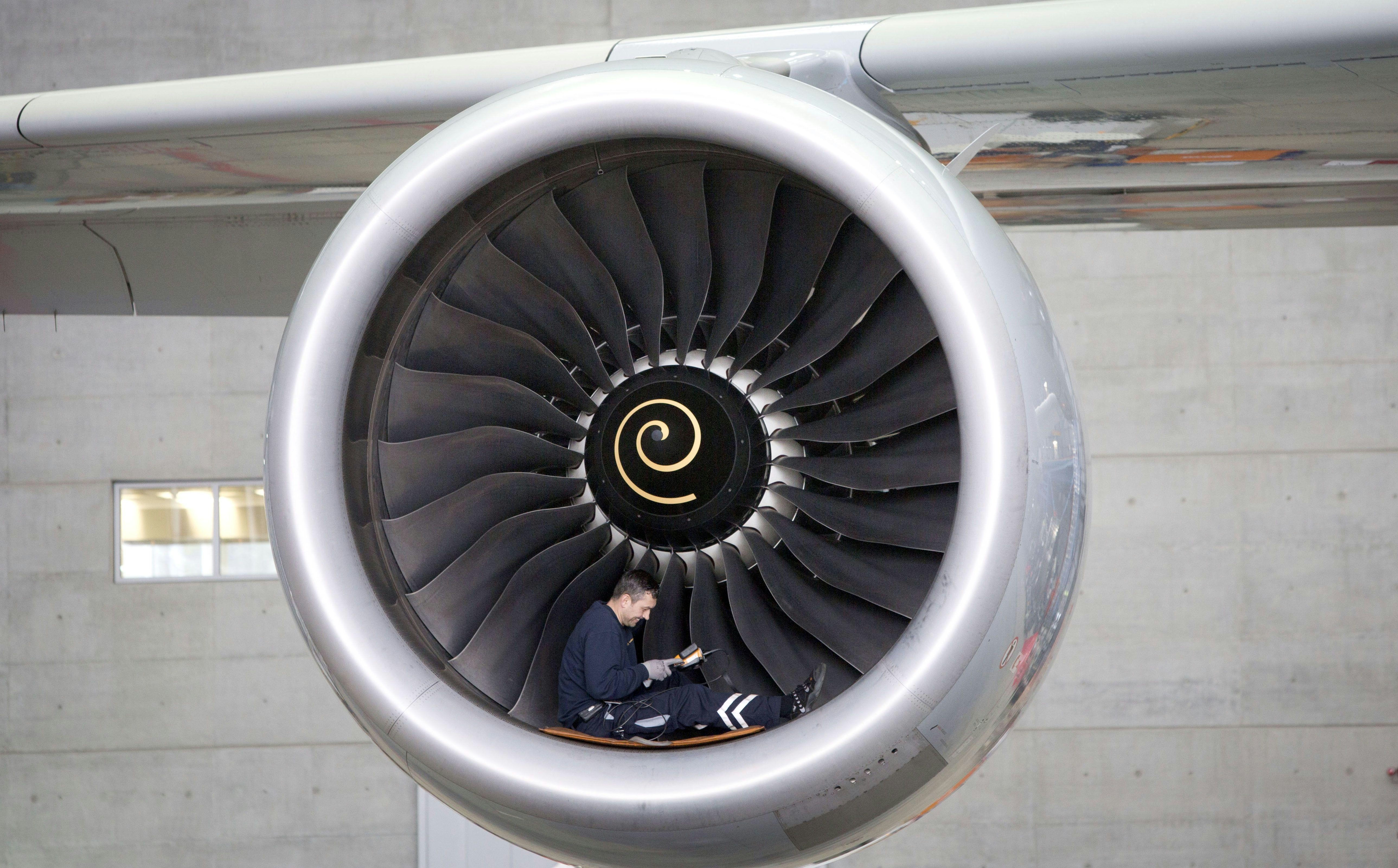
Comparing the Engine Sizes of the Airbus A380 and A320
Standing beside an Airbus A380 on the airport ramp, the sheer scale of its engines immediately captures attention. The circular inlet of its Rolls-Royce Trent 900 engine dwarfs a person, resembling a piece of industrial machinery rather than a conventional aircraft component. By contrast, the Airbus A320’s engines, typically the CFM56, appear compact and orderly—still powerful turbofans but modest in comparison to the A380’s imposing powerplants. This visual disparity is underscored by technical specifications such as fan diameter, thrust output, bypass ratio, and core architecture, all of which highlight that these engines belong to fundamentally different classes.
The Physics Behind Engine Size
The difference in engine size is not merely a matter of scale but is rooted in the principles of physics. The mass of an aircraft dictates the lift required for takeoff and sustained flight, which in turn determines the necessary thrust and engine performance. As an aircraft’s weight increases, so does the force needed to accelerate and maintain flight. This relationship governs both the size and number of engines installed.
The Airbus A380, with a maximum takeoff weight (MTOW) of approximately 575 metric tons, is equipped with four Trent 900 engines, each capable of producing up to 84,000 pounds of thrust. Collectively, the A380’s engines deliver over 280,000 pounds of thrust. In contrast, the A320, with an MTOW near 80 metric tons, relies on two CFM56 engines, each generating around 27,000 pounds of thrust. This nearly sevenfold difference in aircraft mass directly translates into a significant disparity in engine size and power output.
| Category | Airbus A380 | Airbus A320 |
|---|---|---|
| Entry Into Service | 2007 | 1988 |
| Typical Seating | 500+ | 150–180 |
| Maximum Takeoff Weight | ~575 tons | ~80 tons |
| Engines | 4 | 2 |
The engines on the A380 are not enlarged solely to extend range; rather, their primary function is to generate sufficient thrust to lift the aircraft’s substantial weight. Long-range capability emerges as a secondary benefit of this fundamental requirement.
Commercial Implications and Industry Trends
The technical divergence between the A380 and A320 engines reflects broader commercial realities. The A380, once Airbus’s flagship for long-haul travel, has experienced declining orders and reduced production rates as airlines increasingly favor more efficient narrowbody jets like the A320 series. Airbus itself has encountered challenges in maintaining A320 production, with recent shortages of Pratt & Whitney engines causing supply-chain disruptions and compelling the company to lower its delivery targets for the year. These developments underscore the critical role that engine technology and availability play in aircraft manufacturing and airline fleet strategies.
Market preferences continue to evolve, with airlines prioritizing the flexibility and operational efficiency of narrowbody aircraft. This shift has influenced Airbus’s strategic focus and intensified competitive pressures. Meanwhile, Boeing remains committed to widebody models but faces ongoing difficulties in regaining market share in the narrowbody segment.
The pronounced difference in engine size between the A380 and A320 thus encapsulates both the immutable laws of physics and the dynamic forces shaping the aviation industry. As aircraft mass and mission profiles diverge, so too do the engines—and the commercial trajectories—of the aircraft they power.

Etihad Airways Suspends Airbus A380 Flights on Key Route

Aditya Birla Group Seeks Approval for Aircraft Leasing in GIFT City

Qatar Airways Highlights Innovation and Connectivity at Arabian Travel Market 2026

Hong Kong's Five-Year Plan Includes Andrew Fan's Aircraft Parts Processing Hub Proposal

ACIA Aero Leasing Delivers ATR72-600 to Air Nostrum

RTX Appoints Jill Albertelli as Head of Pratt & Whitney

TAT Technologies Joins Beyond Aero Hydrogen Aircraft Program

AURAK Study Highlights Barriers to Air Taxi Adoption in Emerging Economies

Xiamen Air Selects Altitude for 787 Maintenance at Heathrow

Etihad and Swissport Extend Global Partnership
