
将人工智能洞察转化为可执行行动

热门趋势
Categories
Denver Terminal Integrates into Avfuel’s Sustainable Aviation Fuel Supply Chain
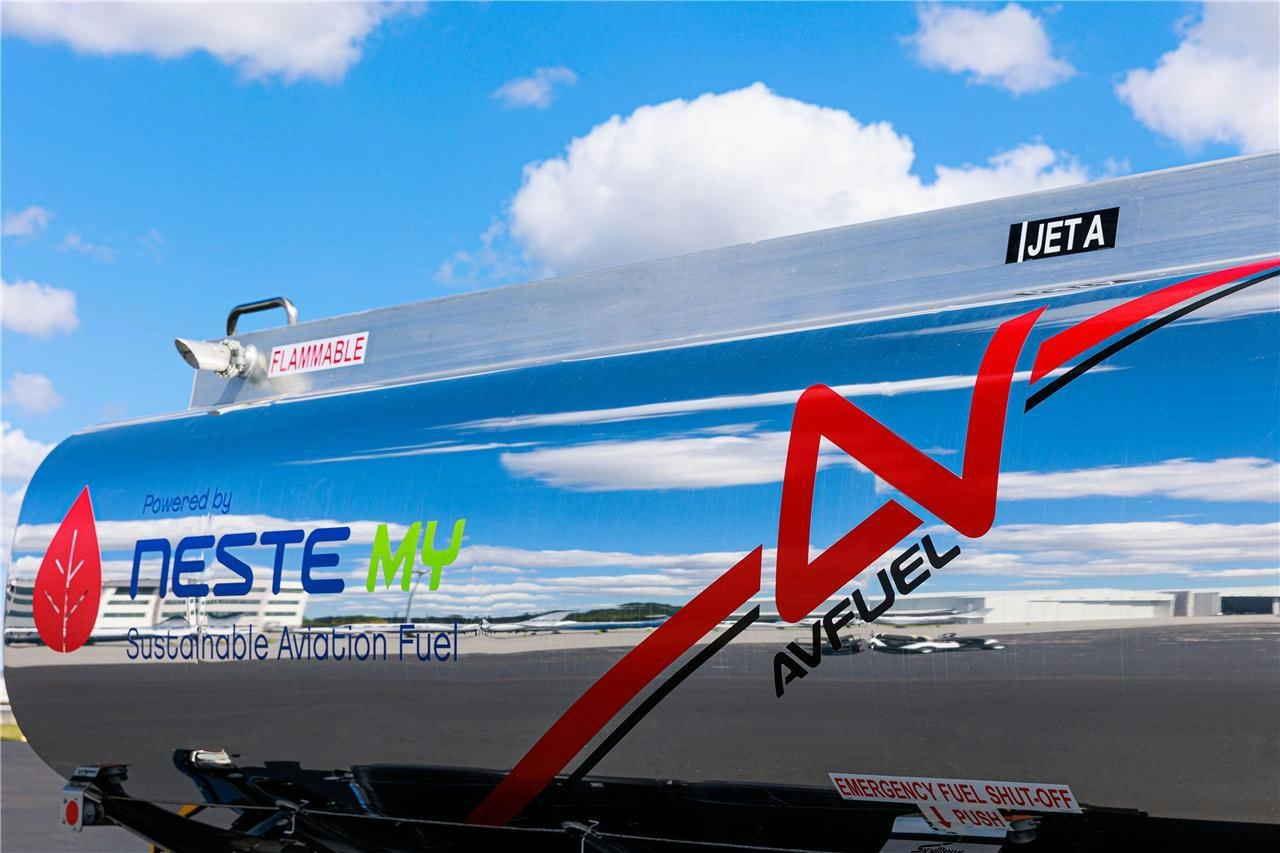
Denver Terminal Enhances Avfuel’s Sustainable Aviation Fuel Network
Avfuel Corporation has announced the integration of its Denver Terminal into its sustainable aviation fuel (SAF) supply chain, marking the establishment of the first SAF supply point in the central United States. This strategic development is poised to improve access to sustainable aviation fuel across the region, reducing dependence on shipments from coastal supply hubs and advancing the business aviation sector’s ambition to achieve net-zero emissions by 2050.
Denver’s central geographic position makes it an ideal regional hub, strengthening Avfuel’s coast-to-coast SAF network, which now comprises eight supply points spanning California, Texas, New Jersey, Florida, and Colorado. C.R. Sincock, II, Avfuel’s executive vice president, emphasized the growing interest in SAF adoption, stating that the company is proud to have established the first SAF supply point in this region. He highlighted that this expansion significantly enhances the national supply infrastructure and underscores Avfuel’s leadership in delivering sustainable solutions for aviation operations.
Supply Chain Partnership and Environmental Impact
The new SAF supply point results from a partnership with Valero Marketing and Supply Company, a subsidiary of Valero Energy Corporation. The sustainable fuel is produced by Diamond Green Diesel LLC, a joint venture between a Valero affiliate and Darling Ingredients Inc. The fuel is manufactured using the Hydroprocessed Esters and Fatty Acids Synthetic Paraffinic Kerosene (HEFA SPK) pathway, which converts lipids such as used cooking oil into jet fuel. This process can reduce lifecycle greenhouse gas emissions by up to 80 percent compared to conventional jet fuel. When blended at a target ratio of 30 percent neat SAF to 70 percent conventional jet fuel, the mixture can lower lifecycle emissions by up to 24 percent.
While the integration of the Denver Terminal represents a significant milestone for Avfuel, it also brings attention to broader challenges within the aviation industry. The Federal Aviation Administration’s (FAA) 2025–2029 National Plan of Integrated Airport Systems (NPIAS) identifies funding for general aviation infrastructure as a continuing concern. With 3,287 federally funded airports included in the plan, financial constraints could affect the pace and scale of SAF adoption at regional terminals such as Denver.
Market responses to Avfuel’s expansion are anticipated to include heightened interest in sustainable aviation fuels as demand for greener alternatives intensifies. Competitors may seek to enhance their own sustainable fuel offerings to maintain competitiveness in an evolving market. This momentum toward alternative fuels is further reflected in initiatives like Pearson Fuels’ second annual E85 Day, scheduled for August 2025, which promotes alternative fuel options across various transportation sectors.
Avfuel’s latest expansion not only fortifies its national SAF infrastructure but also signals a deepening commitment within the aviation industry to invest in sustainable solutions, despite ongoing infrastructure and funding challenges.

Etihad Airways Suspends Airbus A380 Flights on Key Route

Aditya Birla Group Seeks Approval for Aircraft Leasing in GIFT City

Qatar Airways Highlights Innovation and Connectivity at Arabian Travel Market 2026

Hong Kong's Five-Year Plan Includes Andrew Fan's Aircraft Parts Processing Hub Proposal

ACIA Aero Leasing Delivers ATR72-600 to Air Nostrum

RTX Appoints Jill Albertelli as Head of Pratt & Whitney

TAT Technologies Joins Beyond Aero Hydrogen Aircraft Program

AURAK Study Highlights Barriers to Air Taxi Adoption in Emerging Economies

Xiamen Air Selects Altitude for 787 Maintenance at Heathrow

Etihad and Swissport Extend Global Partnership
