
图像

AeroGenie — 您的智能副驾驶。

问任何问题。分析一切。立即行动。

热门趋势

Categories

Dubai Airshow 2025 Highlights Innovation and Sustainability in Aviation
October 15, 2025By ePlane AI
Dubai Airshow 2025 Highlights Innovation and Sustainability in Aviation
0
0
Dubai Airshow
Sustainable Aviation Fuels
Hybrid-Electric Aircraft

Dubai Airshow 2025 Highlights Innovation and Sustainability in Aviation

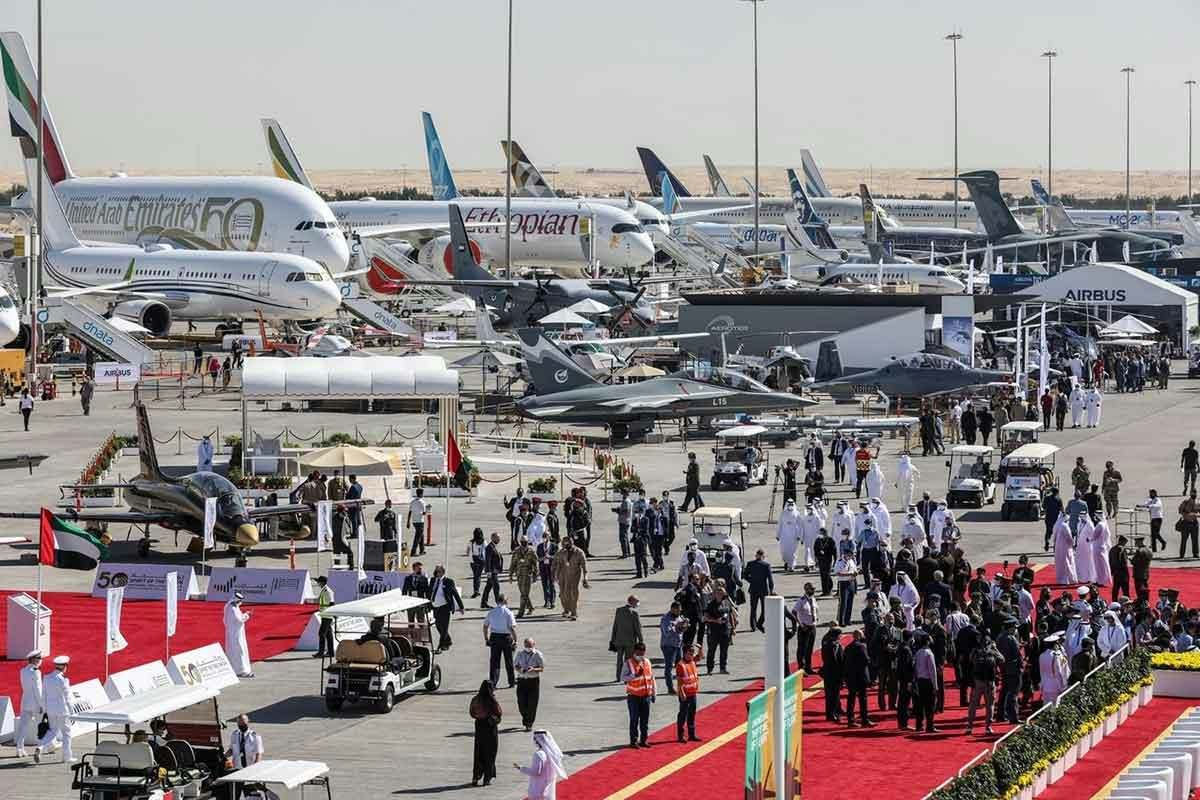
The Dubai Airshow 2025 is poised to serve as a premier global platform showcasing the latest advancements in aviation, defence, and space, with a pronounced emphasis on innovation and sustainability. Against the backdrop of increasing pressure to decarbonize and navigate a complex geopolitical environment, this year’s event seeks to promote collaboration and resilience among industry leaders, visionaries, and innovators.

Advancements in Aviation Technology and Sustainability

Key manufacturers including Airbus, Boeing, and Embraer are expected to unveil next-generation aircraft that prioritize fuel efficiency and emissions reduction. Among the highlights are hybrid-electric and hydrogen-powered prototypes, underscoring the sector’s commitment to achieving cleaner skies. Sustainable aviation fuels (SAF) will also feature prominently, with demonstrations and new partnerships aimed at expanding SAF production and integrating it into global airline operations.

Digital transformation remains a central theme, with artificial intelligence-driven digital twin technology enabling predictive maintenance, operational optimization, and advanced flight simulation. These innovations are anticipated to enhance safety, efficiency, and cost-effectiveness throughout the aviation industry.

Urban Air Mobility and Autonomous Flight Systems

The event will also spotlight the emerging field of Urban Air Mobility (UAM), which promises to transform urban transportation. Electric vertical takeoff and landing (eVTOL) vehicles from startups such as Joby, Archer, and Volocopter will be on display, offering scalable solutions for urban air taxis and intra-city logistics. Additionally, advancements in autonomous flight systems and sophisticated traffic management technologies will be presented, supporting the development of a future air mobility ecosystem.

Innovations in Space and Defence

In the space and defence sectors, attention will focus on reusable launch systems and rapid satellite deployment technologies. Both government agencies and private enterprises are introducing smaller, reusable rockets alongside new models for efficient satellite constellation deployment. Defence exhibitors will emphasize the integration of artificial intelligence and machine learning for early threat detection, autonomous drones, and smart battlefield networks.

Commitment to Sustainability and Smart Infrastructure

Sustainability remains a foundational element of the Dubai Airshow 2025. The event will showcase carbon-neutral airport design concepts and pilot projects featuring energy-efficient, AI-managed airport infrastructure. Advances in lightweight, durable composite materials are also expected to contribute to improved aircraft efficiency and reduced maintenance costs.

Industry Challenges Amid a Shifting Global Landscape

The Airshow unfolds amid ongoing geopolitical uncertainties and the pressing need for comprehensive decarbonization across the aviation sector. Organizers and participants are underscoring the importance of resilience and adaptability, recognizing that technological transformation is critical to the industry’s future. Market observers are likely to focus on the event’s strong emphasis on innovation and sustainability, attracting interest from companies and investors prioritizing these domains.

As other global events such as the World Aviation Festival 2025 in Lisbon and the Skift Global Forum East 2025 in Dubai also highlight technological progress and sustainability, the Dubai Airshow 2025 aims to reaffirm its status as a leading forum for shaping the future of aviation. Combining cutting-edge technology, sustainability initiatives, and a collaborative spirit, the Airshow invites the world to envision and build a cleaner, smarter, and more resilient future in flight.

More news
Boeing Faces Delays as $175 Million Machine Won't Be Ready Until 2029

Boeing Faces Delays as $175 Million Machine Won't Be Ready Until 2029

Boeing Faces Significant Delays as $175 Million Hydraulic Press Won’t Be Operational Until 2029 The postponement of Safran’s $175 million hydraulic press, now expected to become operational only by 2029, highlights the growing pressures within the global aircraft engine manufacturing sector. In an industry where precision and timing are critical, a nearly five-year wait for a single piece of industrial equipment underscores the severity of current supply chain disruptions. For Boeing, this delay represents more than a technical hurdle; it directly affects the company’s capacity to stabilize production schedules, meet increasing airline demand, and rebuild confidence following years of operational challenges. Strategic Investment in Engine Component Production Safran’s acquisition of a 33,000-ton (30,000-metric-ton) hydraulic press is a calculated response to a pressing bottleneck: the scarcity of high-quality forged engine components. Once fully operational, the press is projected to manufacture up to 14,000 precision-forged parts annually, which are vital for both next-generation commercial and military engines. These components require advanced metallurgical processes, extreme pressure, and precise temperature control to satisfy the stringent standards of modern high-bypass turbofan engines, making them difficult to source from alternative suppliers. The complexity and scale of the press mean it cannot be rapidly procured or installed. Its construction demands specialized engineering, integration with existing manufacturing systems, and extensive testing to ensure it meets the exacting tolerances necessary for engine parts. The extended timeline to 2029 reflects not only technical challenges but also the absence of surplus capacity within the global supply chain. Implications for Boeing and the Wider Aerospace Industry Boeing’s reliance on engine manufacturers to maintain its assembly lines means the delay introduces a significant production lag that cannot be mitigated through short-term measures. This challenge is compounded by geopolitical tensions, particularly between the United States and China, which threaten to disrupt delivery schedules and impact Boeing’s order book in the strategically important Asia-Pacific region. In response, competitors may seek to reinforce domestic markets or forge new partnerships to counterbalance potential losses. The market’s reaction to the delay is also a critical concern. Investors may interpret the prolonged timeline for integrating this advanced technology as a risk factor, potentially influencing Boeing’s stock performance and broader industry sentiment. Forgings: A Critical Supply Chain Bottleneck While supply chain issues in aviation are often discussed broadly, the shortage of castings and forgings remains particularly acute. Forged components are fundamental to engine manufacturing, and their production depends on rare and costly equipment such as Safran’s hydraulic press. Unlike other segments of the supply chain, forging capacity expands in large, infrequent increments, making rapid scaling difficult. Despite these challenges, Boeing has demonstrated resilience in its delivery performance. In the first quarter of 2026, the company delivered more commercial aircraft than in any comparable period since 2019, reflecting robust demand and operational momentum amid ongoing supply constraints. As the industry awaits the commissioning of Safran’s press, this episode underscores how narrow the margins for error have become and how a single piece of machinery can significantly influence the pace of global aircraft production.
Marine Corps Develops AI Tools for Aviation Supply and Maintenance

Marine Corps Develops AI Tools for Aviation Supply and Maintenance

Marine Corps Develops AI Tools for Aviation Supply and Maintenance Modernizing Aviation Sustainment Through Artificial Intelligence The United States Marine Corps is undertaking a significant effort to modernize its aviation supply and maintenance operations by developing advanced artificial intelligence (AI) tools. These innovations aim to transform the Corps’ traditionally “outdated” inventory and maintenance processes, enabling more efficient identification and ordering of aircraft parts while forecasting maintenance needs with greater accuracy. The initiative is part of a broader modernization strategy designed to keep the Marine aviation fleet mission-ready amid evolving operational demands. Set to launch this summer, the AI system will leverage historical performance data to predict when aircraft components require replacement, allowing maintenance teams to address issues proactively. Lt. Gen. William Swan, deputy commandant for aviation, emphasized the importance of this approach during a panel at the Sea-Air-Space conference, stating, “Let’s change it before it needs to be in the air, declare an emergency, land in some place we don’t want it to land, etc. That’s the whole idea: supply first, then maintenance, and then the operational stuff pulls together.” Addressing Persistent Challenges in Aircraft Maintenance Aircraft maintenance continues to be a costly and complex challenge for the military, exacerbated by aging platforms, personnel shortages, and strained supply chains. According to Swan, the Marine Corps’ aviation units maintain an average mission capability rate of approximately 62 to 64 percent, with training squadrons performing below this threshold. The Corps’ annual aviation plan, released in February, places AI at the core of efforts to improve sustainment by fostering a “data-enabled culture” and shifting toward predictive, rather than reactive, maintenance practices. This AI initiative is embedded within Project Eagle, the strategic blueprint guiding the Aviation Combat Element’s balance between crisis response and modernization. The latest plan marks a notable shift by prioritizing AI and machine learning in aviation sustainment—areas previously regarded as “isolated and underfunded.” Officials now identify this effort as a top priority for the Corps. Challenges and Progress in AI Integration Despite the promise of AI, integrating these new tools with existing legacy systems presents significant challenges. Ensuring data accessibility and consistency, as well as cultivating a data-driven mindset among maintenance personnel, remain critical hurdles. Additionally, the initiative may encounter skepticism from traditional maintenance providers, while competitors in the aviation maintenance, repair, and overhaul (MRO) sector could accelerate their own AI developments in response. The foundation for this transformation was laid several years ago. In 2022, the Marine Corps began cataloging repair parts and consumables for the F-35 Lightning II after recognizing the limitations of its existing maintenance and resupply methods. Col. Robert Petersen, head of the Corps’ aviation sustainment branch, described the data as “siloed, sitting there, really unavailable for us to harvest and use in any meaningful way” for the fighter jet. Given the global nature of the F-35 supply chain and the competitive environment involving allies and partners, the F-35 was a logical starting point for the AI-driven overhaul. Since then, the Corps has cataloged every consumable part for the F-35 and developed two prototype parts packages using the new AI tools. Data collection efforts have also commenced for the KC-130J aircraft to integrate into the system. Lt. Gen. Swan acknowledged the novelty and complexity of this undertaking, stating, “This is new to us,” underscoring both the potential benefits and the challenges of embedding AI into military aviation sustainment. As the Marine Corps advances this AI-driven approach, its success will depend not only on technological innovation but also on overcoming institutional resistance and ensuring seamless integration with existing systems.
Acorn Capital Management and MTI Aviation Form Strategic Partnership

Acorn Capital Management and MTI Aviation Form Strategic Partnership

Acorn Capital Management Acquires Majority Stake in MTI Aviation Acorn Capital Management, a private equity firm specializing in aerospace, defense, intelligence, and space sectors, has announced a strategic partnership with MTI Aviation through the acquisition of a majority interest in the company. MTI Aviation is a prominent provider of repair, overhaul, and parts distribution services, focusing on electro-mechanical, hydraulics, pneumatics, and power generation components. Its global clientele includes commercial airlines, maintenance, repair, and overhaul (MRO) providers, and aviation parts distributors. The transaction, expected to close in the coming weeks, represents the first platform investment for Acorn’s Fund VI. Jorge Mejia, MTI’s founder and CEO, will retain a significant ownership stake and continue to lead the company. Greg Agnew, Partner at Acorn Capital Management, emphasized the strategic fit of MTI within Acorn’s portfolio, highlighting the company’s strong market position, technical expertise, and established customer relationships. He expressed optimism about collaborating with Mejia and the MTI team to support the company’s next phase of growth. Strategic Growth and Industry Context The partnership aims to provide MTI with enhanced resources and capital to accelerate expansion through both organic growth and targeted acquisitions. Mejia described the alliance as an exciting new chapter for MTI, noting that Acorn’s deep industry knowledge and shared vision for growth position the company well to build on its solid foundation and continue delivering high-quality solutions worldwide. Rick Nagel, Managing Partner at Acorn, added that MTI’s high-quality operations and strong corporate culture make it an ideal investment to complement Acorn’s existing portfolio companies focused on parts. This development occurs amid a period of volatility in the aviation sector. Fluctuating aviation fuel prices, which surged sharply in March according to iFlightPlanner, continue to present operational challenges. The deal also comes at a time of increased scrutiny within the industry, as stakeholders evaluate the financial implications of partnerships following significant funding rounds, such as Vertical Aerospace’s recent capital raise for electric vertical takeoff and landing (eVTOL) aircraft. Competitive pressures are expected to intensify, with companies like Air Elite Network expanding their footprint in the business aviation market. Furthermore, geopolitical instability, underscored by recent warnings from industry leaders, may pose additional risks to the long-term success of the partnership. Terms of the transaction have not been disclosed. Company Profiles Acorn Capital Management is a middle-market private equity firm exclusively focused on aerospace, defense, space, and intelligence sectors. The firm is known for its deep industry expertise and collaborative approach with management teams to build market-leading companies. MTI Aviation specializes in component repair and parts sales for electro-mechanical, hydraulics, pneumatics, and power generation components, serving a diverse global customer base.
Ground Crew Member Seen Lying Near Aircraft Engine Raises Safety Concerns

Ground Crew Member Seen Lying Near Aircraft Engine Raises Safety Concerns

Ground Crew Member Seen Lying Near Aircraft Engine Raises Safety Concerns A photograph circulating on the social media platform Threads has ignited debate over aviation safety after capturing a ground crew member lying directly in front of an aircraft engine at Hong Kong International Airport. The image, taken near a stationary Cathay Pacific A330-300, shows several ground personnel working around the wing and engine, with one individual positioned in front of the engine intake while two others stand nearby. A cardboard box is also visible on the tarmac adjacent to the scene. Official Response and Public Reaction In response to the online speculation, the Airport Authority confirmed, following consultation with the relevant aircraft maintenance company, that the personnel were engaged in scheduled engine maintenance at the time the photo was taken. The authority emphasized that all necessary safety protocols were strictly observed throughout the procedure. Public reaction to the image was divided. Some social media users expressed concern over potential safety breaches, with comments suggesting that such conduct could warrant dismissal. Conversely, individuals familiar with aviation maintenance practices highlighted that engine start-up involves multiple procedural steps, including clearances and audible warnings, typically lasting around ten minutes. They also noted the presence of a visible “red tag” on the aircraft, indicating it was not operational, which suggested that the situation was being managed appropriately. Context of Aviation Safety Challenges This incident emerges amid intensified global scrutiny of aviation safety. Recent events, such as the engine fire on a Delta Airbus A330-300 shortly after takeoff from São Paulo to Atlanta, have underscored persistent challenges within the industry. Uncontained engine failures, which can disperse debris across runways and ignite fires, have prompted airlines and regulatory bodies to review and reinforce safety protocols. In response, many carriers have implemented enhanced safety training and stricter adherence to operational procedures. Beyond isolated incidents, the aviation sector faces broader systemic pressures. Experts warn that runway incursions, airport capacity limitations, and shortages of air traffic controllers are increasingly straining the industry’s ability to uphold safety standards. These challenges have fueled calls for comprehensive safety reviews and sector-wide improvements. While the Airport Authority maintains that proper procedures were followed in the Hong Kong case, the photograph has reignited public discourse on the critical importance of rigorous safety measures both on the ground and in the air. As operational pressures mount, industry experts stress that maintaining and strengthening safety protocols is essential to preventing accidents and preserving public confidence in air travel.
Cabo Verde Airlines Leases Airbus A320 to Maintain International Routes Amid Strengthened European Connectivity

Cabo Verde Airlines Leases Airbus A320 to Maintain International Routes Amid Strengthened European Connectivity

Cabo Verde Airlines Leases Airbus A320 to Maintain International Routes Amid Strengthened European Connectivity Cabo Verde Airlines has leased an Airbus A320 aircraft to bolster its European flight network, ensuring continued connectivity between the archipelago and key destinations including Portugal, France, and Italy. This strategic acquisition is part of the national carrier’s broader effort to rebuild and stabilize its fleet in response to increasing demand across transatlantic and European routes. Operational Strategy and Market Challenges The decision to lease the Airbus A320—a narrow-body aircraft renowned for its efficiency on medium-haul flights—reflects the airline’s need for operational flexibility. Leasing enables Cabo Verde Airlines to manage maintenance schedules and aircraft availability without interrupting service, a critical advantage for a carrier serving a small island nation with fluctuating passenger volumes and seasonal tourism peaks. The A320’s combination of fuel efficiency, passenger capacity, and range makes it particularly well-suited for flights connecting West Africa and Europe. However, the airline faces a tightening global market for leased aircraft. Competitors such as Sky Airline have secured A321XLRs through BOC Aviation, while Avion Express has recently reduced its fleet by 15 A320 family aircraft, indicating a potential oversupply. These market dynamics may affect Cabo Verde Airlines’ ability to negotiate favorable leasing terms and could lead to increased operational costs. Navigating Increased Competition and Strengthening Connectivity Cabo Verde Airlines is contending with intensified competition on transatlantic routes as major carriers like Alaska Airlines, Aeromexico, and United Airlines expand their networks between Africa, Europe, and the Americas. This heightened competition compels the airline to adapt its route network and fleet planning to preserve market share and profitability. Maintaining robust European operations is particularly crucial for Cabo Verde, where tourism constitutes a significant pillar of the national economy. The airline’s routes to Portugal, France, and Italy facilitate not only tourism but also diaspora travel, supporting family, business, and leisure connections. The leased Airbus A320 ensures these vital links remain reliable, especially during peak travel seasons when demand surges. Cabo Verde’s strategic position in the mid-Atlantic continues to enhance its role as a growing hub for travel between Africa, Europe, and South America. Destinations such as Sal, Boa Vista, and Santiago attract European tourists seeking beach holidays and cultural experiences. By reinforcing its fleet with the A320, Cabo Verde Airlines aims to sustain this essential connectivity and maintain competitiveness in a rapidly evolving regional aviation market. As the airline navigates a challenging leasing environment and increased competition, its capacity to provide reliable international service will remain integral to supporting Cabo Verde’s tourism sector and broader economic development.
Surf Air Mobility Revises Financial Outlook Using AI Software

Surf Air Mobility Revises Financial Outlook Using AI Software

Surf Air Mobility Revises 2026 Financial Outlook Using AI-Driven Software Surf Air Mobility has announced a significant revision to its 2026 financial outlook, reporting a 40% reduction in projected Adjusted EBITDA losses. The company attributes this improvement to its proprietary SurfOS™ software, which harnesses artificial intelligence and automation to enhance operational efficiency. Known for its commitment to technological innovation, Surf Air Mobility credits these advancements with streamlining its air mobility platform and accelerating the adoption of next-generation aircraft. Technology-Driven Operational Efficiencies At the core of Surf Air Mobility’s improved forecast is SurfOS, a digital platform designed to automate key airline and charter workflows. This automation has resulted in a 6% reduction in airline operational costs and a 15% decrease in charter service expenses. The company’s “Powered by Surf On Demand” program has further bolstered charter revenue and profitability by enabling Surf Air Mobility to serve a larger client base while maintaining lower operational costs. In addition to workflow automation, the company has implemented corporate automation initiatives and a disciplined procurement strategy, which have collectively reduced staffing requirements by 32% and professional service expenses by 17%. These measures have contributed to a leaner, more efficient operational model, positioning Surf Air Mobility as a leader in innovation and profitability within the aviation sector. Strategic Partnerships and AI Integration A key factor in the accelerated development and deployment of SurfOS has been Surf Air Mobility’s strategic partnership with Palantir. By integrating advanced AI and data-driven solutions, the collaboration has enabled the company to roll out its software platform more rapidly and cost-effectively. This partnership supports Surf Air Mobility’s long-term vision of delivering scalable, modern air mobility services that leverage cutting-edge technology. Challenges and Market Dynamics Despite these technological and financial gains, Surf Air Mobility continues to face significant challenges. Regulatory complexities within the aviation industry, potential delays in the rollout of electric aircraft, and intensifying competition from both established airlines and emerging air mobility companies pose risks to the company’s growth trajectory. Investor skepticism has emerged regarding the feasibility of meeting ambitious timelines, while competitors may respond by accelerating their own electric aviation projects or enhancing existing services to maintain market share. Outlook Surf Air Mobility’s integration of AI and automation has produced notable operational efficiencies and a more favorable financial outlook. However, sustaining this progress will require careful navigation of regulatory hurdles, successful technological deployment, and effective competition management in a rapidly evolving market. As the company continues to refine its processes and expand its offerings, the broader air mobility sector is expected to experience increased innovation and heightened competitive activity.
Vertical Aerospace Raises $800 Million in Funding

Vertical Aerospace Raises $800 Million in Funding

Vertical Aerospace Raises $850 Million to Advance eVTOL Certification U.K.-based Vertical Aerospace has secured a funding package totaling up to $850 million, reinforcing its position as a significant contender in the global electric vertical takeoff and landing (eVTOL) air taxi market. The financing includes a $500 million equity credit line from Yorkville and reflects strong investor confidence in the company’s future. This capital injection is expected to fully fund the certification process for Vertical’s flagship Valo aircraft, targeted for completion by 2028. The announcement follows recent operational milestones, notably the successful completion of the first two-way piloted transition flight of the VX4 prototype, a critical step toward commercial deployment. The funding round also incorporates $50 million raised earlier in March and is regarded as well-priced, with investors perceiving Vertical as undervalued relative to its American counterparts. Positioning in the Competitive eVTOL Landscape Although the $850 million raised is less than the multibillion-dollar war chests of U.S. competitors such as Joby Aviation, Archer Aviation, Beta Technologies, and Boeing’s Wisk Aero, Vertical Aerospace is strategically positioned to compete for customers by the end of the decade. The company estimates that approximately $700 million will be required to certify the Valo, and the new capital provides a clear financial runway to achieve this objective. Once certified, the Valo will directly challenge models like Archer’s Midnight, Joby’s S4, Beta’s Alia, and Wisk’s Generation 6. The Valo’s cabin is designed to seat four passengers initially, with plans to expand capacity to six, surpassing most U.S. competitors. It boasts an estimated payload capacity of 1,200 pounds in passenger configuration, accommodating six checked and six carry-on bags, which is considered best in class. Vertical has already demonstrated the Valo in major U.S. cities including New York, Miami, and Atlanta, unveiling potential route maps that connect airports to city centers and other key destinations. The company envisions the Valo serving a variety of roles, including commuter routes, sightseeing flights, and event shuttles, such as trips to New Jersey’s MetLife Stadium. Michael Cervenka, Vertical’s chief commercial and technology officer, emphasized the importance of the U.S. market at a recent event in New York City, stating, “The U.S. is the biggest aviation market in the world. In the near term, for eVTOLs, I think it will be the biggest market.” Regulatory Path and Market Context Vertical Aerospace is pursuing concurrent certification with the U.K. Civil Aviation Authority (CAA) and the European Union Aviation Safety Agency (EASA), aiming for approval by 2028. Validation from other regulators, including the U.S. Federal Aviation Administration (FAA), is expected to follow shortly thereafter. American competitors are working on similar certification timelines, with some targeting earlier commercial launches. The global eVTOL sector has been predominantly led by American and Chinese manufacturers. While U.S. companies have been testing full-scale prototypes for several years, China’s EHang began limited passenger operations in 2025. In contrast, Europe has faced challenges in the sector; notable players such as Germany’s Lilium and Volocopter ceased operations in 2025. Despite having smaller financial reserves than its U.S. rivals—Archer, Joby, and Beta ended 2025 with liquidity of $1.96 billion, $1.4 billion, and $1.7 billion respectively—Vertical’s more conservative spending has maintained its competitiveness. The company reported a cash burn of approximately $112 million in 2025, finishing the year with $97 million in cash on hand, compared to significantly larger net losses among its American peers. With substantial funding, ongoing operational progress, and increasing market interest, Vertical Aerospace is well-positioned to narrow the gap with global competitors and establish itself as a leading player in the emerging eVTOL industry.
PSA Airlines Appoints New Head of Technical Services

PSA Airlines Appoints New Head of Technical Services

PSA Airlines Appoints Brad R. Decker as Vice President of Technical Services **Charlotte, N.C., April 20, 2026** – PSA Airlines, a wholly owned subsidiary of American Airlines Group and a prominent regional carrier, has announced the appointment of Brad R. Decker as its new Vice President of Technical Services. Decker assumes this critical role amid significant challenges in the airline industry, where escalating operational costs—particularly a sharp rise in fuel prices following the Iran conflict—have placed considerable financial pressure on carriers worldwide. Extensive Experience in Aviation Engineering and Maintenance Brad R. Decker brings over a decade of expertise in the commercial aviation sector, with a distinguished record in engineering, maintenance program development, and operational reliability. In his new capacity, he will be responsible for overseeing powerplant, systems, structures, reliability, technical services, and maintenance programs. These areas are vital as PSA Airlines seeks to uphold its reputation for service reliability while navigating the complexities of increased operational expenses. Before joining PSA, Decker served as Managing Director of Engineering at Allegiant Air, where he led initiatives focused on maintenance optimization, reliability improvements, and cost reduction. His portfolio included managing PMA and DER part sourcing, engine build strategies, and entry-into-service planning for the Boeing 737 MAX, alongside providing direct support for line maintenance operations. Prior to Allegiant, Decker spent nearly a decade at American Airlines, advancing through senior engineering roles and spearheading entry-into-service efforts for multiple aircraft types. Throughout his career, Decker has been instrumental in developing customized maintenance procedures that reduce aircraft downtime and implementing engineering solutions that enhance safety, reliability, and cost efficiency. His technical proficiency encompasses a broad range of aircraft, including Airbus, Boeing, Embraer, and ATR models. He has also collaborated extensively with the Federal Aviation Administration, maintenance, repair, and overhaul (MRO) partners, and key suppliers. Decker holds a Bachelor of Science degree in mechanical engineering from The University of Texas at Arlington. His background includes service as a United States Marine Corps KC-130 flight mechanic and flight engineer, where he gained valuable hands-on experience in aviation maintenance and operational leadership. Strategic Leadership Amid Industry Challenges PSA Airlines’ decision to appoint Decker comes at a time when the airline industry is under intense scrutiny regarding how it will manage soaring fuel costs while maintaining operational excellence. Competitors are also adapting to these pressures; for instance, Malaysia Airlines is expanding its route network in high-demand markets such as China and Japan, and other carriers may pursue similar leadership enhancements to bolster their technical and operational capabilities. PSA’s leadership has expressed confidence that Decker’s technical expertise and proven leadership will be pivotal in advancing the airline’s maintenance performance and engineering discipline. His appointment is expected to strengthen PSA’s resilience and operational effectiveness in a rapidly evolving and challenging market environment.
Aeromag Introduces GestOp AI to Manage Deicing Operations

Aeromag Introduces GestOp AI to Manage Deicing Operations

Aeromag Introduces GestOp AI to Manage Deicing Operations Aeromag has unveiled GestOp AI, a patent-pending software solution designed to enhance the management of aircraft deicing operations through artificial intelligence. This innovation arrives at a time when the aerospace industry is under mounting pressure to improve operational efficiency while reducing environmental impact. GestOp AI aims to provide a predictive, cost-effective, and environmentally responsible approach to deicing management. Advanced AI Integration for Operational Efficiency Developed in partnership with technology firm Vooban, GestOp AI builds upon Aeromag’s existing in-house operations management platform by incorporating sophisticated AI capabilities. Gabriel Lépine, co-CEO of Aeromag, emphasized the company’s objective to deliver a solution that not only saves time and reduces costs but also lowers glycol and fuel consumption. The software’s key features include intuitive task execution, enhanced safety protocols, and optimized operational performance, all contributing to significant time savings and reduced resource use. By employing advanced analytical and optimization tools, GestOp AI is expected to reduce glycol consumption by an estimated 3 to 10 percent per deicing season. This reduction supports both cost efficiency and more sustainable resource management, aligning with broader industry goals to minimize environmental footprints. Challenges and Market Dynamics Despite its promising capabilities, the deployment of GestOp AI faces several challenges. Integrating the new system with existing deicing infrastructure may require substantial adjustments, and ensuring consistent software reliability across diverse operational environments remains a critical concern. Furthermore, as AI-driven solutions increasingly handle sensitive operational data, addressing data privacy and security issues is paramount. The market’s reception to AI-powered deicing management has been mixed. Some traditional operators remain skeptical about the effectiveness of artificial intelligence in managing such complex and variable processes. Meanwhile, competitors are intensifying efforts to advance their own technologies. Companies like Vitria are pushing forward with autonomous operations, while Deccan AI is expanding its post-training services, heightening competition within the sector. These developments underscore the importance for Aeromag to demonstrate GestOp AI’s performance and reliability to secure a competitive edge. As the aerospace industry continues to evolve, Aeromag’s introduction of GestOp AI represents a strategic effort to merge operational efficiency with environmental stewardship. The company’s success in addressing integration, reliability, and security challenges will be crucial to the broader adoption of its AI-driven solution in the global deicing market.
India’s Reliance on Imported Aero Engines Raises Concerns

India’s Reliance on Imported Aero Engines Raises Concerns

India’s Reliance on Imported Aero Engines Raises Concerns India’s aviation sector continues to grapple with a significant dependency on foreign aero engines, a vulnerability that affects both its military and civil aviation domains. Despite sustained investments and numerous initiatives aimed at fostering self-reliance, the country remains reliant on imported propulsion systems. This dependence poses a critical challenge as India’s aviation market expands rapidly, with increasing demands for military and commercial aircraft alike. Challenges in Military Aviation A central obstacle to India’s Atmanirbhar Bharat (self-reliance) ambitions in military aviation is not merely the development of indigenous technology or design maturity, but the persistent difficulty in securing timely deliveries of imported engines. These engines are integral to several key platforms, yet their supply remains under external control, limiting India’s ability to meet operational requirements effectively. This issue is particularly pronounced in the delays surrounding two US-origin engines: General Electric’s F404-IN20 afterburning turbofan, which powers Hindustan Aeronautics Limited’s (HAL) Tejas Mk1 and Mk1A fighters, and Honeywell’s TPE331-12B turboprop, used in the HTT-40 basic trainer. Both platforms are vital to the Indian Air Force’s (IAF) combat readiness and pilot training infrastructure. However, ongoing delivery bottlenecks have disrupted production schedules, directly impacting squadron strength and training capacity. The Tejas Mk1A programme has attracted considerable scrutiny due to deferred deliveries of the F404 engine. These delays have contributed to a reduction in the IAF’s combat squadron strength, which has fallen from a sanctioned 42 to approximately 29. The disruptions have also affected operations at HAL’s Nashik production facility. In response, HAL and General Electric have proposed establishing a dedicated depot-level support arrangement for the F404 engine ecosystem. Nevertheless, negotiations remain underway, and tangible operational improvements have yet to materialize. In contrast, the HTT-40 trainer programme has received comparatively little public or official attention despite facing similar propulsion-related delays. While fighter aircraft naturally command greater visibility and urgency, basic trainers are essential for cultivating future pilot cohorts and sustaining long-term combat capability. The slow progress of the HTT-40 is evident in the limited number of initial series-production aircraft, with only the first two having completed maiden flights in Bengaluru. Implications for Civil Aviation India’s dependence on imported aero engines extends beyond the military sector, carrying significant implications for civil aviation. Industry leaders, including incoming IndiGo chief Willie Walsh, have underscored the shortage of widebody aircraft and the risks posed by fragile supply chains. As global conflicts and market disruptions persist, India’s reliance on foreign engines threatens to increase costs and introduce operational uncertainties within its civil aviation industry. These challenges highlight the tension between India’s aspirations for self-reliance and the current limitations of its industrial base. Although the government is actively pursuing strategies to reduce dependence on critical imports, progress remains incremental. Until India establishes a robust domestic engine manufacturing capability, its ambitions in both military and civilian aviation will continue to be constrained by the uncertainties and vulnerabilities inherent in global supply chains.
line









