
图像

将人工智能洞察转化为可执行行动

立即加入 AeroGenie 候补名单!

热门趋势

Categories

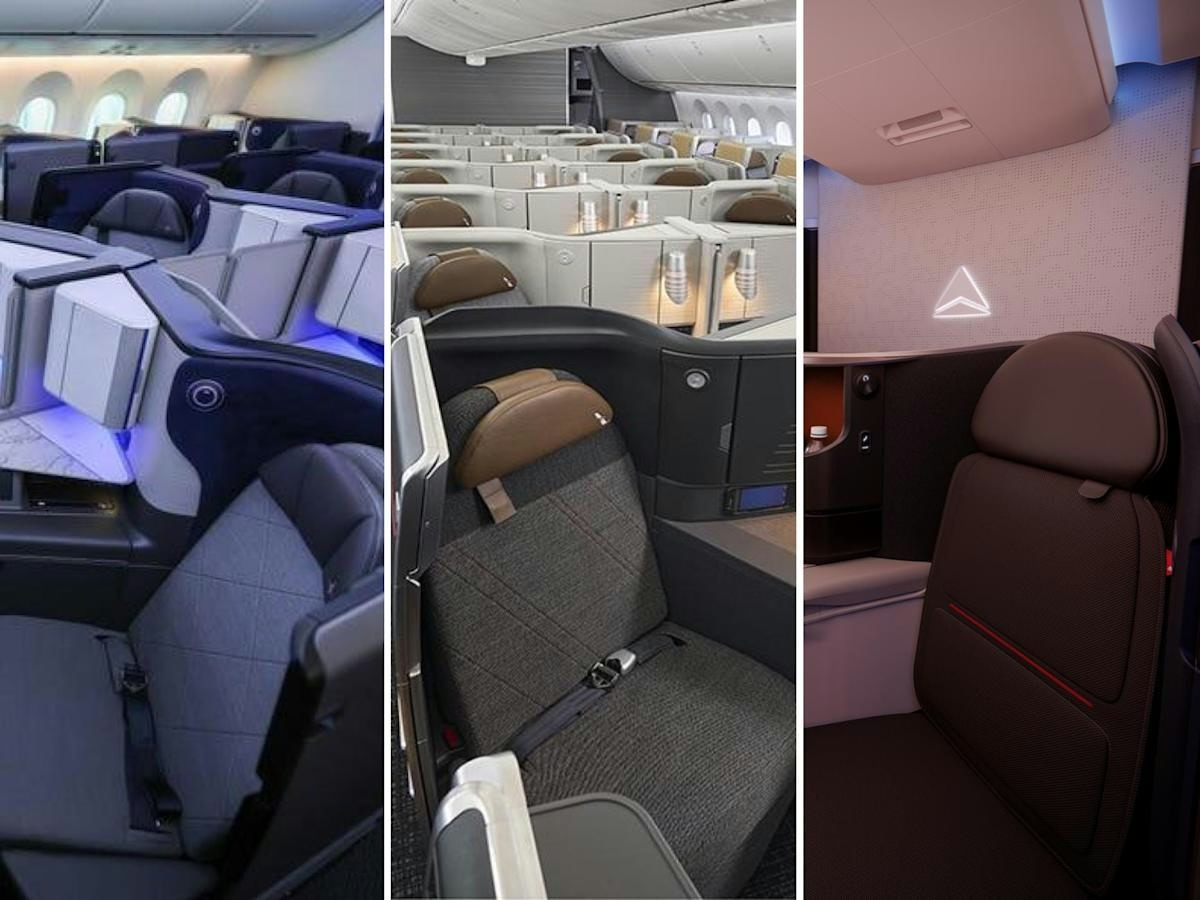
El Al Upgrades Dreamliner Orders to Larger 787-10 Model and Adds New Aircraft
April 17, 2026By ePlane AI
El Al Upgrades Dreamliner Orders to Larger 787-10 Model and Adds New Aircraft
0
0
El Al
Boeing 787-10
Fleet Expansion

El Al Upgrades Dreamliner Orders to Larger 787-10 Model and Expands Fleet Amid Market Challenges

El Al has announced a significant revision to its Boeing 787 order book, opting to upgrade its existing Dreamliner orders to the larger 787-10 variant while expanding its long-haul fleet. The Israeli flag carrier has converted three previously ordered 787-9 aircraft into 787-10s and exercised an option for a fourth 787-10, signaling a strategic shift toward higher-capacity jets on its core international routes. The agreement also includes options for up to six additional Dreamliners, potentially increasing El Al’s total 787 fleet to 34 aircraft by the early 2030s.

Fleet Expansion and Capacity Enhancement

Currently, El Al operates 17 Dreamliners, comprising four 787-8s and 13 787-9s, with two more leased aircraft expected to join the fleet shortly, bringing the near-term total to 19. The 787 family already serves as the backbone of El Al’s long-haul network, replacing older widebody aircraft and connecting key destinations across North America, Europe, and Asia. The introduction of the 787-10 reflects the airline’s focus on increasing seat capacity to accommodate anticipated growth in passenger traffic at Tel Aviv’s Ben Gurion Airport. In El Al’s configuration, the 787-9 seats 271 passengers across three classes, while the larger 787-10 can carry approximately 300 or more, depending on the layout. Although the 787-10 offers a substantial increase in seat supply, it features a slightly reduced range compared to the 787-9.

El Al’s widebody fleet also includes six Boeing 777-200s, each configured with 313 seats. However, these older aircraft are expected to be phased out as the new Dreamliners enter service. The revised agreement with Boeing is valued at approximately $1.5 billion, subject to final configuration and pricing.

Market Challenges and Strategic Considerations

El Al’s fleet expansion occurs amid broader industry challenges. The decision to upgrade to the larger 787-10 and add new aircraft exposes the airline to potential production delays and increased costs associated with this variant. Market analysts have noted that the substantial investment—particularly the $1.5 billion deal for six additional Dreamliners—may invite scrutiny regarding El Al’s financial position and long-term strategic planning.

Responses from competitors further illustrate the complexities of the widebody market. For instance, All Nippon Airways (ANA) recently shifted some of its 787-10 orders back to the smaller 787-9, reflecting a more cautious approach to the 787-10’s market suitability. These developments highlight the challenges El Al faces in balancing capacity growth with operational flexibility and financial discipline.

Despite these hurdles, El Al emphasizes that the fleet renewal is critical to aligning its capacity with projected demand and modernizing its long-haul operations for the years ahead.

More news
China Eastern Airlines Cargo Unveils New Aircraft at Shanghai Pudong, Expands Freighter Fleet to 20

China Eastern Airlines Cargo Unveils New Aircraft at Shanghai Pudong, Expands Freighter Fleet to 20

China Eastern Airlines Cargo Expands Freighter Fleet with New “Fresh Flash” Aircraft at Shanghai Pudong China Eastern Airlines Cargo has unveiled its newly branded “Fresh Flash” special-livery aircraft at Shanghai Pudong International Airport, marking a significant expansion of its all-cargo fleet to 20 aircraft. This development underscores the airline’s strategic commitment to strengthening its position in the global air freight market and highlights the increasing importance of cargo operations in supporting international travel supply chains and connectivity. The introduction of the Fresh Flash aircraft at one of Asia’s busiest aviation hubs emphasizes the vital role that air cargo plays in sustaining modern travel ecosystems. Air freight facilitates the transport of a wide range of goods, from tourism-related products and hospitality supplies to medical shipments and time-sensitive retail items, ensuring the smooth functioning of global travel and tourism infrastructure. Enhancing Global Supply Chains and Navigating Market Competition The addition of the Fresh Flash aircraft represents more than a mere fleet upgrade; it reinforces the essential supply chains that support airlines, airports, hotels, and tourism operators worldwide. As global travel demand continues to recover and diversify, maintaining uninterrupted cargo flows is critical to ensuring the availability of aircraft cabin supplies, inflight catering, hotel essentials, and retail merchandise. Expanding to 20 dedicated cargo aircraft enhances China Eastern’s operational resilience, providing greater scheduling flexibility and improved capacity to manage seasonal surges in tourism-related logistics. However, this growth also introduces challenges, particularly in meeting the rising demand for maintenance, repair, and overhaul (MRO) services as the fleet expands. China Eastern’s fleet expansion occurs amid intensifying competition within the air cargo sector. The airline’s launch of a thrice-weekly Airbus A350-900 freighter service between Shanghai Pudong and Zurich positions it in direct competition with Swiss International Air Lines on a key international route. Concurrently, competitors are bolstering their capabilities: Cathay Pacific has extended its order commitment to eight Airbus A350 freighters, while China Airlines is acquiring two additional Boeing 777 freighters to replace aging aircraft and enhance operational efficiency. These developments reflect a dynamic market environment where airlines are investing in fleet modernization and route expansion to capture growing demand and maintain competitive advantage. Shanghai Pudong’s Role in Global Aviation and the Symbolism of Fresh Flash Shanghai Pudong International Airport functions as both a major passenger hub and a high-volume cargo gateway. The arrival of the Fresh Flash aircraft further solidifies its status as a central node in global aviation, facilitating seamless integration between passenger and freight operations. Efficient cargo throughput at Pudong supports a broad spectrum of supply chains, including duty-free retail and hotel procurement networks, thereby ensuring uninterrupted travel experiences. The Fresh Flash special livery, designed to evoke speed, freshness, and precision, symbolizes the evolving identity of air cargo carriers within the global travel economy. As airlines increasingly leverage branding to engage international markets, the Fresh Flash aircraft serves as a visual representation of China Eastern’s dedication to innovation and global connectivity. With its expanded fleet and renewed focus on operational excellence, China Eastern Airlines Cargo is positioned to play a pivotal role in shaping the future of international air logistics and travel supply chains.
Air India Flight AI-171 Anniversary Statement

Air India Flight AI-171 Anniversary Statement

Air India Marks Anniversary of Flight AI-171 Amid Operational Challenges Air India has issued a solemn statement commemorating the anniversary of the tragic crash of Flight AI-171, which occurred on June 12, 2025. The airline extended its deepest condolences to the families affected by the disaster and reaffirmed its unwavering commitment to enhancing safety and operational standards. The final report from India’s Aircraft Accident Investigation Bureau (AAIB) is expected imminently, promising to provide detailed insights into the causes of the crash and recommendations aimed at preventing future incidents. Operational Scrutiny and Industry Pressures In the wake of the AI-171 tragedy, Air India has come under intensified scrutiny regarding its operational practices. The airline has recently faced criticism over a series of safety violations and lapses, which have adversely affected its reputation and shaken passenger confidence. These difficulties coincide with broader challenges confronting the aviation sector, including soaring jet fuel costs and persistent airspace restrictions. Consequently, Air India has been compelled to reduce several international routes, citing commercial unviability as a key factor. Despite these hurdles, Air India’s strategic partners continue to express confidence in the airline’s future. The Singapore Airlines Group, a major investor, has reiterated its support, viewing its stake in Air India as a vital component of its expansion strategy within the Indian aviation market. Commitment to Safety and Future Outlook Air India has emphasized its ongoing collaboration with regulatory authorities to address safety concerns and implement the AAIB’s forthcoming recommendations. The airline is focused on improving operational reliability and restoring public trust through comprehensive reforms. As the anniversary of the AI-171 crash is observed, Air India stands at a pivotal juncture. The industry awaits the release of the AAIB’s final report and the airline’s response, which will be critical in shaping its path forward.
Army Aviators Adopt 3D Spatial Audio to Enhance Cockpit Communication

Army Aviators Adopt 3D Spatial Audio to Enhance Cockpit Communication

Army Aviators Adopt 3D Spatial Audio to Enhance Cockpit Communication Advancing Situational Awareness Through Innovative Audio Technology The U.S. Army is pioneering a significant advancement in cockpit communication with the integration of 3D spatial audio technology on two Black Hawk helicopters at the Army Aviation Center of Excellence. This development is designed to improve pilot situational awareness and operational effectiveness, aligning with the Army’s broader goals of modernization and enhanced training. Historically, Army aviators have relied on mono-channel headsets that deliver all communications—radios, crew intercoms, and alerts—through a single audio stream. This setup requires pilots to mentally separate overlapping messages, increasing cognitive load during complex missions. The newly implemented 3D spatial audio system addresses this challenge by simulating a 360-degree sound environment, allowing pilots to perceive each communication channel as originating from a distinct direction. This approach mirrors natural human hearing, enabling pilots to prioritize messages more effectively and reduce mental strain. Captains William Bradley and Brandon Allen, research pilots at the U.S. Army Aeromedical Research Laboratory (USAARL), have described the technology as transformative. Captain Allen noted that when managing multiple radios, the 3D spatial audio distinctly separates each channel, making it easier to identify who is speaking. Both pilots reported enhanced speech intelligibility, decreased cognitive fatigue, and improved situational awareness during demanding flight operations. From Experimental Deployment to Operational Integration The initiative began with the installation of 3D spatial audio on USAARL’s MEDEVAC research Black Hawk, marking the first use of this technology in a U.S. Army helicopter. Feedback and engineering evaluations from this initial deployment informed subsequent installations on additional aircraft. The recent upgrade at Lowe Army Heliport involved over 231 man-hours and two days of flight testing, reflecting a collaborative effort among USAARL, the Aviation & Missile Command, CATI Training Systems, TTM Technologies, and other partners. Addressing Security Concerns Amidst a Competitive Technological Landscape While the operational benefits of 3D spatial audio are clear, the technology also introduces new challenges, particularly regarding data security and privacy. The National Transportation Safety Board has expressed concerns about the potential for analytical tools to reconstruct cockpit audio from ancillary data sources, highlighting the sensitive nature of verbal communications in military aviation. This underscores the necessity for robust safeguards as audio systems become increasingly sophisticated. The Army’s adoption of 3D spatial audio occurs within a rapidly evolving technological environment. Defense firms such as Anduril, which recently secured $5 billion in Series H funding, and consumer technology companies like Meta, with its latest Ray-Ban smart glasses, are advancing augmented reality and spatial audio capabilities. This competitive landscape is accelerating innovation but also intensifying scrutiny over data protection and user privacy. Ongoing Evaluation and Future Prospects Colonel Thomas Summers, commander of USAARL, emphasized the importance of iterative, user-driven development. He stated that pilots are encouraged to actively engage with the technology, providing feedback to refine and optimize its application in Army aviation. The Black Hawks equipped with 3D spatial audio are currently supporting the 1st Battalion, 212th Aviation Regiment’s Aviation Tactics Instructor Course, facilitating continued operational assessment. Looking ahead, as the Army prepares for next-generation platforms such as the Cheyenne II (MV-75), USAARL and its partners remain committed to integrating technologies that reduce cognitive burden and enhance pilot awareness. Sustained collaboration across Army agencies will be critical to delivering advanced and secure warfighting capabilities to aviation formations.
RedCabin Sparks Discussion on Accessibility Innovations

RedCabin Sparks Discussion on Accessibility Innovations

RedCabin Sparks Discussion on Accessibility Innovations A New Focus on Inclusive Aviation Attending the RedCabin Aircraft Cabin Innovation Summit at Lufthansa Seeheim near Frankfurt offered a unique perspective on the future of aircraft cabin design, particularly through the lens of accessibility. As a wheelchair user, the seamless accessibility of the resort and conference centre was immediately apparent, fostering a sense of independence that is often overlooked in such settings. More notably, accessibility emerged as a central theme throughout the summit, both in formal sessions and informal conversations—an area traditionally marginalized in aviation innovation. Accessibility was not treated as an afterthought but rather integrated into broader discussions about passenger experience, encompassing diverse age groups, design considerations, operational challenges, and the evolving nature of aircraft cabins. This emphasis was most evident during the roundtable titled “Universal Skies: Towards the Next Level of Passenger Accessibility.” Moderated by experts from Airbus, Airchair, and the Lufthansa Group, the session convened airlines, manufacturers, suppliers, and accessibility advocates to confront a critical question: how to create a cabin environment that genuinely accommodates all passengers. Practical Solutions Rooted in Real Experience The roundtable transcended theoretical debate by engaging participants in hands-on problem-solving. Attendees divided into four working groups focused on mobility, hearing, visual, and cognitive accessibility. Each group identified barriers encountered throughout the passenger journey and proposed solutions spanning products, services, and digital innovations. The inclusion of lived experience trainers and realistic passenger personas—representing wheelchair users, blind travellers, and individuals with hearing or cognitive disabilities—ensured that discussions remained grounded in authentic needs. By sharing the voices and emotions of disabled passengers, the session challenged prevailing misconceptions and underscored that disability is an inherent aspect of the human condition. Supporting these discussions, data presented at the summit highlighted the growing scale of the accessibility challenge. The global population of people with disabilities has increased from 0.8 billion in 2014 to 1.3 billion in 2024, driven by demographic changes, improved diagnoses, and rising chronic health conditions. Currently, 16% of the world’s population experiences significant disability, and by 2030, nearly one billion people will be aged over 65. These figures position accessibility not as a niche concern but as a mainstream opportunity and a fundamental equality imperative. Challenges and Competitive Pressures Ahead Despite the collaborative spirit and forward momentum at RedCabin, the company faces considerable challenges as it charts its future course. With plans for an initial public offering by the end of 2026, RedCabin must navigate the complexities of achieving profitability while managing investor expectations. Some investors remain cautious about the company’s heavy reliance on breakthrough innovations, especially as competitors intensify efforts in related sectors. For example, Apple’s Vision Pro has garnered attention for its advanced accessibility features, including eye-tracking wheelchair control and on-device subtitle generation, heightening competition in the smart glasses market. Simultaneously, RedCabin’s focus on augmented reality technologies is attracting scrutiny amid urban pilots of AR helmets, which raise concerns about surveillance and privacy. Throughout the summit, participants examined persistent challenges such as boarding procedures, transfers, lavatory access, cabin navigation, communication, and mobility equipment stowage. These discussions reinforced that accessibility is both a business imperative and a human right. The aviation industry’s growing commitment to placing accessibility at the heart of innovation signals a promising shift, though RedCabin’s ability to balance visionary ambitions with market realities will remain under close observation in the coming years.
Aviation Minister Affirms Ongoing, Objective Probe into Air India Crash on Anniversary

Aviation Minister Affirms Ongoing, Objective Probe into Air India Crash on Anniversary

Aviation Minister Affirms Ongoing, Objective Probe into Air India Crash on Anniversary Investigation Progress and Challenges On the first anniversary of the Air India flight AI 171 crash in Ahmedabad, which tragically claimed 260 lives, authorities have reiterated that the investigation remains active and unresolved. The Aircraft Accident Investigation Bureau (AAIB) confirmed on Friday that the probe is ongoing, with no definitive timeline for the release of the final report. The AAIB emphasized its commitment to conducting a “thorough, independent, objective, and evidence-based” investigation, in accordance with international protocols that require updates if a final report is not issued within a year of the accident. Civil Aviation Minister Ram Mohan Naidu echoed this position on social media platform X, reaffirming the government’s dedication to uncovering the causes of the crash. The investigation has encountered significant challenges, particularly the exhaustive analysis required for the Boeing 787-8’s engines, which has contributed to delays. Investigators have undertaken a comprehensive examination of technical, operational, organizational, and human factors, supported by accredited representatives and subject matter experts. While the AAIB reported substantial progress in analyzing aircraft systems, flight recorder data, engine components, and maintenance records, it refrained from providing specific details or a projected completion date. Concerns and Broader Implications The integrity of the investigation has come under scrutiny amid concerns about potential conflicts of interest. The absence of a key member of the investigative team has also raised questions regarding the pace and direction of the inquiry. Meanwhile, Air India continues to grapple with operational lapses and safety violations, complicating its efforts to recover from the tragedy. These ongoing issues highlight the broader challenges facing the airline as it strives to restore public confidence and improve safety standards. The AAIB has stated that the final report will be released only after all investigative activities are completed and the necessary international review and consultation processes, as prescribed under the International Civil Aviation Organization (ICAO) Annex 13, are fulfilled. ICAO Annex 13 establishes global standards for aircraft accident investigations. Remembering the Tragedy Minister Naidu expressed his condolences on the anniversary, stating, “As we mark one year since the tragic Air India Flight AI-171 accident, we remember with profound sorrow those who lost their lives and extend our heartfelt condolences to their families and loved ones.” He reaffirmed that the investigation continues with diligence and professionalism, adhering to established national and international procedures, and underscored the commitment to a thorough and objective determination of the accident’s causes and to enhancing aviation safety. On June 12, 2025, Air India’s Boeing 787-8, registered VT-ANB and operating flight AI 171 from Ahmedabad to London Gatwick, crashed shortly after takeoff, resulting in the loss of all on board. The aviation community and the families affected continue to await answers as the investigation proceeds.
Boeing and Civil Aviation Minister Release Statement on Air India AI-171 Crash Investigation

Boeing and Civil Aviation Minister Release Statement on Air India AI-171 Crash Investigation

Boeing and Civil Aviation Minister Address Air India AI-171 Crash Investigation on Anniversary As India marks one year since the devastating crash of Air India flight AI-171, both Boeing and the country’s Civil Aviation Minister, Ram Mohan Naidu, have issued statements reflecting on the tragedy and the ongoing investigation. The crash, which occurred on June 12, 2025, remains one of the deadliest aviation disasters in recent Indian history, claiming 260 lives and leaving only a single survivor. Boeing’s Response and Continued Support In its statement, Boeing expressed condolences to the families and loved ones affected by the disaster. The manufacturer reaffirmed its commitment to supporting the investigation led by India’s Aircraft Accident Investigation Bureau (AAIB). The AI-171 flight, operated by a Boeing 787 Dreamliner from Ahmedabad to London Gatwick, crashed shortly after takeoff, marking the first fatal accident involving the 787 since its commercial debut. This incident has raised significant concerns regarding the aircraft’s safety and reliability. Government’s Position and Investigation Status Civil Aviation Minister Ram Mohan Naidu conveyed his deepest sympathies to the victims’ families and emphasized the government’s dedication to a thorough and impartial inquiry. He highlighted that the investigation is being conducted with diligence and professionalism, adhering to both national and international protocols. However, the final accident report, originally anticipated by the one-year anniversary, has been delayed due to ongoing technical analysis of the Dreamliner’s engines. The AAIB is expected to issue a status update shortly, with the comprehensive report projected within the next three months. Challenges and Controversies Surrounding the Investigation The postponement of the final report has sparked controversy, with some critics questioning the transparency and independence of the investigation amid allegations of potential conflicts of interest. Boeing faces intensified scrutiny as the AI-171 crash has disrupted the previously unblemished safety record of the 787 Dreamliner. The company remains under pressure to address these safety concerns while cooperating with Indian authorities. Simultaneously, Air India is confronting operational challenges, including recent findings of safety violations by India’s aviation regulator. These developments have amplified demands for enhanced transparency and accountability in both airline operations and accident investigations. As the nation solemnly commemorates the lives lost in the AI-171 tragedy, families and aviation experts alike await the forthcoming investigation findings, seeking clarity and renewed assurances on aviation safety standards.
EAA AirVenture Oshkosh 2026 Highlights Aviation Innovation During WomenVenture Event

EAA AirVenture Oshkosh 2026 Highlights Aviation Innovation During WomenVenture Event

EAA AirVenture Oshkosh 2026 to Highlight Women in Aviation Innovation The Experimental Aircraft Association (EAA) will celebrate the contributions of women leading innovation in aviation during its 73rd annual AirVenture Oshkosh, scheduled for July 20-26, 2026, at Wittman Regional Airport in Oshkosh, Wisconsin. Central to this year’s convention is the WomenVenture event, which will focus on the theme “Design, Build, Test,” spotlighting women at the forefront of aircraft design, construction, and testing. Margaret Brill, Vice President of the EAA Aviation Foundation and coordinator of WomenVenture programming, emphasized the significance of this theme. She noted that the event aims to recognize women who are driving new developments in the rapidly evolving aviation industry, underscoring their critical role in shaping the future of flight. WomenVenture Flagship Events and Programming The WomenVenture program will feature a series of key activities on Wednesday, July 22. The day will begin with the annual EAA WomenVenture group photo at 11 a.m. on Boeing Plaza, followed by a Power Lunch at 11:30 a.m. in the Theater in the Woods. The lunch will include a keynote address by Xyla Foxlin, an engineer, pilot, and prominent YouTube creator known for her innovative work in aviation. The evening program, also held at the Theater in the Woods at 6:30 p.m., will present a panel discussion featuring accomplished women involved in aircraft development. Brill highlighted the impact of Foxlin and the panelists, stating that their insights into future aviation possibilities and pathways for the next generation will be both informative and inspiring for attendees. Throughout the week, the EAA WomenVenture Center, located on Knapp Street between the EAA Press Headquarters and the Forums and Workshops area, will serve as a hub for networking and mentorship. The center will host 12 aviation organization exhibitors, daily forums, and social gatherings designed to foster connections among women in the aviation community. Event Logistics and Industry Context This year’s AirVenture faces notable logistical challenges, particularly with the anticipated arrival of the NASA Super Guppy, a large cargo aircraft requiring extensive space and specialized handling. Organizers are actively working to manage these complexities to ensure smooth operations throughout the event. The focus on innovation through WomenVenture comes at a critical juncture for the global aviation industry. As the market landscape shifts and competing aviation expos vie for attention, AirVenture’s ability to showcase cutting-edge developments and promote diversity remains under close scrutiny. The growing prominence of the Latin American aviation sector, highlighted by LATAM’s recent hosting of the International Air Transport Association (IATA) Annual General Meeting, further elevates the importance of AirVenture’s programming and its leadership role within the industry. Additional Activities and Registration Information Other popular WomenVenture activities, including the Ice Cream Social presented by Endeavor Air on July 20 and Bingo sponsored by CiES Incorporated on July 25, have already reached capacity. Attendees interested in learning more or registering for a free commemorative WomenVenture T-shirt, designed by EAA member Justine Boyer, are encouraged to visit EAA.org/WomenVenture. WomenVenture is presented by The Boeing Company, with additional support from a range of industry partners including 4imprint, Endeavor Air, the General Aviation Manufacturers Association (GAMA), Hartzell Propeller, The Ninety-Nines, Piedmont Airlines, Pilotsmith, Southwest Airlines, UND Aerospace, Wing Aviation, Women in Aviation International, The Yalanis Private Wealth Management Group of Wells Fargo Advisors, and Zipline.
Pitot Tube Market Expected to Grow Through 2035 Amid Aviation and Industrial Demand

Pitot Tube Market Expected to Grow Through 2035 Amid Aviation and Industrial Demand

Pitot Tube Market Expected to Grow Through 2035 Amid Aviation and Industrial Demand The global Pitot Tube market is set for steady expansion through 2035, driven by sustained demand across aviation, industrial process control, HVAC, and energy generation sectors, according to the latest IndexBox report. Entering 2026, the market benefits from solid demand fundamentals, disciplined procurement practices, and a more regionally diversified supply chain. Critical Role and Market Segmentation Pitot Tubes, which measure fluid velocity by detecting pressure differentials, remain indispensable for safety, efficiency, and regulatory compliance—particularly in commercial aviation where they are essential for accurate airspeed indication and flight safety. The market’s stable demand is supported by recurring maintenance, repair, and overhaul (MRO) cycles in aviation, ongoing capital investments in smart manufacturing, and increasingly stringent emissions monitoring standards. The product landscape is bifurcated between standardized, cost-sensitive units designed for general industrial applications and highly engineered, certification-intensive probes tailored for aerospace and defense sectors. Value differentiation in the market is largely driven by precision manufacturing, material durability suited for extreme environments, and integration with advanced digital data acquisition systems. Market Outlook and Growth Drivers Between 2026 and 2035, the Pitot Tube market is projected to grow at a compound annual growth rate (CAGR) of approximately 3.8%, reaching a market index of 145 by 2035, using 2025 as the base year. This growth is underpinned by several key factors. The expansion of the global commercial aircraft fleet and rising air passenger traffic are boosting both original equipment manufacturer (OEM) and MRO demand. Stringent aviation safety regulations mandate regular calibration and replacement of Pitot-static systems, further supporting market stability. In addition, increased industrial automation and digitalization are driving the need for precise flow measurement to enhance operational efficiency and ensure regulatory compliance. Stricter environmental regulations are also fueling demand for emissions monitoring in power generation and process industries. Meanwhile, steady demand persists in HVAC applications, supported by building retrofits and heightened indoor air quality standards. Regionally, the Asia-Pacific market is emerging as a significant growth engine, propelled by China’s aerospace ambitions and India’s expanding industrial base. North America and Europe continue to dominate in high-value, certified products, maintaining stable demand within mature markets. The aftermarket segment, particularly aviation MRO, remains a resilient and important revenue stream. Challenges and Competitive Dynamics Despite positive growth prospects, the Pitot Tube market faces notable challenges. The rise of advanced micro sensors, which offer more consistent air data and mitigate vulnerabilities associated with traditional Pitot Tubes, presents a potential threat. As these technologies gain traction, market dynamics may shift, potentially reducing demand for conventional Pitot Tubes in certain applications. In response, industry players are increasingly investing in research and development to enhance existing Pitot Tube technologies or to develop alternative solutions that match the performance and reliability of micro sensors. The market also contends with substitution by other flow measurement technologies, such as ultrasonic and thermal mass sensors, particularly in specialized industrial niches. Additionally, supply chain volatility for precision alloys and specialty materials continues to pose ongoing risks. Conclusion Overall, the Pitot Tube market is expected to grow in line with global industrial and aerospace GDP, characterized by incremental innovation in materials and sensor integration rather than disruptive technological change. Manufacturers, distributors, and investors operating within this niche yet vital market will need to carefully balance opportunities in expanding regions and segments with the challenges posed by emerging technologies and evolving industry standards.
Families and Aviation Community Pay Tribute to AI Crew in Mumbai

Families and Aviation Community Pay Tribute to AI Crew in Mumbai

Families and Aviation Community Pay Tribute to AI Crew in Mumbai On Friday, family members, friends, and colleagues gathered in Mumbai to commemorate the 12 crew members who lost their lives in the Air India Flight AI-171 crash, marking one year since one of India’s deadliest aviation disasters. The memorial, held in Bandra, brought together grieving relatives alongside members of the aviation community to honor those who perished when the London-bound Air India Boeing 787-8 Dreamliner crashed shortly after takeoff from Ahmedabad on June 12 of the previous year. The tragedy claimed 260 lives, including 241 passengers and crew onboard and 19 people on the ground. Only one passenger survived, while all 12 crew members died during the aircraft’s initial climb. Personal Reflections and Calls for Transparency Among those attending was Amol Tatkare, an Air India cabin crew member whose wife, Aparna Mahadik, a senior cabin crew member, was among the victims. Tatkare recounted the harrowing day of the crash: “I was at the training academy. During lunch break, I got a message from someone in the cabin crew fraternity asking if everything was okay.” Initially unaware that his wife was on the ill-fated flight, he later realized the aircraft was the one Aparna was on. “She had woken me up for training that morning. When I learnt the aircraft was flying to Gatwick, I knew it was the one Aparna was on. But I was still hopeful,” he said. Tatkare described the months since as deeply traumatic for himself, his daughter, and both families. He expressed his faith in the ongoing investigation, stating, “I have complete faith in the Aircraft Accident Investigation Bureau and all the agencies investigating the crash. I am hopeful that the truth comes out in the final investigation report.” Sandeep Kapoor, a close friend of Captain Sumeet Sabharwal, who commanded the flight, also attended the memorial. While refraining from speculation on the cause of the accident, Kapoor defended his late friend’s professionalism: “I don’t want to get into what happened and why it happened, but I am sure no blame should come on him.” Industry Response and Future Directions As families continue to seek answers from investigators, the tragedy has prompted reflection within Mumbai’s aviation community on the challenges of integrating artificial intelligence (AI) crew members and the need for enhanced training and support. The aftermath has underscored the importance of robust training programs and resources, with a growing demand for AI-focused training and workforce development grants. This trend aligns with broader industry movements, including the Federal Aviation Administration’s reopening of Aviation Workforce Development Grants and investments by competitor airlines in advanced AI capabilities and leadership. Notable developments include recent appointments at Pratt & Whitney Canada, Yingling Aviation, and Kopter, as well as Bombardier’s FastTrack A&P Program. Industry experts observe that the push for more inclusive talent pools and elevated training standards is gaining momentum. Events such as the upcoming Asia Pacific Airline Training Symposium (APATS) 2026 in Bangkok are expected to address these evolving needs. For many in Mumbai’s aviation sector, the legacy of the AI-171 tragedy has become a catalyst for renewed commitment to safety, training, and support for both crew members and their families as they continue to navigate the ongoing impact of the disaster.
Air Canada, Brussels Airport, Arrow Analytics, and SkyFood Honored in Industry Innovation Awards

Air Canada, Brussels Airport, Arrow Analytics, and SkyFood Honored in Industry Innovation Awards

Air Canada, Brussels Airport, Arrow Analytics, and SkyFood Honored in Industry Innovation Awards The co-located APEX FTE EMEA and Ancillary & Retailing event held in Dublin from 9 to 11 June 2026 culminated in the prestigious FTE Innovate Awards. This globally respected platform celebrates tangible impact and innovation across the aviation sector. Airlines, airports, and vendors from around the world competed live on stage, presenting their pioneering initiatives to a distinguished panel of industry leaders, including Javed Malik, Managing Director at Auj Saudi Arabia, and Dr. Joe Leader, Group CEO of APEX/FTE/IFSA. The winners were determined by a combination of expert judgment and audience votes, reflecting broad industry engagement. Award Categories and Finalists The awards were divided into three principal categories. The **Most Innovative Airline Initiative** category featured finalists such as Finnair, AirAsia, Air France-KLM, Air Canada, Qatar Airways, and SunExpress. In the **Most Innovative Airport Initiative** category, contenders included Aena, Brussels Airport, Fraport, Aeroporti di Roma, Munich Airport, and Fraport Twin Star Airport Management. The **Best New Transformative Concept** category showcased emerging innovators like Aero-Sec, NewSense Engineering, Arrow Analytics, Aware, PnrGo, and Metcove. Additionally, the FTE EMEA Startup Innovation Award was presented to highlight promising new entrants in the sector. Air Canada’s Groundbreaking Baggage Transformation Air Canada was awarded the **Most Innovative Airline Initiative** for its comprehensive baggage transformation project. Jason Odey, Director of Baggage & Airside Innovation, and Hassan Masoudi, Manager of Baggage & Airside Innovation, accepted the accolade on behalf of the airline. The initiative is structured as a six-phase maturity journey designed to revolutionize both customer and employee experiences in baggage operations. The first phase, **Identify**, employs a five-point baggage scanning system that tracks every bag from check-in to carousel, and in rare cases of delay, through to final delivery at passengers’ doorsteps. The **Connect** phase integrates scan data with airport operations, linking each bag to real-time flight schedules and connections. In the **Understand** phase, advanced analytics reveal operational patterns and vulnerabilities that are otherwise undetectable through manual observation. The **Predict** phase utilizes machine learning models to forecast mishandling risks and flag at-risk bags before errors occur. The **Deliver** phase introduces an industry-first feature that displays the name of the team member handling each bag, enhancing passenger trust and reducing anxiety. Finally, the **Automate** phase, currently in progress, involves deploying autonomous vehicles, robotic handling, and AI-powered connection runners, all built on validated operational insights. This intelligence-driven approach has resulted in a 36% reduction in mishandled bags, a 57% improvement in recovery speed, and a 43% faster rerouting of delayed bags. Customer satisfaction has increased significantly, and cost savings are being reinvested into further innovation. However, Air Canada’s substantial investment in data architecture prior to full AI deployment highlights the ongoing challenge of maintaining a competitive edge, underscoring the critical importance of robust data infrastructure in aviation innovation. Industry-Wide Innovation and Competitive Dynamics Brussels Airport’s recognition in the **Most Innovative Airport Initiative** category underscores its leadership in advancing aviation technology, a development expected to prompt competitive responses from other major airports. Arrow Analytics, shortlisted for the **Best New Transformative Concept** and recently featured at the Skift Data + AI Summit, is leveraging its expertise in data-driven solutions to unlock new market opportunities and reshape competitive dynamics within the sector. SkyFood’s accolade in the innovation awards reflects a broader trend of technological advancement in aviation. Its achievements are anticipated to influence market reactions and encourage strategic shifts among competitors. As the aviation industry increasingly embraces data, artificial intelligence, and customer-centric design, these awards highlight the sector’s commitment to transformative progress and establish new benchmarks for operational excellence.
line









