
图像

借助人工智能,让您的报价机会收入提升 3 倍!

欢迎参加我们30分钟的实时演示,了解如何实现报价自动化

热门趋势

Categories

Embraer Acknowledges Airbus’ Advantage in AirAsia’s A220 Order
May 14, 2026By ePlane AI
Embraer Acknowledges Airbus’ Advantage in AirAsia’s A220 Order
0
0
Airbus A220
AirAsia
Embraer Competition

Embraer Acknowledges Airbus’ Advantage in AirAsia’s $19 Billion A220 Order

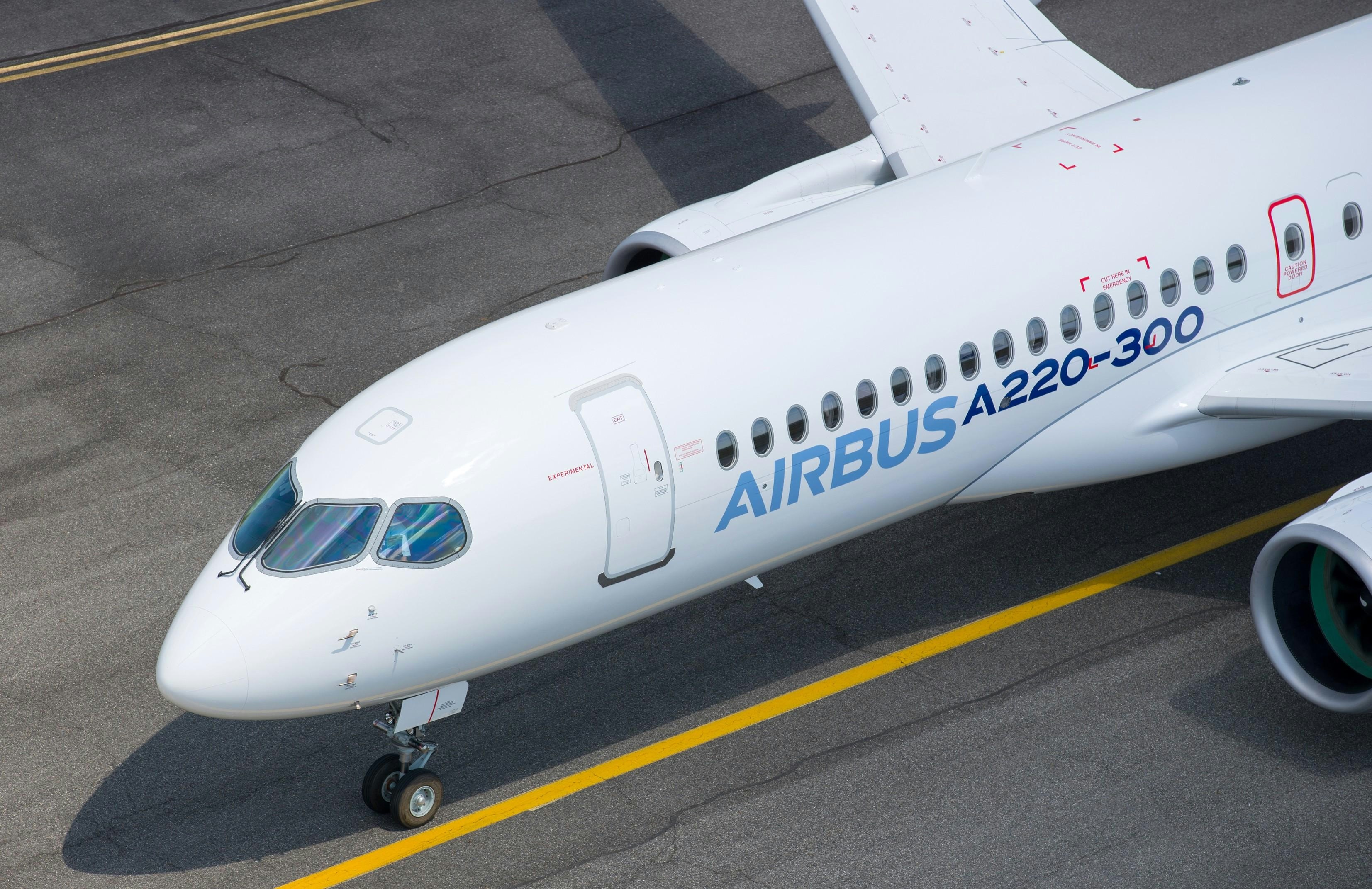
Embraer has conceded Airbus’s clear advantage in AirAsia’s recent commitment to purchase 150 A220 aircraft, a deal valued at $19 billion that further solidifies Airbus’s dominance in the single-aisle aircraft market. Francisco Gomes Neto, CEO of the Brazilian manufacturer, attributed Airbus’s success largely to AirAsia’s longstanding relationship with the European aerospace giant, noting that the Malaysian carrier’s all-Airbus fleet created a challenging environment for competing bids.

During Embraer’s first-quarter earnings call, Gomes Neto remarked, “They are an all-Airbus operator, so Airbus had a natural advantage there.” Despite Embraer’s active efforts to promote its E2 family of regional jets, the company faced significant obstacles in persuading AirAsia to deviate from its established Airbus preference. The order, announced at Airbus’s Mirabel assembly facility in Canada and attended by AirAsia CEO Tony Fernandes, represents one of the largest commitments ever made for the A220 program.

Airbus’s Growing Market Presence and AirAsia’s Strategic Choice

This landmark deal marks a major milestone for Airbus, pushing total A220 orders beyond 1,000 since the aircraft—originally developed as the Bombardier CSeries—entered the market more than a decade ago. After acquiring control of the program in 2018, Airbus rebranded the jet as the A220 and expanded production with assembly lines in Mirabel, Canada, and Mobile, Alabama.

AirAsia’s decision highlights the increasing market appeal and operational efficiency of the A220, factors that have bolstered Airbus’s position in the segment bridging large regional jets and smaller single-aisle aircraft. The A220-300 model competes directly with Embraer’s E195-E2, while the smaller A220-100 overlaps with the E190-E2, intensifying competition between the two manufacturers.

Competitive Pressures and Embraer’s Response

For Embraer, the loss underscores the mounting competitive pressures it faces as Airbus secures high-profile contracts. The company is expected to respond by intensifying marketing efforts and exploring new partnerships to sustain its market position. Industry analysts suggest that the AirAsia order may shift investor confidence further in favor of Airbus, potentially causing a temporary decline in Embraer’s stock performance.

Despite the setback, Gomes Neto maintained a positive outlook on the competition, emphasizing that AirAsia had conducted a thorough evaluation of the E2 jets before ultimately selecting the A220. He highlighted the E2’s lower operating weight and strong fuel efficiency as key competitive advantages, even as the airline chose to expand its Airbus fleet.

The AirAsia order not only reinforces Airbus’s leadership in the narrowbody market but also signals a potential shift in the competitive landscape, with Embraer now seeking new strategies to strengthen its presence amid intensifying rivalry.

More news
How Malaysia Airports is blending digital innovation, curated retail and personalised passenger engagement

How Malaysia Airports is blending digital innovation, curated retail and personalised passenger engagement

Malaysia Airports’ Strategic Transformation: Digital Innovation and Curated Retail Malaysia Airports Holdings Berhad is spearheading a comprehensive transformation of the airport experience at Kuala Lumpur International Airport (KLIA) and its wider network. By integrating digital innovation, carefully curated retail offerings, and personalised passenger engagement, the operator aims to create dynamic, culturally distinctive gateways that resonate with modern travellers. At the recent TFWA Asia Pacific Exhibition & Conference in Singapore, Hani Ezra Hussin, Senior General Manager of Commercial Services, detailed how these initiatives are driving both enhanced passenger interaction and commercial growth. Passenger engagement is notably outpacing overall passenger growth. In 2025, Malaysia Airports recorded 104.5 million passenger movements across its domestic network, while total sales transactions surged by 28.8% year-on-year to approximately 44 million. This increase underscores travellers’ deeper interaction with the airport’s commercial offerings, reflecting deliberate efforts to tailor the environment to the expectations of today’s discerning passengers. Positioning for Visit Malaysia 2026 and Beyond As Malaysia prepares to welcome Visit Malaysia 2026, the airports are being repositioned not merely as transit hubs but as gateways that deliver significant commercial value alongside a distinctive ‘Sense of Malaysia’. Hani Ezra highlighted that Malaysia Airports is becoming an increasingly attractive platform for brands seeking to engage with higher-spending, experience-driven travellers. This shift is underpinned by a fundamental reimagining of the airport experience, moving away from traditional tenancy models towards a focus on curation, relevance, storytelling, and digital integration. This transformation is viewed not as a one-off reset but as the foundation for ongoing evolution. Malaysia Airports is continuously refining its retail mix, experimenting with new concepts, and developing a commercial ecosystem capable of swiftly adapting to changing traveller behaviours. Key initiatives include immersive retail environments, data-driven personalisation, and infrastructure enhancements designed to increase dwell time and spending. Digital innovation plays a central role in this strategy, with omnichannel engagement and seamless integration of emerging technologies into existing systems. However, the operator faces challenges in keeping pace with rapid technological advancements, ensuring smooth system interoperability, and meeting passengers’ rising expectations for personalised experiences. These demands require sustained investment and operational agility. Market Dynamics and Competitive Landscape The broader market environment is also shaping Malaysia Airports’ approach. The rapid expansion of Malaysia’s e-commerce sector and the growing importance of experiential retail in Greater Kuala Lumpur provide a conducive backdrop for these initiatives. Passenger feedback has been positive, with many appreciating the enhanced convenience and engagement offered by the new retail and digital experiences. Meanwhile, competitors are beginning to adopt similar strategies to maintain their market positions. Looking ahead, Malaysia Airports remains focused on delivering increased value for brands, partners, and travellers. By blending digital innovation with curated, culturally resonant retail and personalised engagement, the operator is setting new benchmarks for the airport experience in the region.
Southwest Airlines Automates Endpoint Operations

Southwest Airlines Automates Endpoint Operations

Southwest Airlines Advances Automation in Endpoint Operations Southwest Airlines is intensifying its digital transformation efforts by automating endpoint operations to enhance efficiency and improve the digital experience for its workforce. According to a senior leader in the airline’s IT division, the focus has shifted toward proactive and preventative measures, allowing the team to address potential issues before they arise rather than reacting to problems after the fact. Digitization Across Frontline Operations Over the past decade, the Dallas-based carrier has progressively replaced paper-based workflows with mobile devices and cloud applications across various departments, including maintenance, flight operations, gate services, and cabin crews. Currently, Southwest has largely digitized its operations for its 72,000 employees, two-thirds of whom serve in frontline roles. Printed manuals for pilots and ground staff have been supplanted by mobile devices, significantly increasing the demands on the IT department. The team now supports approximately 50,000 smartphones and tablets, 20,000 laptops, and 15,000 personal computers used by employees. Navigating Industry Challenges Through Automation Southwest’s automation initiatives come amid a challenging macroeconomic environment marked by persistent high fuel costs and broader industry headwinds. While other airlines have responded with capacity reductions, Southwest has maintained its profit outlook for 2026, reflecting a cautious yet steady approach to managing these pressures. The airline views its investment in automation and digital tools as a strategic means to control costs and bolster operational resilience. The broader airline industry is also contending with geopolitical uncertainties, including the ongoing conflict in Iran, which continues to disrupt global operations. Financial strains are particularly pronounced among low-cost carriers. For instance, JetBlue recently secured $500 million in financing by using Airbus jets as collateral, highlighting the financial challenges faced by some competitors. In contrast, Southwest’s stable profit forecast and commitment to digital infrastructure underscore divergent strategies within the sector as airlines adapt to a rapidly evolving landscape. By continuing to digitize and automate frontline operations, Southwest aims to respond proactively to operational issues, enhance the employee experience, and sustain stability amid ongoing industry volatility.
Trump’s China Trip Could Unlock Major Boeing Aircraft Deal

Trump’s China Trip Could Unlock Major Boeing Aircraft Deal

Trump’s China Visit Poised to Unlock Major Boeing Aircraft Deal U.S. President Donald Trump’s forthcoming visit to China on May 14–15 is anticipated to be one of the most consequential commercial engagements between the two nations in recent years, with Boeing positioned at the center of the economic discussions. The presence of Boeing CEO Kelly Ortberg in the presidential delegation highlights the critical importance of aircraft sales in the agenda. Alongside Ortberg is GE Aerospace CEO H. Lawrence Culp Jr., whose company supplies jet engines for Boeing planes, underscoring the broader significance of the U.S. aviation supply chain in these negotiations. Potential Breakthrough in Aviation Trade The involvement of these key industry leaders signals a concerted effort to reestablish U.S. dominance in China’s aviation market, which has increasingly leaned toward Airbus in recent years. Senior U.S. officials have indicated that negotiations are in their “final days or weeks,” with discussions reportedly encompassing hundreds of aircraft. The prospective deal is expected to include narrowbody Boeing 737 Max jets as well as widebody models such as the Boeing 787 Dreamliner and Boeing 777X, accompanied by orders for related jet engines. Should the agreement be finalized, it would represent a significant easing of tensions in aviation trade, which have been strained by stalled orders, regulatory challenges, and geopolitical friction over the past several years. Market speculation has intensified following Boeing’s announcement on May 12 of 109 unidentified aircraft orders placed in April, including 57 widebody jets—a category typically dominated by large international carriers such as China’s state-owned airlines. Although Boeing has not disclosed the identities of the customers, the timing has fueled industry conjecture that Chinese airlines may be involved, given their historical practice of placing large orders anonymously until political conditions permit public acknowledgment. Nevertheless, no official confirmation has linked these orders to Chinese buyers, and both Boeing and U.S. officials have refrained from commenting on the origin of the commitments. Broader Commercial and Geopolitical Context The stakes for both the United States and China are considerable. Market analysts currently assign an 86% probability that China will proceed with aircraft purchases from Boeing, alongside a strong possibility of extending the ongoing U.S.-China tariff truce. However, the outcome of the visit remains uncertain amid persistent tensions, particularly concerning issues such as Iran, and skepticism endures regarding the likelihood of substantive breakthroughs during the summit. Meanwhile, Airbus continues to consolidate its position in the Chinese market. China Southern Airlines recently placed a substantial order for 137 Airbus A320neo-family aircraft, valued at approximately $21.4 billion. The Guangzhou-based carrier will receive 102 aircraft directly, while its subsidiary Xiamen Airlines will take delivery of an additional 35 jets, with deliveries scheduled between 2028 and 2032. Although the list price exceeds $21 billion, industry standards suggest that significant discounts were likely negotiated. In addition to aviation, Trump’s delegation includes leading executives from the technology sector, such as Apple’s Tim Cook, Nvidia’s Jensen Huang, Tesla’s Elon Musk, and Qualcomm’s Cristiano Amon. Their participation reflects the high stakes surrounding chip exports, artificial intelligence development, electric vehicles, and supply chain access in China—areas characterized by intense competition alongside deep commercial interdependence. As President Trump’s visit approaches, the prospect of a major Boeing deal remains a central focus for markets and policymakers alike, with the potential to significantly influence the future trajectory of U.S.–China commercial relations.
Willis Lease Finance Corporation Plans Convertible Senior Notes and Common Stock Offerings

Willis Lease Finance Corporation Plans Convertible Senior Notes and Common Stock Offerings

Willis Lease Finance Corporation Announces Convertible Senior Notes and Common Stock Offerings Willis Lease Finance Corporation (NASDAQ: WLFC), a prominent lessor of commercial aircraft engines and provider of global aviation services, has revealed plans to offer $175 million in aggregate principal amount of convertible senior notes due 2031 through a registered public offering. The company also indicated the potential for a concurrent common stock offering, contingent upon prevailing market conditions and other factors. Details of the Convertible Notes Offering The proposed offering includes a 30-day option for underwriters to purchase up to an additional $25 million in notes to cover over-allotments. Proceeds from the convertible notes are expected initially to be used to repay outstanding balances under the company’s revolving credit facility on a temporary basis, with the ultimate intention of deploying funds for general corporate purposes. The final size, terms, and completion of the offering remain subject to market conditions and investor demand. Morgan Stanley & Co. LLC, BofA Securities, and Deutsche Bank Securities Inc. are serving as joint book-running managers for the notes offering. The convertible senior notes will be unsecured obligations accruing interest payable semi-annually on May 15 and November 15, beginning November 15, 2026. The notes will mature on May 15, 2031, unless repurchased, redeemed, or converted earlier. Holders will have the right to convert their notes under specified conditions and during designated periods, with the company retaining discretion to settle conversions in cash, common stock, or a combination of both. The notes will be redeemable, in whole or in part, at the company’s option starting May 21, 2029, provided the company’s common stock trades above 130% of the conversion price for a defined period. Partial redemptions will be subject to maintaining a minimum outstanding principal amount of $75 million. Additionally, in the event of a “fundamental change,” such as certain change-of-control events or delisting, noteholders may require the company to repurchase their notes at par plus accrued interest. Market Context and Potential Implications Willis Lease Finance’s financing initiative occurs amid a dynamic and potentially volatile market environment. The company faces challenges including fluctuating investor appetite for convertible securities and increased competition from other firms pursuing similar capital-raising strategies. The possibility of shareholder dilution arising from an oversubscribed common stock offering may also affect investor sentiment. Market responses to the offerings are likely to be mixed. Some investors may view the convertible notes as a strategic tool for optimizing the company’s capital structure and reducing interest expenses. Conversely, concerns may arise regarding dilution risks and the specific terms governing conversion. This move may also influence competitors within the aircraft leasing sector to explore comparable financing approaches, potentially intensifying competition and impacting broader market dynamics. There is no guarantee that the offerings will be completed or that their terms will remain as proposed. Investors are advised to carefully review the company’s regulatory filings and consult with financial advisors before making investment decisions.
SIA Engineering rides MRO boom as aircraft shortages persist

SIA Engineering rides MRO boom as aircraft shortages persist

SIA Engineering Capitalizes on MRO Market Growth Amid Aircraft Shortages SINGAPORE – SIA Engineering Company (SIAEC), the maintenance, repair, and overhaul (MRO) specialist affiliated with Singapore Airlines, has reported a significant 21% increase in net profit to S$168.9 million for the fiscal year 2025/26. This growth outpaced a 14.3% rise in revenue, which reached S$1.42 billion. The company’s strong financial performance reflects its ability to leverage a global surge in demand for MRO services as airlines worldwide continue to face persistent delays in new aircraft deliveries from major manufacturers Airbus and Boeing. Market Dynamics Driving MRO Demand The disparity between SIAEC’s revenue and profit growth underscores not only an increase in maintenance volumes but also a strategic shift toward a more profitable business mix. Ongoing supply-chain disruptions and engine availability challenges have compelled airlines to extend the operational lifespan of older aircraft, thereby intensifying the need for comprehensive maintenance services. Older jets require more frequent and rigorous inspections, engine overhauls, and component replacements, creating a favorable environment for MRO providers like SIAEC. SIAEC has adeptly positioned itself to benefit from these market conditions, particularly by focusing on higher-margin segments within the aftermarket. The company’s profits from associated firms and joint ventures rose by 22.5% during the year, highlighting the growing significance of its partnership-driven approach. Unlike traditional maintenance providers that primarily concentrate on airframe servicing, SIAEC has cultivated a network of specialized collaborations with leading aerospace manufacturers and engine suppliers. Strategic Partnerships and Technical Expertise Central to SIAEC’s strategy are its alliances with Pratt & Whitney and Safran Aircraft Engines. The partnership with Pratt & Whitney grants SIAEC access to maintenance demand for geared turbofan (GTF) engines, which power a substantial portion of the Airbus A320neo fleet. Durability and inspection challenges with certain GTF variants have further increased global demand for overhaul services. Similarly, collaboration with Safran integrates SIAEC into the expanding CFM LEAP engine ecosystem, a critical component of the global narrowbody aircraft market. These partnerships enable SIAEC to undertake more complex and higher-value technical work while avoiding the heavy capital investments typically required to develop advanced engine maintenance capabilities independently. Challenges and Regional Outlook Despite the robust growth, the MRO sector faces notable challenges. Elevated fuel prices, driven by ongoing geopolitical tensions, threaten to compress airline profit margins and may lead carriers to reduce capacity, potentially dampening demand for maintenance services. Some airlines have already begun accelerating the retirement of older aircraft, which could moderate the current surge in MRO activity. Nevertheless, the Middle East and Asia-Pacific regions remain among the fastest-growing MRO markets globally, with regional demand expected to increase substantially by 2031. While SIAEC remains smaller and more regionally focused compared to larger global competitors such as Lufthansa Technik, HAECO, and Air France-KLM Engineering & Maintenance, its strategic positioning within the rapidly expanding Asia-Pacific aviation market may provide a competitive advantage. This regional focus positions SIAEC to navigate both the opportunities and emerging risks facing the industry in the coming years.
Founder of Sporty’s Pilot Shop Dies at 90

Founder of Sporty’s Pilot Shop Dies at 90

Founder of Sporty’s Pilot Shop Dies at 90 Hal Shevers, the visionary founder of Sporty’s Pilot Shop, passed away on Tuesday at the age of 90, according to Eric Radtke, vice president of the company. Shevers retired earlier this year after leading the business for 63 years, leaving behind a profound legacy that significantly influenced both aviation education and the general aviation retail industry. A Legacy Rooted in Aviation and Entrepreneurship Shevers began his aviation retail career in 1961 by selling pilot hand-held radios from the trunk of his car. This modest start evolved into Sportsman’s Market, which later became known simply as Sporty’s—a brand now synonymous with pilot supplies and aviation education. Under his leadership, Sporty’s became a pioneer in product development and mail-order catalogs, setting high standards for quality and reliability within the industry. Beyond retail, Shevers played a crucial role in the development of Clermont County Airport (I69) in Batavia, Ohio, transforming it into a vibrant aviation hub. Both Sporty’s Pilot Shop and Sporty’s Academy, a Part 141 flight school he founded, operate from this airport and maintain a close partnership with the University of Cincinnati’s aviation program. The airport also hosts Sandy’s Airpark, a residential aviation community named in honor of Shevers’ wife of more than 60 years, who survives him. Shevers’ passion for aviation was sparked during his time as a mechanical engineering student at Purdue University, where he earned his private pilot certificate through the Purdue Flying Club. Over his lifetime, he accumulated multiple instructor certificates, an Airline Transport Pilot (ATP) rating, and a Citation type rating, logging more than 10,000 flight hours. His entrepreneurial spirit extended beyond aviation, with successful ventures in housewares and tools through catalogs such as Preferred Living and Tool Shop. Commitment to Education and Community A dedicated educator, Shevers held both flight and ground instructor certificates and was renowned for teaching ground schools and developing one of the industry’s most comprehensive remote ground school programs. Generations of pilots have relied on Sporty’s training courses—delivered via VHS, DVD, and online platforms—as foundational elements of their education. In recognition of his contributions, Shevers was inducted into the National Association of Flight Instructors Hall of Fame in 2007. Shevers was also deeply committed to community service, particularly through his involvement with Scouting America and Aviation Exploring programs. His dedication earned him the Silver Beaver Award, the highest council-level honor for adult Scout leaders. John Zimmerman, president and CEO of Sporty’s, reflected on Shevers’ enduring impact: “Hal’s passion and dedication transformed Sporty’s from an idea into a great American business story. As an employee-owned company, we remain committed to his original vision—create uniquely high quality products and back them up with friendly, helpful service.” Challenges and Future Outlook With Shevers’ passing, Sporty’s faces the challenge of preserving its market presence and brand legacy amid a changing competitive landscape. Industry analysts emphasize the growing importance of competitor advertising research to understand market dynamics and adapt strategies effectively. The aviation retail sector may experience shifts in consumer sentiment and competitive responses, as rivals seek to capitalize on the founder’s absence by capturing market share or introducing new offerings. Recent data highlights the critical role of strategic competitor analysis in ensuring successful campaign planning and sustained growth. Hal Shevers’ influence remains deeply embedded in the countless pilots and aviation professionals who have relied on Sporty’s products and services, as well as in the company’s ongoing commitment to innovation and excellence.
MTU Aero Engines Invests in TRecs to Advance Digital Strategy

MTU Aero Engines Invests in TRecs to Advance Digital Strategy

MTU Aero Engines Invests in TRecs to Advance Digital Strategy MTU Maintenance Lease Services, the leasing division of MTU Aero Engines AG, announced a strategic minority investment in TRecs, an artificial intelligence-driven startup specializing in engine lifecycle management, on May 13, 2026. This investment is designed to accelerate the digitalization of engine lifecycle processes, particularly within leasing and asset management workflows, as the aviation industry continues its recovery following the pandemic. Enhancing Engine Lifecycle Management through Digital Innovation TRecs offers a platform that simplifies the management of open item lists related to engine transitions, shop visits, and lease returns by providing a unified, auditable source for all documentation. This initiative strengthens MTU’s ongoing digital transformation efforts in maintenance, repair, and overhaul (MRO) services, benefiting lessors, airlines, and financial stakeholders alike. The move aligns with broader industry trends emphasizing operational efficiency and digital innovation, especially as global fleet expansion drives MRO demand at an estimated annual growth rate of 4 to 5 percent. Strategic Implications and Market Position MTU’s investment in TRecs is expected to improve MRO efficiency through the deployment of advanced digital tools, reinforcing its core competencies in engine manufacturing and aftermarket services. Headquartered in Munich, Germany, MTU operates globally with significant involvement in major engine programs such as the Pratt & Whitney GTF engines powering the Airbus A320neo and A220 aircraft. Its North American operations, which include support for U.S. carriers and lessors, position MTU as a critical player for American investors seeking exposure to European aerospace growth. Recent financial results highlight MTU’s strong market standing, with earnings per share reported at €18.44, a gross margin of 19.24 percent, and a net profit margin of 11.17 percent in the latest reporting period. The company’s robust aftermarket demand and sustained growth in commercial MRO services further underscore its competitive advantage amid the aviation sector’s ongoing recovery. Challenges and Competitive Landscape While the investment in TRecs underscores MTU’s commitment to digital transformation, it also introduces challenges related to integrating new technologies into existing workflows, ensuring data security, and managing customer transitions to the new platform. These factors will be critical in fully realizing the benefits of the digital solution. Market observers anticipate that this move may bolster investor confidence in MTU’s digital strategy. However, competitors such as Pratt & Whitney, General Electric, and Rolls-Royce are likely to respond by accelerating their own digital initiatives or developing comparable technologies to maintain their competitive positions. Relevance for U.S. Investors MTU Aero Engines is publicly traded on the Frankfurt Stock Exchange under the ticker MTX and is available over-the-counter in the United States as MTUAY. This dual presence offers American investors a valuable opportunity to participate in European aerospace growth. MTU’s significant exposure to U.S. airlines and lessors closely ties its performance to the domestic air travel recovery, making it a noteworthy entity in the transatlantic aviation market. As MTU continues to advance its digital strategy through investments like TRecs, its ability to navigate integration challenges while sustaining strong aftermarket demand will be pivotal in shaping its competitive position and attractiveness to global investors. For further details, visit the official MTU Aero Engines website.
Wizz Air Receives 200th Airbus A321neo, Highlighting Focus on Innovation and Sustainability

Wizz Air Receives 200th Airbus A321neo, Highlighting Focus on Innovation and Sustainability

Wizz Air Marks Delivery of 200th Airbus A321neo, Reinforcing Commitment to Innovation and Sustainability Wizz Air has reached a significant milestone with the delivery of its 200th Airbus A321neo aircraft, underscoring the airline’s dedication to innovation, sustainability, and affordable air travel. This achievement forms a key part of Wizz Air’s ambitious expansion strategy, which also includes the integration of the Airbus A321XLR, further solidifying its status as a leading low-cost carrier in Europe. Fleet Expansion and Operational Efficiency Since introducing its first A321neo in 2019, Wizz Air has rapidly expanded its fleet to include 200 aircraft within the A321neo family. This comprises 186 A321neo, 8 A321XLR, and 6 A320neo models. The modernized fleet supports the airline’s objective to broaden its European network and explore new international routes, while simultaneously enhancing operational efficiency and passenger experience. The advanced design of the A321neo, featuring increased seating capacity and next-generation Pratt & Whitney engines, has been instrumental in Wizz Air’s growth. These engines offer up to 20% lower fuel consumption compared to previous models, significantly reducing CO₂ emissions per seat and aligning with the airline’s net-zero carbon ambitions. Additionally, the quieter operation of the aircraft helps mitigate noise pollution around airports, benefiting both travelers and local communities. Challenges and Market Dynamics Despite the successes, the rapid expansion and reliance on the A321neo have presented challenges. The aircraft model has recently come under scrutiny following tail-strike incidents, leading Airbus to issue revised flare guidance to operators. While these events have raised operational concerns, Wizz Air continues to prioritize safety and is committed to ongoing improvements within its fleet. Market responses to Wizz Air’s milestone have been cautiously optimistic. The airline’s CEO has addressed industry challenges such as rising fuel prices and supply chain shortages, asserting that there is no imminent crisis for the company. He also acknowledged previous setbacks, particularly in the Abu Dhabi market, but expressed confidence in the airline’s future growth prospects. Meanwhile, competitors like easyJet are expanding their route networks within the UK, intensifying competition in the low-cost sector. Nevertheless, Wizz Air’s investment in a modern and efficient fleet positions it well to maintain a competitive advantage and fulfill its promise of delivering affordable, sustainable air travel. As Wizz Air celebrates the delivery of its 200th A321neo, the airline remains focused on leveraging technological advancements to connect more destinations, reduce environmental impact, and provide passengers with a comfortable and efficient flying experience.
Chair of Major U.K. Air Taxi Manufacturer Steps Down

Chair of Major U.K. Air Taxi Manufacturer Steps Down

Chair of Major U.K. Air Taxi Manufacturer Steps Down Vertical Aerospace, the United Kingdom’s foremost developer of electric vertical takeoff and landing (eVTOL) air taxis, is undergoing a leadership transition following the announcement that board chairman Dómhnal Slattery will be stepping down. Slattery shared the news on LinkedIn, reflecting on the milestone of Vertical’s first piloted transition flight in April as “one of the proudest moments” of his career. He indicated that it was the appropriate time to step back, entrusting the next phase—certifying the company’s flagship Valo air taxi—to the existing team. Leadership Transition Amid Critical Developments In an official statement, Vertical Aerospace acknowledged Slattery’s significant contributions, crediting his leadership with helping the company reach key milestones. The board expressed gratitude for his ongoing support despite his departure. Benjamin Story, a non-executive board member with extensive experience in aviation and finance, has been appointed interim chair while the search for a permanent successor is underway. Slattery’s departure occurs at a crucial juncture for Vertical Aerospace. The company has recently demonstrated its Valo aircraft in major U.S. cities, including New York and Miami, successfully completing several piloted transition flights that showcased the aircraft’s ability to transition between hover and forward flight. These achievements position Vertical among a select group of eVTOL manufacturers, alongside U.S. competitors such as Joby Aviation and Beta Technologies. However, the change in leadership introduces potential challenges regarding the company’s strategic continuity. Industry analysts caution that such transitions can unsettle investors, potentially affecting stock performance. Competitors may also seek to exploit any perceived instability by accelerating their own development and marketing initiatives. The competitive environment remains intense, with rivals like Volocopter advancing new product launches and securing additional funding. Financial Position and Industry Challenges Vertical Aerospace recently secured a financing package of up to $800 million, supplementing an earlier $50 million raise, to support its certification efforts through 2028. While this substantial funding bolsters the company’s position, its ongoing investment in certification and operational expansion continues to result in significant net losses. The broader eVTOL sector faces additional uncertainties, including the potential impact of investigations into trade practices involving key players such as Joby Aviation, whose partnership with Delta Air Lines could be jeopardized. Adding to Vertical’s pressures is an ongoing lawsuit filed by competitor Archer Aviation, which alleges notable similarities between the two companies’ flagship aircraft designs. Reflecting on Vertical’s evolution, Slattery remarked, “Five years ago, Vertical Aerospace was a handful of people and an ambition. Today, it sits at the forefront of the global eVTOL sector—a category-leading aircraft, the strongest order book in the industry, a financial package of up to $850 million closed, and a world-first piloted transition flight complete.” Slattery’s tenure as chair began in January 2022 and lasted until August 2023, before he returned to the role in early 2025. His extensive background includes founding CEO of Avolon and senior leadership positions at RBS Aviation Capital (now SMBC Aviation Capital), two of the world’s largest aircraft lessors. Interim chair Benjamin Story brings a wealth of experience from his roles on the boards of Transport for London, Citigroup, Rolls-Royce, and ITP Aero, as well as senior positions at Morgan Stanley and Deutsche Bank. Slattery expressed confidence in Story’s leadership during the interim period, stating, “I have no doubt the company will thrive under his guidance while a permanent chair is appointed.”
Why the Travel Industry Is Preparing for a Changing Future

Why the Travel Industry Is Preparing for a Changing Future

Why the Travel Industry Is Preparing for a Changing Future Technological Advances and Their Limitations Earlier this year, OpenAI recruited the creator of OpenClaw, an AI agent designed for autonomous task management, signaling a growing interest in integrating advanced artificial intelligence into travel services. Concurrently, airlines have introduced new applications promising enhanced traveler empowerment through features such as instant rebooking, digital vouchers, and real-time baggage tracking—all accessible from a single interface. Industry commentators have praised these innovations as bridging the technological divide and returning control to customers. However, these solutions may be addressing a rapidly disappearing reality. The notion of “empowerment” in travel today often still places the burden of problem-solving squarely on the passenger. For instance, consider a business traveler arriving at the airport only to face a four-hour delay. Despite the availability of rebooking options via the airline’s app, fully booked flights and long queues for customer service remain common. The traveler must then manage a cascade of disruptions—rescheduling accommodations, transportation, and professional commitments—often at considerable personal cost and stress. While digital tools streamline certain processes, they do not eliminate the fundamental challenge: the traveler remains responsible for managing the fallout of operational disruptions. Industry Challenges and Shifting Dynamics This model of customer-managed disruption is increasingly misaligned with the evolving realities of the travel sector. Airlines are grappling with rising fuel costs, a situation expected to intensify with the anticipated global fuel crisis in 2026. These pressures are prompting a reevaluation of the traditional high-volume, low-margin business approach. Additionally, geopolitical tensions and growing operational complexities are diminishing the appeal and reliability of business travel, undermining industry confidence. At the same time, some destinations are imposing restrictions to mitigate overtourism, while artificial intelligence begins to transform how trips are planned and managed. Despite these challenges, demand for travel endures, particularly within Europe, where local travel remains robust. The industry now faces a critical juncture: it must reconcile the imperatives of profitability and sustainability with travelers’ increasing desire for hassle-free experiences—not merely more sophisticated digital tools. Envisioning a More Seamless Future Emerging developments hint at a more proactive and integrated future for travel management. Imagine an AI assistant that, in the early hours of the morning, anticipates a flight delay by analyzing weather data, crew availability, and historical patterns. Before the traveler awakens, the system has automatically rebooked flights, updated hotel and car rental reservations, and notified relevant contacts. The traveler then begins the day confident that their itinerary is intact, having invested only minimal effort. As the travel industry contends with escalating costs, operational risks, and shifting traveler expectations, the true potential of technology lies not in transferring more responsibility to customers but in anticipating and resolving disruptions before they occur. The future of travel will be defined less by the proliferation of apps and more by the seamless, often invisible integration of technology that simplifies journeys amid growing complexity.
line









