
将人工智能洞察转化为可执行行动

热门趋势
Categories
Establishing Clear Certification for Emerging Aviation Technologies in the U.S.
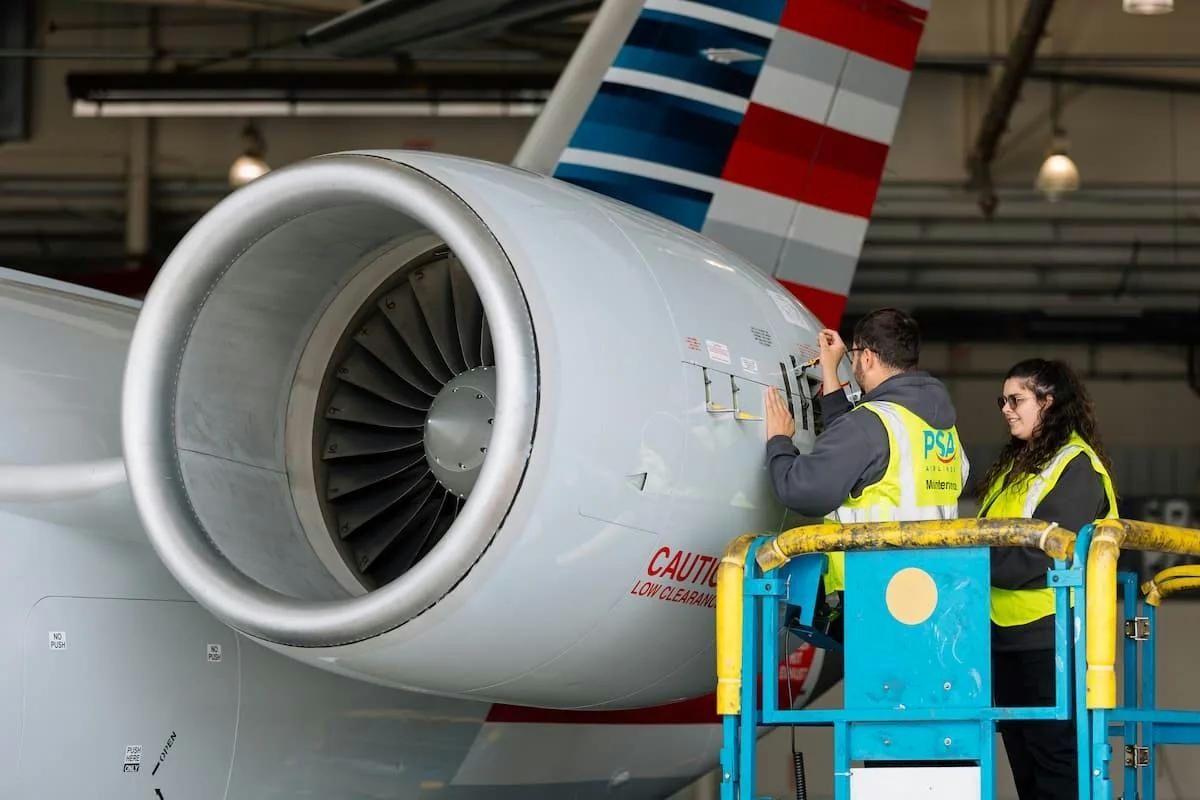
Establishing Clear Certification for Emerging Aviation Technologies in the U.S.
The United States has historically been at the forefront of aviation innovation, from the pioneering achievements of the Wright brothers to the development of modern commercial air travel. Today, a new generation of technologies—including Advanced Air Mobility (AAM) aircraft, electric vertical takeoff and landing (eVTOL) systems, increasingly autonomous flight controls, and novel propulsion methods—holds the potential to transform transportation, emergency response, cargo logistics, and regional connectivity. While innovation continues unabated, the critical challenge lies in whether the U.S. certification system can evolve rapidly enough to accommodate these advancements without compromising the highest safety standards.
Modernizing Certification for a New Era
Safety remains the paramount concern for policymakers, yet the existing certification processes, originally designed for conventional aircraft, face scrutiny regarding their ability to offer the transparency, predictability, and scalability required by emerging aviation technologies. A 2023 report by the Department of Transportation’s Office of Inspector General highlighted significant challenges confronting the Federal Aviation Administration (FAA) in its certification approaches, policy development, and communication efforts related to AAM aircraft. The report cautioned that unresolved issues could impede the FAA’s capacity to efficiently facilitate the introduction of innovative technologies.
In response, Congress has incorporated provisions aimed at integrating AAM and modernizing the FAA within the FAA Reauthorization Act of 2024. Bipartisan legislation such as the Aviation Innovation and Global Competitiveness Act, supported by the American Institute of Aeronautics and Astronautics (AIAA), seeks to improve transparency and predictability in the certification of novel aircraft. These legislative efforts underscore a growing consensus that updating certification frameworks is essential to preserving U.S. leadership in aerospace.
Balancing Safety, Innovation, and Competitiveness
Aircraft certification is among the most stringent regulatory processes worldwide, forming the foundation of public confidence in aviation safety. However, predictability in certification is equally crucial to fostering innovation. The development of new aircraft involves extensive engineering, substantial financial investment, rigorous testing, and complex supply-chain coordination. Uncertainty surrounding certification timelines or compliance requirements introduces risks for manufacturers, suppliers, investors, and infrastructure providers alike.
This challenge extends beyond AAM to encompass the broader aerospace sector, where technologies are becoming increasingly autonomous, electrified, and software-driven. The certification system must therefore adapt to accommodate designs that do not conform to traditional regulatory frameworks. The overarching question is whether the U.S. can sustain a certification regime that evolves in tandem with continuous technological advancements, thereby supporting ongoing improvements in safety, performance, and passenger experience.
Global Competition and Strategic Importance
The modernization of certification processes transcends regulatory concerns and is integral to maintaining global competitiveness. The FAA’s recent approval for Boeing’s 777X testing, alongside international initiatives such as Germany’s DLR exploring certification by analysis, illustrate the dynamic and competitive environment in this domain. Global competitors are investing heavily in research and development while pursuing collaborations to standardize certification procedures.
Market responses have been cautiously optimistic, acknowledging both the potential for U.S. leadership in advanced air mobility and the complexities involved in adapting regulatory frameworks. The emphasis on domestic industrial dominance, as highlighted by Executive Order 14307, further reinforces the strategic significance of certification in securing America’s aerospace future. As international competition intensifies, establishing clear, adaptable, and efficient certification processes will be vital for the United States to maintain its preeminence in aviation innovation and safety.

Etihad and Swissport Extend Global Partnership

Sepehran Airlines B737 Returns to Mashhad After Tyre and Engine Issues

Etihad Deploys Widebody Fleet to Meet Strong Demand

Korean Air Finalizes $36.2 Billion Deal with Boeing
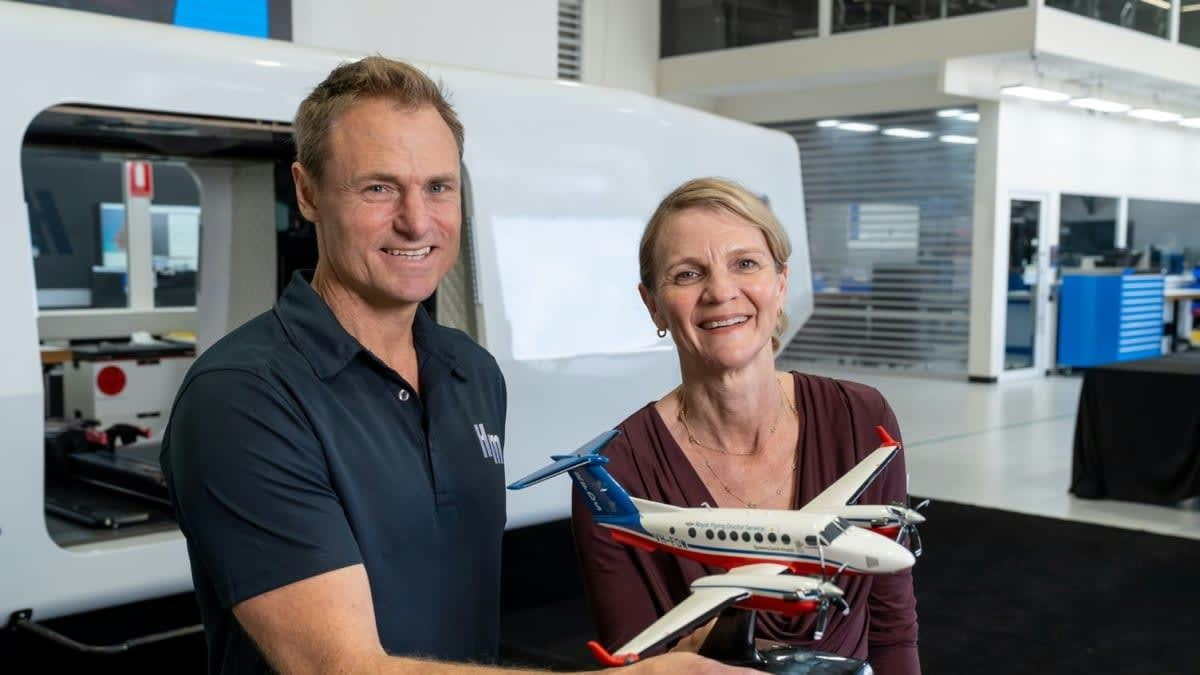
Australia’s RFDS Queensland Section Orders Six King Air 260Cs

Korean Air Finalizes Order for 103 Boeing Jets and Engines
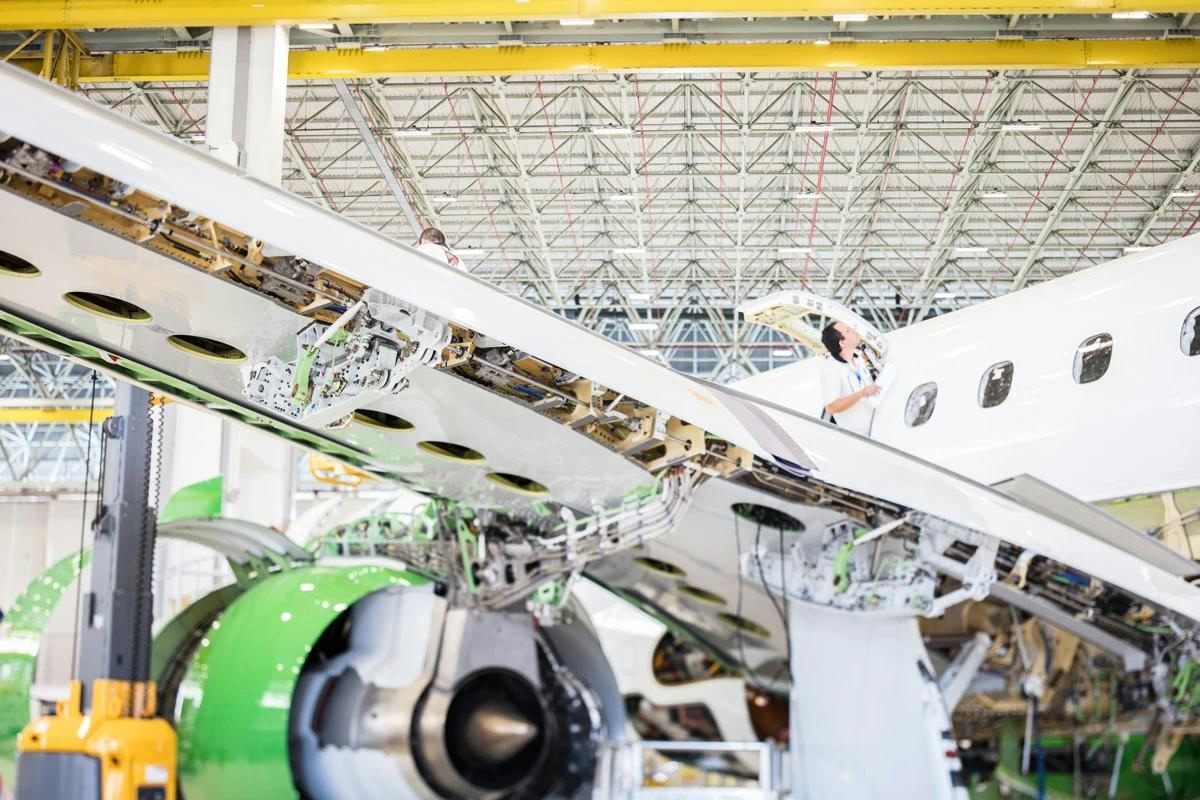
Embraer E195-E2 Features Distinctive Engine Placement Among Regional Jets

What Passengers Can Expect on Boeing’s New 777X Jet

How Ethiopian Airlines Became Africa’s Leading Carrier Amid Gulf Competition

Joby Aviation Extends Autonomous Flight Capabilities with Cross-Country Tour
