
将人工智能洞察转化为可执行行动

热门趋势
Categories
FAA Approves Increased Takeoff Weight for Boeing 787
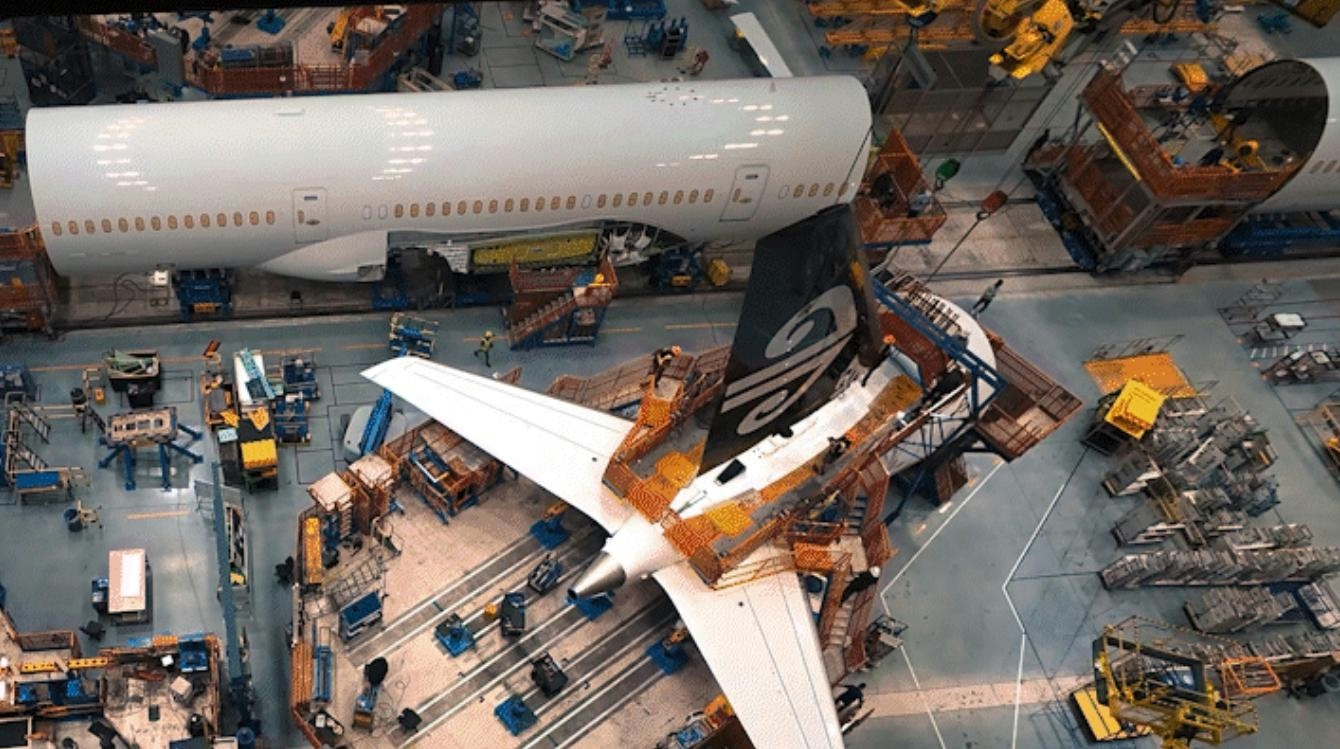
FAA Approves Increased Takeoff Weight for Boeing 787
The U.S. Federal Aviation Administration (FAA) has granted certification for an increased maximum takeoff weight (iMTOW) for Boeing’s 787-9 and 787-10 aircraft. This approval provides airlines with enhanced operational flexibility, allowing them to carry heavier payloads or extend the range of these Dreamliner variants by up to 400 nautical miles. The adjustment addresses evolving airline demands for greater efficiency and route versatility.
Enhancing Operational Capabilities
Boeing has begun equipping aircraft with the iMTOW capability, which are now progressing through ticketing and delivery stages. According to John Murphy, 787 Chief Project Engineer, the upgrade is a direct response to customer feedback and ongoing product development efforts. Airlines expressed a clear desire for increased flexibility: some sought longer mission capabilities for the 787-10, while others prioritized additional payload capacity for the 787-9, even if it meant some trade-offs in range. Boeing’s solution aims to accommodate both requirements, reflecting a tailored approach to diverse airline needs.
Air New Zealand, the launch customer for the 787-9, is poised to be among the first operators to benefit from the enhanced takeoff weight. The airline anticipates that the upgrade will support its strategic network expansion, bolstering trade, tourism, and connectivity for New Zealand.
Regulatory Oversight and Safety Considerations
While the iMTOW certification represents a significant advancement, the FAA is concurrently proposing new inspection protocols for Boeing 787s. These measures are intended to address potential fatigue issues linked to manufacturing defects involving "shim gaps" between structural components. If unaddressed, these gaps could compromise the long-term durability of the aircraft, necessitating additional operational considerations for airlines as they integrate the upgraded models into their fleets.
This dual focus on expanding aircraft capabilities and maintaining rigorous safety standards highlights the complex balance Boeing and its airline partners must navigate. As the 787 family evolves to meet market demands, ongoing regulatory oversight remains critical to ensuring the aircraft’s reliability and performance.

Etihad Airways Suspends Airbus A380 Flights on Key Route

Aditya Birla Group Seeks Approval for Aircraft Leasing in GIFT City

Qatar Airways Highlights Innovation and Connectivity at Arabian Travel Market 2026

Hong Kong's Five-Year Plan Includes Andrew Fan's Aircraft Parts Processing Hub Proposal

ACIA Aero Leasing Delivers ATR72-600 to Air Nostrum

RTX Appoints Jill Albertelli as Head of Pratt & Whitney

TAT Technologies Joins Beyond Aero Hydrogen Aircraft Program

AURAK Study Highlights Barriers to Air Taxi Adoption in Emerging Economies

Xiamen Air Selects Altitude for 787 Maintenance at Heathrow

Etihad and Swissport Extend Global Partnership
