
将人工智能洞察转化为可执行行动

热门趋势
Categories
Fifteen Years On, the Boeing 787 Dreamliner Has Transformed Long-Haul Travel
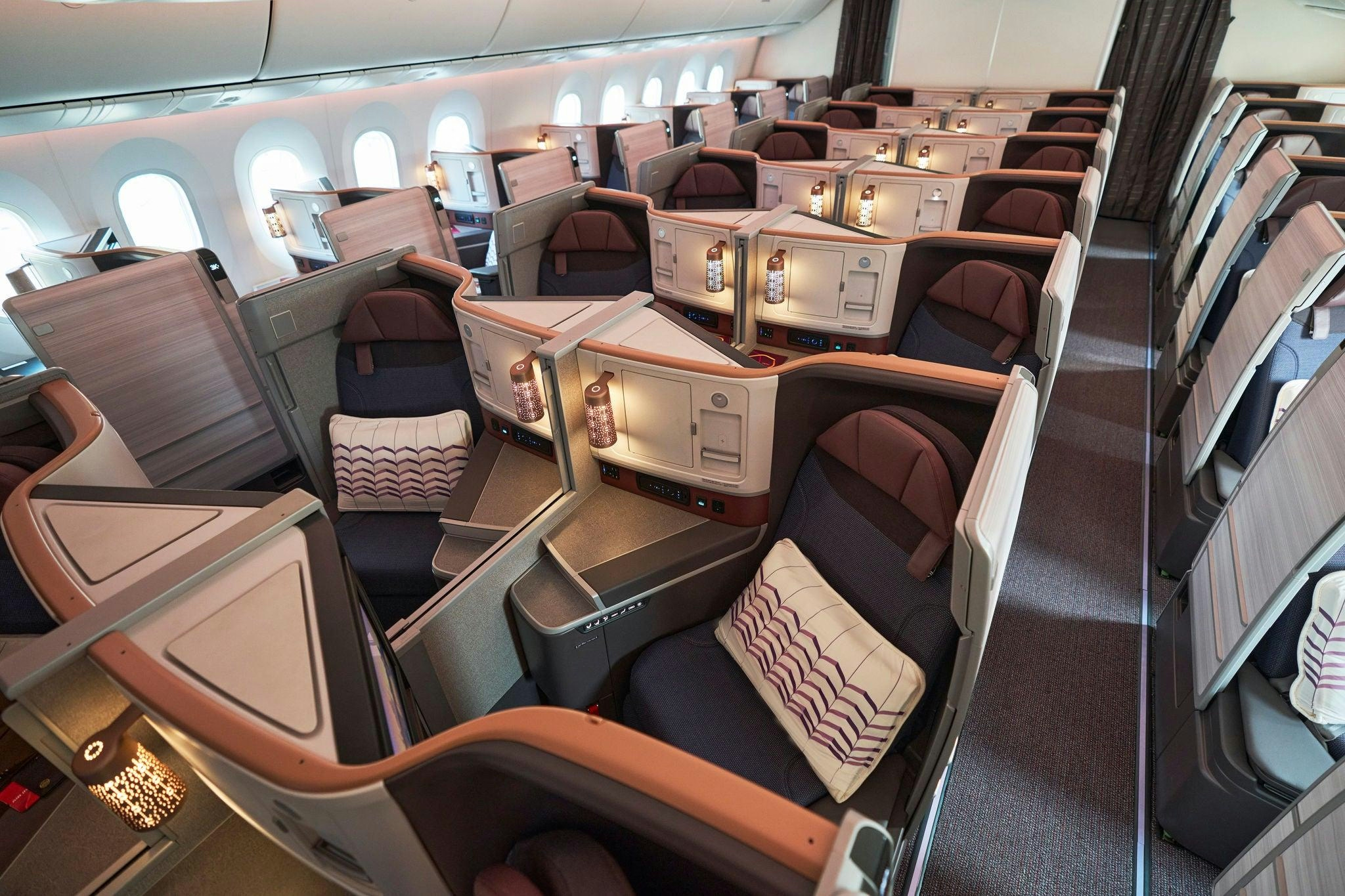
Fifteen Years On, the Boeing 787 Dreamliner Has Transformed Long-Haul Travel
When the Boeing 787 Dreamliner entered service in 2011, the long-haul aviation sector was largely defined by sprawling hub airports and increasingly larger aircraft. Airlines relied heavily on major international hubs such as Heathrow, Dubai, and Frankfurt, as older widebody jets were too expensive to operate on routes with lower passenger demand. Rather than competing directly with Airbus’s superjumbo A380, Boeing pursued a different strategy: developing a midsize, long-range aircraft capable of flying up to 7,565 nautical miles (14,010 kilometers) while delivering significantly improved fuel efficiency.
Fifteen years later, Boeing’s strategic gamble has fundamentally reshaped global air travel. The 787 has secured over 2,300 orders and more than 1,000 deliveries, enabling airlines to inaugurate over 370 new nonstop routes that were previously commercially unviable. Its blend of fuel efficiency, reduced operating costs, and passenger-centric cabin design has made direct long-haul flights between secondary cities economically feasible, thereby altering both the economics and geography of international aviation.
The Emergence of Long, Thin Routes
Prior to the introduction of the 787, airlines faced a challenging dilemma on long-haul routes. Large aircraft such as the Boeing 747 or Airbus A340 could cover intercontinental distances but required consistently high passenger loads to remain profitable. Many city pairs simply lacked sufficient demand to justify daily service with these large jets, compelling travelers from smaller markets to connect through major hubs—even when direct demand existed.
The Dreamliner transformed this dynamic by combining long-range capability with moderate seating capacity, typically accommodating between 240 and 330 passengers depending on configuration. Its advanced engineering reduced fuel consumption by approximately 20 to 25 percent compared to older twinjets like the Boeing 767 and early Airbus A330 models. These efficiencies allowed airlines to profitably operate routes that were once considered unrealistic. Since its debut, the 787 family has served more than 2,000 unique city pairs worldwide, making direct flights such as Perth to London, Austin to Heathrow, and San Jose to Tokyo commercially viable. Secondary airports have gained direct intercontinental connections, offering passengers shorter travel times and fewer layovers.
Competition and Shifting Market Dynamics
The success of the Dreamliner has not gone unchallenged. Increasing competition among long-haul aircraft and the global expansion ambitions of airlines have intensified market dynamics. Carriers such as Alaska Airlines and Delta Air Lines are leveraging the 787 and similar aircraft to broaden their international networks, fueling new “hub wars” as they compete for global market share. In response, competitors have taken steps to enhance their offerings: LATAM Airlines recently reaffirmed its commitment to Rolls-Royce engines for its 787 fleet after addressing durability concerns, while Air New Zealand is introducing innovative bunk bed concepts to improve the long-haul passenger experience.
Boeing’s Strategic Divergence from the A380 Era
In the early 2000s, Boeing and Airbus envisioned contrasting futures for commercial aviation. Airbus anticipated rising passenger demand and increasing airport congestion, leading to the development of the A380, designed to carry over 500 passengers between major hubs. Boeing, by contrast, prioritized operational flexibility and direct point-to-point connectivity, betting that airlines and passengers would prefer more frequent service on midsize aircraft rather than massive hub operations.
Fifteen years on, the impact of the 787 Dreamliner is evident. It has ushered in a new era of long, thin routes, challenged the dominance of traditional hub airports, and stimulated innovation across the aviation industry. As airlines and manufacturers continue to evolve, the Dreamliner’s role as a catalyst for change in long-haul travel remains firmly established.

Etihad Airways Suspends Airbus A380 Flights on Key Route

Aditya Birla Group Seeks Approval for Aircraft Leasing in GIFT City

Qatar Airways Highlights Innovation and Connectivity at Arabian Travel Market 2026

Hong Kong's Five-Year Plan Includes Andrew Fan's Aircraft Parts Processing Hub Proposal

ACIA Aero Leasing Delivers ATR72-600 to Air Nostrum

RTX Appoints Jill Albertelli as Head of Pratt & Whitney

TAT Technologies Joins Beyond Aero Hydrogen Aircraft Program

AURAK Study Highlights Barriers to Air Taxi Adoption in Emerging Economies

Xiamen Air Selects Altitude for 787 Maintenance at Heathrow

Etihad and Swissport Extend Global Partnership
