图像

将人工智能洞察转化为可执行行动

立即加入 AeroGenie 候补名单!

热门趋势

Categories

Florida Collaborates with Eve Air Mobility to Test Electric Air Taxis
July 22, 2026By ePlane AI
Florida Collaborates with Eve Air Mobility to Test Electric Air Taxis
0
0
Eve Air Mobility
Electric Air Taxis
eVTOL Testing

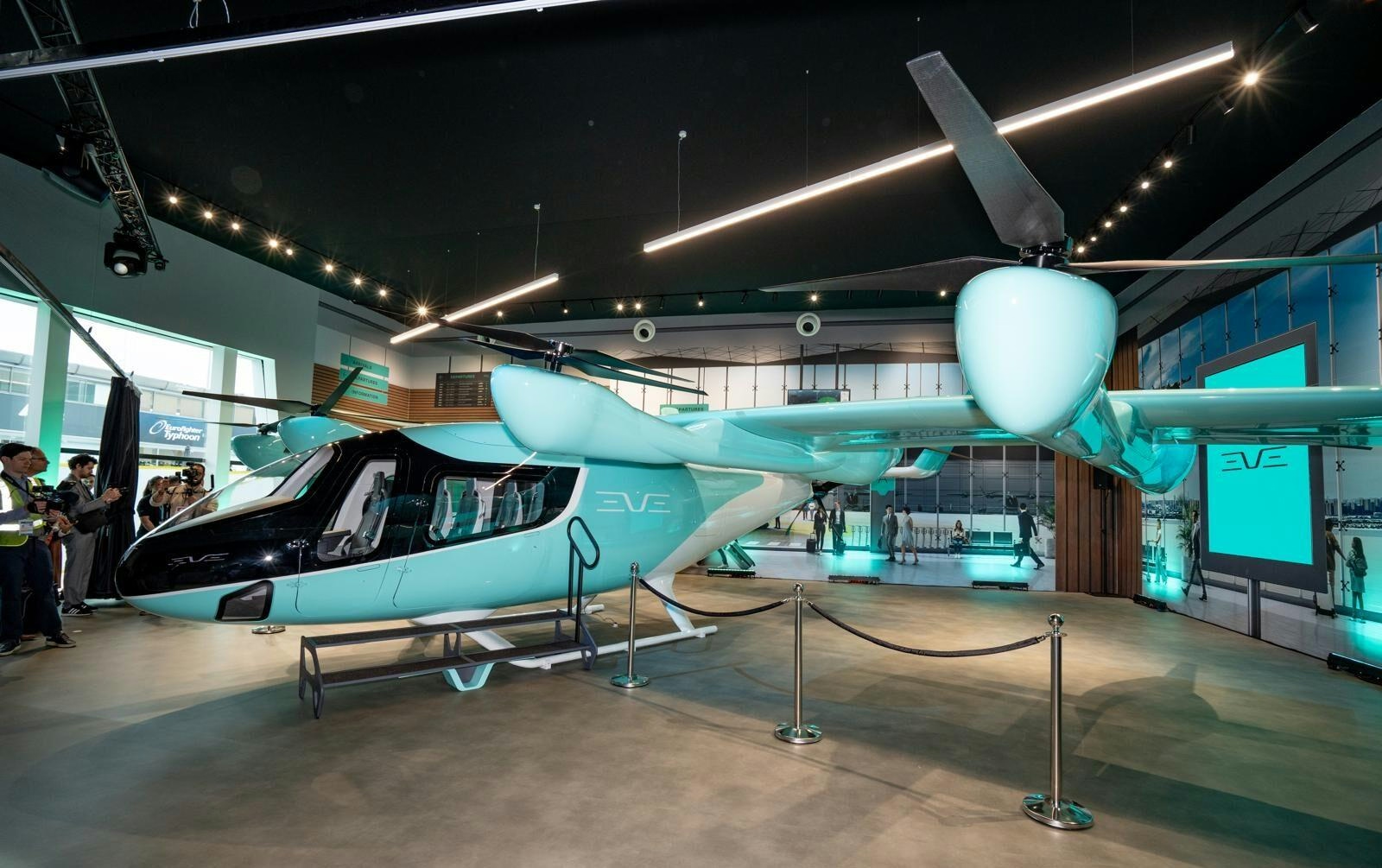
Florida Advances Electric Air Taxi Testing in Partnership with Eve Air Mobility

Preparing for the Future of Advanced Air Mobility

The Florida Department of Transportation (FDOT) has entered into a strategic partnership with Eve Air Mobility to advance the testing and integration of electric air taxis within the state. This collaboration leverages SunTrax Air, FDOT’s dedicated research and testing facility in Auburndale, Florida, to evaluate the infrastructure and operational frameworks necessary for electric vertical takeoff and landing (eVTOL) aircraft to become a functional component of Florida’s transportation network.

eVTOL aircraft, which utilize electric propulsion to take off and land vertically, are widely regarded as a transformative solution for urban mobility challenges. Despite their potential, the widespread adoption of eVTOLs faces significant obstacles, including regulatory approval, infrastructure development, and safety assurance. The U.S. Federal Aviation Administration (FAA) is currently conducting a pilot program aimed at certifying eVTOL aircraft for commercial operations. However, real-world testing and the seamless integration of these vehicles into existing transportation systems remain critical challenges.

Assessing Operational and Infrastructure Readiness

The partnership between FDOT and Eve Air Mobility will focus on a comprehensive assessment of several key factors. These include operational feasibility, infrastructure readiness, airspace navigation, passenger experience, and adherence to safety and regulatory standards. Johann Bordais, CEO of Eve Air Mobility, emphasized Florida’s strategic position in shaping the future of advanced air mobility, noting the state’s proactive efforts to build the necessary ecosystem to support this emerging technology. Eve Air Mobility, supported by the aircraft manufacturer Embraer, is not only developing eVTOL aircraft but also advancing support services and air traffic management technologies essential for the sector’s growth.

Addressing the critical infrastructure component, Eve Air Mobility has also formed a partnership with Hitachi Energy to develop electric charging and landing facilities tailored to eVTOL operations. This collaboration highlights the importance of establishing a robust support network to facilitate the widespread deployment of electric air taxis.

Industry Context and Florida’s Role

The competitive landscape for electric air taxis is intensifying, with companies such as Joby Aviation and Wisk Aero accelerating their efforts to obtain FAA certification and capture market share. The industry is also navigating complex legal disputes concerning safety standards, underscoring the high stakes involved in bringing eVTOL technology to commercial viability.

FDOT Secretary Jared Perdue underscored the significance of SunTrax as a critical asset in supporting research and testing initiatives aimed at safely integrating eVTOL aircraft into Florida’s transportation system. The announcement of this partnership at the Farnborough International Airshow in the United Kingdom signals Florida’s commitment to positioning itself at the forefront of the advanced air mobility industry.

More news
Lycoming Increases Time Between Overhauls to 2,600 Hours for Multiple Piston Engines

Lycoming Increases Time Between Overhauls to 2,600 Hours for Multiple Piston Engines

Lycoming Extends Overhaul Interval to 2,600 Hours for Multiple Piston Engines Lycoming Engines has announced a substantial increase in the recommended time between overhauls (TBO) for a broad range of its piston aircraft engines. The company has raised the base TBO for most factory-new and rebuilt fixed-wing models from 2,200 to 2,600 hours, representing a 400-hour extension. This adjustment aims to reduce operating costs and enhance aircraft availability by allowing engines to remain in service longer before undergoing major maintenance. Scope and Eligibility of the New TBO The revised 2,600-hour TBO applies to several of Lycoming’s most widely used engine families, including the O-320, IO-320, O-360, IO-360, IO-390, O-540, and IO-540 series. However, eligibility depends on the specific engine model as well as its maintenance and operational history. Operators are required to continue following Lycoming’s technical publications and comply with all Federal Aviation Administration (FAA) airworthiness standards. Jim Wright, senior vice president of Lycoming Engines, emphasized that the updated TBO schedule reflects the company’s commitment to delivering maximum value, reliability, and performance to aircraft owners, operators, and maintenance providers. He noted that the extension is grounded in decades of engineering expertise combined with the latest fleet data analysis. It is important to note that the 2,600-hour interval does not apply universally across all Lycoming engines. Certain turbocharged, high-speed, and higher-horsepower models remain excluded from this extension. Operators are advised to verify the eligibility of their specific engines through authorized Lycoming distributors to ensure compliance. Industry Context and Implications Lycoming’s decision to extend overhaul intervals comes amid increasing competition in the piston engine market and shifting operator requirements. The move is expected to undergo regulatory review and will require acceptance from both aviation authorities and the broader market. Industry analysts anticipate that competitors may respond with similar TBO adjustments or alternative measures to maintain their market positions. This change is also likely to impact operators’ strategies for spare engine availability. Recent developments, such as BeauTech’s new decade-long agreement for spare engines, highlight the critical role of long-term planning in fleet management. With engines now able to remain in service for longer periods, operators may reconsider their approaches to spare engine inventories and maintenance scheduling. Lycoming’s extension of the TBO signals a broader industry trend toward maximizing engine lifecycle value. It may also stimulate further innovation and competitive responses within the piston engine sector as manufacturers seek to balance performance, reliability, and cost-efficiency.
Flynas Adds 25 Airbus Aircraft, Total Firm Orders Reach 235

Flynas Adds 25 Airbus Aircraft, Total Firm Orders Reach 235

Flynas Expands Fleet with 25 Additional Airbus Aircraft, Total Firm Orders Reach 235 Saudi Arabian low-cost carrier Flynas has confirmed an order for 25 more Airbus aircraft, reinforcing its strategic expansion within the rapidly evolving Middle Eastern aviation sector. This latest acquisition increases Flynas’ total firm orders with Airbus to 235 aircraft, underscoring the airline’s commitment to growth aligned with Saudi Arabia’s broader objectives of tourism development and economic diversification. Composition of the New Order The agreement comprises five Airbus A330-900 widebody jets alongside 20 A321neo narrowbody aircraft. This order elevates Flynas’ total commitment to the A330neo model to 20 units, while its A321neo order book now stands at 56 aircraft. Currently, Flynas operates a fleet of 67 Airbus planes, including two A330-300s, four A320ceos, and 61 A320neos, reflecting a strong preference for Airbus products in its operational strategy. Strategic Implications and Market Dynamics Flynas’ fleet expansion occurs amid a broader surge in aircraft acquisitions by Saudi carriers, driven by the kingdom’s ambition to increase passenger traffic and enhance global connectivity. Notably, Riyadh Air recently placed an order for 34 widebody aircraft from both Airbus and Boeing, intensifying competition within the region’s aviation market. The addition of these 25 Airbus jets positions Flynas to strengthen its competitive stance against regional rivals such as Riyadh Air and Scandinavian Airlines (SAS). Nevertheless, the airline’s aggressive growth trajectory may encounter challenges, including potential supply chain constraints, escalating production costs, and heightened competition from both regional and international carriers. Industry Response and Future Outlook The significant influx of orders from Saudi airlines is expected to prompt strategic responses from major aircraft manufacturers. Airbus and Boeing are likely to increase production capacity, offer competitive pricing structures, and introduce advanced technological features to secure and expand their market shares amid rising demand. As Saudi Arabia continues to emerge as one of the fastest-growing aviation markets globally, Flynas’ expanded fleet exemplifies the kingdom’s dedication to transforming its aviation industry in support of its Vision 2030 economic reform agenda.
Embraer Expands Innovation Partnership with the UK

Embraer Expands Innovation Partnership with the UK

Embraer Expands Innovation Partnership with the UK Brazilian aerospace manufacturer Embraer has formalized an expanded collaboration with the United Kingdom through a newly signed Memorandum of Understanding (MoU) with the UK Department for Business, Innovation, Science and Trade (BIST). The agreement, announced at the Farnborough International Airshow, aims to deepen Embraer’s longstanding engagement with the UK aerospace sector by enhancing cooperation in research and development, innovation, aviation capabilities, and supply chain development. This initiative builds upon Embraer’s more than 45 years of operational presence and partnership within the UK. Strengthening Longstanding Ties Embraer’s relationship with the UK has historically encompassed the supply of both commercial and defence aircraft, alongside collaborative research and development projects with British suppliers. The company’s existing partnership with UK Export Finance (UKEF) has already contributed to a significant increase in the number of UK-based suppliers involved in Embraer’s operations, nearly doubling the volume of business conducted with these partners. The new MoU with BIST establishes a structured framework for ongoing engagement between Embraer and key UK stakeholders. Its primary objective is to identify and cultivate new opportunities in innovation, engineering, and supply chain partnerships, while supporting projects that generate economic value for both parties. Francisco Gomes Neto, president and CEO of Embraer, emphasized the strategic importance of the UK to the company’s global ambitions. He stated, “The United Kingdom is a strategic partner for Embraer, and we see significant opportunities to deepen our collaboration in innovation, technology and industrial development. We share a common vision of aviation as a driver of economic growth, technological advancement and connectivity. Building on the work we’ve been developing with the UKEF, this MoU marks an important step in further expanding our partnership and supporting sustainable growth across the global aerospace sector.” Jonathan Reynolds, the UK’s trade secretary for business, innovation and science, also welcomed the agreement, highlighting its potential to foster economic growth across the country. He remarked, “The UK needs better growth in every postcode, and for business and government to work in partnership to raise living standards. This agreement is a strong vote of confidence in the UK’s world-leading aerospace sector and builds on our longstanding partnership with Embraer. By strengthening collaboration on innovation, engineering and supply chains, we can create new opportunities, support high-skilled jobs, and drive growth in communities across the UK.” Navigating Challenges Ahead Despite the promising outlook, Embraer’s expanded partnership with the UK faces several challenges. The company must navigate complex regulatory and compliance frameworks across multiple international markets, which could affect the speed and effectiveness of joint initiatives. Market responses have been mixed, with investors closely monitoring how the partnership will influence Embraer’s competitive positioning within the global aerospace industry. Additionally, competitors may respond by accelerating their own strategic alliances or investments to safeguard market share. The ultimate success of this partnership will depend on Embraer and its UK collaborators’ ability to overcome these obstacles and deliver measurable advancements in innovation and economic growth.
New air-jet tech could make flying taxis faster and much quieter

New air-jet tech could make flying taxis faster and much quieter

New Air-Jet Technology Promises Quieter, Faster Flying Taxis A South Korean electric vehicle innovator, Saean R&D Co., Ltd, has made a significant advancement in urban air mobility by securing three pivotal patents for a next-generation air-jet propulsion system. These patents, recently granted by the Korean Intellectual Property Office (KIPO), aim to address two of the most pressing challenges facing flying taxis today: excessive noise and speed limitations associated with traditional open propeller designs. Saean’s patented technologies encompass a proprietary propulsion system, integrated air-guiding vanes, and a vortex-generating jet design. Together, these innovations create a cohesive platform that enhances structural stability, improves propulsion efficiency, and—most importantly—reduces noise levels. These factors are critical for the successful commercialization of Urban Air Mobility (UAM) solutions. Addressing Core Challenges in Urban Air Mobility As urban populations swell and road congestion intensifies, the UAM sector is poised for rapid growth. Industry forecasts, such as those from Morgan Stanley, estimate the global UAM market could reach $1.5 trillion by 2040. In this competitive landscape, Saean is strategically building a patent-protected ecosystem centered on its internal air-jet framework. The company’s foundational patent encloses the propulsion system within an acoustically shielded housing, which not only enhances high-speed cruise efficiency but also lays the groundwork for inter-city Regional Air Mobility (RAM). The second patent introduces guiding vanes designed to optimize airflow, thereby reducing energy consumption and alleviating battery strain. The third patent focuses on generating micro-vortices that prevent aerodynamic stalls during sharp maneuvers and disperse nozzle exhaust, significantly mitigating urban noise pollution. Traditional open-propeller configurations are plagued by high drag and disruptive noise, rendering them less suitable for densely populated city environments. By enclosing the propulsion system and employing advanced airflow management techniques, Saean aims to establish new industry benchmarks and accelerate the formation of commercial partnerships within the global aerospace sector. Navigating Market and Regulatory Complexities Despite these technological advancements, the widespread adoption of flying taxis faces considerable challenges. Regulatory approval, safety certification, and the development of necessary infrastructure remain formidable obstacles. The promising market potential has already attracted substantial investment from major technology and aviation companies, intensifying competition. Saean’s expanded patent portfolio is designed to create a formidable “patent wall,” complicating efforts by competitors to replicate or circumvent its core technologies. This strategic move is expected to trigger further legal and technological contests as companies vie for dominance in the emerging UAM market. Leveraging Established Expertise Unlike many startups in the field, Saean brings extensive experience in electric mobility. The company’s portfolio includes the EXOD electric sports car, midsize WiD-U SUVs, heavy-duty tipper trucks, and specialized battery packs. Drawing on its expertise in heavy electric vehicle transport and battery thermal management, Saean is now focused on developing a foundational platform for quiet, high-speed regional air transit. As the UAM industry shifts from experimental flight testing toward real-world commercialization, regulatory frontrunners such as Joby Aviation and Archer Aviation are making significant progress in Western markets. Saean’s latest patents position the company as a formidable contender in the global race to redefine urban and regional air travel.
Fuji Dream Airlines Expands Embraer Fleet in Japan

Fuji Dream Airlines Expands Embraer Fleet in Japan

Fuji Dream Airlines Expands Embraer Fleet Amid Rising Competition in Japan Embraer has confirmed that Fuji Dream Airlines (FDA) has placed a firm order for two additional E175 aircraft, reinforcing its position in Japan’s regional aviation market. These new jets, configured in a single-class layout accommodating 84 seats, are slated for delivery in 2027 and 2028 and are already included in Embraer’s current order backlog. Strengthening Regional Connectivity Since its inception in 2009, Fuji Dream Airlines has established itself as a significant player in Japan’s regional aviation sector, currently operating a fleet of 15 Embraer jets, comprising two E170s and thirteen E175s. The airline is noted for its exceptional operational performance, maintaining a 12-month average schedule reliability exceeding 99.8 percent. This high standard reflects FDA’s commitment to aircraft quality and rigorous maintenance practices. Shunsuke Honda, President of Fuji Dream Airlines, emphasized the strategic importance of the new aircraft, stating that their introduction will enhance the airline’s capacity and further strengthen its network connecting communities across Japan. He also highlighted the order as an opportunity to deepen the longstanding partnership with Embraer. Embraer’s Role in Japan’s Regional Aviation The E175 model is widely recognized for its reliability and efficiency on high-frequency, short-haul routes, making it a preferred choice among regional carriers such as FDA. Arjan Meijer, President and CEO of Embraer Commercial Aviation, praised Fuji Dream Airlines for its outstanding operations and dedication to excellence, noting the airline’s significant contribution to Japan’s regional aviation sector. He reaffirmed Embraer’s commitment to supporting FDA’s growth by delivering exceptional value. FDA’s fleet expansion occurs amid intensifying competition among regional airlines in Japan. As other carriers seek to grow their fleets and enhance service offerings, the market is expected to experience shifts that could benefit passengers through increased options and potentially lower fares. This competitive environment underscores the critical importance of fleet modernization and network expansion for airlines aiming to maintain or improve their market positions. Broader Market Implications and Embraer’s Strategic Moves The timing of FDA’s order aligns with Embraer’s robust delivery schedule, particularly following a strong second quarter in 2026, which is anticipated to further solidify the manufacturer’s standing in the regional aviation market. Embraer’s continued success in securing orders from established carriers like FDA highlights its competitive edge and influence within the sector. In a related development, Embraer and Azorra have entered into an agreement for up to 30 E-Jet freighter conversions, including 20 firm orders and 10 purchase rights. This initiative follows the successful introduction of the E190F freighter and responds to growing global demand for efficient, right-sized cargo aircraft. John Evans, CEO of Azorra, remarked that the E-Freighter presents a compelling alternative to older 737 freighters, offering reliable performance alongside lower operating costs and compliance with noise regulations. As Fuji Dream Airlines and its competitors continue to expand and modernize their fleets, the regional aviation landscape in Japan is set for further transformation, with Embraer playing a pivotal role in shaping the future of the market.
FL Technics’ SVP of Sales for Base Rises from Aviation Mechanic to Leading Multimillion-Dollar Deals

FL Technics’ SVP of Sales for Base Rises from Aviation Mechanic to Leading Multimillion-Dollar Deals

FL Technics’ SVP of Sales for Base Rises from Aviation Mechanic to Leading Multimillion-Dollar Deals From Hangar Floor to Executive Leadership Vilius Grigas’s career progression within FL Technics exemplifies a remarkable ascent in the aviation maintenance industry. Beginning less than ten years ago as an entry-level aircraft mechanic, Grigas now holds the position of Senior Vice President of Base Maintenance Sales for EMEA and the Americas. At just 32 years old, he is responsible for negotiating and securing service contracts that exceed $65 million annually with major aviation clients worldwide. His journey reflects not only personal ambition but also the evolving demands and opportunities within the global maintenance, repair, and overhaul (MRO) sector. Strategic Growth Amid Industry Transformation FL Technics Group, a prominent independent MRO service provider, is experiencing significant expansion driven by increasing global demand for maintenance of popular aircraft models such as the Airbus A320 and Boeing 737. The company is actively scaling its maintenance capacity and establishing new teams across Europe, Asia, and the Americas to meet this demand. This growth occurs within a rapidly changing market environment where operational excellence must be complemented by strategic agility and technological innovation to maintain a competitive advantage. Grigas’s technical expertise, developed through hands-on experience in aircraft maintenance, remains central to his approach in sales leadership. His ability to communicate effectively with both technical teams and clients fosters trust and clarity during complex negotiations. He emphasizes the importance of understanding engineering concerns, stating, “The technical background always helps to bridge the communication between the service provider and the client. When speaking with engineers, I know the right questions to ask, and I can understand their worries.” This insight was instrumental in securing a base maintenance agreement with JetBlue, one of North America’s largest low-cost carriers, a deal finalized even before FL Technics officially launched its U.S. operations. Navigating Global Negotiations and Market Challenges Operating across diverse international markets, Grigas encounters a wide range of negotiation styles and cultural practices. He adapts to varying environments, whether enduring lengthy meetings or adjusting to uncomfortable room temperatures, viewing these challenges as opportunities to build rapport. “Everyone has their own habits and strategies, so it’s important to understand what matters to them, and to stay patient. Over time, you pick up how to adjust on the spot so you can build trust no matter where you are,” he explains. Despite the company’s growth, FL Technics faces significant challenges as it scales. The MRO industry is under mounting pressure to comply with evolving regulatory requirements and to integrate advanced digital platforms such as the Sensus MRO system, which aims to streamline operations and improve service delivery. These developments have heightened scrutiny from investors and stakeholders regarding the company’s financial discipline and strategic direction. Concurrently, competitors are accelerating their efforts to enhance digital capabilities and expand market presence, intensifying the competitive landscape. Grigas’s combination of technical knowledge, adaptability, and strategic foresight positions FL Technics to navigate these challenges effectively. Each new contract secured under his leadership not only represents a commercial success but also underscores the company’s dedication to meeting the changing needs of global aviation operators.
Boeing Plans to Increase 777X Range

Boeing Plans to Increase 777X Range

Boeing Plans to Extend 777X Range Amid Technical and Market Challenges Boeing has announced plans to increase the range of its 777X aircraft family, with the 777-9 model now listed on the company’s website as capable of flying up to 8,000 nautical miles. This development reflects Boeing’s ongoing efforts to enhance the aircraft’s performance through a combination of technical improvements, including potential increases to the maximum take-off weight (MTOW) and additional thrust from the GE Aerospace GE9X engines. Technical Enhancements and Collaboration with GE Aerospace Speaking in London ahead of the Farnborough Airshow, Boeing Commercial Airplanes CEO Stephanie Pope emphasized the company’s commitment to extending the 777X’s capabilities. She highlighted close collaboration with GE Aerospace to explore multiple technological avenues, including possible MTOW adjustments and increased engine thrust. While specific details remain limited, the GE9X engines currently certified for 105,000 pounds of thrust are reportedly capable of delivering up to 134,300 pounds, indicating room for further performance upgrades. The current range figures listed by Boeing include up to 8,000 nautical miles for the 777-9, 5,000 nautical miles for the 777-8 Freighter, and 9,500 nautical miles for the 777-8 passenger variant. These figures underscore Boeing’s ambition to position the 777X as a leader in long-haul twinjet performance. Program Challenges and Market Response The 777X program has encountered a series of technical challenges during flight testing, including unexpected aerodynamic behaviors, systems integration difficulties, and structural concerns. These issues have contributed to delays, pushing the 777-9’s entry into service to 2026. Some airline customers have expressed frustration over the shifting timeline, citing concerns about the impact on their fleet planning and operational strategies. Despite these setbacks, Boeing remains focused on certification efforts, targeting first deliveries of the 777-9 next year. The company plans to certify the 777-8 Freighter approximately two years later, followed by the passenger-configured 777-8. Market reactions to Boeing’s range extension plans have been mixed. While some airlines welcome the prospect of enhanced capabilities, others remain cautious due to the program’s history of delays and technical hurdles. Competitors, notably Airbus with its A350-1000, are closely monitoring Boeing’s progress as the company seeks to maintain a competitive edge in the long-haul aircraft market. As Boeing continues to address technical challenges and pursue range improvements, the industry will be watching closely to see how these efforts influence the 777X’s market position in the coming months.
Boeing Gains Widebody Orders as Philippine Airlines Returns to Airbus

Boeing Gains Widebody Orders as Philippine Airlines Returns to Airbus

Boeing Gains Widebody Orders as Philippine Airlines Returns to Airbus The second day of the Farnborough International Air Show shifted attention from the narrowbody aircraft deals that dominated the opening day to widebody aircraft orders, cargo expansion, and Embraer’s increasing influence in Latin America. Key announcements from AerCap, MSC Air Cargo, and Philippine Airlines, though smaller in scale compared to Monday’s landmark 200-aircraft order by SMBC Aviation Capital, carried significant implications for the manufacturers involved. Philippine Airlines’ Dual Commitment to Boeing and Airbus A major development was Philippine Airlines’ decision to order 15 Boeing 787-10 Dreamliners, with options for an additional five aircraft. This move marks a significant return to Boeing’s widebody portfolio for the carrier. At the same time, Philippine Airlines expanded its existing order for Airbus A350-1000s, signaling a strategic effort to diversify its long-haul fleet. This dual procurement approach presents both challenges and opportunities for Boeing and Airbus as they seek to accommodate the airline’s evolving requirements. For Boeing, the Philippine Airlines order provides a timely boost amid ongoing production challenges, including the well-documented difficulties with early 777-9 models, often referred to as the “Terrible Teens.” The new order may help alleviate some production bottlenecks and strengthen Boeing’s competitive stance against Airbus in the widebody market. The announcement was met with a positive market response, with Boeing’s stock experiencing a temporary rise. Airbus, despite facing a slight reduction in anticipated widebody orders due to the split with Boeing, maintains a strong partnership with Philippine Airlines through the A350-1000 program. The airline’s continued investment in Airbus aircraft ensures the European manufacturer remains a key player in its future fleet strategy. Market reaction to Airbus was more muted, reflecting the mixed nature of the order. Broader Industry Implications Industry analysts suggest that these developments could intensify competition between Boeing and Airbus, potentially leading to more aggressive marketing strategies and pricing adjustments as both manufacturers vie for market share in the widebody segment. Additionally, the day’s announcements highlighted growth in the cargo sector and Embraer’s expanding footprint in Latin America, underscored by new orders from AerCap and MSC Air Cargo. While the volume of orders was less dramatic than the previous day, these shifts signal important trends shaping the global aviation industry.
Joby Stock Rises for Third Day Following Exclusive Air Taxi Deal with Virgin Atlantic

Joby Stock Rises for Third Day Following Exclusive Air Taxi Deal with Virgin Atlantic

Joby Stock Rises for Third Day Following Exclusive Air Taxi Deal with Virgin Atlantic Joby Aviation Inc. (NYSE: JOBY) shares continued their upward trajectory for a third consecutive day on Wednesday, buoyed by the announcement of a definitive multi-year agreement with Virgin Atlantic to launch electric air taxi services in the United Kingdom. This binding contract formalizes a partnership initially disclosed in 2025, designating Virgin Atlantic as Joby’s exclusive airline collaborator for air taxi operations within the region. Details of the Partnership and Service Integration Under the terms of the agreement, Virgin Atlantic will incorporate Joby’s electric air taxi service into its digital platforms, including its website and mobile application, allowing travelers to seamlessly book airport transfers alongside their long-haul flights. The service is set to commence operations from Virgin Atlantic’s primary hubs at London Heathrow and Manchester airports, with plans for gradual expansion across the UK. Initial routes are anticipated to include an eight-minute journey between Heathrow and Central London, as well as a 15-minute flight connecting Manchester Airport to Leeds—significantly reducing current travel times that exceed one hour by car. Joby will retain responsibility for aircraft operations, route management, and obtaining the necessary regulatory approvals from the UK Civil Aviation Authority. Virgin Atlantic’s role will focus on customer acquisition and the integration of the service within airport infrastructure. Joby’s all-electric aircraft, equipped with six tilting propellers enabling vertical takeoff and landing, is engineered to operate with substantially lower noise levels compared to traditional helicopters. The aircraft is designed to serve routes up to 100 miles once commercial operations commence. Competitive and Operational Challenges The partnership emerges amid a rapidly evolving and competitive landscape in urban air mobility. Competitors such as Archer Aviation are also advancing electric air taxi technologies and are currently engaged in legal disputes with Joby, underscoring the intensifying race to commercialize this emerging mode of transportation. Regulatory approval remains a critical hurdle, as Joby must secure clearance from UK authorities before initiating passenger services. Operational integration represents another significant focus area. Virgin Atlantic, which holds a 49% ownership stake by Delta Air Lines, will be instrumental in embedding Joby’s service into its customer experience and airport operations. Concurrently, Joby’s recent manufacturing alliance with Toyota Motor Corporation aims to address production and supply chain challenges. This joint venture combines Joby’s expertise in electric vertical takeoff and landing (eVTOL) technology with Toyota’s manufacturing prowess to scale aircraft production efficiently and cost-effectively. Market Response and Investor Sentiment Despite the complexities ahead, investor sentiment has remained optimistic. Joby’s shares rose by more than 5% in Wednesday’s pre-market trading and were among the most actively discussed stocks on social media platform Stocktwits. The market enthusiasm reflects confidence in the potential for Joby and Virgin Atlantic to establish a leading air taxi network in the UK, even as the company navigates regulatory, competitive, and operational challenges.
Hexagon Unveils Rapid Reverse-Engineering System for Aircraft Cabin Maintenance

Hexagon Unveils Rapid Reverse-Engineering System for Aircraft Cabin Maintenance

Hexagon Unveils Rapid Reverse-Engineering System for Aircraft Cabin Maintenance Hexagon, a prominent provider of measurement technologies, has launched an innovative rapid reverse-engineering workflow designed to enhance aircraft cabin maintenance, repair, and overhaul (MRO) operations. This new system addresses a persistent challenge in refurbishing aging aircraft interiors: the replacement of parts that lack existing CAD data. Components such as seat shrouds, armrests, tray tables, and galley hardware often suffer from cracking, delamination, or obsolescence, complicating their reproduction and replacement. Advancing On-Demand Manufacturing for Aircraft Interiors On-demand manufacturing has become increasingly popular for reproducing hard-to-source aircraft parts. However, the absence of accurate CAD data has traditionally impeded this process, as reliance on manual measurements or outdated drawings frequently results in errors and costly rework. While scan-based reverse engineering offers a potential solution, it typically demands specialist expertise and involves time-consuming manual redrawing of 3D models from incomplete scan data. The use of non-specialist CAD software can further exacerbate delays. Hexagon’s new system, developed by its Portable Metrology Division, centers on the Geomagic Design X software platform. This solution integrates direct control of handheld 3D scanners with automated features such as Region Segmentation, Modelling Wizards, Auto Sketch, and NURBS surfacing. According to Hexagon, the system can transform even complex, freeform shapes into fully editable, parametric CAD models with complete design history, achieving reconstruction speeds three to eight times faster than traditional scan-based methods. Aziz Tahiri, Hexagon’s global director for aerospace and defense, highlighted the growing importance of reverse engineering in interior refurbishment. He noted increasing interest from defense customers in mobile units that combine scanning arms, reverse engineering software, and 3D printers within a single container, enabling damaged parts to be scanned, rebuilt, and repaired on site. Tahiri emphasized that with Geomagic Design X and accessible handheld 3D scanning equipment, reverse engineering directly into CAD can be accomplished within hours, offering a highly productive workflow readily adoptable by engineers and manufacturing teams. User-Friendly Technology Designed for Field Conditions Hexagon stresses that the system requires no specialist training for MRO technicians or manufacturing engineers. The rugged and portable Atlascan Pro scanner allows users to capture small parts from any angle, even under unstable hangar or field conditions. The software’s integrated Accuracy Analyzer continuously verifies constructed surfaces against scan data throughout the process, minimizing the risk of rework and fit issues. Completed models can be seamlessly exported to major CAD platforms such as Solidworks, Siemens NX, Autodesk Inventor, or PTC Creo, facilitating the production of replacement parts through machining or 3D printing with minimal trial and error. Despite its potential, Hexagon’s rapid reverse-engineering system faces several challenges. Integrating the new workflow into established aircraft maintenance procedures may require operational adjustments, and maintaining consistent accuracy and reliability will be essential for broad industry adoption. Some traditional maintenance providers may exhibit reluctance toward adopting new technologies, and market responses could include skepticism regarding the system’s effectiveness and cost-efficiency. Furthermore, competitors are expected to respond by developing or enhancing their own reverse-engineering solutions to preserve market share. As the aviation sector continues to pursue faster and more reliable maintenance methodologies, Hexagon’s system represents a notable advancement. Its ultimate impact will depend on how successfully it navigates integration challenges, ensures dependable performance, and gains acceptance within the industry.
line