
将人工智能洞察转化为可执行行动

热门趋势
Categories
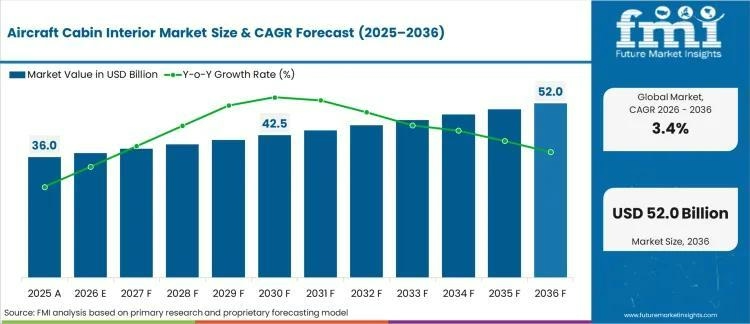
Global Aircraft Cabin Interior Market Projected to Reach $52.1 Billion by 2036
Global Aircraft Cabin Interior Market Projected to Reach $52.1 Billion by 2036
The global aircraft cabin interior market is set to experience steady growth, with its value expected to rise from $37.2 billion in 2026 to $52.1 billion by 2036. This projection, outlined in the latest analysis by Future Market Insights (FMI), corresponds to a compound annual growth rate (CAGR) of 3.4% over the forecast period. The market’s resilience is evident amid shifting industry dynamics and evolving passenger expectations.
Drivers of Market Growth: Value-Centric Upgrades and Retrofit Cycles
Airlines are increasingly prioritizing targeted retrofit programs over wholesale fleet replacements, focusing on enhancing passenger experience and maximizing yield. Investments are concentrated on advanced seating configurations, in-flight entertainment and connectivity (IFEC) systems, and optimized seating density, particularly on long-haul and high-yield routes. This strategic shift reflects a broader industry trend toward value-driven cabin enhancements.
The acceleration of retrofit cycles for both widebody and narrowbody aircraft underscores airlines’ commitment to meeting rising passenger demands. Features such as premium economy cabins, business class suites, and lie-flat seating are gaining prominence, driving higher per-aircraft interior expenditures even as overall seat counts stabilize or decline. Additionally, regulatory compliance remains a critical factor, with stringent safety and flammability standards compelling airlines to upgrade aging cabin components. This regulatory environment ensures a steady demand for next-generation materials and systems, irrespective of broader economic conditions.
Competitive Landscape: Balancing Standardization and Customization
The aircraft cabin interior market is characterized by a growing tension between standardized products and highly customized solutions. Standardized components, such as commoditized floor panels for narrowbody fleets, compete alongside bespoke offerings tailored for widebody and VIP aircraft. This bifurcation intensifies competitive pressures as suppliers strive to balance cost efficiency with the need for differentiation.
Airlines and maintenance, repair, and overhaul (MRO) providers are navigating these dynamics by carefully weighing cost considerations against brand-driven customization. In response, industry players are pursuing strategic acquisitions to bolster their engineering and production capabilities. A notable example is Setna iO’s acquisition of J&C Aero, which enhances the company’s capacity to serve both standardized and bespoke market segments effectively.
Strategic Partnerships and Localization Efforts
Long-term strategic partnerships between cabin interior suppliers and global airlines are increasingly shaping the industry landscape. These collaborations extend beyond traditional supply agreements to encompass manufacturing, assembly, and lifecycle support. A prominent illustration is the 2025 memorandum of understanding between Safran and Emirates, which will establish a dedicated seat manufacturing and assembly facility in Dubai. This initiative highlights the growing emphasis on localized production and integrated supply chains.
Such partnerships are essential as suppliers contend with complex certification requirements, extended production lead times, and airline procurement strategies that prioritize reliability and lifecycle cost optimization. The trend toward localization and deeper collaboration is expected to continue influencing market dynamics in the coming years.
Dominance of the Seats Segment
Aircraft seating remains the largest product category within the cabin interior market, accounting for approximately 40% of total market value. Seats play a pivotal role in passenger comfort and airline revenue optimization, prompting manufacturers to invest heavily in lightweight materials, modular designs, and streamlined certification processes. Recent expansions in production capacity and technological innovation reflect the sector’s commitment to addressing evolving airline requirements and sustaining long-term market value.
The trajectory of the global aircraft cabin interior market is shaped by a combination of regulatory imperatives, competitive innovation, and strategic adaptation, positioning it for sustained growth through 2036.

Etihad Airways Suspends Airbus A380 Flights on Key Route

Aditya Birla Group Seeks Approval for Aircraft Leasing in GIFT City

Qatar Airways Highlights Innovation and Connectivity at Arabian Travel Market 2026

Hong Kong's Five-Year Plan Includes Andrew Fan's Aircraft Parts Processing Hub Proposal

ACIA Aero Leasing Delivers ATR72-600 to Air Nostrum

RTX Appoints Jill Albertelli as Head of Pratt & Whitney

TAT Technologies Joins Beyond Aero Hydrogen Aircraft Program

AURAK Study Highlights Barriers to Air Taxi Adoption in Emerging Economies

Xiamen Air Selects Altitude for 787 Maintenance at Heathrow

Etihad and Swissport Extend Global Partnership
