
图像

AeroGenie — 您的智能副驾驶。

问任何问题。分析一切。立即行动。

热门趋势

Categories

Haveus Aerotech Expands Aviation MRO Services in India
March 10, 2026By ePlane AI
Haveus Aerotech Expands Aviation MRO Services in India
0
0
Haveus Aerotech
Aviation MRO India
DGCA Approval

Haveus Aerotech Expands Aviation MRO Services in India Amid Intensifying Competition

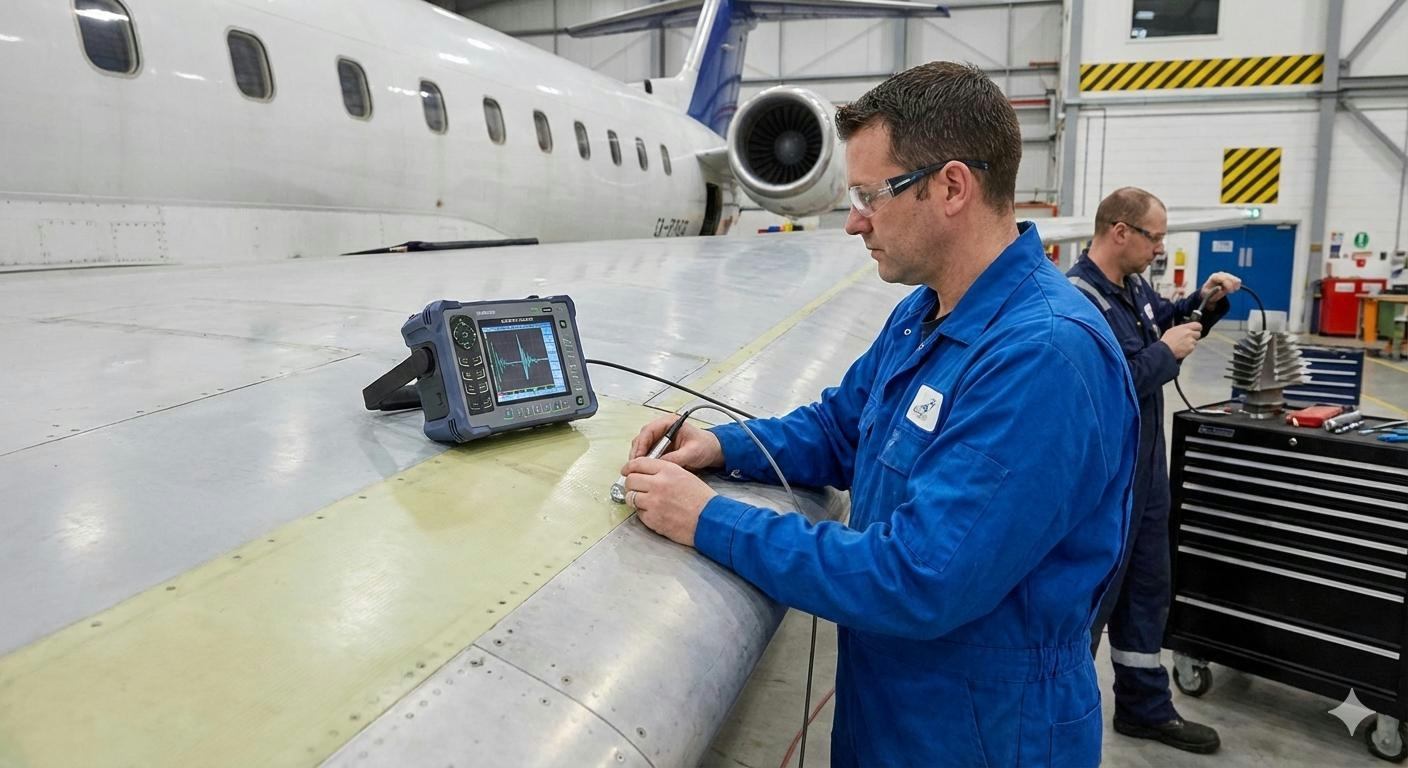
Haveus Aerotech, a Gurugram-based aviation maintenance, repair, and overhaul (MRO) provider, has announced the expansion of its service capabilities at its Bengaluru and Delhi facilities following approval from the Directorate General of Civil Aviation (DGCA). The Bengaluru site has received authorization to handle specialized galley, avionics, and life-saving equipment, becoming the first service station in South India certified by Safran Cabin Germany. Concurrently, the Delhi facility has become the first MRO in India to obtain DGCA approval for servicing environmental and temperature-controlled cargo containers.

Strategic Growth in a Competitive Market

This expansion occurs amid a period of rapid growth and intensifying competition within the Indian aviation MRO sector. Established companies such as West Star Aviation have recently bolstered their market positions, exemplified by West Star’s acquisition of DCJet, which has enhanced its field maintenance capabilities. These developments reflect a broader industry trend toward consolidation, with firms pursuing strategic partnerships and acquisitions to secure or expand their market share.

As Haveus Aerotech extends its operational footprint, it confronts competition from both domestic and international MRO providers, alongside increased regulatory scrutiny to ensure adherence to stringent safety and operational standards. The company’s newly acquired certifications position it to capitalize on the rising demand for advanced MRO services across Asia, where the engine MRO market alone is projected to reach $30 billion by 2035. Nevertheless, this growth trajectory also presents challenges, as competitors may respond with further consolidation or innovation to maintain their competitive advantage.

Haveus Aerotech’s recent approvals represent a significant milestone in its efforts to strengthen its presence within India’s evolving aviation maintenance landscape, a sector that continues to attract substantial investment and regulatory focus.

More news
Pika Aero and DGM France Receive CBTA Innovation Award

Pika Aero and DGM France Receive CBTA Innovation Award

Pika Aero and DGM France Receive CBTA Innovation Award for AI-Driven Training Solutions Pika Aero and DGM France have been honored with the prestigious IATA CBTA Center Best Innovation Award, recognizing their groundbreaking use of artificial intelligence (AI) to advance competency-based training and assessment (CBTA) in the aviation sector. The award was presented during the 4th IATA CBTA Center Conference, held in conjunction with the 2026 IATA World Cargo Symposium (WCS). Advancing Aviation Training Through Artificial Intelligence Pika Aero was recognized for its immersive, AI-powered dangerous goods training platform, which delivers concise, targeted lessons and dynamic operational scenarios that adapt in real time to the learner’s performance. This approach enhances engagement and ensures that training is tailored to individual needs. Similarly, DGM France’s solution employs AI to personalize training content based on each learner’s prior knowledge and experience. Their system validates progress post-training and provides structured feedback to address any remaining competency gaps. Frederic Leger, IATA’s Senior Vice President of Products and Services, emphasized the significance of these innovations: “As Pika Aero and DGM France have demonstrated, AI has become a vital enabler in providing realistic training environments that strengthen safety and enhance compliance. We are proud to count both companies among IATA’s network of CBTA Centers and encourage others to follow their example in raising training standards across the industry.” Baptiste Sesmat, Director General of Pika Aero, expressed gratitude for the accolade, noting the company’s commitment to excellence despite being a newly accredited CBTA Center. “We owe it to our customers, who place their trust in us not only to provide the highest standards of training but also to push us to raise the bar in building a truly immersive training experience,” he said. Vytautas Volskis, President of DGM France, described their innovative approach to dangerous goods training as a system-engineering challenge. He explained that rather than adopting traditional course models, their AI-supported CBTA framework designs, measures, and continuously refines competence within a regulated governance structure. “Our model ensures that safety performance is not assumed but demonstrated,” Volskis stated. Industry Impact and Future Challenges The IATA CBTA Center Best Innovation Awards, established in 2023, aim to promote the development of training solutions that enhance operational efficiency, safety, and sustainability in aviation. The 2026 selection process involved an independent jury comprising industry experts, IATA representatives, and external validators who evaluated submissions based on innovation, industry impact, sustainability, user-friendliness, feasibility, and proven effectiveness. Despite their success, both Pika Aero and DGM France face considerable challenges as they integrate advanced AI technologies into existing aviation systems. Navigating complex regulatory frameworks and competing with established aerospace entities will require continuous adaptation. Their achievements are expected to attract increased investor interest and may prompt competitors to accelerate innovation efforts, potentially through the development of similar AI-driven training technologies or strategic partnerships. As the aviation industry evolves, the recognition of Pika Aero and DGM France highlights the growing importance of AI-driven training solutions in enhancing global safety and compliance standards.
Tata Advanced Systems Chooses Ramco Systems for Aviation Software

Tata Advanced Systems Chooses Ramco Systems for Aviation Software

Tata Advanced Systems Selects Ramco Systems for Defence Aviation Software Tata Advanced Systems Limited (TASL) has appointed Ramco Systems to provide specialized aviation software for a defence maintenance facility dedicated to supporting the Indian Air Force’s Lockheed Martin C130J aircraft. This collaboration represents a strategic effort to enhance India’s defence aviation maintenance capabilities through the integration of advanced digital technologies. Strategic Partnership and Implementation The partnership focuses on deploying Ramco’s tailored software solutions designed specifically for military aircraft maintenance. The system will be installed at a facility responsible for servicing the C130J, a critical asset within the Indian Air Force’s transport fleet. By incorporating these advanced digital tools, Tata Advanced Systems aims to improve operational efficiency and maintain the readiness of essential military equipment. The software provider, Ramco Systems, will work closely with Tata Advanced Systems to ensure the solution meets the rigorous demands of defence maintenance. The end user, the Indian Air Force, stands to benefit from enhanced maintenance processes that support mission-critical operations. Challenges in Integration and Compliance Despite the promising outlook, Tata Advanced Systems faces several challenges in integrating Ramco’s aviation software into existing infrastructure. Ensuring compatibility with legacy systems is a complex task that requires meticulous planning and execution to avoid disruptions. Furthermore, the software must adhere to stringent international aviation standards, which are particularly rigorous in defence applications. The transition also involves overcoming resistance from established legacy systems and necessitates comprehensive training programs for personnel to effectively utilize the new technology. These factors underscore the complexity of modernizing defence maintenance operations while maintaining uninterrupted service. Industry Impact and Market Dynamics This development reflects a wider industry trend toward software-driven maintenance solutions becoming central to defence aviation operations. The performance and reliability of Ramco’s platform will be closely monitored by stakeholders, given the critical nature of military aviation. The partnership may also influence competitors to accelerate their digital transformation initiatives, especially as European helicopter manufacturers intensify their efforts to expand within the growing Indian rotorcraft market. This competitive environment is likely to foster further innovation and the formation of new alliances within the defence aviation sector. Strengthening Indigenous Defence Capabilities The adoption of advanced maintenance software aligns with India’s broader strategy to bolster indigenous defence infrastructure and ensure the operational readiness of its armed forces. Through this collaboration, Tata Advanced Systems and Ramco Systems contribute to the modernization of military aviation support, reinforcing the Indian Air Force’s ability to maintain a mission-ready and efficient fleet. This initiative highlights the increasing importance of software in defence maintenance and signals a shift toward more integrated, technology-driven support systems within India’s military aviation landscape.
Why New Airbus Aircraft Are Moved Between Sites Before Delivery

Why New Airbus Aircraft Are Moved Between Sites Before Delivery

The Complex Journey of New Airbus Aircraft Before Delivery When airlines receive brand-new Airbus aircraft, it is common for these planes to traverse thousands of miles between multiple sites prior to entering commercial service. These pre-delivery movements, occurring before the aircraft’s inaugural revenue flight, are an integral part of Airbus’s delivery process. They are meticulously coordinated to accommodate a range of essential activities, including inspections, legal formalities, customization, and service preparations. Given Airbus’s extensive global production network, this process is notably intricate and presents considerable logistical challenges. A Global Manufacturing Network Airbus operates over 20 major manufacturing facilities worldwide, each specializing in distinct components or systems. For instance, the wings of the Airbus A350 are manufactured in Broughton, United Kingdom, while fuselage sections are produced in Saint-Nazaire, Nantes, and Hamburg. These components are subsequently transported to final assembly lines located in Toulouse, Hamburg, Mobile, and Tianjin. Widebody aircraft such as the A350 are primarily assembled in Toulouse, whereas narrowbody models like the A320neo family are assembled across multiple sites, including Mobile, Alabama, and Tianjin, China. The A220 model is mainly assembled in Mirabel, Canada, and Mobile. Transporting these large and complex components between facilities demands a highly sophisticated logistics operation. Airbus utilizes its fleet of BelugaXL cargo aircraft, specifically designed to carry oversized parts such as wings and fuselage sections across Europe. This logistical framework supports Airbus’s distributed manufacturing model while maintaining efficient assembly operations. Nevertheless, the complexity inherent in moving aircraft and components between multiple sites can introduce logistical hurdles and potential delays, which may affect production schedules. Assembly, Testing, and Delivery Challenges Upon arrival at the final assembly line, engineers dedicate several weeks to assembling the aircraft, installing major systems, avionics, cabin interiors, and landing gear. Even after assembly is complete, the aircraft undergoes rigorous testing and inspections before formal handover to the airline customer. This pre-delivery process ensures compliance with all regulatory and customer requirements but also adds layers of time and complexity to the delivery timeline. The logistical intricacies involved in this multi-site movement have broader implications for Airbus and the wider aviation market. Delays or disruptions in transporting aircraft between sites can raise concerns about supply chain reliability and increase costs for airlines awaiting new deliveries. Market analysts have observed that such challenges may be contributing to Airbus’s delivery forecast for 2026, which stands at 870 aircraft—slightly below market expectations. Meanwhile, competitors such as Boeing are intensifying efforts to narrow the delivery gap, with Boeing’s January 2026 delivery figures reportedly surpassing those of Airbus. This competitive environment highlights the critical importance of efficient logistics and supply chain management within the global aircraft manufacturing industry. The movement of new Airbus aircraft between multiple sites before delivery thus reflects the company’s global production strategy. While this approach enables Airbus to leverage specialized expertise across different countries, it also introduces logistical complexities that can influence delivery schedules and market dynamics.
Rotortrade MRO Latrobe Appointed as Garmin Dealer

Rotortrade MRO Latrobe Appointed as Garmin Dealer

Rotortrade MRO Latrobe Appointed as Official Garmin Dealer Rotortrade has announced that its Latrobe-based maintenance, repair, and overhaul (MRO) facility has been appointed as an official Garmin dealer, a development that significantly enhances its certified avionics installation and integration capabilities across the United States. This new partnership authorizes Rotortrade MRO Latrobe to provide certified installation, integration, and technical support for Garmin’s comprehensive range of avionics products. These offerings include cockpit modernizations, glass cockpit upgrades, navigation and communication systems, and integrated flight deck solutions designed for various helicopter platforms. Operating under FAA Part 145 approval, Rotortrade MRO Latrobe delivers OEM-supported installations in full compliance with regulatory standards. The dealership status is expected to streamline procurement processes, reduce lead times, and offer a structured upgrade pathway for operators aiming to improve safety, operational efficiency, and aircraft value retention. Customers will benefit from a consolidated point of contact for avionics acquisition, integration, and post-installation support, thereby simplifying the upgrade process and minimizing aircraft downtime. Dan Mansfield, General Manager of Rotortrade MRO Latrobe, emphasized the significance of the appointment, stating, “Becoming an official Garmin dealership significantly enhances our technical offering. Garmin’s avionics solutions are widely recognized for reliability and innovation in cockpit modernization. With certified in-house integration capability, we can provide operators with a seamless upgrade process, from specification to installation and ongoing support, under one roof.” Industry Context and Market Challenges Rotortrade’s appointment as a Garmin dealer arrives amid a period of heightened complexity within the MRO sector. The industry continues to face persistent challenges related to new engines from major manufacturers such as Pratt & Whitney and Safran. These engine-related issues have contributed to production delays and increased regulatory scrutiny, particularly as the Federal Aviation Administration intensifies oversight of Boeing’s quality control processes. Such market headwinds may affect the pace and scope of avionics upgrades across the aviation aftermarket. Competitors are likely to respond by leveraging their established relationships with alternative avionics suppliers or by enhancing their own service offerings to maintain market share. Market reactions to Rotortrade’s expanded capabilities are expected to be mixed; while some stakeholders may view the move as a strategic enhancement of the company’s service portfolio, others may remain cautious given the ongoing uncertainties in the sector. Despite these challenges, Rotortrade MRO Latrobe’s new status as a Garmin dealer positions the company as a trusted U.S.-based center for advanced avionics installation and retrofit. This development supports both immediate operational improvements and long-term fleet modernization strategies for helicopter operators navigating a rapidly evolving industry landscape.
Reliable Robotics and Albuquerque Aviation Department Collaborate on FAA Advanced Air Mobility Safety Program

Reliable Robotics and Albuquerque Aviation Department Collaborate on FAA Advanced Air Mobility Safety Program

Reliable Robotics and Albuquerque Aviation Department Collaborate on FAA Advanced Air Mobility Safety Program Advancing Autonomous Regional Air Cargo Operations Reliable Robotics, a pioneer in autonomous aircraft systems, has joined forces with the City of Albuquerque Aviation Department to participate in the Federal Aviation Administration’s (FAA) Advanced Air Mobility Integration Pilot Program (eIPP). This initiative seeks to introduce cutting-edge safety technologies into regional air cargo operations, focusing on connecting Albuquerque with other communities in the Four Corners region through autonomous commercial cargo aircraft. The eIPP represents a landmark development as it will facilitate the first commercial operation of regional air cargo service by a large unmanned aircraft system (UAS) in the United States. Reliable Robotics’ wholly owned subsidiary, Reliable Airlines, will operate these autonomous cargo flights between Albuquerque International Sunport (ABQ), Durango-La Plata County Airport in Colorado, and Santa Fe Regional Airport in New Mexico. Robert Rose, CEO and co-founder of Reliable Robotics, highlighted the significance of the selection, stating that it underscores a strong commitment to leveraging aircraft autonomy to enhance aviation safety and maintain U.S. competitiveness. He emphasized that the FAA-certified technology will substantially improve the safety of regional air cargo operations and demonstrate that large UAS can be safely integrated into controlled airspace. The program aims to expand air service connectivity while advancing the company’s mission to make aviation safer and more accessible. Innovative Safety Technologies and Local Support Reliable Robotics’ autonomy system is engineered to address the leading causes of aviation accidents. Its always-on autopilot system manages all phases of flight—including taxi, takeoff, en route navigation, and landing—to mitigate risks such as loss of control and controlled flight into terrain. The company’s Detect and Avoid system incorporates advanced radar and the FAA’s ACAS X collision avoidance technology to autonomously resolve potential traffic conflicts. Notably, these technologies are designed to integrate seamlessly with existing airport infrastructure and aircraft, eliminating the need for modifications to current facilities. Albuquerque Mayor Tim Keller expressed strong support for the initiative, underscoring the city’s commitment to innovation and modernization. He noted that partnering with Reliable Airlines in this pioneering program aligns with efforts to reshape the future of aviation. Since 2023, Reliable Airlines has successfully operated air cargo services at the Sunport, and the city is eager to advance toward remote-piloted cargo aircraft as part of its broader airport system upgrades. Collaborative Efforts and Future Prospects The eIPP also includes several public sector partners, such as the New Mexico Department of Transportation, New Mexico Economic Development Department, New Mexico State University UAS Test Site, Durango-La Plata County Airport, and Santa Fe Regional Airport. Through this collaboration, Reliable Robotics will collect and share operational data to inform future regulatory frameworks and guidance for integrating autonomous aviation into the National Airspace System. While the program holds promise for enhanced connectivity and improved safety, it faces potential challenges including regulatory complexities, technological integration hurdles, and public acceptance of autonomous cargo operations. The initiative may encounter skepticism from traditional aviation stakeholders, and competitors might respond with collaborative safety efforts or strategies aimed at capturing market share in the emerging advanced air mobility sector. In addition to the eIPP, Reliable Robotics is preparing for a U.S. Air Force deployment in Guam and pursuing a type inspection authorization campaign with the FAA, signaling the company’s broader ambitions to expand the application of its autonomous flight technologies.
APEX and FTE Honor Female Leaders Driving Innovation in Passenger Experience

APEX and FTE Honor Female Leaders Driving Innovation in Passenger Experience

APEX and FTE Honor Female Leaders Driving Innovation in Passenger Experience To commemorate International Women’s Day, the Airline Passenger Experience Association (APEX) and Future Travel Experience (FTE) are highlighting the contributions of female leaders who are transforming the future of passenger experience. Throughout the week, APEX will feature a series of interviews with women at the forefront of innovation within its member organizations. The series begins with Clare Josey, Senior Director of Passenger Services at RAVE Aerospace, whose career exemplifies the expanding influence of women in some of aviation’s most dynamic sectors. Clare Josey: A Career Shaping Passenger Experience Innovation Clare Josey’s professional journey started in media and content distribution, where she gained a deep understanding of audience engagement and the role of technology in enhancing experiences. Her subsequent positions at BBC Worldwide, Rockwell Collins, Thales, Spafax, and now RAVE Aerospace have focused on bridging airline needs with emerging technological capabilities to create meaningful solutions for passengers. Josey describes her passion for innovation leadership as a balance between creativity and practicality, aiming to deliver experiences that genuinely improve the passenger journey while accommodating the operational realities of airlines. Reflecting on the progress toward gender equality in aviation, Josey acknowledges significant advancements, particularly in raising the profile of women in customer experience, commercial, and innovation roles. She notes an encouraging increase in female participation in engineering and software development, areas critical to shaping the technologies that underpin modern passenger journeys. Nonetheless, she points out that women remain underrepresented in the most senior and technical leadership positions. Josey emphasizes the need for stronger sponsorship and a deliberate commitment to inclusive leadership at the highest levels to accelerate progress. Josey also shares insights into the unique challenges and opportunities she has encountered as a woman leading innovation. Often one of the few women in technical discussions, she has developed strategies to navigate diverse communication styles and rigorously question assumptions. While this approach can be time-consuming, she asserts that it frequently results in more comprehensive and durable solutions. Her experience reinforces the value of diverse perspectives in fostering stronger and more innovative outcomes. Industry Context: Challenges and Technological Advances These reflections come amid significant structural challenges facing the aviation industry, particularly in emerging markets such as Brazil. Azul CEO John Rodgerson recently highlighted that Brazil’s aviation sector struggles with low passenger flights per capita and a disproportionate share of global passenger lawsuits. Despite these obstacles, Brazil remains a market with considerable growth potential. Airlines like Azul are responding by expanding their networks—serving 130 cities compared to competitors’ 65 or 70—and prioritizing enhancements to the passenger experience to capture greater market share. Simultaneously, technological advancements continue to reshape consumer expectations and competitive dynamics within the industry. Innovations such as Honor’s new foldable Magic V6 smartphone, which boasts a larger battery and advanced camera capabilities, illustrate how breakthroughs in technology can influence both passenger experience and broader market trends. As APEX and FTE celebrate the achievements of female leaders like Clare Josey, their stories highlight the critical role of diversity, innovation, and adaptability in steering the future of aviation, particularly as the industry confronts both longstanding and emerging challenges.
The Cost of a Boeing 747 Engine

The Cost of a Boeing 747 Engine

The Cost of a Boeing 747 Engine The engine of a Boeing 747 remains one of the most substantial financial commitments for operators of this iconic aircraft. As the 747 has transitioned from a passenger workhorse to a specialized cargo transporter, the market for its engines has bifurcated into two primary segments: legacy powerplants for the 747-400 and advanced units for the 747-8. This division is clearly reflected in the multi-million dollar price tags attached to these massive turbofans, making the engine the single most expensive component of the aircraft. Pricing and Market Segmentation A new GEnx-2B engine designed for the 747-8 is currently priced between $25 million and $30 million per unit. By contrast, a used but serviceable CF6 or PW4000 engine for the older 747-400 can be acquired on the secondary market for anywhere from $2 million to $8 million, depending on its maintenance history and remaining flight cycles. This significant price disparity explains why many smaller cargo operators continue to favor the 747-400, despite the operational advantages offered by the newer 747-8 model. The cost of these engines is influenced by more than just raw materials. Factors such as maintenance records, technical reliability, and the number of cycles remaining on life-limited components all contribute to whether an engine is valued at a modest $2 million or commands a premium of $25 million. Each engine cycle—comprising a start and shutdown—brings the engine closer to a mandatory overhaul, which can itself cost upwards of $5 million. For many 747-400 freighters still in operation, the expense of a major engine overhaul may even surpass the market value of the airframe. Industry Dynamics and Technological Advances The market for 747 engines is further shaped by broader industry forces. Fluctuating demand, competition from other engine manufacturers such as Rolls-Royce and Pratt & Whitney, and potential supply chain disruptions all affect pricing and availability. Airlines frequently adjust their purchasing decisions based on engine performance, cost efficiency, and the latest technological innovations. In response, competitors may modify pricing strategies, accelerate innovation, or pursue strategic partnerships to maintain or expand their market share. Notably, MTU Aero Engines has projected an increase in commercial business revenue by 2026, a development that could further influence market dynamics and pricing strategies across the sector. Historically, the cost of engines has outpaced inflation, driven by the integration of advanced materials such as carbon fiber and 3D-printed alloys. In the 1970s, a JT9D engine for the original 747-100 was priced at approximately $1 million—equivalent to roughly $7 million in today’s dollars. Modern engines now cost about four times that amount in real terms, reflecting the increased complexity and performance requirements necessary to meet contemporary environmental and operational standards. Ultimately, the final cost of a 747 engine is determined by a complex interplay of technical, economic, and market factors. For operators, navigating this landscape demands careful consideration not only of the initial purchase price but also of long-term maintenance, reliability, and the evolving dynamics of a highly competitive global market.
Federal Authorities Approve Electric Air Taxi Tests in 26 States

Federal Authorities Approve Electric Air Taxi Tests in 26 States

Federal Authorities Approve Electric Air Taxi Tests in 26 States Federal regulators have granted approval for eight proposals to conduct tests of electric vertical takeoff and landing (eVTOL) aircraft across 26 states, marking a significant regulatory milestone for the electric air taxi industry. This broad authorization allows companies such as Archer Aviation and Joby Aviation to advance beyond controlled prototype demonstrations and initiate operational testing in real-world environments. A Pivotal Moment for Urban Air Mobility The decision represents a crucial turning point for the emerging Urban Air Mobility sector, reflecting federal confidence in the transformative potential of eVTOL technology for American transportation. By permitting tests in diverse settings—from densely populated urban corridors to expansive suburban regions—regulators are facilitating the collection of vital data on aircraft performance under varying weather conditions, altitudes, and air traffic scenarios. Archer Aviation and Joby Aviation, two leading industry players, stand to benefit substantially from this development. Both companies have invested heavily and navigated the Federal Aviation Administration’s (FAA) stringent certification process but have yet to generate significant revenue. Their stock prices, which surged following high-profile special purpose acquisition company (SPAC) mergers, have experienced volatility as investors await concrete evidence that flying taxis can transition from concept to commercial viability. Expanding Applications and Industry Challenges Vermont-based Beta Technologies, a competitor with a focus on cargo transport and emergency medical services, is also positioned to capitalize on the multi-state testing framework. Unlike its West Coast counterparts, Beta’s emphasis on diverse use cases broadens the scope of potential eVTOL applications. The federal approval’s inclusion of multiple operational models indicates regulatory interest in evaluating a wide range of scenarios simultaneously. The timing of this regulatory endorsement is particularly significant. The eVTOL sector has attracted billions in investment, including a notable $900 million commitment from Toyota, underscoring growing enthusiasm from traditional automotive manufacturers and technology firms alike. This influx of capital is expected to intensify competition, with companies such as Beta Technologies accelerating development timelines—Beta recently announced plans to commence operations a year ahead of schedule. Despite the sector’s momentum, substantial challenges remain. Regulatory hurdles persist, especially concerning safety standards and environmental impacts. Federal authorities are actively addressing these issues, with legislative efforts underway to enhance transparency and predictability in the FAA’s certification process. These initiatives aim to streamline the path toward commercial deployment while ensuring rigorous oversight. As electric air taxi testing expands nationwide, the industry’s capacity to meet regulatory, safety, and environmental benchmarks will be closely scrutinized. The coming months will be critical in determining whether eVTOL technology can fulfill its promise of revolutionizing urban mobility or whether it will be constrained by the complexities of airspace management and public scrutiny.
Electric Air Taxis Set to Launch in 26 States

Electric Air Taxis Set to Launch in 26 States

Electric Air Taxis Set to Launch in 26 States The Federal Aviation Administration (FAA) has granted approval for eight pilot programs that will enable leading companies—including Archer Aviation, Beta Technologies, Joby Aviation, and Wisk—to commence extensive testing of electric aircraft as early as this summer. This three-year initiative, spanning 26 states, is designed to position U.S. firms at the forefront of next-generation aviation technologies for personal travel, regional transportation, cargo logistics, and emergency medical services, according to Department of Transportation Secretary Sean Duffy. Accelerating Advanced Air Mobility The Advanced Air Mobility and Electric Vertical Takeoff and Landing (eVTOL) Integration Pilot Program, initially announced last year by executive order, aims to expedite the development and deployment of electric air taxis and other regional electric aircraft. Although numerous eVTOL startups have emerged in recent years, commercial operations remain several years away due to the protracted and costly FAA certification process. This pilot program will allow selected companies to test their aircraft prior to full regulatory approval, potentially accelerating timelines and providing critical operational data. Industry leaders have expressed strong support for the initiative. Kyle Clark, founder and CEO of Beta Technologies, stated that participation in the program could enable the company to launch aircraft operations a year earlier than planned. The announcement prompted a nearly 12% surge in Beta’s stock price, with publicly traded peers Archer and Joby also experiencing gains. Archer Aviation compared the eVTOL pilot program to early robotaxi testing, underscoring its importance in building public trust and establishing safety protocols necessary for scaling electric air taxi services. The company is developing a four-passenger piloted eVTOL, named Midnight, and views the program as essential preparation for planned air taxi operations in Los Angeles during the 2028 Olympic Games. FAA Deputy Administrator Chris Rocheleau emphasized the significance of these partnerships, stating, “These partnerships will help us better understand how to safely and efficiently integrate these aircraft into the National Airspace System. The program will provide valuable operational experience that will inform the standards needed to enable safe Advanced Air Mobility operations.” Challenges and Future Prospects Despite the momentum generated by the pilot programs, significant challenges remain. Regulatory hurdles, safety concerns, and the technological integration of eVTOLs into existing airspace represent key issues that must be addressed. Public skepticism is anticipated initially, but industry observers expect growing acceptance as pilot programs demonstrate safety and operational efficiency. Competition within the sector is likely to intensify, with companies pursuing aggressive marketing strategies, technological innovation, and strategic partnerships to secure market share. The FAA’s approval of pilot programs across 26 states marks a pivotal step toward the broader acceptance and integration of electric air taxis. However, ensuring safety and addressing public concerns will be critical as the industry advances toward commercial viability.
Precision Aviation Services Authorized as StableFlight Installer

Precision Aviation Services Authorized as StableFlight Installer

Precision Aviation Services Authorized as StableFlight Installer Precision Aviation Services has been officially designated as an Authorized Autopilot Installer (AAI) for the Thales and StandardAero StableLight Autopilot System. This next-generation four-axis autopilot is specifically designed for light helicopters, including the H125 and AS350 platforms. The authorization empowers Precision Aviation to manage the installation, integration, and ongoing maintenance of the StableLight system, which aims to reduce pilot workload while enhancing operational precision and flight stability. Expanding Advanced Avionics Capabilities Jordan Webber, Vice President of Component Services at Precision Aviation Group, expressed enthusiasm about the new partnership, highlighting the addition of the StableLight system to the company’s expanding portfolio of advanced avionics solutions. Webber emphasized that becoming an Authorized Autopilot Installer enables Precision Aviation to offer rotor-wing customers a cutting-edge technology that improves safety, performance, and mission effectiveness. This development also reinforces the company’s dedication to innovation within the aviation sector. Mark Tyler, Vice President and General Manager of Precision Aircraft Services in Peachtree City, noted that this milestone reflects Precision Aviation Group’s ongoing investment in advanced technology. He underscored the company’s commitment to delivering innovative solutions that enhance flight safety and operational efficiency. Tyler also expressed anticipation for engaging with both longstanding clients and new partners at the upcoming VERTICON event. Industry Challenges and Market Outlook As an authorized installer, Precision Aviation Services faces the critical responsibility of upholding stringent standards of precision and reliability in every StableLight system installation. The company must also navigate a competitive maintenance and repair market, where established competitors are expected to respond by upgrading their own service offerings or forming strategic alliances to maintain market share. Furthermore, Precision Aviation will need to remain vigilant in adapting to evolving industry regulations and rapid technological advancements to ensure ongoing compliance and relevance. Market analysts anticipate a positive reception to Precision Aviation’s new authorization, with increased demand projected for its specialized autopilot installation and support services. The company’s enhanced capabilities are expected to attract both existing customers and new clients seeking state-of-the-art autopilot solutions. To commemorate the announcement, an AS350 Thales Demonstrator featuring the StableLight system is currently on display at VERTICON 2026, providing attendees with a firsthand look at the system’s advanced functionalities.
line









