
将人工智能洞察转化为可执行行动

热门趋势
Categories
Hop-A-Jet Calls on FAA to Broaden Engine Corrosion Regulations
Hop-A-Jet Calls on FAA to Broaden Engine Corrosion Regulations
Fatal Crash Spurs Calls for Stricter Oversight
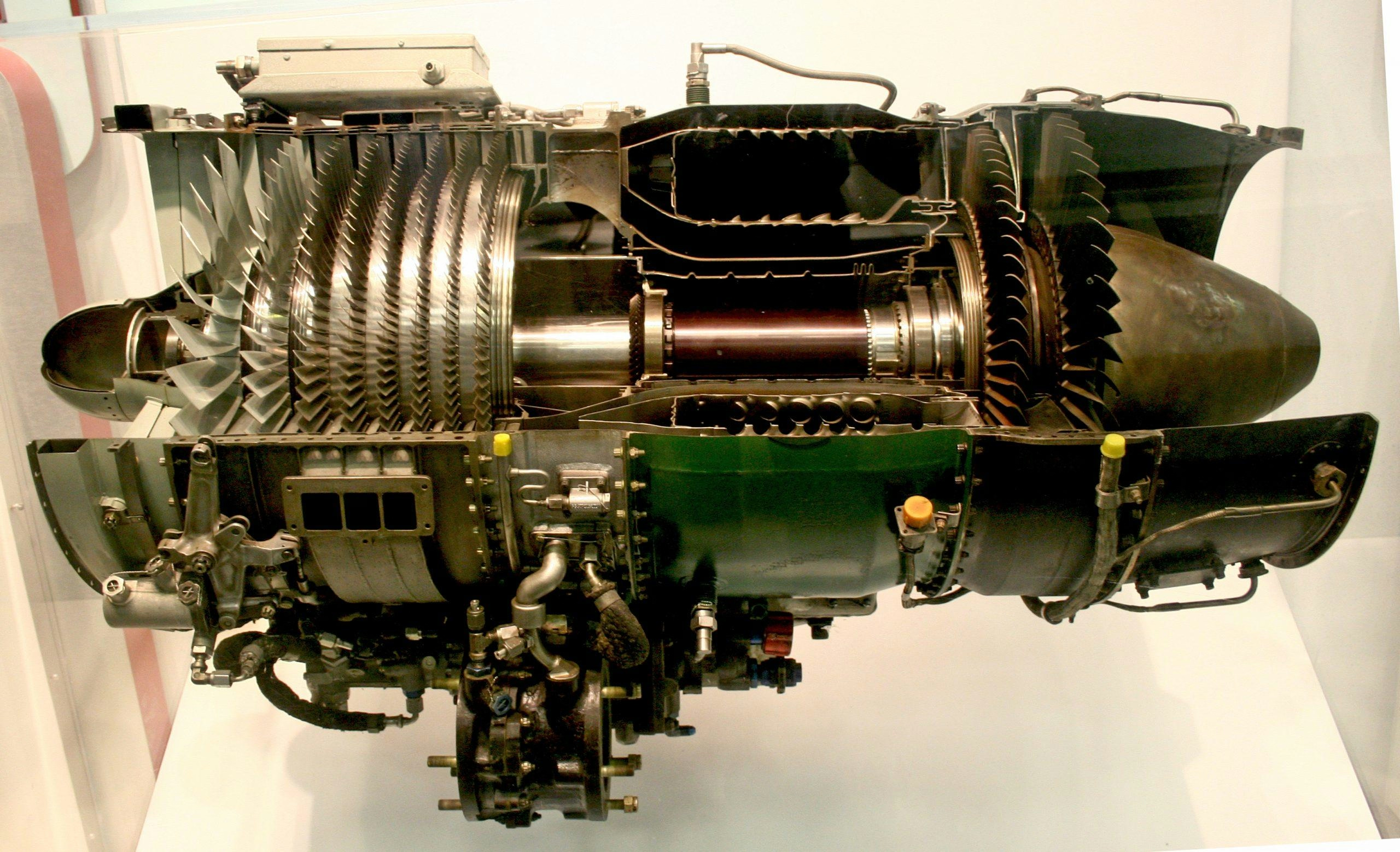
Hop-A-Jet has urged the Federal Aviation Administration (FAA) to enhance inspection requirements for General Electric CF34 engines following a fatal crash involving a Bombardier Challenger 604. The National Transportation Safety Board (NTSB) determined that corrosion within the engines’ variable geometry (VG) systems led to compressor stalls and a near-simultaneous loss of thrust in both engines as the aircraft approached Naples Airport. The flight crew attempted an emergency landing on Interstate 75, but the jet collided with roadside structures and was destroyed by fire. Both pilots perished, while the cabin attendant and two passengers survived.
In response to the NTSB’s findings, the FAA earlier this year proposed an airworthiness directive mandating borescope inspections and operational checks for over 1,100 CF34-series engines installed on Bombardier Challenger and regional jets. However, Hop-A-Jet contends that these measures fall short of addressing the full scope of the corrosion risk. In formal comments submitted to the FAA, the company called for direct corrosion inspections, mandatory reporting of inspection results, and heightened scrutiny of engines previously cleared under inspection protocols that may have overlooked corrosion-prone areas.
Challenges in Detecting Corrosion and Environmental Concerns
Hop-A-Jet highlights the limited capacity of operators to identify corrosion independently, noting that specialized inspections are typically conducted by engine manufacturers or authorized maintenance providers using proprietary methods. A post-accident review of archived borescope images revealed corrosion that had gone undetected by the operator, underscoring the difficulty in identifying such issues without enhanced inspection protocols.
The company also advocates for additional safeguards tailored to aircraft operating in coastal environments, where salt exposure accelerates corrosion. Furthermore, Hop-A-Jet calls for clearer FAA guidance on recognizing engine-start anomalies such as hung starts and slow starts—factors that were central to the NTSB’s investigation.
Industry Implications and Regulatory Outlook
Hop-A-Jet’s recommendations emerge amid growing industry concerns regarding engine reliability and maintenance. Recent data and discussions at industry summits have underscored persistent challenges with engine corrosion and maintenance delays, with airline executives criticizing manufacturers for slow responses. These issues have heightened apprehension among business aviation operators about engine safety, potentially driving demand for more rigorous inspection and maintenance standards.
The proposed expansion of regulations may encounter resistance, including potential regulatory pushback from the FAA, which could result in increased scrutiny and delays in finalizing broader rules. Competitors may respond by adopting similar safety measures or lobbying against regulations perceived to increase operational costs.
Hop-A-Jet maintains that its proposals are intended to enhance safety across the CF34 fleet and prevent future accidents. The FAA is currently reviewing public comments on the proposed directive before issuing a final rule.

Etihad Deploys Widebody Fleet to Meet Strong Demand
Korean Air Finalizes $36.2 Billion Deal with Boeing

Australia’s RFDS Queensland Section Orders Six King Air 260Cs

Korean Air Finalizes Order for 103 Boeing Jets and Engines

Embraer E195-E2 Features Distinctive Engine Placement Among Regional Jets

What Passengers Can Expect on Boeing’s New 777X Jet

How Ethiopian Airlines Became Africa’s Leading Carrier Amid Gulf Competition

Joby Aviation Extends Autonomous Flight Capabilities with Cross-Country Tour

Strengthening Europe's Aviation Supply Chain Amid Uncertainty

The Evolution of the Aircraft Maintenance Engineer Role
