
图像

AeroGenie — 您的智能副驾驶。

问任何问题。分析一切。立即行动。

热门趋势

Categories

IAI Certifies 777-300ERSF for Rolls-Royce Trent 1000 Engines
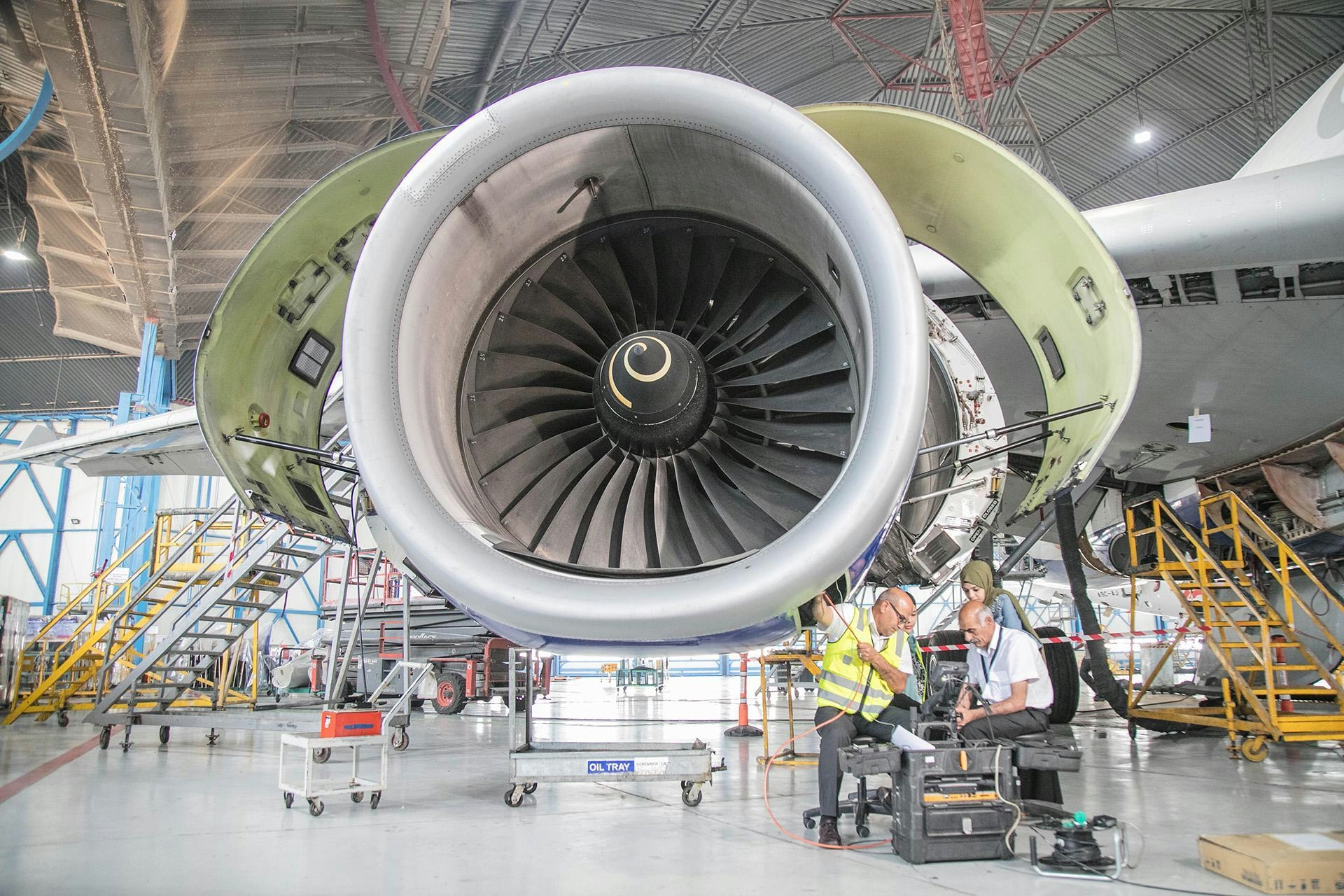
July 11, 2025By ePlane AI
IAI Certifies 777-300ERSF for Rolls-Royce Trent 1000 Engines
0
0
IAI
777-300ERSF
Rolls-Royce Trent 1000

IAI Certifies 777-300ERSF for Rolls-Royce Trent 1000 Engines

Israel Aerospace Industries (IAI) has officially certified its 777-300ERSF freighter to transport the Rolls-Royce Trent 1000 engine, becoming the second widebody freighter capable of carrying this particular powerplant. This certification, announced this week, represents a significant advancement for the 777-300ERSF program and addresses a critical logistical challenge faced by operators in the air cargo sector.

Overcoming Transportation Challenges

The Rolls-Royce Trent 1000 engine, originally developed for the Boeing 787 Dreamliner, poses unique transportation difficulties due to its substantial height and diameter of 15.5 feet. These dimensions have historically limited the engine’s compatibility with many aircraft types. IAI confirmed to Cargo Facts that it successfully overcame these dimensional constraints, enabling the 777-300ERSF to accommodate the engine safely and efficiently.

The certification process required IAI to navigate a complex regulatory landscape, ensuring full compliance with stringent safety and operational standards. This involved resolving technical issues identified during rigorous testing phases and managing the logistical intricacies of integrating a new engine type into an existing freighter platform. These efforts were crucial to securing approval and maintaining the highest levels of safety and reliability.

Market Implications and Industry Response

Industry analysts suggest that this certification could have significant market repercussions. The enhanced capability to transport the Trent 1000 engine may increase demand for the 777-300ERSF, particularly among operators prioritizing improved performance and operational efficiency. This development positions IAI favorably against competitors whose aircraft have yet to receive certification for the Trent 1000.

In response, rival manufacturers may expedite their own engine integration initiatives or invest in emerging technologies to match or exceed the capabilities associated with the Rolls-Royce engine. Such competitive dynamics are likely to drive further innovation within the aerospace industry as companies strive to meet evolving market demands and regulatory requirements.

With this latest certification, IAI continues to broaden the operational versatility of the 777-300ERSF, reinforcing its status as a prominent contender in the global air cargo market.

More news
Joby Aviation’s AI Air Taxi Push Tests Early-Stage Investor Expectations

Joby Aviation’s AI Air Taxi Push Tests Early-Stage Investor Expectations

Joby Aviation’s AI Air Taxi Initiative Challenges Early-Stage Investor Expectations Joby Aviation (NYSE: JOBY) is intensifying its efforts to introduce electric air taxis into the U.S. airspace by collaborating with Air Space Intelligence to incorporate AI-supported airspace management within the National Airspace System. This initiative is bolstered by Joby’s selection for the White House-backed eVTOL Integration Pilot Program, which authorizes early operations across 12 states. This positioning places Joby at the forefront of the rapidly developing electric vertical takeoff and landing (eVTOL) market. Advancing AI-Driven Airspace Management Joby’s strategy centers on providing short-haul, on-demand air taxi services amid ongoing regulatory and industry deliberations about integrating eVTOL aircraft into everyday air travel and urban mobility frameworks. The partnership with Air Space Intelligence aims to merge Joby’s air taxi technology with AI-driven traffic management systems, a crucial advancement as the Federal Aviation Administration (FAA) continues to formulate new safety regulations under its eVTOL Integration Pilot Program. This program spans 26 states and counts Joby as a key participant, underscoring the company’s influential role in shaping the future of urban air mobility. Regulatory and Legal Challenges Despite these promising developments, Joby faces significant challenges. The company is currently conducting flight tests on its first FAA-compliant aircraft as part of the Type Inspection Authorization process, a critical step toward full certification. Concurrently, Joby is embroiled in legal disputes with competitor Archer Aviation, which has accused Joby of fraud and misrepresenting its business relationships with Chinese entities to secure U.S. contracts. Archer alleges that Joby concealed these ties and misrepresented its operations, claims that Joby has sought to dismiss through federal court. Investor Sentiment and Market Performance Investor sentiment remains cautiously optimistic amid these regulatory and legal complexities. Following recent FAA announcements, Joby’s stock has demonstrated resilience, even as the broader market evaluates the risks and potential of early-stage eVTOL ventures. Currently, Joby shares trade at approximately $8.28, about 30% below the consensus analyst target of $11.90. This valuation reflects the balance between the company’s promising technological advancements and the uncertainties surrounding its path to commercial viability. Key factors influencing investor outlook include Joby’s regulatory progress through government-backed pilot programs, which could shape future infrastructure and customer expectations for electric air taxis. Additionally, the competitive landscape, marked by ongoing legal disputes and rising competition from other eVTOL manufacturers such as Archer Aviation, remains a critical consideration. Despite a recent 16% decline in stock value over the past month, investors are closely monitoring Joby’s progress toward certification milestones and potential for sustained growth. The resolution of pilot program outcomes and legal proceedings will be pivotal in determining the pace at which Joby and its competitors can scale operations, validate business models, and influence the evolution of the U.S. electric air taxi market. For now, Joby’s early partnerships and active regulatory engagement maintain its prominence as the industry navigates a complex trajectory toward commercial success.
SR-71 Blackbird Loses Both Engines at 83,000 Feet Over Russia, Crew Faces Near-Death Escape

SR-71 Blackbird Loses Both Engines at 83,000 Feet Over Russia, Crew Faces Near-Death Escape

SR-71 Blackbird Loses Both Engines at 83,000 Feet Over Russia, Crew Faces Near-Death Escape At an altitude of 83,000 feet above Soviet territory, the SR-71 Blackbird experienced a catastrophic failure when both of its engines shut down while flying at Mach 3. This critical malfunction forced the crew into a dire predicament: either eject over hostile airspace or attempt to restart the engines while descending rapidly toward the Barents Sea. First revealed in the May 2013 issue of *Aviation History*, this incident highlights the extraordinary capabilities of the Cold War reconnaissance aircraft as well as the extreme risks faced by its pilots. The SR-71: Engineering for Speed and Survival Conceived in the 1960s by Lockheed’s Skunk Works under the leadership of Kelly Johnson, the SR-71 Blackbird was purpose-built for intelligence gathering over denied airspace, particularly that of the Soviet Union. Entering operational service in 1966, the aircraft was equipped with cutting-edge sensors designed to monitor missile installations and naval bases in near real time. Its primary defense was not stealth technology but unmatched speed and altitude. Capable of cruising at Mach 3.2—exceeding 2,000 miles per hour—and flying above 80,000 feet, the SR-71 could outrun virtually any threat, including surface-to-air missiles. This extraordinary performance, however, came with significant engineering challenges. The aircraft’s titanium airframe endured skin temperatures surpassing 500 degrees Fahrenheit, expanding during flight due to intense heat. The Pratt & Whitney J58 engines operated partially as ramjets at high speeds, demanding flawless functionality from every component. Any failure in this complex system risked catastrophic consequences. The Dangers of High-Altitude Flight Operating at such extreme altitudes and speeds exposed the SR-71 to unique hazards. One of the most perilous technical issues was the “unstart,” a sudden collapse of the supersonic shockwave within the engine intake that instantly disrupted airflow and caused a rapid loss of thrust. In the incident over Russia, both engines failed simultaneously, leaving the crew with only seconds to respond. This emergency underscored the critical importance of advanced ejection systems and rapid response protocols. At such altitudes and velocities, the margin for error was virtually nonexistent. The crew’s successful escape not only demonstrated their exceptional training and composure under pressure but also emphasized the necessity of robust emergency procedures in high-performance military aircraft. Broader Implications and Industry Impact The event also brought attention to the essential role of anti-icing systems and the specific risks associated with high-altitude operations. Engine failures at these heights can be triggered by factors such as ice accumulation or disruptions in engine intake airflow, making reliable anti-icing technology indispensable. Incidents of this nature often prompt increased focus on aircraft safety systems across the aerospace industry. Competitors and manufacturers may accelerate efforts to enhance reliability and emergency capabilities, fostering innovation in both military and civilian aviation sectors. Legacy of the Blackbird Despite the inherent dangers and technical challenges, the SR-71’s operational record remains unparalleled. Throughout decades of service, not a single aircraft was ever shot down. Nevertheless, episodes like the engine failure over Soviet airspace serve as stark reminders that even the most advanced machines are vulnerable. The safety of their crews depends on a delicate balance of cutting-edge technology, rigorous training, and split-second decision-making under extreme conditions.
Airbus Orders and Deliveries for March 2026

Airbus Orders and Deliveries for March 2026

Airbus Orders and Deliveries for March 2026 Airbus has published its Orders and Deliveries report for March 2026, revealing a month marked by strong demand alongside persistent production challenges. During March, the company delivered 60 aircraft to 38 customers, while its order backlog expanded by 261 units, closing the month with 9,037 jets awaiting delivery. The total orders for the month reached 331 aircraft, offset by 10 cancellations and the 60 deliveries, resulting in continued growth of the backlog. Delivery Breakdown and Quarterly Performance The March deliveries comprised eight A220s, 41 aircraft from the A320neo family, three A330neos, and eight A350s. Despite the robust order intake, Airbus experienced a decline in A320neo deliveries during the month. Over the first quarter of 2026, the manufacturer delivered 114 aircraft, a decrease from 136 in the same period last year. Nevertheless, Airbus secured significant orders, including 100 A320neo-family jets for AerCap, 101 for China Eastern Airlines, and 25 for Juneyao Air. Net orders for the quarter totaled 398 jets, underscoring sustained airline confidence in Airbus’s product lineup. Backlog and Market Context Airbus’s backlog now stands at 9,037 aircraft, which, at the projected 2026 production rate of approximately 870 aircraft per year, would require around 10.4 years to fulfill. This persistent backlog growth occurs despite global challenges such as the ongoing conflict in Iran and elevated fuel prices. Airbus’s book-to-bill ratio for 2026 remains strong, reflecting continued demand, particularly for the versatile A321neo family. In February 2026, Airbus reported solid delivery figures, while its main competitor, Boeing, achieved a nine-year high in monthly deliveries, intensifying competition in the commercial aircraft sector. However, Airbus maintains a production lead over Boeing, whose output remains constrained by ongoing FAA oversight and is expected to see only modest increases in the near term. Production Challenges and Outlook Despite multiple supply chain disruptions and missed production targets over the past four years, Airbus’s order book continues to expand. The primary challenge for senior management remains increasing production rates, especially reaching the long-anticipated target of 75 aircraft per month for the A320neo family. This goal, delayed since the global pandemic, now appears unlikely to be achieved before 2028. As Airbus contends with supply chain complexities and strives to enhance output, its strong order momentum and substantial backlog position the company to sustain its leadership in the global aerospace market.
Airbus Posts Strong Q1 Orders Despite Decline in A320neo Deliveries

Airbus Posts Strong Q1 Orders Despite Decline in A320neo Deliveries

Airbus Posts Strong Q1 Orders Despite Decline in A320neo Deliveries Airbus reported a robust first quarter in 2024, securing net orders for 398 aircraft despite a noticeable decline in deliveries of its A320neo-family jets. The European aerospace leader delivered 114 aircraft during the period, down from 136 in the same quarter last year. This reduction was largely driven by a slowdown in single-aisle jet deliveries, with only 81 A320neo-family aircraft handed over compared to 106 in the first quarter of 2023. Supply Chain Challenges and Delivery Impact The decline in deliveries follows Airbus’s mid-February warning regarding a shortage of Pratt & Whitney PW1100G engines, which has disrupted the company’s production ramp-up plans. These supply chain constraints have constrained Airbus’s ability to meet delivery targets, particularly for its popular single-aisle models. Despite these challenges, Airbus demonstrated resilience by securing significant new orders throughout the quarter. Strong Order Book and Key Contracts Among the notable deals, AerCap placed an order for 100 A320neo-family jets, which has been allocated to its US entity, NAS Aviation Services. China Eastern Airlines committed to 101 aircraft from the same family, while Juneyao Air of China ordered 25 jets in March. Airbus also recorded substantial twin-aisle aircraft agreements, including Delta Air Lines’ purchase of 16 A330-900s and 15 A350-900s, alongside 34 A321neos. Additionally, Atlas Air confirmed an order for 20 A350 freighters. Airbus further assigned 20 A220-300 aircraft to undisclosed customers through two separate orders of 10 jets each. However, a longstanding order for 10 A220-100s, originally placed by start-up Odyssey Airlines in 2011 when the program was known as the Bombardier CS100, was cancelled. Market Implications and Competitive Landscape The strong order intake has reinforced market confidence in Airbus’s long-term prospects, even as the company contends with ongoing supply chain issues. Industry analysts suggest that the surge in orders may bolster investor optimism regarding Airbus’s ability to sustain a healthy backlog. Meanwhile, competitors such as Boeing, which reported a nine-year high in deliveries in February, could potentially strengthen their market position in light of Airbus’s delivery setbacks. This dynamic may prompt rival manufacturers to intensify marketing efforts to capitalize on Airbus’s temporary production challenges. Despite the delivery slowdown, Airbus’s success in attracting substantial new orders highlights continued demand for its aircraft and positions the company for future growth as supply chain disruptions are gradually resolved.
United Airlines 787 Engine Fire Last Month Challenged Firefighting Efforts

United Airlines 787 Engine Fire Last Month Challenged Firefighting Efforts

United Airlines 787 Engine Fire Exposes Challenges in Firefighting and Raises Industry Concerns A persistent engine fire aboard a United Airlines Boeing 787-9 last month highlighted significant challenges in extinguishing in-flight blazes, causing extensive damage to critical engine components and prompting scrutiny of engine reliability and firefighting protocols within the aviation sector. Incident Overview and Immediate Response On 2 March, United flight 2127, departing Los Angeles International Airport for Newark Liberty, encountered a serious engine malfunction at approximately 17,000 feet. The aircraft, equipped with twin GE Aerospace GEnx-1B76A engines, experienced strong vibrations accompanied by a drop in the left engine’s N2 speed. Shortly thereafter, the flight crew received a “L ENGINE FIRE” warning via the engine indicating and crew alerting system (EICAS), initiating the engine fire checklist. Despite deploying the first fire extinguisher bottle, the warning briefly ceased but reappeared within 30 seconds. A second fire bottle was discharged, yet the fire warnings persisted. The crew declared an emergency and returned to Los Angeles, ultimately landing safely on a single engine. Following the landing, an evacuation was conducted on the runway using emergency slides. All passengers and crew evacuated without injury. Damage Assessment and Ongoing Investigation Subsequent inspections revealed extensive sooting and thermal damage concentrated around the external surfaces of the engine core module, extending toward the pylon connection. Borescope examinations identified damage within the high-pressure turbine, although the thrust reverser halves on both sides showed minimal thermal impact. A flight attendant reported observing flames emanating from the left engine after landing. The National Transportation Safety Board (NTSB) released a preliminary report detailing these findings but has yet to determine the root cause of the engine failure. The investigation remains active, with Boeing, GE Aerospace, and United Airlines yet to provide official comments. Industry Implications and Market Reactions The difficulties encountered in extinguishing the fire have intensified concerns regarding the reliability of the GEnx engine and the adequacy of current firefighting measures. Industry analysts suggest that this incident may prompt airlines and manufacturers to reassess safety protocols and engine design standards. Market responses could include increased scrutiny of fleets powered by GEnx engines and potential revisions to operational procedures at United Airlines and other carriers. In response to growing safety considerations, some competitors have adjusted their fleet strategies. For instance, All Nippon Airways (ANA) has reportedly converted certain 787-10 orders to the 787-9 variant, reflecting a broader reevaluation of aircraft procurement decisions. Concurrently, United Airlines has recently reduced its capacity by 5% to mitigate rising fuel costs, a development that may further influence market dynamics as the industry balances operational efficiency with safety imperatives. The NTSB’s investigation continues as the aviation community closely monitors the situation, anticipating potential impacts on engine safety standards and firefighting protocols worldwide.
Jiatai Aims to Ensure Linefit Compatibility for Premium Economy Seats

Jiatai Aims to Ensure Linefit Compatibility for Premium Economy Seats

Jiatai Advances Linefit Certification for Premium Economy Seats Amid Growing Market Competition Jiatai, the Xiangyang-based aircraft seat manufacturer, is intensifying efforts to secure linefit offerability with leading airframers for its premium economy seating platforms tailored to widebody aircraft. This strategic move aims to strengthen the company’s foothold in the increasingly competitive aircraft interiors sector. Jiatai, a trusted supplier to China’s COMAC, already holds linefit certifications from Boeing and Airbus for its single-aisle economy and business class seats, as well as for twin-aisle economy class products. Collaboration and Certification Progress In late 2024, Jiatai formalized a cooperation agreement with Airbus to optimize its economy seats for the manufacturer’s 10-abreast configuration on the Airbus A350 New Production Standard (NPS). Building on this partnership, Jiatai recently disclosed that applications for linefit certification of its twin-aisle premium economy seats are currently underway. The new premium economy design draws heavily on Jiatai’s business class recliners for single-aisle aircraft, reflecting a broader industry trend toward enhanced comfort and privacy in premium cabins. Market Challenges and Competitive Landscape Securing linefit compatibility for premium economy seats presents significant challenges. The standardized linefit segment is characterized by intense cost pressures, compelling manufacturers to continuously refine mechanical systems to reduce weight and enhance reliability. Concurrently, airlines are increasingly seeking customized, brand-specific solutions, particularly for widebody and VIP completions. This dynamic requires seatmakers to strike a delicate balance between innovation and scalable, efficient production. Competitors are responding by integrating advanced materials and predictive maintenance technologies to improve system power consumption and reliability, thereby raising the bar for both new entrants and established players. The market is witnessing a marked shift toward premium cabin products, with carriers such as United Airlines expanding their premium offerings, sometimes at the expense of traditional economy seating. Product Portfolio and Strategic Partnerships Jiatai’s product range reflects these evolving market demands. For single-aisle aircraft, the company offers three business class configurations: a mechanical JT220B, an electric JT220B, and an upgraded JT220B featuring winged privacy, a feature gaining traction globally. In economy class, Jiatai provides the fully featured JT1122E for long-haul operations and the JT22E for medium- to long-haul flights. The company’s collaboration with UK-based design firm Factorydesign has further enhanced its product offerings. Factorydesign has contributed to three narrowbody economy products, including the JT1122E, which was developed comprehensively to align with current seat design trends. This platform is already in service with Hainan Airlines and China Southern Airlines, with Factorydesign continuing to support Jiatai’s global expansion strategy. While Jiatai has yet to develop a lie-flat business class platform, its sister company within the AVIC group, Thompson Aero Seating, is recognized as a leading provider of premium lie-flat seats. Jiatai’s reputation for delivering professional technical solutions, efficient production timelines, and comprehensive after-sales support has earned it growing recognition among international customers. As the premium cabin market continues to expand, industry observers will closely monitor Jiatai’s forthcoming developments, particularly in anticipation of announcements at future events such as the Aircraft Interiors Expo 2026.
DoorDash Launches Drone Delivery Service in Atlanta

DoorDash Launches Drone Delivery Service in Atlanta

DoorDash Introduces Drone Delivery Service in Atlanta DoorDash has unveiled its drone delivery service in metropolitan Atlanta, marked by the appearance of a new drone-shaped icon within the DoorDash app for select users. This launch is the result of a partnership with Wing, the drone delivery subsidiary of Alphabet, Google's parent company. Customers who tap the icon gain access to a curated selection of restaurants located at Tanger Outlets Locust Grove near McDonough. Orders placed through this service are delivered by drone to customers within a six-mile radius, often arriving in as little as 20 minutes. Expansion of Wing’s Drone Delivery Network Wing began its Atlanta operations in December in collaboration with Walmart and is rapidly expanding its reach, with plans to serve 270 Walmart stores across multiple states by 2027. The company reports average flight times of five minutes or less for deliveries in Atlanta. Wing and Walmart have already established drone delivery services in Dallas-Fort Worth since 2022 and have recently extended operations to Houston and Charlotte, North Carolina. Additional markets slated for future expansion include Los Angeles, Miami, St. Louis, Cincinnati, Orlando, and Tampa, with service in the San Francisco Bay Area announced for later this year. DoorDash customers in Dallas-Fort Worth and Charlotte also have access to Wing’s drone delivery, following the partners’ initial U.S. pilot program in Virginia earlier this year. Beyond Wing, DoorDash is exploring further drone delivery partnerships with Israel’s Flytrex and Ireland’s Manna. Competitors such as Uber Eats and Grubhub are similarly investing in drone technology; Uber Eats collaborates with Flytrex and Manna, while Grubhub recently launched drone deliveries in New Jersey in partnership with Dexa. Walmart, in addition to its work with Wing, is also partnering with Flytrex and Zipline. Challenges and Technological Innovations Despite the promising momentum, DoorDash’s drone delivery initiative faces significant challenges, including regulatory hurdles, public acceptance, and intense competition from other delivery platforms. While consumer interest has been notable, widespread adoption will depend on overcoming operational complexities and the substantial investments required for technology and infrastructure development. DoorDash’s broader autonomous delivery strategy includes its proprietary delivery robot, “Dot,” reflecting the company’s commitment to innovation, though these efforts may encounter logistical and regulatory obstacles. Harrison Shih, head of DoorDash’s drone delivery program, emphasized the importance of autonomous delivery in enhancing local commerce, describing it as a means to make services faster, more enjoyable, and more sustainable. Heather Rivera, Wing’s chief business officer, highlighted that the company completes thousands of drone deliveries daily. In January, Wing reported that its top 25% of customers in Dallas-Fort Worth and Atlanta order by drone approximately three times per week, with overall deliveries tripling between the first and last six months of 2025. Service Details and Operational Capabilities Atlanta residents can verify their eligibility for DoorDash’s drone delivery service on Wing’s website and join a waitlist if necessary. Currently, the service is limited to a six-mile radius from Tanger Outlets Locust Grove, with plans for future expansion. Wing’s flagship drones employ vertical lift and cruise motors capable of carrying up to five pounds of cargo at speeds reaching 60 miles per hour and altitudes around 150 feet. These drones operate effectively in light wind and rain conditions. Packages are lowered to precise locations via tether, and customers can track their deliveries in real time through the DoorDash app. Most aspects of drone operations, including flight planning and traffic management, are highly automated. Store associates prepare orders curbside for Wing’s Autoloader mechanism, streamlining the delivery process from restaurant to doorstep.
The Importance of Supervising Apprentices in Aircraft Maintenance

The Importance of Supervising Apprentices in Aircraft Maintenance

The Importance of Supervising Apprentices in Aircraft Maintenance Addressing the Talent Shortage in Aerospace Supervising apprentices in aircraft maintenance has become increasingly vital amid a growing talent shortage in the aerospace sector. This challenge is particularly pronounced in business aviation, where the demand for skilled technicians significantly exceeds the available supply. In response, companies are intensifying their focus on training programs and forging partnerships with educational institutions to cultivate a new generation of qualified professionals capable of sustaining industry standards. The Critical Role of Supervision in Safety and Skill Development With over 45 years of experience in aircraft maintenance, I have observed the profound impact that inadequate supervision can have on safety and operational integrity. A notable example involved an apprentice who, without sufficient guidance, bent a torque wrench while attempting to torque the mast nut on a Bell 206 helicopter. This incident highlighted how a lack of proper oversight can lead to potentially hazardous errors. Apprentices require supervision calibrated to their level of experience and competence to prevent such risks and ensure quality workmanship. The disparity in knowledge and skill between licensed aircraft maintenance engineers (AMEs) or airframe and powerplant mechanics (A&Ps) and apprentices can be substantial. While some apprentices rapidly develop proficiency, others need close monitoring to maintain safety and quality standards. Despite the pressures of production deadlines, it is crucial that experienced staff resist the temptation to bypass training opportunities in favor of expediency. Recognizing that every expert begins as a novice underscores the importance of investing time in effective supervision, which ultimately benefits individuals, teams, companies, and the broader industry. Legal and Operational Imperatives for Supervision Effective supervision is not merely a best practice; it is a legal obligation in many jurisdictions. For instance, Canadian WorkSafe regulations assign supervisors the responsibility for worker safety through directing work, providing instruction, and identifying hazards. Supervisors must ensure worker competency, enforce safety procedures including the use of personal protective equipment (PPE), educate workers about potential risks, and collaborate with health and safety committees. These responsibilities have gained heightened significance in today’s market, where oversaturation in Europe’s aircraft, crew, maintenance, and insurance sectors has intensified the demand for rigorous operational standards. Industry competitors are responding by investing in innovative training solutions and strengthening collaborations with educational institutions to develop a workforce equipped to meet evolving challenges. To assist supervisors in fulfilling this critical role, I have developed a checklist designed to guarantee that every task assignment is accompanied by the appropriate level of information and oversight. This framework benefits not only apprentices but all personnel, particularly when experience levels vary, ensuring clarity and safety across operations. Ultimately, the duty to nurture and supervise apprentices lies with all AMEs and A&Ps. By dedicating the necessary time and attention to developing new talent, the aerospace industry can safeguard the safety, integrity, and future viability of its operations.
Airline Group Warns Jet Fuel Shortages Could Last Months Despite Potential Strait of Hormuz Reopening

Airline Group Warns Jet Fuel Shortages Could Last Months Despite Potential Strait of Hormuz Reopening

Airline Group Warns Jet Fuel Shortages Could Persist for Months Despite Potential Strait of Hormuz Reopening The escalating conflict between Iran and the United States has caused oil prices to surge by as much as 70% within weeks, placing significant strain on the global airline industry. Despite tentative signs of a ceasefire and the possible reopening of the Strait of Hormuz—a vital maritime chokepoint responsible for 20% of the world’s oil shipments—industry leaders warn that jet fuel shortages and elevated prices are likely to endure for several months. Prolonged Supply Challenges Amid Disrupted Refining Capacity Willie Walsh, director general of the International Air Transport Association (IATA), which represents airlines worldwide, emphasized that even if the Strait of Hormuz reopens and remains accessible, the recovery of jet fuel supply will be slow. He highlighted that the primary constraint lies not in crude oil availability but in the significant disruption to refining capacity across the Middle East. Unlike crude oil, jet fuel lacks strategic reserves, leaving airlines particularly vulnerable to supply shocks. “If [the Strait of Hormuz] were to reopen and remain open, I think it will still take a period of months to get back to where supply needs to be given the disruption to the refining capacity in the Middle East,” Walsh stated. According to data from S&P Global Energy, global refining capacity has declined by 10% to 12% since the conflict began, with over 2 million barrels per day of refining operations halted in the region. This reduction has triggered widespread supply chain disruptions, driving energy costs sharply higher. Industry Impact and Financial Strain The consequences of the jet fuel shortage are already manifesting across the aviation sector. Several European airports have imposed restrictions on aircraft refueling, and some airlines have preemptively canceled flights to manage limited fuel supplies. Executives from major carriers, including Delta’s Ed Bastian and United Airlines’ Scott Kirby, report that the conflict has increased their operating costs by approximately $400 million each. In response, United Airlines has raised checked luggage fees by $10—the first increase in two years—while Malaysia’s AirAsia X has increased airfares by up to 40% and fuel surcharges by 20%. United’s CEO Scott Kirby cautioned that sustaining operations amid persistently high fuel prices will be challenging if oil prices remain elevated. Industry analysts warn that ongoing fuel cost pressures and potential shortages could erode airline profits, particularly if passenger demand weakens. The sector may face significant financial strain, with some carriers potentially forced to reduce capacity to manage soaring expenses. Contextualizing the Crisis Despite the severity of the current disruptions, Walsh underscored that the situation does not compare to the scale of the COVID-19 pandemic, which decimated global aviation capacity by 95%. Instead, he likened the current crisis to the aftermath of 9/11 or the Great Recession, periods during which recovery took several months rather than years. “This is not similar to COVID. This is not a crisis anywhere close to what we experienced [then],” Walsh remarked, noting that the post-9/11 recovery spanned about four months, while the 2008-2009 downturn lasted 10 to 12 months. Nevertheless, the damage to energy infrastructure has left industry leaders cautious about a swift resolution. Thai Airways CEO Chai Eamsiri described the current oil shock as the worst in his nearly four-decade career, citing the destruction of critical infrastructure and the protracted process required to restore normal operations.
Eve Completes 50 eVTOL Flights with Just Over Two Hours of Total Air Time

Eve Completes 50 eVTOL Flights with Just Over Two Hours of Total Air Time

Eve Completes 50 eVTOL Flights, Logging Over Two Hours of Air Time Eve Air Mobility has successfully completed 50 test flights of its electric vertical takeoff and landing (eVTOL) prototype, accumulating just over two hours of total flight time since its inaugural flight in December 2025. All testing has been conducted at Embraer’s facility in Gavião Peixoto, Brazil, with the prototype remaining within the designated test area throughout the campaign. Prototype Testing and Flight Program Progress The aircraft involved is an uncrewed engineering prototype designed primarily to assess fundamental flight characteristics and system performance. Eve has reported a gradual increase in flight speeds during the program, alongside the collection of critical data on stability, control, and energy consumption. However, the prototype has yet to perform transition flights, which demonstrate the shift from vertical takeoff to forward flight. Compared to some of its competitors, Eve’s flight program remains in an earlier phase. For instance, Joby Aviation began flying a certification test aircraft in March, with the U.S. Federal Aviation Administration (FAA) expected to participate in evaluation flights. Similarly, Vertical Aerospace recently achieved a piloted thrustborne transition with its full-scale eVTOL, successfully demonstrating the transition from vertical to forward flight under operational conditions. Regulatory and Market Outlook Looking ahead, Eve plans to develop a fleet of six conforming prototypes to undergo certification testing with Brazil’s National Civil Aviation Agency (ANAC). The company faces potential regulatory challenges as ANAC is anticipated to soon establish the "means of compliance" required for type certification of air taxis in Brazil, a crucial step toward commercial deployment. Despite the nascent stage of its flight program, Eve has garnered positive market attention and secured sufficient funding to support its development efforts through 2028. The company is also forging strategic partnerships with Alt Air and Skyports Infrastructure to advance commercial eVTOL services, underscoring its ambition to become a significant player in the emerging urban air mobility sector. The competitive landscape remains highly dynamic. Recently, California-based Archer Aviation filed a counterclaim against rival Joby Aviation, alleging fraud and undisclosed business ties to China, highlighting the intense rivalry and high stakes within the eVTOL market. As Eve continues its incremental flight testing and prepares for forthcoming regulatory milestones, it is positioning itself through both technical development and strategic alliances to compete in the rapidly evolving air taxi industry.
line









