
将人工智能洞察转化为可执行行动

热门趋势
Categories
IATA Proposes New AI Initiatives for Global Air Cargo
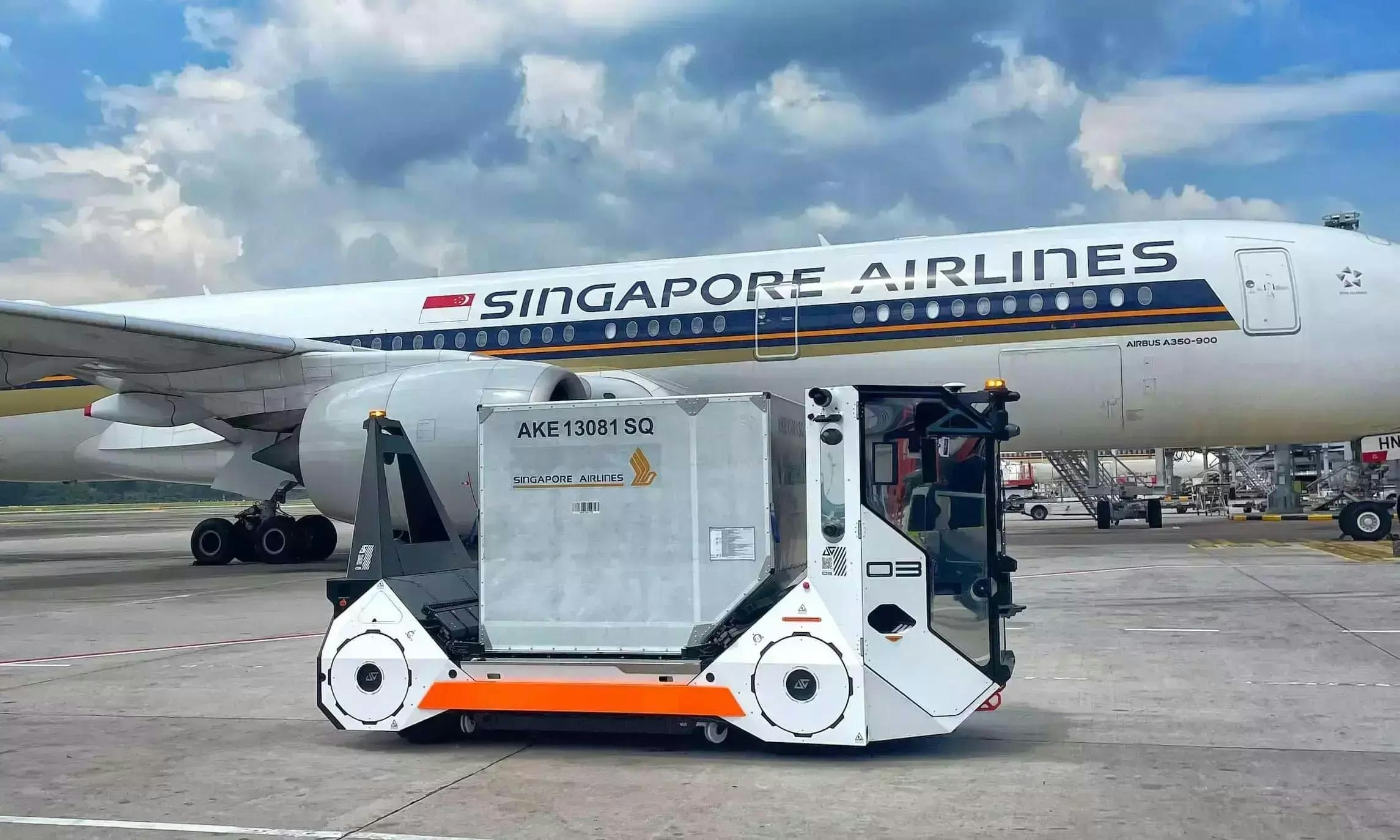
IATA Proposes New AI Initiatives for Global Air Cargo
The International Air Transport Association (IATA) is intensifying its efforts to integrate artificial intelligence (AI) into global air cargo operations. By introducing new digital standards, facility blueprints, and industry charters, IATA aims to enhance the speed, intelligence, and resilience of freight transportation worldwide. These initiatives form part of a comprehensive strategy to modernize the sector through advanced technology adoption.
From Concept to Practical Deployment in Cargo Operations
Recent discussions at the World Cargo Symposium and IATA publications indicate a significant shift in AI’s role within air cargo—from a conceptual innovation to a practical operational tool. Industry leaders are increasingly focused on harnessing data-driven strategies, generative AI, and automation to reduce costs, minimize delays, and improve the reliability of shipment flows. Rather than treating AI as a standalone technology, these efforts are integrated into the broader digitalization of air cargo, aligning AI tools with established data-sharing and messaging standards. This approach facilitates seamless connectivity among airlines, handlers, freight forwarders, and customs authorities, avoiding fragmented or siloed solutions.
IATA’s analysis of projected trade activity for 2025 highlights AI’s dual impact on the sector. Not only is AI transforming cargo operations, but the air cargo industry itself is a critical transporter of the high-value servers, storage devices, and memory chips essential for expanding global AI infrastructure. This interdependence strengthens the business rationale for further investment, as airlines seek to capture emerging high-tech cargo markets while employing AI to better forecast demand, optimize capacity, and protect time-sensitive shipments.
Governance and Standards: The Digitalization Leadership Charter
At the core of IATA’s AI strategy is the Digitalization Leadership Charter, which has garnered early support from airlines, handlers, and technology providers. The charter establishes shared principles focused on data standards, sustainability, and the secure deployment of technology, with particular emphasis on the responsible use of generative AI in cargo processes.
A central element of the charter is the promotion of unified data formats and platforms, especially IATA’s ONE Record framework. This system enables the creation of machine-readable, end-to-end records for each consignment, providing AI applications with reliable data for functions such as anomaly detection, service prediction, and automated document verification. The charter also underscores the importance of cybersecurity and ethical technology use. As cargo operators increasingly experiment with AI for decision support and process automation, the framework advocates for algorithmic oversight and clear accountability mechanisms when human operators interact with automated recommendations. This governance model is timely, given the rapid integration of generative AI across booking portals, contact centers, and operational control rooms.
Addressing Workforce and Industry Challenges
Despite the promising potential of AI, IATA’s initiatives face significant challenges, particularly regarding workforce implications. Concerns have been voiced by students, job seekers, and labor advocates about the risk of automation displacing employment opportunities within the sector. Some industry stakeholders remain cautious, debating whether AI will primarily serve as a tool for operational efficiency or pose a threat to traditional job roles.
Market responses to AI adoption are varied. While some competitors embrace AI to enhance efficiency, others resist integration to safeguard existing jobs and established operational models. There are also apprehensions about potential increases in operational costs and the broader consequences for hands-on roles in air cargo management.
Looking Ahead
As IATA’s AI-driven vision for air cargo continues to evolve, the industry is navigating a complex balance between innovation and workforce concerns. With formal governance frameworks and collaborative standards now in place, early adopters are expected to share best practices and demonstrate tangible improvements in efficiency and reliability. Ongoing dialogue among stakeholders will remain essential to ensure that the benefits of AI are equitably realized across the global air cargo ecosystem.

Etihad Airways Suspends Airbus A380 Flights on Key Route

Aditya Birla Group Seeks Approval for Aircraft Leasing in GIFT City

Qatar Airways Highlights Innovation and Connectivity at Arabian Travel Market 2026

Hong Kong's Five-Year Plan Includes Andrew Fan's Aircraft Parts Processing Hub Proposal

ACIA Aero Leasing Delivers ATR72-600 to Air Nostrum

RTX Appoints Jill Albertelli as Head of Pratt & Whitney

TAT Technologies Joins Beyond Aero Hydrogen Aircraft Program

AURAK Study Highlights Barriers to Air Taxi Adoption in Emerging Economies

Xiamen Air Selects Altitude for 787 Maintenance at Heathrow

Etihad and Swissport Extend Global Partnership
