
将人工智能洞察转化为可执行行动

热门趋势
Categories
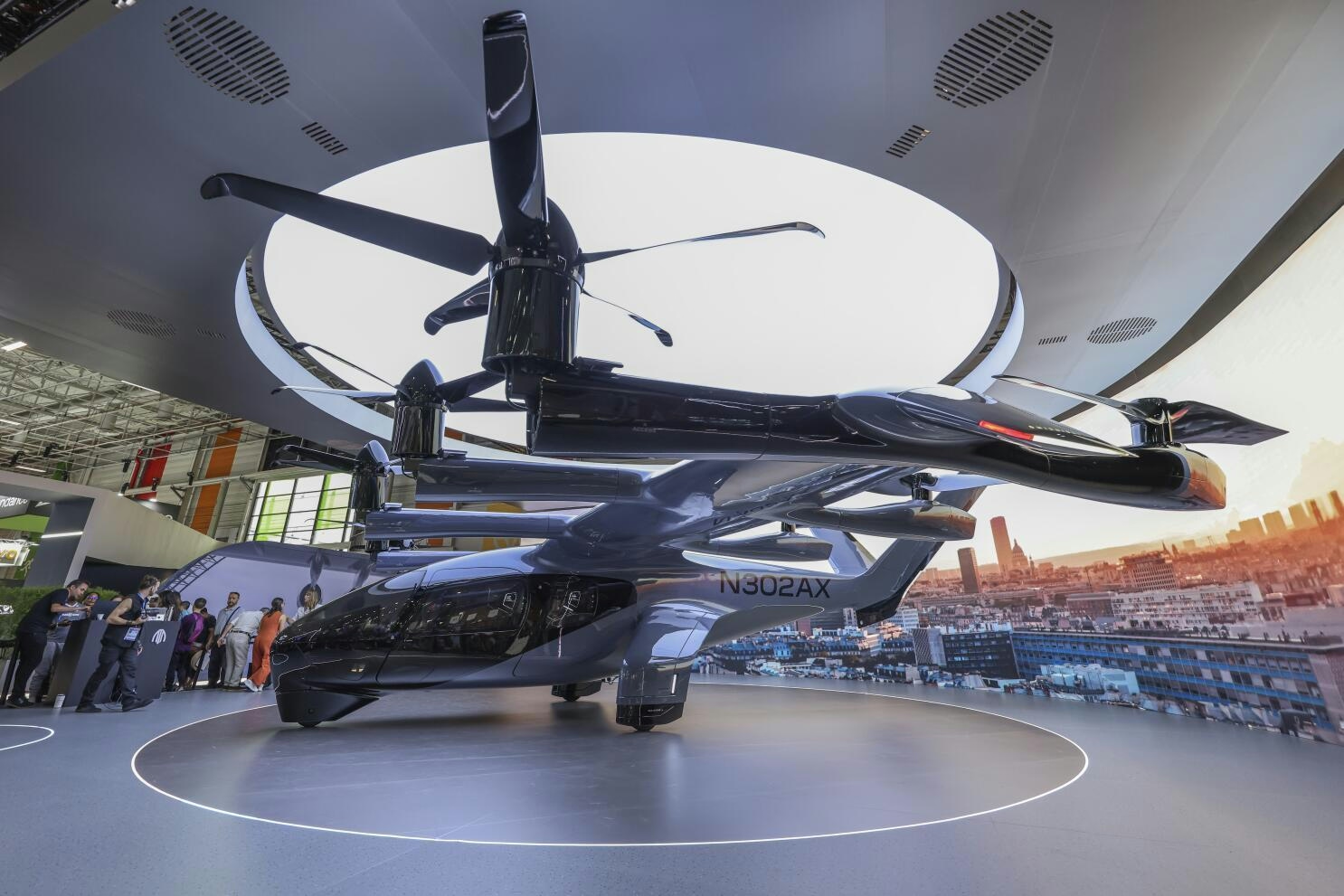
Integrating Electric Air Taxis into Airports
Integrating Electric Air Taxis into Airports
Advancing from Concept to Practical Implementation
At this year’s Sustainable Skies World Summit, discussions surrounding advanced air mobility (AAM) transitioned from theoretical speculation to pragmatic considerations, emphasizing operational feasibility, economic impact, and public value. Industry leaders, regulators, and manufacturers convened to explore how electric air taxis might be effectively integrated into existing airport infrastructures, addressing real-world challenges beyond initial enthusiasm.
A prominent case study emerged from Norway, where a six-month trial involved an electric aircraft completing 126 flights over nearly 9,000 nautical miles. Jan Petter Steinland, Director of Strategic Analysis and Transformation at the Norwegian Civil Aviation Authority, described the trial as “pleasantly anticlimactic,” highlighting the minimal maintenance required—limited to three tire changes and routine cleaning by a single engineer. The energy costs were substantially lower than those associated with conventional aircraft, and the electric plane demonstrated reliable operation both day and night, even under severe winter conditions. Crucially, these flights were seamlessly integrated into controlled airspace, with rapid turnaround times facilitated by high-capacity airport charging infrastructure.
These findings indicate that electric aircraft have the potential to reduce operational costs and complexity relative to helicopters, contingent on the development of adequate supporting infrastructure. Panelists underscored that the objective extends beyond merely replacing helicopters for affluent travelers. In regions such as Norway, where aviation serves as a critical link for rural communities, advanced air mobility represents a practical extension of existing transport networks, offering tangible societal and economic benefits. Moreover, electric air taxis could play a vital role in public-interest missions, including emergency response and national resilience efforts.
Regulatory and Market Challenges
Despite encouraging results, significant obstacles remain. Regulatory challenges are paramount, as companies like Joby Aviation and Archer Aviation contend with legal disputes over innovation claims and government funding. Market responses vary: Surf Air Mobility has embraced electric aircraft for their cost efficiency and environmental advantages, while Vertical Aerospace and Archer Aviation emphasize the potential for substantial reductions in commute times. Competition is intensifying, with firms actively seeking government approvals and participation in pilot programs to expedite market entry.
In the United States, the Federal Aviation Administration has authorized eight pilot programs spanning 26 states to accelerate the integration of electric vertical take-off and landing (eVTOL) aircraft. Nevertheless, the construction of vertiports and charging stations remains a critical hurdle for achieving commercial viability.
Joby Aviation, having demonstrated success in the San Francisco Bay Area and integrated flights with the Uber app in the Middle East, now regards the United Kingdom as a strategic market. Max Coppin, UK General Manager at Joby, reiterated the company’s mission to “save a billion people an hour a day,” while acknowledging that initial deployments will be concentrated on select markets and routes due to resource limitations.
A Measured Approach in the United Kingdom
The UK’s strategy toward electric air taxis is deliberately cautious. Sofia Stayte, Head of Future Flight at the Department for Transport, emphasized that the country is not seeking to be the first to deploy the technology. Instead, the focus lies in establishing a stable and advanced regulatory framework, aligning deployment timelines with technological readiness to ensure the safe and effective integration of electric air taxis into the nation’s airports and airspace.

Etihad Airways Suspends Airbus A380 Flights on Key Route

Aditya Birla Group Seeks Approval for Aircraft Leasing in GIFT City

Qatar Airways Highlights Innovation and Connectivity at Arabian Travel Market 2026

Hong Kong's Five-Year Plan Includes Andrew Fan's Aircraft Parts Processing Hub Proposal

ACIA Aero Leasing Delivers ATR72-600 to Air Nostrum

RTX Appoints Jill Albertelli as Head of Pratt & Whitney

TAT Technologies Joins Beyond Aero Hydrogen Aircraft Program

AURAK Study Highlights Barriers to Air Taxi Adoption in Emerging Economies

Xiamen Air Selects Altitude for 787 Maintenance at Heathrow

Etihad and Swissport Extend Global Partnership
